
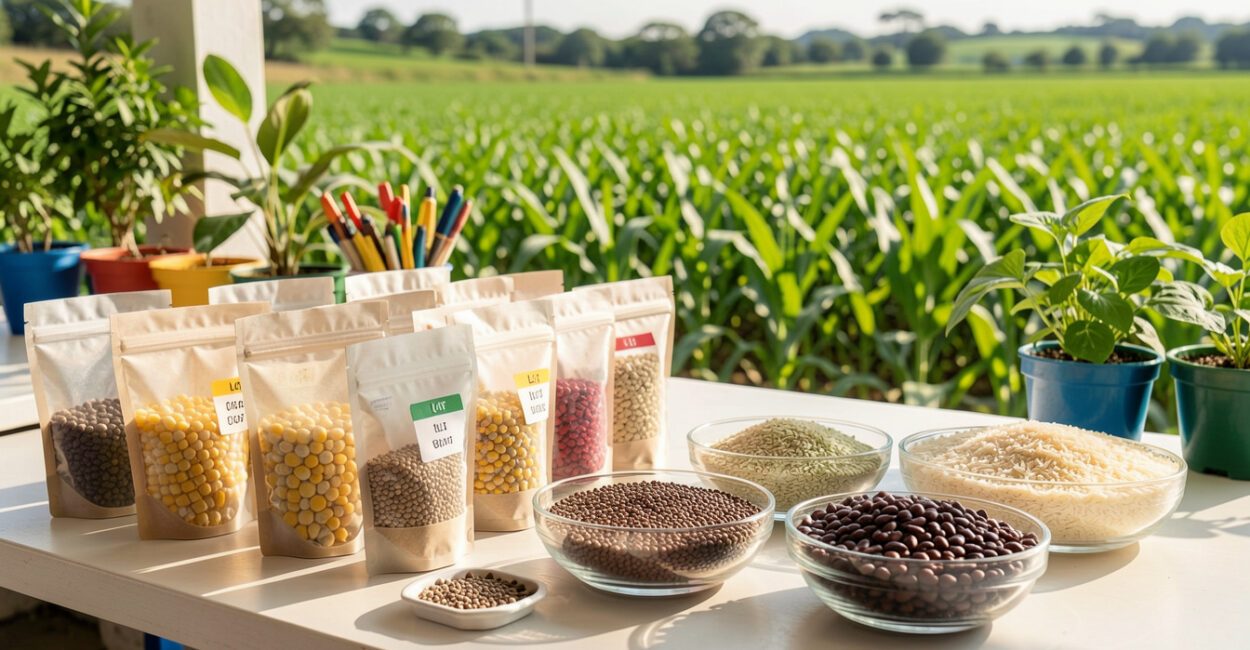
A lot may show a high germination rate on the label and still not be the best choice for your farm. Certified seeds go through a formal production and quality control process, but your decision also depends on the cultivar, region, planting season, and the management practices your farm can support.
Before buying, check the lot identification, germination and purity data, test date and validity, and technical recommendations for your region. Certification helps verify the lot’s origin and compliance; it does not guarantee yield or replace sound agronomic selection.

Start by separating two questions: Does the seed lot meet the stated standards, and is the cultivar suited to the environment where it will be planted? This distinction helps you avoid paying for quality that does not solve the right problem.
Before choosing, define these factors
- Crop, cultivar, and the field to be planted.
- Region, planting season, and soil and climate conditions.
- Production goals and available management practices.
- Quantity needed and transportation and storage conditions.
What certified seeds are and what certification guarantees
Certified seeds are produced under an official certification process, with requirements for identity, origin, and quality set by applicable regulations. For buyers, this means the lot has traceable documentation and identification and has gone through the control steps required for its category.
Certification does not guarantee that every seed will germinate in the field or that a crop will achieve a particular yield. Performance also depends on climate, soil, planting time, planter calibration, planting depth, and crop management. A compliant lot can still fail if it is stored in heat and moisture or planted under unsuitable conditions.
It is also important to distinguish certified seeds from officially inspected seeds. Certification follows a specific control and documentation process; inspection refers to official oversight of production and sales under applicable rules. The terms are not interchangeable: check the declared category and the lot documentation.
Brazil’s Law No. 10,711/2003 established the National Seed and Seedling System. Additional requirements and procedures may vary by crop and current regulations, so consult the seed and seedling section of MAPA, Brazil’s Ministry of Agriculture and Livestock, before interpreting a specific case.
How to check the lot’s origin, label, and documents
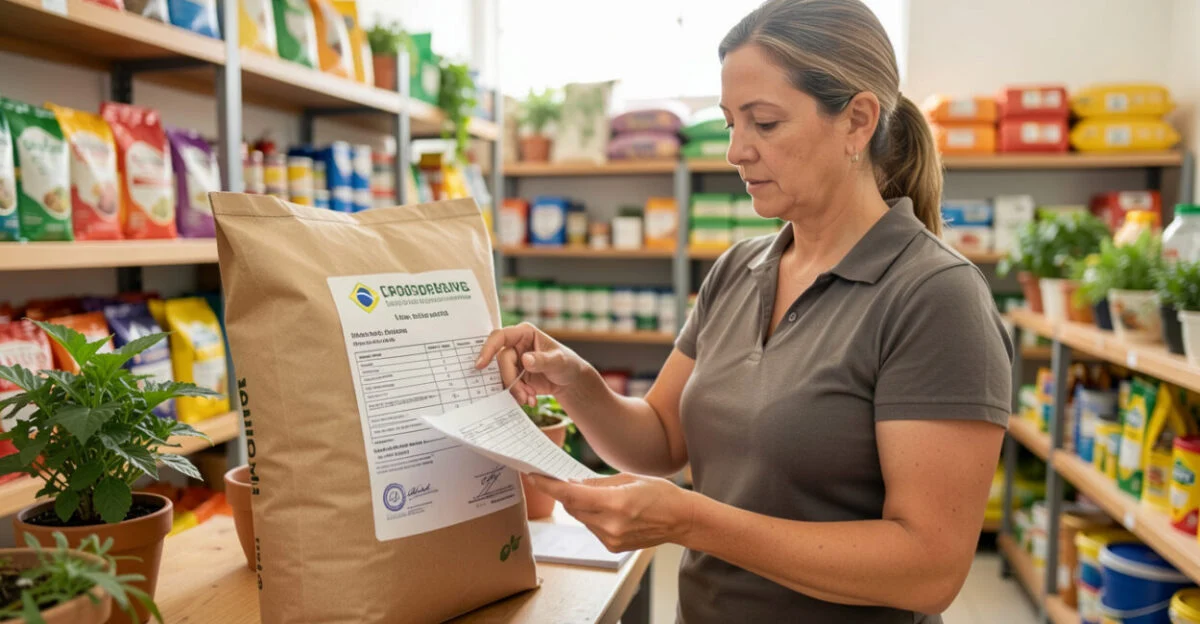
Start with the sealed packaging and lot identification. Compare the crop, cultivar, category, producer, lot number, and quality data on the label with the invoice and documents provided by the seller. If anything does not match, ask for clarification before opening the package or planting the seeds.
The seed label should identify the product and provide information such as germination and purity, as required by applicable regulations. Also check the test or analysis date and validity, and make sure the packaging is intact, with no signs of tampering, moisture, or relabeling. A product name alone does not prove its origin.
MAPA maintains rules for the National Seed and Seedling Registry (RENASEM) and for seed production and trade. Checking the registries and regulations can help confirm that the parties involved are authorized when required. To reduce losses after purchase, connect lot organization with storage and loss prevention practices, while keeping in mind that storing harvested grain is not the same as preserving seeds for planting.
What to consider when evaluating seeds

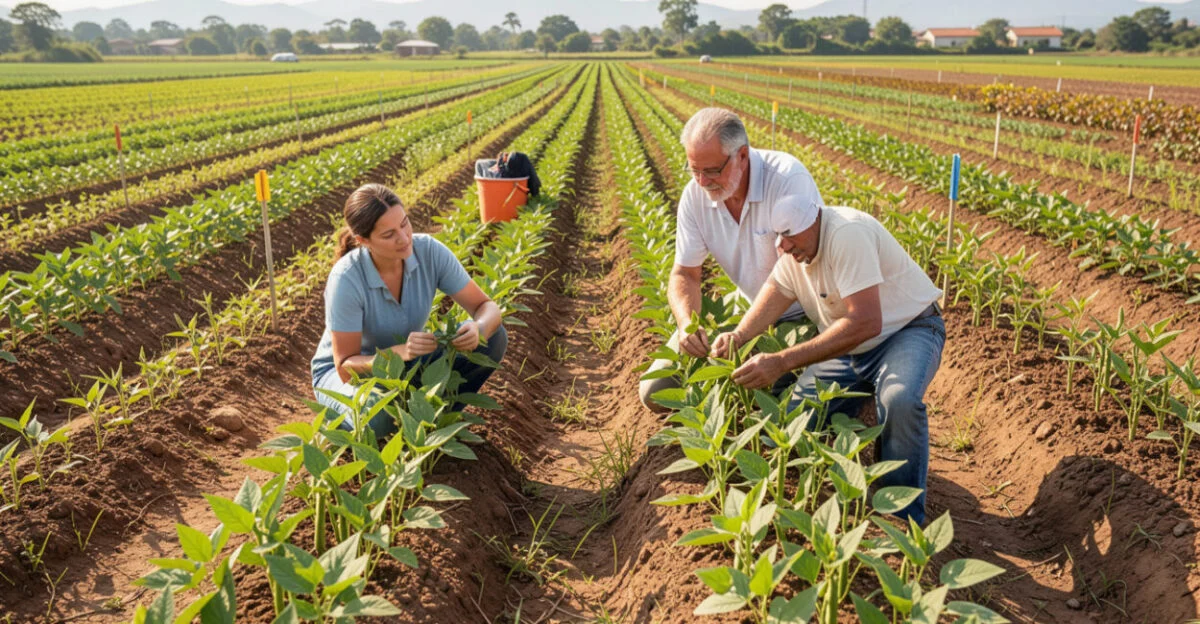
Start with criteria that rule out unsuitable options: regional adaptation, a growth cycle that fits the planting window, and tolerance or resistance to relevant local challenges. Then compare price, seed treatments, and quality attributes. A cultivar with the wrong maturity cycle can expose a crop to risk even when the lot has strong lab results.
Seed quality includes physical, physiological, genetic, and sanitary attributes. Physical purity indicates the proportion of seeds of the declared species relative to inert material and other seeds; varietal purity refers to the identity and uniformity of the cultivar. Germination measures the ability to produce normal seedlings under test conditions. Seed vigor helps estimate performance under less favorable conditions, but it is not the same as germination.
Compare the lot data with your planting needs and local technical recommendations. A high score does not make up for choosing the wrong cultivar, and seed treatment does not correct varietal identity problems. Field management also matters: information about soil, climate, and conservation practices can be organized using resources on sustainable agriculture and farm management.
How to choose certified seeds for every crop
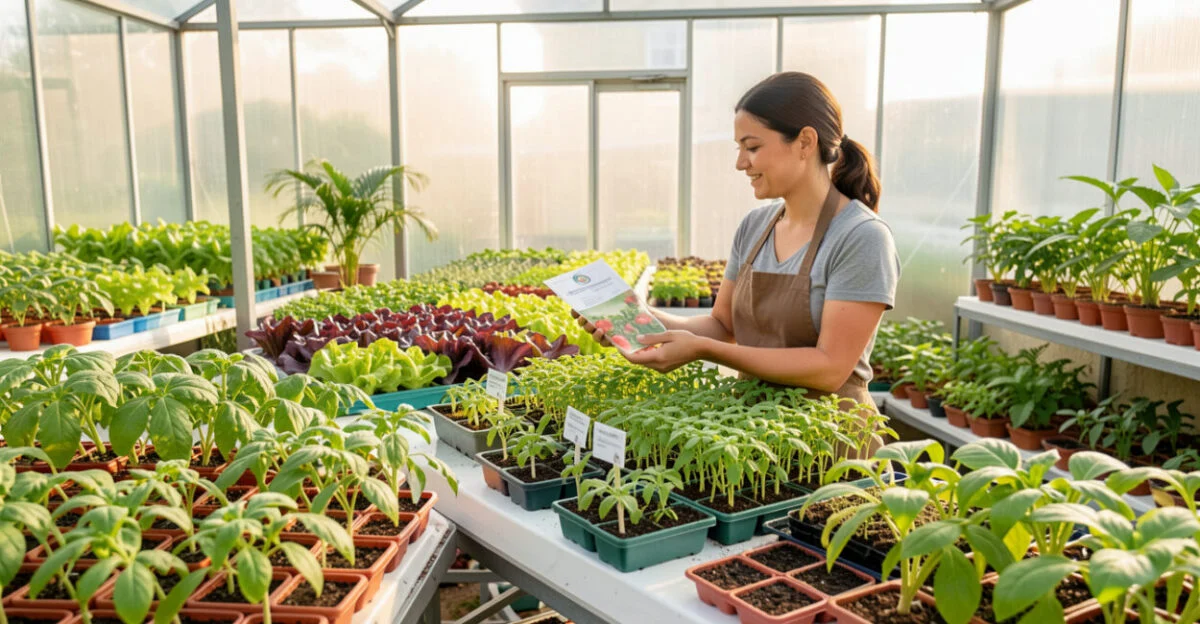
Choose based on the crop and field, not on a universal ranking of the “best seed.” For corn, soybeans, beans, or vegetables, compare adaptation, maturity cycle, disease resistance, and lot quality in light of the production system and planting season.
Crop Selection criteria What to confirm before buying Corn Hybrid or variety suited to the environment, maturity cycle, purpose, and disease pressure. Regional recommendation, planting window, treatment, and seeding rate indicated by the breeder or technical advisor. Soybeans Maturity group, regional adaptation, maturity cycle, and response to management conditions. Results from local trials, planting time, and compatibility with the production system. Beans Market class, maturity cycle, adaptation, and response to diseases that matter in the region. Target market, planting time, origin, and the lot’s plant health information. Vegetables Species and cultivar suited to the climate, growing system, and market standards. Identity, expiration date, stated germination rate, and package storage conditions.
When evaluating certified corn seed, assess the hybrid or variety for the environment and intended use: grain, silage, or another purpose. “CV” can mean cultivar, but it can also stand for coefficient of variation in experimental reports. There is no universally ideal CV for choosing seeds; in trials, the coefficient of variation describes the relative variability of the results and should be interpreted alongside the experimental design, study conditions, and other statistical measures.
There is no single most productive certified soybean cultivar for every location. Yield depends on the region, maturity group, environment, planting time, and management. Consult results from trials conducted under conditions similar to those on your farm and seek advice from a professional familiar with your region.
Example: A farm plans to plant soybeans near the end of the recommended planting window for its region. Even if a lot has a high germination rate, the decision should account for whether the cultivar’s maturity cycle fits that window and whether local trial results support its use. If it is not a good fit, comparing only the price per bag will not address the risk.
Seed selection can also be part of digital agriculture decisions, such as reviewing field and weather data, as long as the information is appropriate for the scale of the farm. Agricultural technology tools support the analysis but do not replace local agronomic advice.
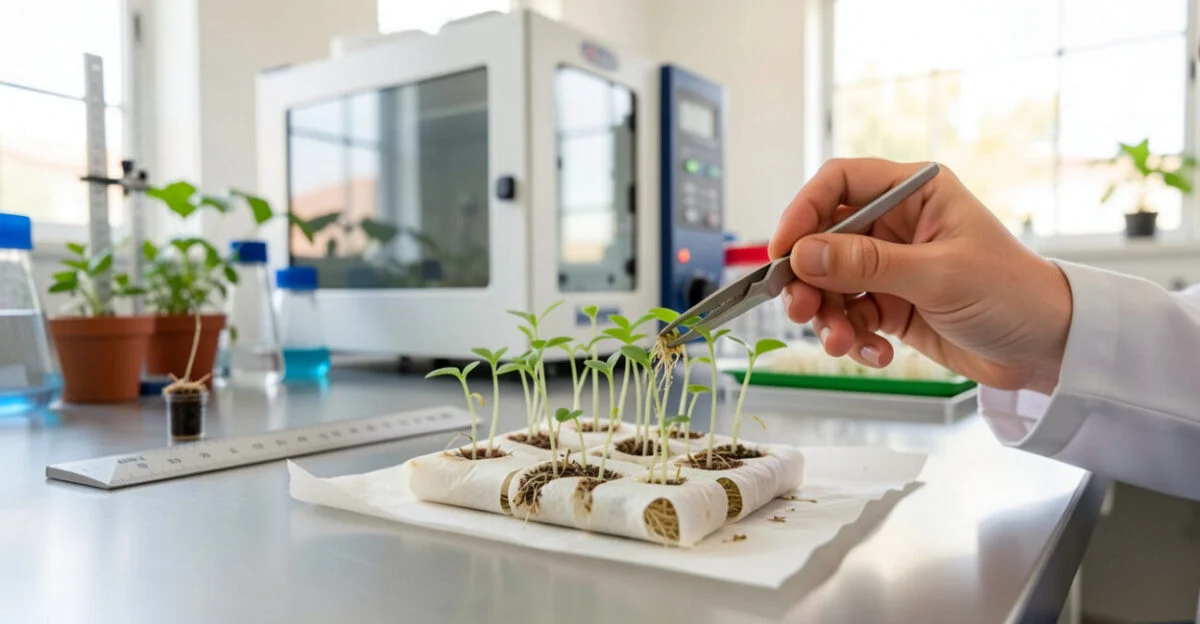
What a germination test tells you and how to interpret the results
A germination test estimates a lot’s ability to produce normal seedlings under controlled, standardized conditions. It evaluates seed germination using technical procedures; it does not predict exactly how seeds will emerge or how much a crop will yield in the field.
Read the percentage alongside the test date and conditions, purity, and lot identification. The tested sample represents the lot only if it was collected properly. Quality can also change after testing, especially if the seed is exposed to heat, moisture, or packaging damage.
Vigor and germination answer different questions. Two lots can have similar lab germination rates but differ in the speed and uniformity of emergence under cold, drought, or other stressful conditions. To understand the methods and interpret the results, consult MAPA’s Seed Testing Rules and Embrapa’s technical resources.
How to buy, transport, and store seeds
Plan your purchase to minimize the time between delivery and planting. During transport, protect packages from rain, excessive heat, and punctures. Store them in a dry, well-ventilated place away from moisture and pests. Temperature and humidity affect seed storage, but the impact varies by species and lot.
- Confirm the crop, cultivar, category, and lot number.
- Compare the label, invoice, and documents received.
- Check germination, purity, and test validity.
- Inspect the packaging and reject any damaged or damp packages.
- Protect the shipment from rain and heat during transport.
- Store seeds separately from chemicals and record the date they arrive.
Keep the invoice, label, and documents until the crop is established. If emergence is poor, these records can help distinguish lot-related problems from causes such as planting too deep, waterlogged soil, pests, or improper equipment settings.
Which official sources to consult about seeds and certification
For production, sales, and registration rules, consult Brazil’s Ministry of Agriculture and Livestock (MAPA) and the text of Law No. 10,711/2003. MAPA’s Seed Testing Rules are the reference for testing methods; Embrapa materials provide context on quality, cultivar selection, and crop-specific recommendations. Always check the current version before making a regulatory decision.
Seed certification is not the same as certification for agricultural products. Product certification requirements depend on the product and the system, such as organic production or conformity assessment. First identify the product and certification scheme you are seeking; then consult the regulatory agency and applicable standards. Do not assume RENASEM applies to food or other agricultural product certifications.
When deciding what to buy, note the cultivar and lot, confirm regional adaptation, and check the documents before paying. If local recommendations and label information do not match, hold off on choosing until you resolve the discrepancy with a technical advisor or the responsible supplier.
Frequently Asked Questions
Are officially inspected seeds always certified?
No. Inspection and certification are distinct forms of control, with their own requirements. Check the category stated on the label and the corresponding documentation.
Can I save an opened package for the next growing season?
That depends on the species, the condition of the lot, and storage conditions. Opening the package exposes seeds to the environment. Keep it tightly closed, labeled, and in a dry place, and do not assume the test results will remain valid after storage.
Does seed treatment increase germination?
Treatment is intended to protect seeds against certain organisms, depending on the product and its intended use. It cannot restore deteriorated seeds or, by itself, guarantee higher germination.
How can I get an agricultural product certified?
First, identify the product and the type of certification you want, since requirements vary across systems and standards. Consult the responsible agency and the requirements for the activity. This certification should not be confused with seed certification.
Why can plant stands be uneven even when germination is high?
Lab results do not reproduce all field conditions. Poor moisture, uneven planting depth, compaction, pests, or low vigor can interfere with emergence.
Can I compare lots based only on germination percentage?
No. Also compare purity, vigor when available, varietal identity, test validity, and storage conditions. The best lot for a field also depends on the cultivar and regional recommendations.
Artigos Relacionados
 Crop Insurance: How to Evaluate Farm Coverage
 Agroforestry: How to Combine Trees and Crops on a Farm
 Integrated Pest Management: How to Protect Crops
 Crop Rotation: How to Plan Planting on Your Farm
 Farm Insurance: Coverage and How to Choose a Policy
 Fruit Farming: Profitable Crops Adapted to Brazil’s Northeastern Semi-Arid Region
