
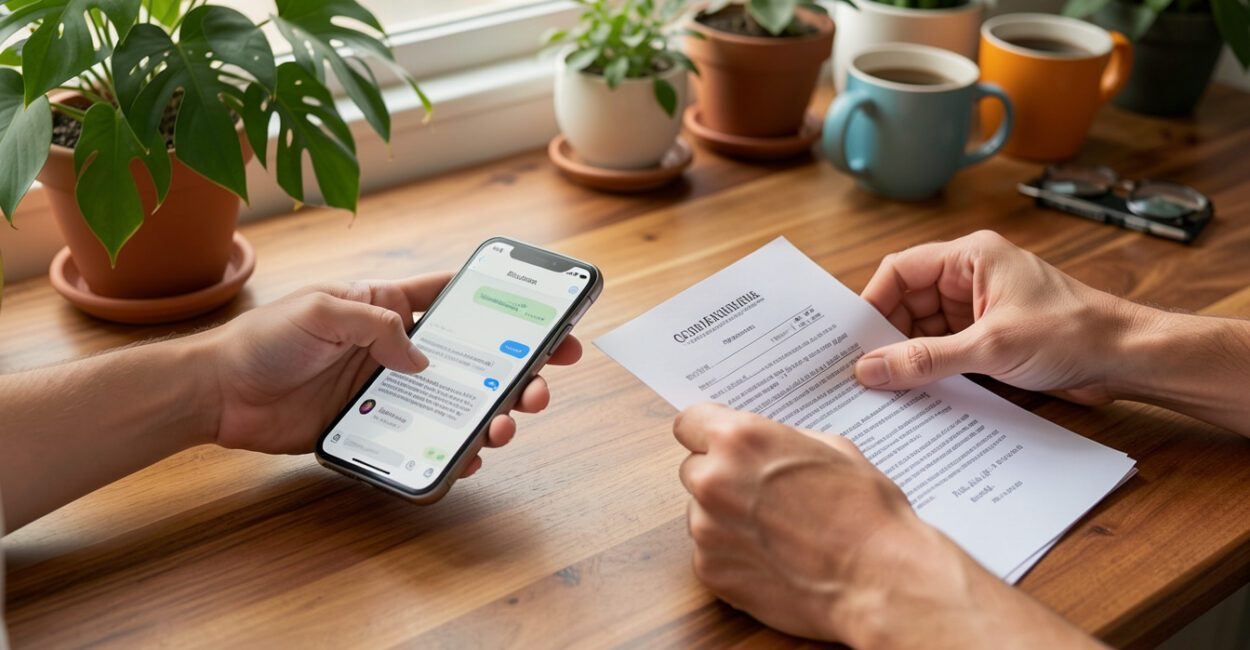
A convincing answer can mix a correct fact with a wrong date or a source that doesn’t say what the text claims. To check AI answers, turn the text into specific claims, verify each one against reliable sources, and assess whether the evidence supports the exact conclusion presented.
The fluency of an answer, by itself, doesn’t prove that it’s true.

This matters when you use a chatbot to study, prepare a post, or make a decision. A small error, such as attributing a quote to the wrong person, can spread when content is copied without being checked.
How to check AI answers by separating claims
The safest way to determine whether an AI answer is correct is to break it into verifiable claims and check each one against appropriate sources. Identify names, dates, numbers, quotes, and conclusions; look for the original evidence; compare the context; and note what you couldn’t confirm. If a claim has significant consequences, don’t verify it with just one search.
This method helps because language models generate answers based on patterns and context, not through an automatic guarantee of truth. An AI hallucination occurs when a system produces incorrect or made-up information that seems plausible. The term describes an error; it doesn’t mean the tool intends to deceive.
- Break the answer into verifiable parts: separate facts, interpretations, and recommendations.
- Prioritize what could cause harm: start with figures, deadlines, proper names, and instructions.
- Look for independent evidence: prefer original documents and recognized sources.
- Check the context: make sure the source supports the entire claim, not just a related passage.
- Decide how to use it: correct, discard, or flag as uncertain anything you can’t verify.
For example, an answer about the origin of a public policy might include a date, the name of an agency, and an explanation of its effects. Those are three different claims. Confirming the agency’s name doesn’t prove that the date or interpretation is correct.
Signs that may point to errors or fabricated information
Be wary of answers that give very specific numbers without sources, cite references that are hard to find, link to pages unrelated to the topic, or sound overly certain about controversial issues. These signs don’t prove an answer is wrong, but they show where to start checking.
A common problem is a plausible-sounding quote that doesn’t exist or is attributed to the wrong person. Sometimes a link opens a real page that doesn’t support the claim: the title seems relevant, but the content covers something else. Open the source and find the relevant passage before reusing the information.
Contradictions within the answer itself deserve attention. If one paragraph says a rule took effect in a certain year and another describes an incompatible deadline, don’t choose the better-written version. Go back to the documents that could clarify the discrepancy.
A claim is confirmed only when the source supports the same fact, in the same context and with the same scope.
The NIST AI Risk Management Framework treats AI risk management as a process that depends on context and use. This perspective helps explain why an answer that’s acceptable for brainstorming may be insufficient for a medical, financial, or legal decision.

How to check an AI answer step by step

Start by copying the claims you plan to use into a checklist. Then classify each item as an objective fact, interpretation, prediction, or recommendation. You can compare objective facts with records and documents; interpretations require context; and predictions can’t be confirmed as if they were events that have already happened.
Run targeted searches instead of searching for the entire answer in quotation marks. For a number, include the institution’s name, the time period, and the unit of measure. For a quote, search for the phrase in an original transcript, publication, or recording. For a conclusion, identify the premises supporting it and whether the source actually justifies that result.
Read also: Insurance Policy Lookup: A Guide to Finding and Checking Policies
A common practical mistake is confirming only the first search result. That can lead to a page repeating the same information without checking its source. When the stakes are high, look for a primary source and independent confirmation instead of counting copies of the same content as separate evidence.
If you’re checking an answer from ChatGPT or another chatbot, rephrase the question neutrally and ask for specific references, such as the title, author, and date. Use the additional answer only as a lead: another answer from the same system isn’t independent confirmation.
Where to verify information provided by AI
Prefer the source that originally produced or recorded the information. For a regulation, consult the official text; for public data, look for the responsible agency; for a scientific claim, check the paper or a review in the field. Reputable news sources can provide context and help you find documents, but they don’t replace the original record when it’s available.
In education and technology, for example, an explanation of AI use in the classroom can be checked against institutional documents and studies cited in the material. An article about AI and learning in schools should also be evaluated based on the quality of its sources and the context, not just how clearly it explains the topic.
For governance and ethics principles, the UNESCO Recommendation on the Ethics of Artificial Intelligence is an institutional reference. It doesn’t verify any specific data generated by a chatbot; it serves as guidance on values and responsibilities in the use of technology.
When the original document isn’t accessible, look for independent sources that explain where the information came from and what its limitations are. If every page repeats the same claim without pointing to an original source, repetition isn’t confirmation.
How to evaluate sources, links, and citations provided by AI
AI may provide references, links, or citations that are incorrect, incomplete, or don’t support the claim. Open each link, make sure the document exists, and compare the relevant passage with what the answer says. If the page is unavailable, look up the title and author in a trusted catalog or repository.
Also check the type of source. An opinion piece doesn’t serve the same purpose as an official regulation; a summary doesn’t replace the original study; and a commercial website may have interests that influence which data it selects. An institution’s reputation matters, but so does the source’s relevance to the specific claim.
If you’re building an automated customer service system, your fact-checking should include the content the bot uses to respond. The article on how to reduce problematic responses in customer service chatbots addresses this context: approved references and content reviews can help limit errors, but they don’t eliminate the need to monitor responses.
What to do when reliable sources disagree
When reliable sources report different figures, compare what each one measured, over what period, and using which method. Differences may stem from different scopes, updates made on different dates, or incompatible definitions, without either source necessarily being wrong.
Criterion
What to check
How to interpret the discrepancy
Date
When the data was published and what period it covers
One source may include an update that the other hasn’t incorporated yet.
Definition
How each source defines the term or indicator
Two figures may measure different things despite using similar labels.
Methodology
How the data was collected and analyzed
Different samples, criteria, and methods can produce different results.
Authority and purpose
Who produced the information and for what purpose
One source may be better for official data; another may be more useful for analyzing the context.
Don’t automatically average conflicting figures. First find out whether they’re comparable. If the difference remains unexplained, present both results with their dates and methodologies, or make clear that you couldn’t determine which one better answers the question.
When fact-checking requires extra care
In health, law, finance, and safety, use AI to organize questions or look up terms—not as the final authority for making decisions. General guidance may overlook personal factors, recent changes to a rule, or conditions that affect the recommendation. When a decision involves a real risk, verify it with a qualified professional or the responsible agency.
This limitation also applies to personal data. Don’t send sensitive information to a service without understanding how it handles that information, and don’t treat a generated answer as a professional assessment. The UNESCO Recommendation and the NIST framework help frame risks, but they don’t replace specific clinical, legal, or financial advice.
The next step is to choose a claim from the answer that you plan to use and trace it back to the source closest to the original fact. If there’s no verifiable evidence, remove the claim or label it as unconfirmed before sharing the content.
Frequently Asked Questions
Is a well-written answer more reliable?
No. Fluency and a confident tone don’t show that the facts are correct; reliability depends on the evidence and context.
Should I trust an answer if it includes several links?
Not without opening and checking each reference. Links may be broken, lead to irrelevant pages, or fail to support the cited claim; several references may also repeat a single source.
How should I keep a record of my fact-check?
Record the claim, the source you checked, the date you accessed it, and the passage that confirms it. This record makes it easier to review information when it changes and helps others understand why it was considered reliable.
Artigos Relacionados
 UFPE Fire: What Information Helps Explain the Cause
 Financial Scams: How to Spot Them and Protect Your Money
 Literal Reading in School: Quick Exercises for Finding Answers
 Entrepreneurship: How to Spot Business Opportunities
 High-Demand, Low-Competition Careers in Small Cities: How to Spot Profitable Opportunities and Stand Out
 Information Security: 5 Risks You’re Overlooking Right Now
