
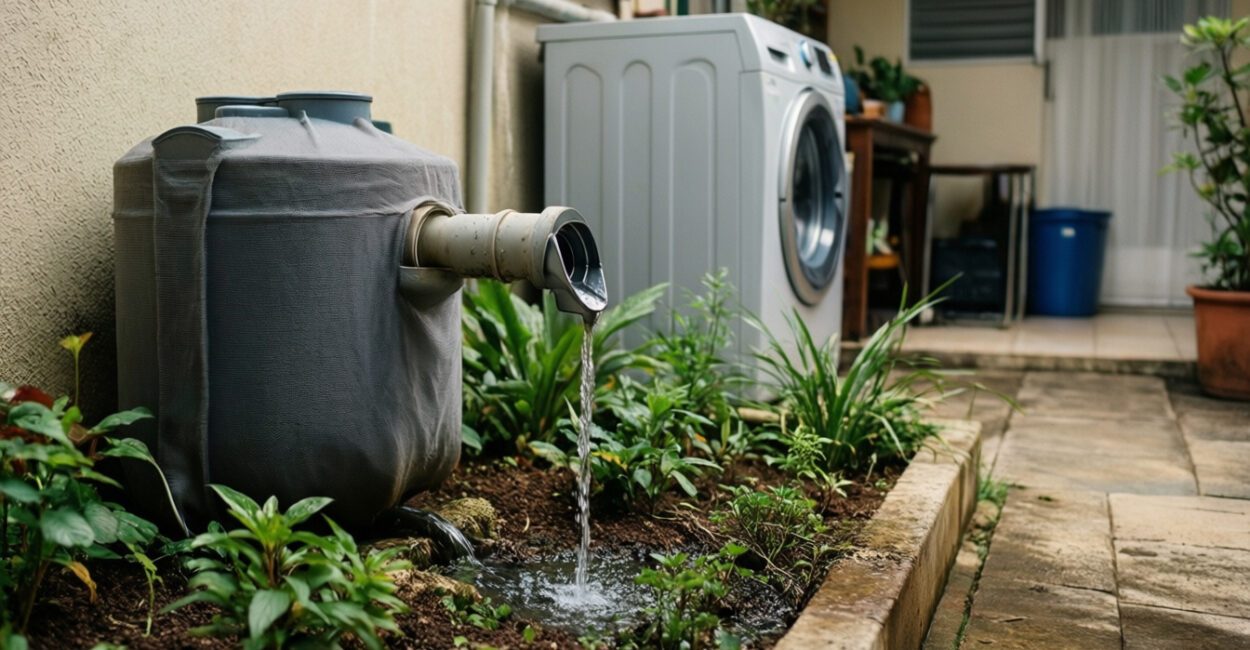
Water from showers or washing machines can replace some of the drinking water used at home, as long as its source and intended use are compatible. Graywater reuse requires separate collection, treatment suited to the intended use, and precautions to avoid contact and cross-contamination.
The system can be simple, such as using rinse water right away to wash the patio, or it can involve pipes, filters, and disinfection. The choice depends on the available volume, the products used for cleaning, and local regulations.

Before you get started
- Identify which parts of your home produce graywater and which uses you want it to serve.
- Check whether the plumbing allows these pipes to be separated from the sewer line.
- Consider treatment, storage, and maintenance—not just collection.
- Consult your local government and a qualified professional before installing a permanent system.
What is graywater reuse, and how does graywater differ from blackwater?
Graywater is household wastewater from sinks, showers, bathtubs, and washing machines, as long as it does not include water from toilets. In graywater reuse, this flow is separated from sewage and directed to nonpotable uses after assessment and, when needed, treatment. Kitchen sink water may be excluded or treated separately because it tends to contain grease and food scraps.
Blackwater is wastewater containing human waste from toilets. It poses a greater health risk and requires its own treatment. Dishwashing water can also have high levels of grease and organic matter, so not every project classifies or reuses it with other graywater.
The term refers to wastewater, not gray ash from wood, coal, or a stove. These are different topics, with different uses and risks.
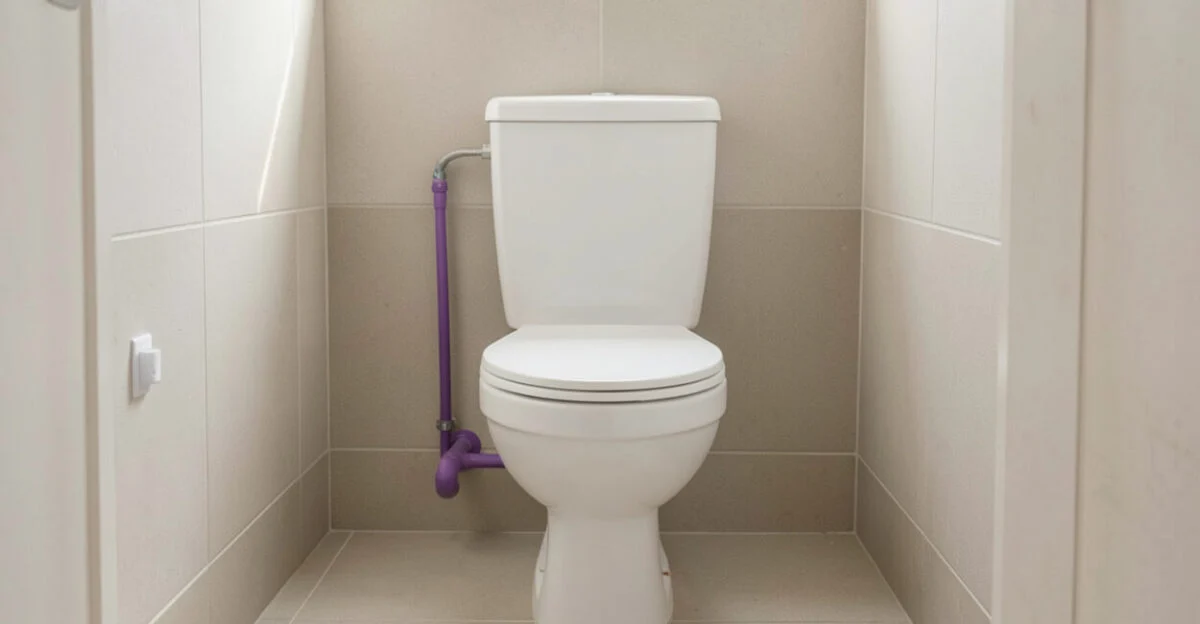
What is graywater reuse at home used for?
After proper assessment, treated water can serve uses that do not require potable quality. The intended use should guide the treatment: water suitable for toilet flushing, for example, is not automatically suitable for irrigation or washing that involves frequent contact.
- Toilet flushing: A common use in building systems, with a clearly labeled nonpotable water line protected from connections to the drinking water supply.
- Targeted irrigation: May be considered for ornamental plants, provided the water quality and application method are suitable. Avoid contact with edible parts of plants and with people.
- Washing floors and outdoor areas: Depends on treatment and should minimize splashing and direct exposure.
- Immediate, controlled uses: Rinse water may be reused occasionally, as long as it contains no incompatible products and is used without extended storage.
Graywater should not be used for drinking, cooking, brushing your teeth, or washing food. Even with household treatment, do not assume the water has become potable.
How do graywater reuse systems work?

A system collects wastewater through separate pipes, removes unwanted materials, applies the necessary treatment, and distributes the water to nonpotable fixtures. If the water is stored, the storage must be properly sized and managed: water left standing too long can lose quality and develop odors.
- Separate the sources. Direct only the sources specified in the plan to the graywater line.
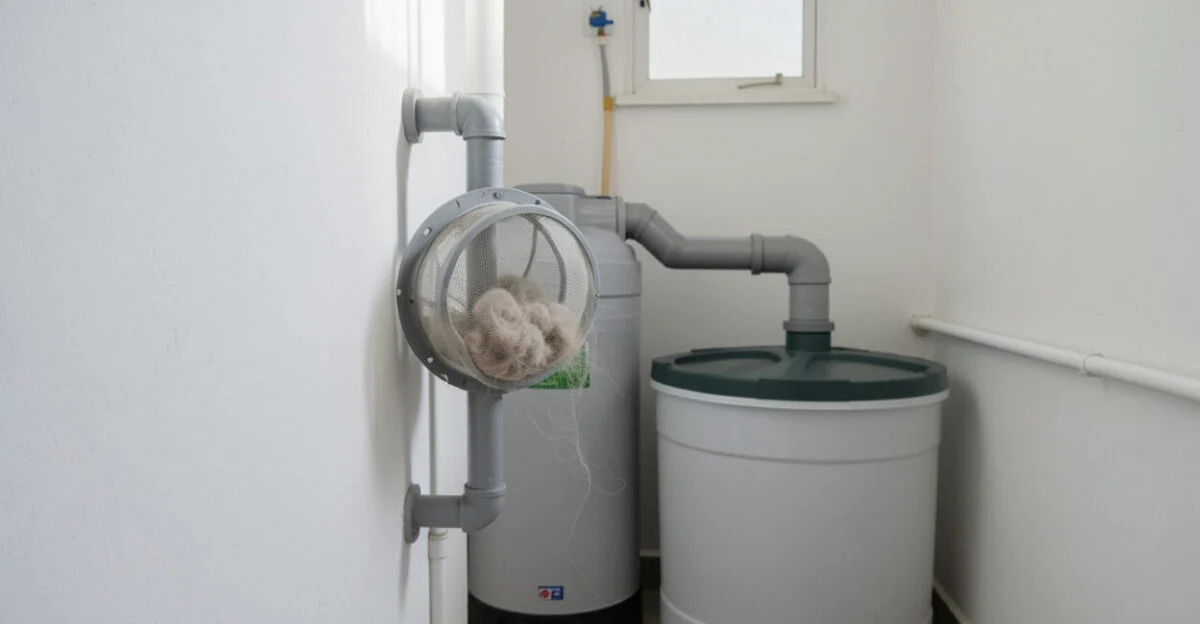
- Capture solids. Use accessible, cleanable devices to keep lint, hair, and debris from reaching the treatment system.
- Treat water for its intended use. Combine the processes needed to reduce solids, organic matter, and microbiological risks.
- Store water safely. Avoid long storage periods and keep the tank closed, labeled, and accessible for inspection.
- Distribute through a separate line. Label pipes and points of use, and prevent any connection to the potable water system.
One often-overlooked issue is lint from the washing machine: it can clog filters and pipes before the tank looks dirty. An accessible lint trap or filter, cleaned regularly, helps prevent clogs and makes maintenance easier. The U.S. Environmental Protection Agency’s (EPA) guidance on water reuse also emphasizes that treatment must match the end use and potential exposure.
Read also: How to Reduce Food Waste at Home
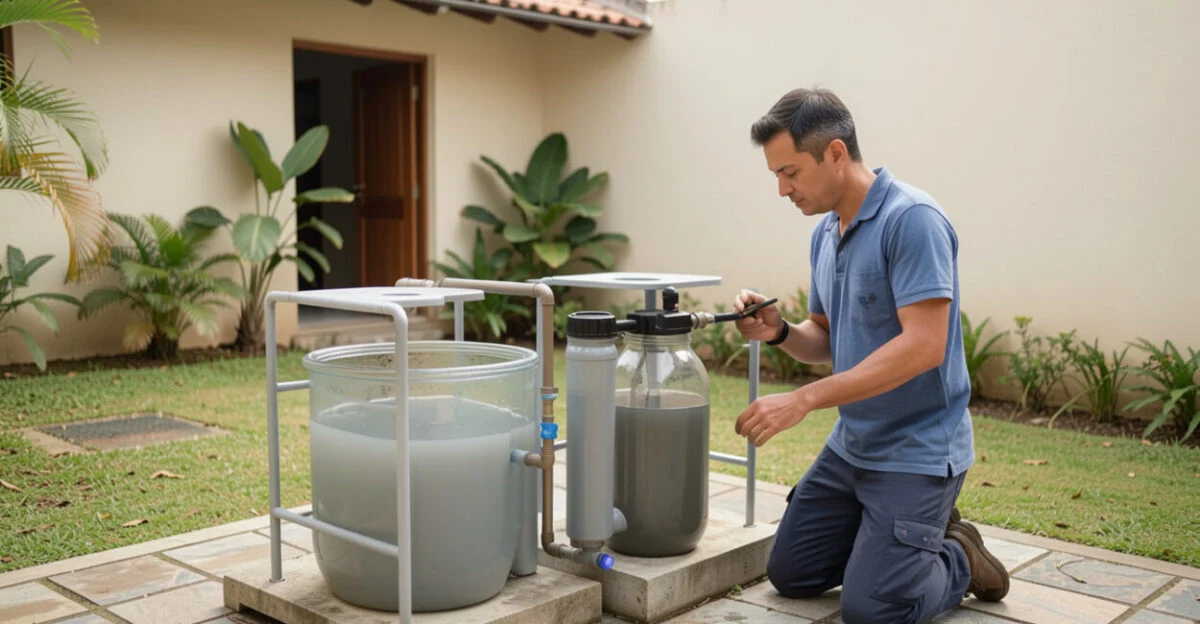
Which treatment steps may be needed?
There is no universal list of “seven water treatments.” Processes vary based on the source, wastewater quality, and intended use. Some are pretreatment steps, while others are different technologies that can be combined.
Process What it does When it may be considered Screening or sieving Traps hair, lint, and larger particles. As an initial safeguard for filters and pipes. Filtration Reduces suspended particles, depending on the type of filter. When the intended use requires water with fewer visible solids. Sedimentation Allows some settleable solids to separate out. In systems with a tank and sludge management. Biological treatment Reduces organic matter through the action of microorganisms. When the organic load or intended use calls for additional treatment. Disinfection Reduces microorganisms through an appropriate process, such as chlorination or ultraviolet light. When risk assessment and the intended use indicate that this barrier is needed.
Read also: Graywater Reuse at Home: Safety and Options
Filtration and disinfection do not solve every problem: each process has limits and must be operated properly. The National Water and Basic Sanitation Agency (ANA), Brazil’s federal water and sanitation regulator, published Water Conservation and Reuse in Buildings, and ABNT NBR 16783, a Brazilian standard on alternative nonpotable water sources in buildings, are useful project references. Check the current standard and local requirements before choosing a system.
How do you plan a home installation?
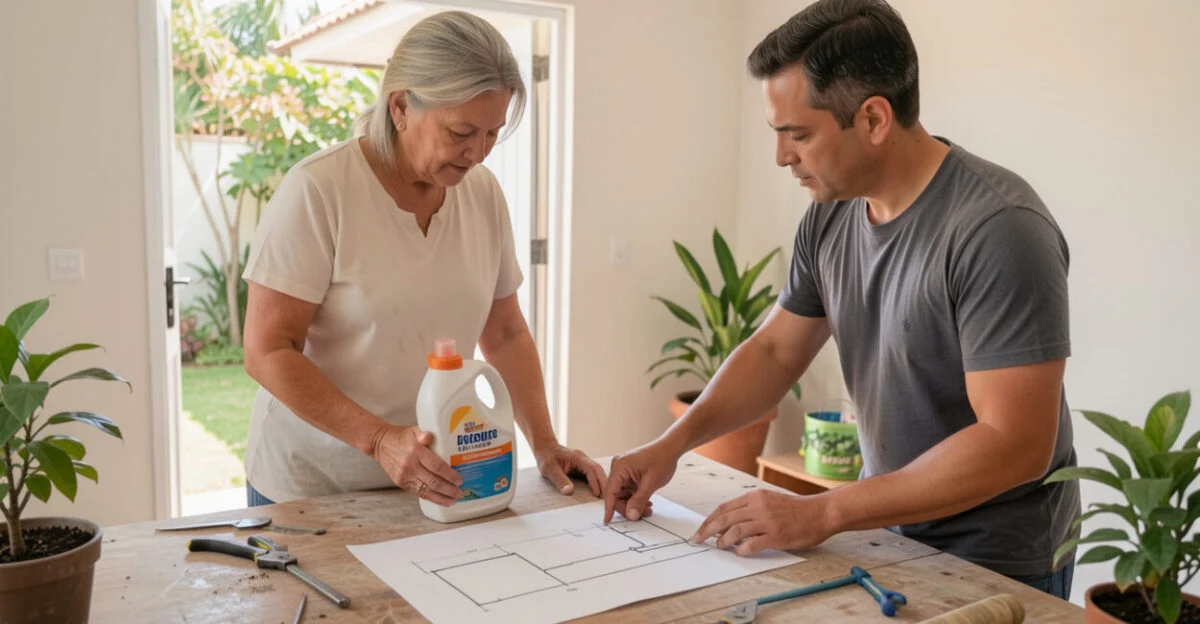
Start by comparing the amount of water produced with the demand you want to meet. Showering may generate water at different times than toilet flushing occurs; without controlled storage or a supplemental source, the system may not provide a steady supply. In an existing home, separating pipes may require construction work and access to walls or floors. In new construction, planning separate lines from the outset tends to simplify installation. A qualified professional can assess plumbing, treatment, ventilation, maintenance, and compliance with local and state requirements.
A typical example: washing machine water may seem like a practical way to irrigate the garden. If the detergent contains high levels of sodium or other ingredients that are unsuitable for the soil and plants, frequent use can cause damage. Check the label, avoid unsuitable products, and do not apply this water to food that will be eaten raw.
To cut waste in other parts of your household routine, see these habit changes that can help you save resources at home.
What safety and hygiene precautions are essential?
Reused water must remain separate from the potable water system and be labeled nonpotable. An accidental cross-connection can contaminate drinking water; backflow prevention devices and physical separation should be included in the design, as required by the installation and applicable standard.
- Do not allow ingestion or contact with eyes, mouth, or open wounds.
- Avoid aerosols and splashing, especially in areas used by children.
- Do not store water indefinitely; inspect the tank and clean it according to the system design.
- Use cleaning products compatible with the treatment process and the intended use of the water.
- Stop using the water if there is a persistent odor, a change in color, or a treatment failure.
The World Health Organization addresses health risks associated with wastewater use in its guidelines for the safe use of wastewater, excreta, and graywater. Conditions vary depending on exposure, treatment, and setting, so this guidance does not replace applicable Brazilian requirements.
Why is graywater reuse important, and what benefits can it offer?
Reuse reduces demand for potable water when it replaces that water for suitable uses, such as toilet flushing or certain outdoor applications. It may also reduce the volume of wastewater sent to the sewer, although the results depend on the system and how the water is used. There is no fixed savings figure that applies to every home. The benefits depend on how much water is collected, how regular the demand is, and the cost of installation and maintenance. If a household produces little graywater or has no frequent use for it, a complex system may not be worthwhile.
For irrigation, the application method matters too: directing water to the soil reduces contact with leaves and people. Guidance on how to prevent waterlogged roots when watering a vertical garden helps explain why irrigation volume and frequency need to be controlled, although graywater requires additional attention to water quality. The next step is to list the available sources and intended uses. If you plan to store water or distribute it through pipes, ask a qualified professional to assess the system and confirm local requirements before beginning construction.
Frequently asked questions
Can graywater be used to water a vegetable garden?
Whether it can be used depends on the water’s composition and the irrigation method. Avoid applying it to edible parts of plants, and consult a technical expert when growing food.
Can I save bathwater to use the next day?
Untreated water can deteriorate during storage. For occasional use, reuse it right away and keep it out of children’s reach; systems with tanks require proper design and management.
Do detergent and fabric softener prevent water reuse?
Not every product is suitable for every use. Salts, fragrances, and other ingredients can affect plants, soil, or treatment performance. Check the ingredients and the system’s recommendations before choosing products.
Does household graywater treatment make the water potable?
No. Household treatment should not be considered sufficient to make this water safe for drinking, food preparation, or oral hygiene.
Where can I find Brazilian guidance on this topic?
Consult technical publications from Embrapa, Brazil’s agricultural research agency, and ANA, the National Water and Basic Sanitation Agency; the current version of ABNT NBR 16783; and local sanitation and building-plumbing requirements. The right solution may vary depending on the water source and intended use.
Artigos Relacionados
 Home Composting: Feed Your Garden Without Waste
 Vertical Garden Supports: Compare 5 Models for Your Home
 Plants for a Vertical Garden: 9 Options for Apartments
 Affordable Solar Panel Installation: Build a Simple PV System, Cut Costs, and Keep Your Home Safe
 Early Literacy at Home: Strategies to Support Your Child
 Financial Activities for Kids: At-Home Guide
