
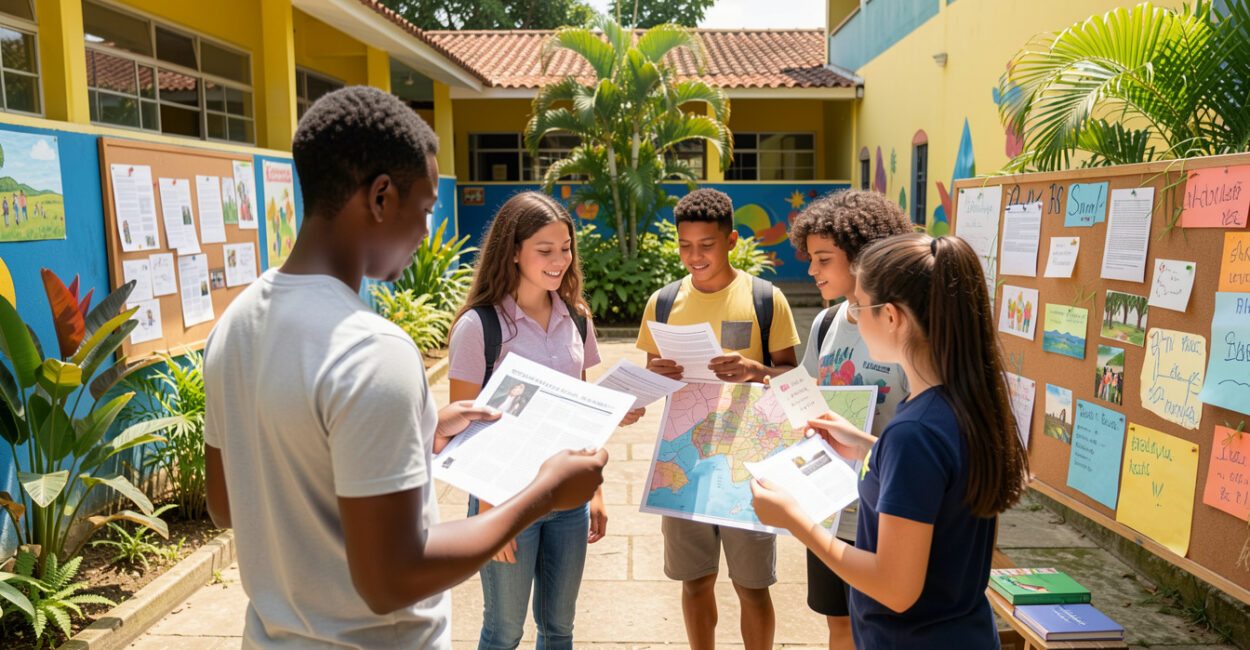
Someone who learns to compare sources may stop sharing false information; a class that discusses neighborhood problems may organize a community campaign. This is how education changes people: it expands knowledge and perspective, influencing choices and relationships. Its social effects, however, also depend on real-world conditions and participation.
The idea often appears in phrases attributed to Paulo Freire, but not every popular version is a verified quote from the educator. To understand what it means, we need to distinguish individual transformation from social change and recognize the limits of education when it acts alone.

What does it mean to say that education changes people?
Education is a process of development that builds knowledge, skills, and ways of interpreting reality through learning experiences. Saying that it changes people means that learning can broaden someone’s perspective, change how they understand a problem, and influence their decisions. It does not guarantee that every individual change will lead to collective transformation. For example, someone who learns how a household budget works may start comparing interest rates before taking out a loan. Someone else, after studying workers’ rights, may recognize a violation and seek guidance. Knowledge opens up possibilities, but the choice to act depends on factors such as time, income, safety, and access to services.
Learning expands the range of choices; living conditions help determine which ones are possible.
Who said education can bring about change?
The phrase “Education doesn’t change the world; education changes people” is often attributed to Paulo Freire, but this wording, on its own, does not prove who said it or point to a verifiable work or edition. It is more accurate to distinguish it from the wording found in Freire’s writings: “If education alone does not transform society, without it society cannot change either.” This second phrase appears in Freire’s Cultural Action for Freedom and Other Writings. It is often mentioned alongside the idea that people transform the world, but different popular versions should not be treated as one exact quotation. Nor is it accurate to automatically attribute every familiar saying about education and change to Pedagogy of the Oppressed.
When using a quote in an essay or presentation, check the work and edition, not just quote images or websites. This is also useful when preparing a school assignment, such as an essay on the Agrinho theme. Agrinho is a Brazilian educational program.
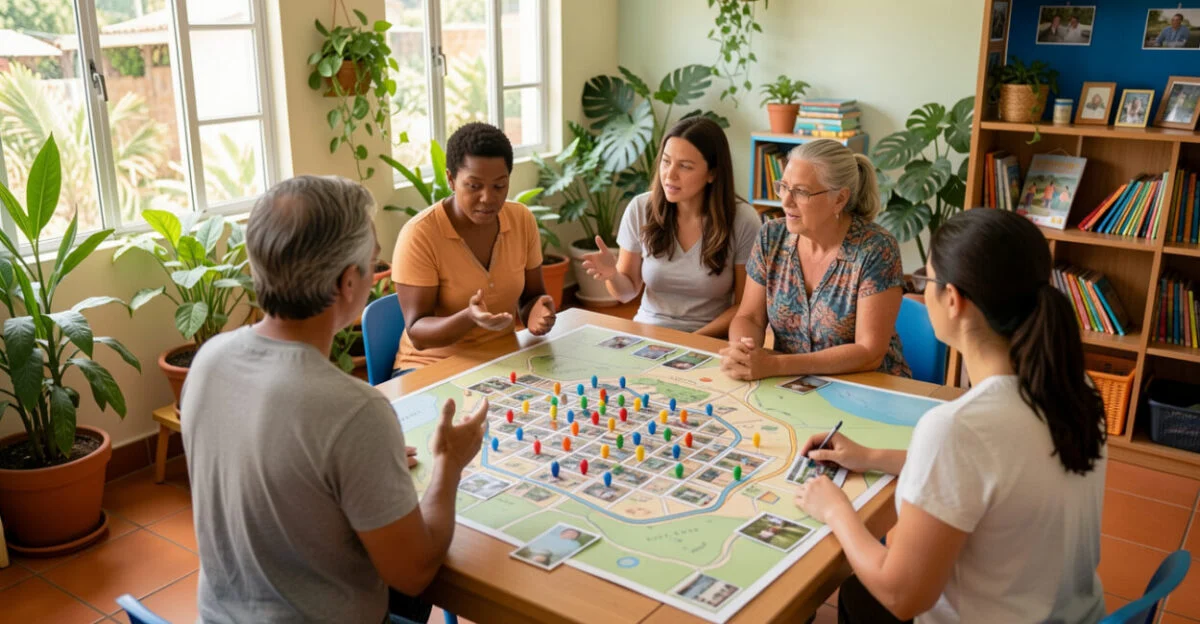
What did Paulo Freire believe about education and social change?

Paulo Freire believed that education plays a part in social transformation but cannot bring it about on its own. In the phrase recorded in Cultural Action for Freedom and Other Writings, education is presented as a necessary condition for change, not a guarantee that change will happen by itself.
This view is connected to Freire’s critique of teaching in which students simply receive information without discussing how it relates to reality. In contrast, he valued dialogue and the development of knowledge through a critical reading of the world. From this perspective, learning involves understanding a situation and developing the ability to intervene in it.
Article 205 of Brazil’s Federal Constitution defines education as everyone’s right and a duty of the state and family, to be provided with the cooperation of society. It links this right to the full development of the individual, preparation for citizenship, and qualification for work. The law sets out a public purpose; fulfilling it depends on policies, institutions, and access.
Read also: Critical Autonomy: How Education Empowers Citizens
Education helps us understand reality and act on it, but collective change also requires organization and real-world conditions.
How can learning change everyday choices and relationships?
Learning can change decisions and the way people live together by giving them tools to interpret situations, weigh options, and talk through conflicts. Its effects show up in everyday practices, not just in certificates or grades.
Read also: How to Grow Strawberries: Climate, Seedlings, and Essential Care
- Critical thinking: Compare sources and check evidence before accepting or sharing a claim.
- Autonomy: Understand instructions, rights, or available options to make a more informed decision.
- Dialogue: Listen to different arguments and explain your own point of view without turning a disagreement into a personal attack.
- Rethinking habits: Recognize, for example, that you can cancel a recurring bill or that a health statistic needs to be confirmed through a reliable source.
A practical detail often makes a difference: learning to research means more than just finding an answer. You also need to check who published the information, when it was updated, and whether other reliable sources confirm it. Without that step, access to information can reinforce a misconception instead of deepening understanding.
At school, an essay assignment can teach students to support an opinion with arguments and sources instead of simply repeating a thesis. Assignments such as writing about sustainability can help students practice critical reading, as long as they develop their own reasoning.
How can individual changes affect society?
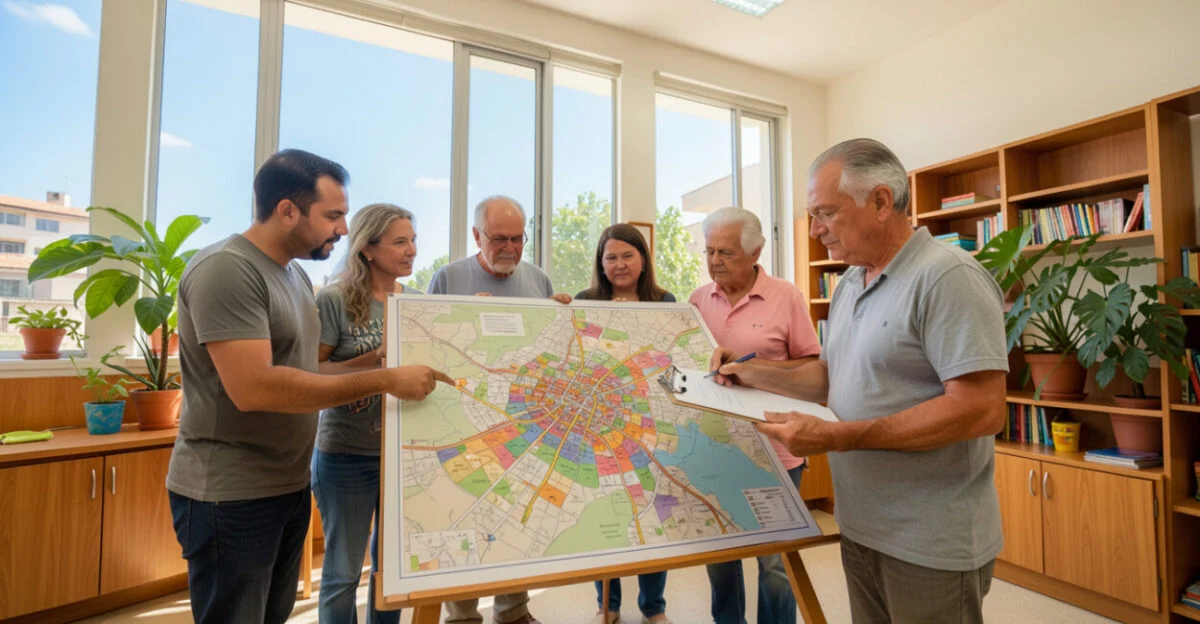
Individual change can affect society when knowledge leads to participation, cooperation, or collective decision-making. Someone who understands a local problem can talk with neighbors, attend a public meeting, and bring a proposal to a council or relevant agency.
This connection also appears in institutions. When students, families, and educators discuss school rules, for example, they can identify problems and propose changes. The outcome depends on dialogue, organization, and openness to participation; one person’s initiative alone cannot replace resources, public policies, or institutional responsibilities.
One useful reference for considering this broader perspective is UNESCO’s report Reimagining Our Futures Together: A New Social Contract for Education, which calls for education to be viewed as a public and collective endeavor. The publication looks beyond individual development and is available in UNESCO’s report.
To connect learning and citizenship, consider what happens after people understand an issue: Is there a way to participate? Can the people affected be heard? Is there an authority that can respond? These questions help distinguish a change in perspective from a real transformation of social conditions.
What did Zygmunt Bauman say about education?
Zygmunt Bauman examined education in a society marked by change and uncertainty, where knowledge and living conditions can shift over time. This perspective points to the need for lifelong learning and for preparing people to interpret new situations, rather than simply memorizing material for one stage of life.
It is wise to avoid short quotes attributed to Bauman unless they can be traced to a specific work or interview. His contribution can be more reliably presented as a reflection on the relationship between education and social change, without turning a paraphrase into a direct quote.
This perspective does not mean that every person should have to adapt to any change on their own. Access to education depends on factors such as income, time, educational opportunities, and institutional support. Without considering these conditions, the call for lifelong learning risks blaming individuals for barriers that are also collective.
Education, people, and society: Key differences
Distinguishing between levels of change helps us assess what education can do and what requires other efforts. The table compares individual change, collective contributions, and limitations.
Dimension
What can change
Example
Limitation
Individual
Knowledge, interpretation, and decisions
Compare sources before sharing a news story
Information alone cannot overcome a lack of time or resources to act
Collective
Practices, agreements, and participation in institutions
Organized residents bring an issue to a public meeting
The proposal depends on being heard, organization, and an institutional response
Social
Rules and conditions that affect groups
A policy expands access to a particular educational service
A single initiative cannot replace policies, funding, and continuity
If you want to evaluate an educational initiative, first consider what it aims to change: knowledge, behavior, participation, or an institutional condition. Then look for evidence suited to that goal. A test can show whether students have learned the material; on its own, it does not demonstrate a change in attitude or social impact.
Keep reading this series
Frequently asked questions
Is formal education the only kind that can change a person?
No. Schools and universities are important, but people also learn at home, at work, in community organizations, and through cultural experiences. The quality of learning depends on the context, goals, and opportunities available.
Does having more information always lead to better decisions?
Not necessarily. Information needs to be understandable, reliable, and relevant to the decision. Someone may know what options are available and still lack the resources to choose the most appropriate one.
How can I tell if a quote from Paulo Freire is accurate?
Look for the wording in an identified work, along with its edition and context. If you find the phrase only on social media or websites without a bibliographic reference, treat the attribution as unverified.
How are education and citizenship related?
Learning can help people understand their rights, responsibilities, and ways to participate. Article 205 of Brazil’s Federal Constitution links education to preparation for citizenship, but participation also depends on accessible channels and the ability to use them.
Can one person change society on their own?
One person can start an initiative or influence others, but lasting social change usually depends on cooperation and institutions. Individual contributions matter, though they cannot replace collective efforts or public policies.
Where can I start applying this idea in everyday life?
Choose a specific issue that affects you or your community. Check information with reliable sources, identify who is responsible for addressing the problem, and look for a legitimate forum for dialogue or participation.
Artigos Relacionados
 Children’s Day in Early Childhood Education: Ideas by Age Group
 Environmental Education Projects: 7 Ideas for National Day
 Activities for Early Childhood Education: Practical Ideas
 Neuroscience in Early Childhood Education: How Children’s Brains Learn and How to Apply This Knowledge to Maximize Learning
 The Power of Free Play: Exploring Why Play Matters in Early Childhood Education and How to Foster Creativity and Imagination
 Women’s Day Cards for Early Childhood Education: Creative Ideas, Inspiring Messages, and Fun Activities to Celebrate Gender Equality
