
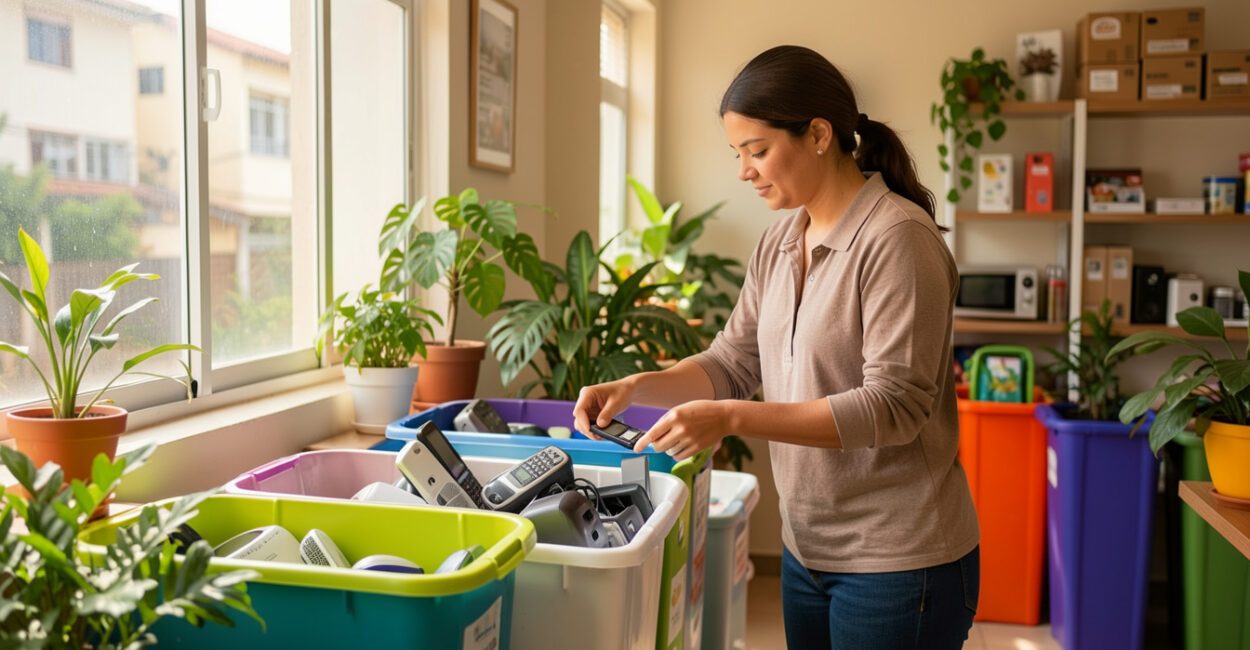
An old cell phone can still hold photos, passwords, and conversations even after it’s turned off. To learn how to dispose of e-waste safely, first erase the data from your devices. Then separate batteries and find a collection site that confirms it accepts that type of material.
Rules and fees vary by program and location.

Discarded electrical and electronic equipment is waste that may contain recoverable materials as well as components that require proper handling. Everyday examples range from an unused charger to a broken refrigerator, but their destinations and transportation requirements may differ.
Brazil’s National Solid Waste Policy provides for reverse logistics for products and packaging covered by the system, with shared responsibility among manufacturers, importers, retailers, consumers, and public authorities. In practice, start by identifying the item and checking the collection site’s rules before you leave home.
Before sorting your devices
- Identify the type of waste: a small device, a household battery, a standalone battery, or a large appliance.
- Check whether the device can still be repaired, donated, or sold safely.
- Erase personal data from cell phones, computers, and other devices with storage.
- Check the locator or municipal service and confirm accepted items, hours, and any limits.
How to dispose of e-waste safely
Sort the device, protect your personal data, and take each item to a collection site that confirms it accepts that material. Before dropping off the equipment, remove accounts and memory cards when possible, turn it off, and don’t take it apart. For damaged batteries or large appliances, ask the operator about packaging, transportation, and pickup.
For cell phones and computers, back up anything you want to keep, sign out of accounts, and restore the factory settings. A factory reset helps remove user information, but for company equipment or devices with sensitive data, also follow your organization’s security procedures. If the device won’t turn on, ask the collection site whether it accepts items in that condition; don’t try to open the battery to remove the storage device.
A common mistake is taking several items to a recycling drop-off without checking what it accepts. The site may take light bulbs or regular recyclables but not electronics, or it may accept only small devices. Confirm the type of waste and any conditions before making the trip.
What can be disposed of as e-waste
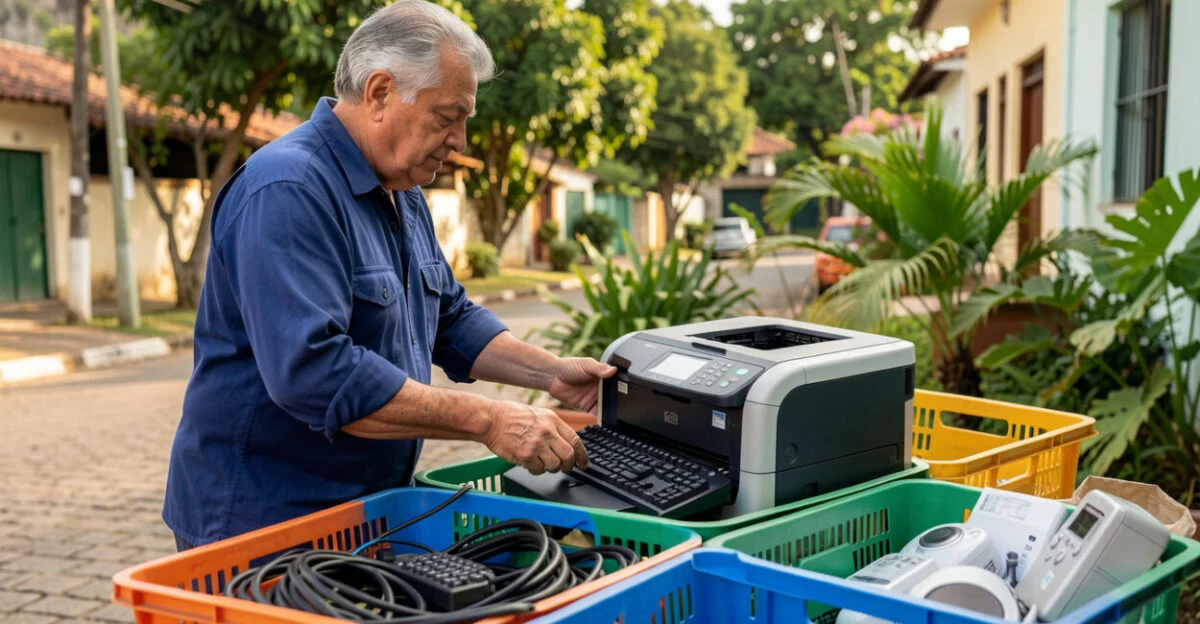
This category includes discarded equipment that requires electricity or electromagnetic fields to operate, such as cell phones, computers, printers, TVs, cables, keyboards, headphones, and small appliances. Batteries also need proper disposal, but they may have a separate collection stream and shouldn’t automatically be mixed in with whole devices.
Sort items by category. A charger and a keyboard are usually treated as small devices; a standalone battery may require its own container; and a refrigerator needs different transportation arrangements. Acceptance depends on the operator, the condition of the material, and local rules.
Where to dispose of electronics near you

To find an e-waste collection site, search by ZIP code or municipality using a reverse logistics program’s locator, then compare the results with information from your local government. The Green Eletron collection site locator is one option for finding locations affiliated with the program.
Before you go, contact the location directly to confirm that it accepts your specific item, takes broken devices, and check its hours. A locator may not reflect recent changes to a site’s operations. If searching for “where to dispose of electronics near me” doesn’t return clear results, try the municipality name, ZIP code, and device type, such as “batteries” or “computer.”
In São Paulo, check official city government channels using search terms such as “São Paulo city e-waste disposal” and confirm the rules for the listed address. In Salvador, check the Recicla Salvador service and see whether there’s an ecoponto (municipal drop-off site) that accepts electronics; the word “ecoponto” alone doesn’t guarantee that the site takes this material. To find out where to dispose of e-waste in Salvador, confirm the type of waste accepted and the site’s hours before you leave.
Collection sites and reverse logistics programs
Reverse logistics organizes the return of discarded products to the business sector for reuse or environmentally sound disposal. Green Eletron runs collection initiatives for electronics and batteries; ABREE also provides information about collection sites for electrical and electronic products. Check with the relevant program to confirm what each location accepts.
Type of waste Where to look What to confirm Cell phone, cable, keyboard, or small device Electronics collection site, such as those listed by Green Eletron or ABREE Whether it accepts that category, broken devices, and loose accessories Household batteries and portable batteries Dedicated collection bin or a site that says it accepts batteries Accepted types, battery condition, and packaging requirements Refrigerator, stove, or washing machine Reverse logistics program that collects large appliances or an authorized municipal service Pickup at your address, cost, whether an appointment is required, and how to prepare the item Waste not accepted by the site you checked Municipal service or another program that confirms it accepts the item Proper destination, hours, and any quantity limits
Schools can use activities about sorting materials and disposal to teach environmental education, provided collection is handled by an appropriate operator. There are also ideas for school recycling projects that help address the topic without turning the classroom into an improvised storage site.
A collection site is right for your waste only if it confirms the type of material it accepts, drop-off requirements, and receiving hours.
How to dispose of batteries and appliances
Don’t put loose batteries in just any electronics collection bin without confirming that it accepts them. CONAMA Resolution No. 401/2008, issued by Brazil’s National Environment Council, sets criteria for battery management and provides guidance on proper disposal. Check the text of the regulation on the National Environment Council (CONAMA) website and follow the collection site’s instructions.
If a battery is swollen, leaking, very hot, or punctured, don’t transport it with loose objects or try to open it. Keep it away from heat sources and ask the collection service how to package and drop it off. If there’s smoke or immediate danger, avoid handling it and contact the appropriate emergency service.
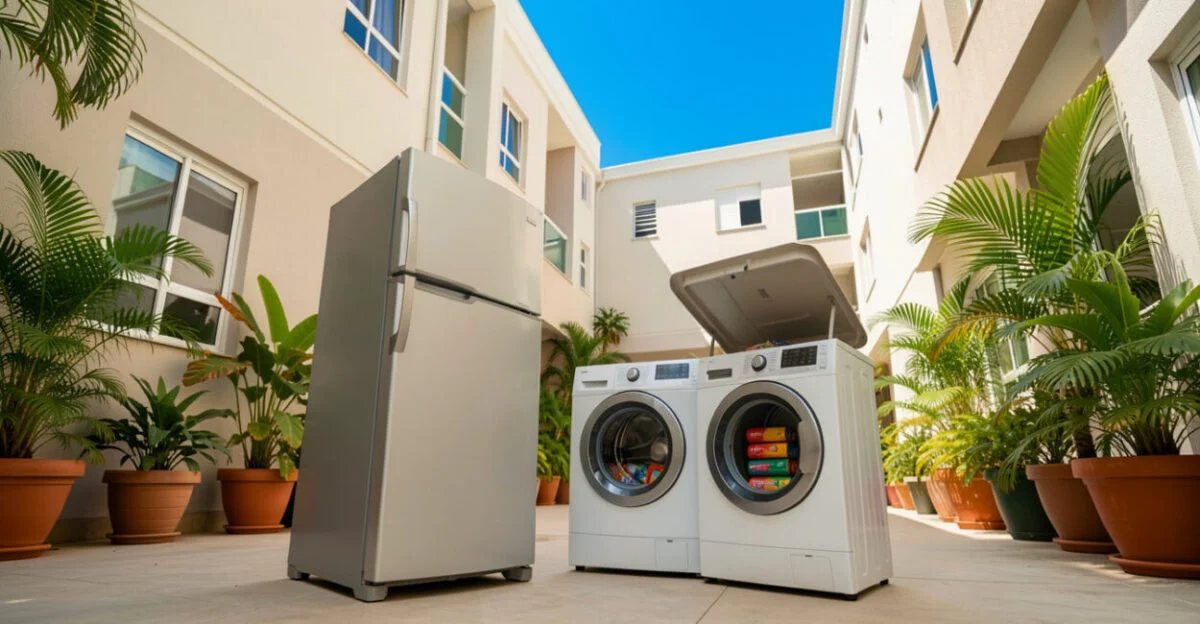
Large appliances may require a scheduled pickup, removal by an authorized crew, or drop-off at a location equipped to accept them. Don’t leave an appliance at the curb assuming it will be collected: arrange the service and ask whether it needs to be unplugged, emptied, or placed in a particular accessible area.
Is disposal free?
Drop-off at reverse logistics collection sites may be free, but there’s no single policy for every device and municipality. Home pickup of appliances may depend on the program, region, equipment type, and any transportation or service fees.
The rule is simple: if a site accepts small items but you need to get rid of a refrigerator, confirm whether pickup is available at your address and whether it costs anything before scheduling. General rules often fall short for bulky items because dropping something off at a collection bin isn’t the same as having it picked up at home.
For example, if a computer still works, you can erase its data and look for an organization that accepts donations instead of sending it straight to recycling. If it’s broken, confirm that a collection site accepts nonworking equipment. In either case, follow the collector’s specific instructions for any standalone battery.
Why you shouldn’t put electronics in the trash
Regular trash collection doesn’t provide the sorting needed to recover components or the handling required for certain materials. Batteries may pose risks if damaged or exposed to unsuitable conditions; whole devices can also be lost as a source of reusable materials.
Brazil’s Law No. 12,305/2010, which established the National Solid Waste Policy, sets guidelines for waste management and shared responsibility. The text is available in the federal legislation on solid waste. This doesn’t mean every municipal collection site accepts every type of electronics: acceptance still depends on the local service.
If a device is still usable, repairing, reusing, or donating it can extend its life. For other reuse and environmental education ideas, see these suggestions for creative recycling at businesses, as long as they don’t involve improvised disassembly of batteries or hazardous components.
Frequently asked questions
Do I need to remove the SIM card and memory card before handing in my phone?
Yes, remove the SIM card and memory card when possible. They may contain data or account information that won’t be erased when you reset the device.
Can I drop off cables and chargers with my phone?
It depends on the collection site. Some accept accessories, while others ask you to sort them by category. Check first so you don’t leave items outside the collection bin or without a proper destination.
Can a broken device still be sent for recycling?
In many cases, yes, but the site must accept nonworking equipment. Mention the problem when you contact the site, especially if the battery is damaged or shows signs of leaking.
What should I do if I can’t find a collection site nearby?
Check with your local government and reverse logistics program locators using your municipality, ZIP code, and item category. If you can’t confirm a service for that type of waste, keep it in a dry, safe place until you find an appropriate option; don’t leave it on the street or mix it with regular trash.
Artigos Relacionados
 Vertical Garden Supports: Compare Materials and Install Safely
 Home Composting: Feed Your Garden Without Waste
 Recyclable Packaging: 5 Choices That Cut Costs and Waste
 Sustainable Living at Home: 7 Swaps to Cut Waste
 How Petrobras Is Investing in Waste Treatment Today
 Creative Upcycling: Practical Ideas for Making Money from Waste
