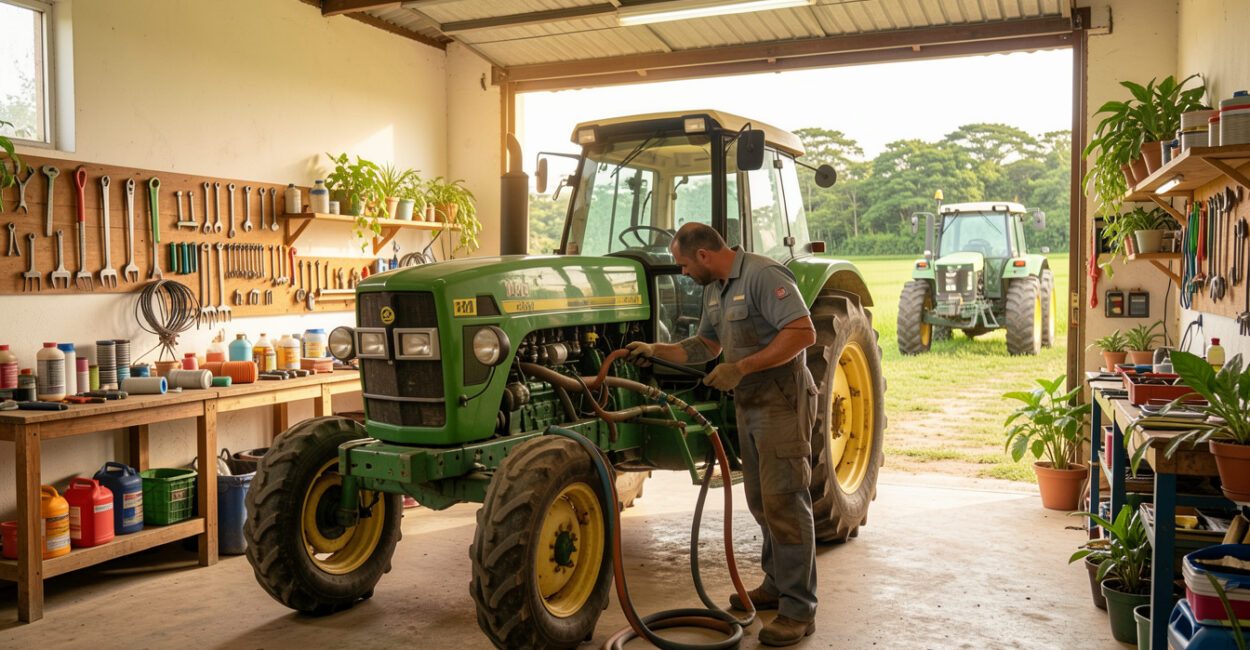
A cracked hose or clogged filter can bring work to a halt just when the crop depends on the tractor most. Tractor maintenance includes inspections, scheduled service, and monitoring for signs of wear to keep the machine available and safe. The right schedule depends on the model, hours worked, and operating conditions.
On the farm, the operator’s manual is the best guide: service intervals and specifications vary by engine and systems. A quick check before startup and another at the end of the shift can help catch changes early, but they do not replace an assessment by a mechanic when there is a malfunction or safety concern.

Why does tractor maintenance prevent farm downtime?
Preventive maintenance lowers the chance of unexpected failures by identifying wear, leaks, and contamination before they affect performance. It also supports safer operation and helps keep the tractor available during peak demand, though it cannot prevent every breakdown or predict every failure.
For example, an air filter clogged with dust can restrict airflow to the engine. If the machine runs that way for too long, performance may drop and fuel consumption or wear may increase. Frequent inspections let you address a small warning sign before it leads to downtime in the field.
This planning ties in with other farm management decisions, including equipment use, soil conservation, and scheduling fieldwork. For more on the subject, see our guide to sustainable farming practices.
A quick, regular inspection can reveal a problem before it brings fieldwork to a stop.
What are the types of maintenance for farm equipment?
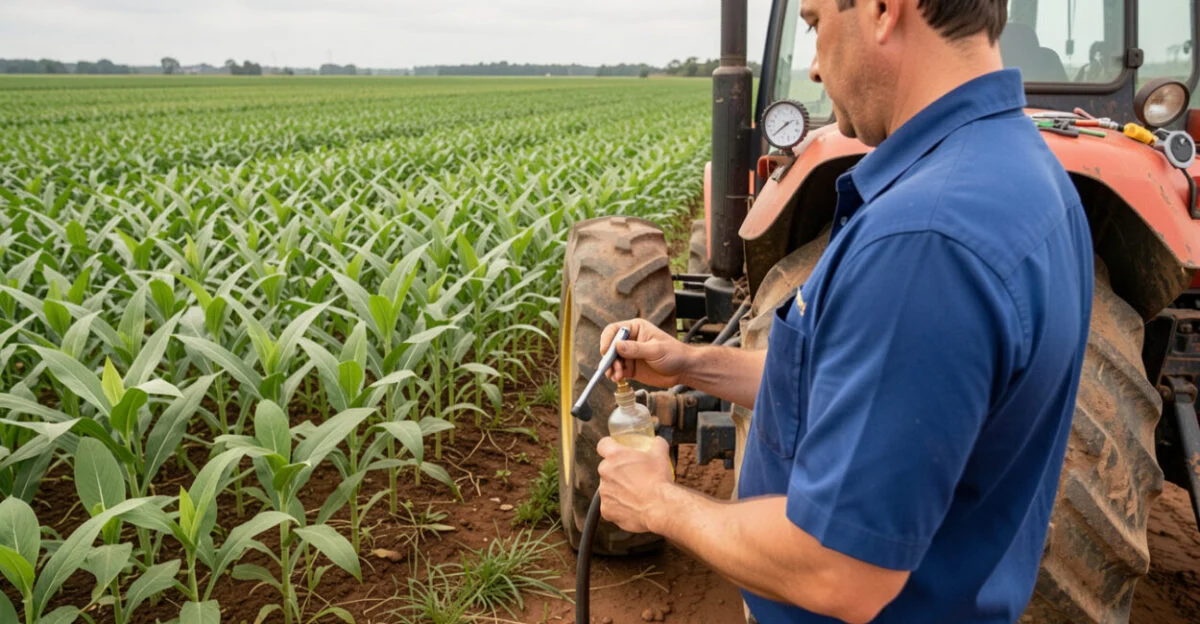
The main types are preventive, corrective, and predictive maintenance. Preventive maintenance follows scheduled intervals and tasks; corrective maintenance takes place after a failure occurs; and predictive maintenance uses condition data to estimate when a component may need attention.
Preventive maintenance includes tasks such as changing fluids and filters on the manufacturer’s schedule, checking tires, and looking for leaks. Corrective maintenance may involve repairing a broken hose or replacing a damaged part. Predictive maintenance may include oil analysis or monitoring temperature and pressure when the right equipment and technical support are available.
On a farm, these methods can work together. A daily check is preventive; a warning light or new noise may prompt predictive diagnostics; and a repair after a breakdown is corrective. Technical resources from SENAR, Brazil’s National Rural Learning Service, on operating and maintaining farm tractors can provide useful context, but the manual for your specific model remains the source for its specifications and service intervals.
What should you check before startup and at the end of the workday?

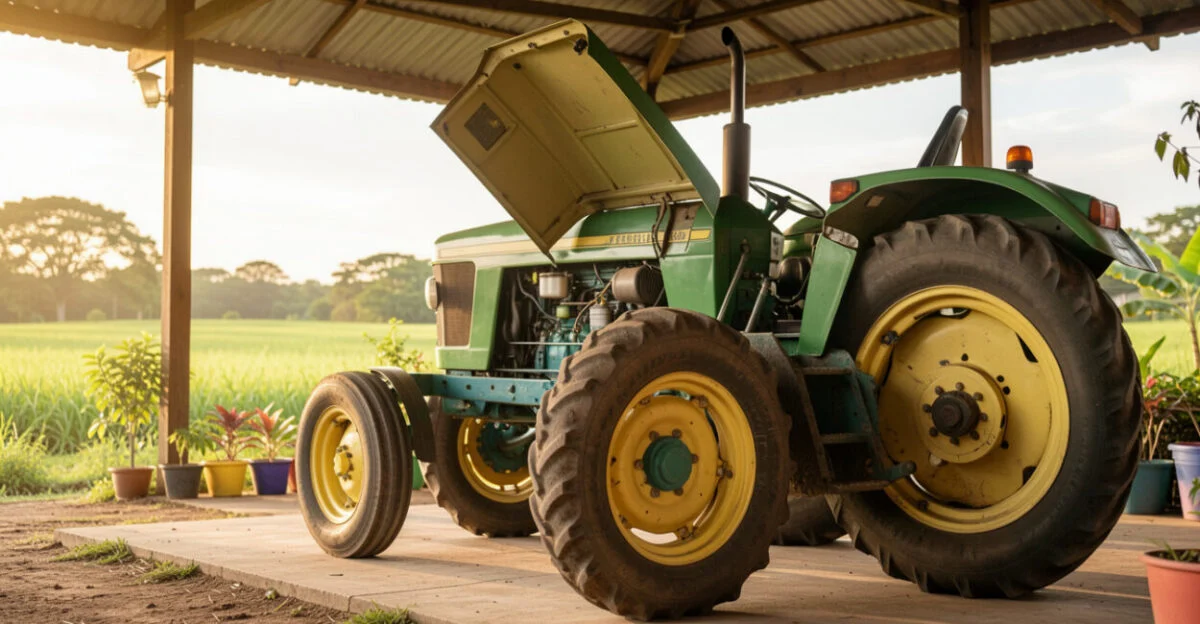
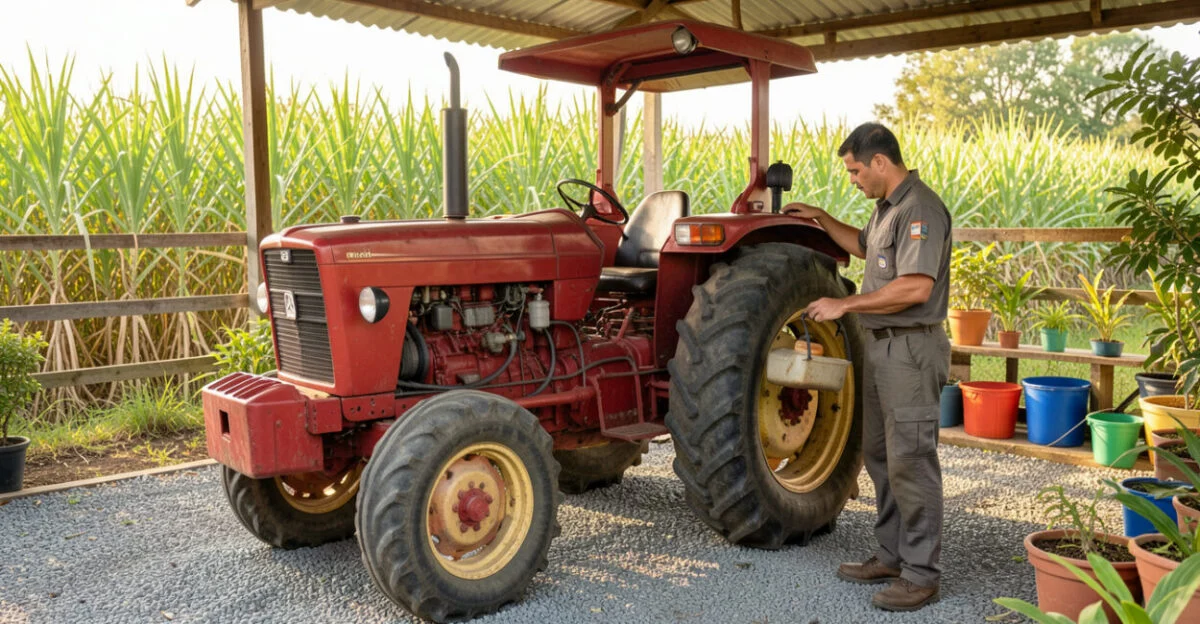
Before startup, check fluid levels and visible conditions, tires, accessible filters, and possible leaks. At the end of the day, remove debris and note any changes that occurred during operation. Inspect the tractor while it is parked in a safe location, with the engine off when necessary, and follow the manufacturer’s instructions.
- Look for oil, fuel, or hydraulic fluid leaks under the machine and around connections.
- Check the engine oil and coolant levels according to the manual.
- Look over the tires and wheels for damage; use the pressure recommended for the model and application.
- Check whether air intakes and accessible filters are clogged with straw or dust.
- After work, remove built-up dirt and plant material, especially near hot components.
- Note any unusual noises, smoke, dashboard warnings, or changes in how the tractor operates.
A common mistake is cleaning a filter element with compressed air without the manufacturer’s approval. The pressure or improper method can damage the filter material and allow particles into the engine. If the manual does not call for cleaning, follow its replacement instructions and ask for help if you’re unsure.
In Brazil, NR-12, a workplace safety regulation issued by the Ministry of Labor and Employment, sets safety requirements that apply depending on the equipment and situation. Consult Regulatory Standard No. 12 and the manufacturer’s instructions; inspections do not authorize work on hazardous components.
After how many hours should you change tractor oil?
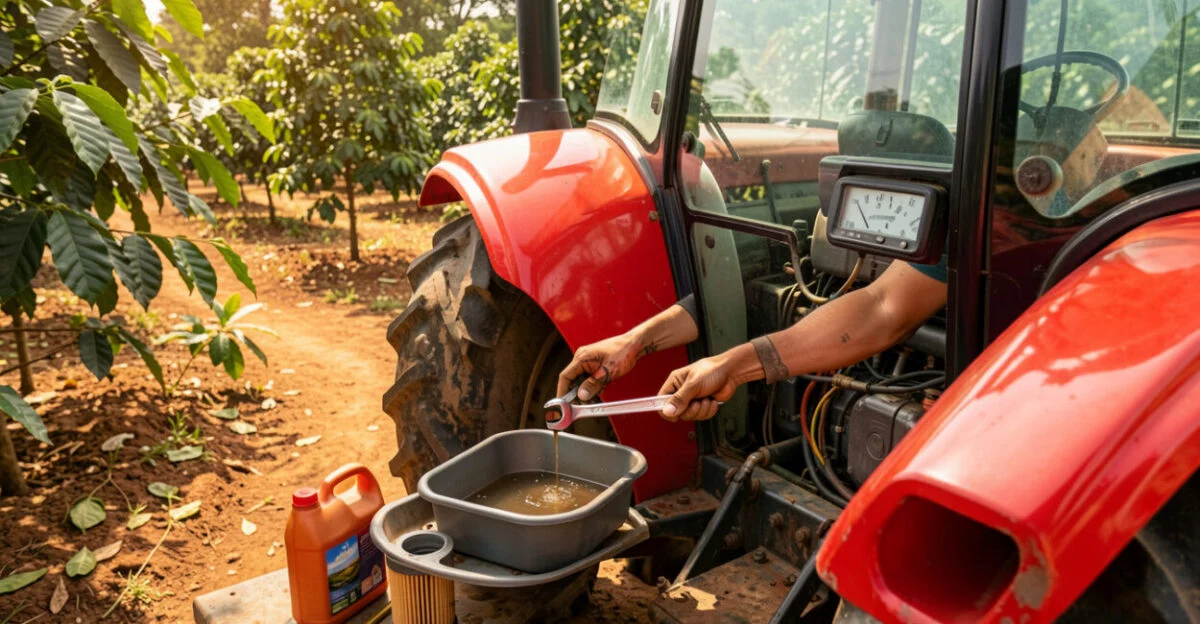
Change the oil at the interval specified in the manual for your model. The interval can vary depending on the engine, oil specification, and operating conditions. There is no universal number of hours that applies to every tractor: heavy dust, high loads, and extended operation may call for different maintenance than normal conditions.
Also check whether the manufacturer recommends changing the filter along with the oil, which specification to use, and how to account for elapsed time when the machine is used for only a few hours. The hour meter alone does not determine when service is due if the manual also sets a calendar-based interval or special requirements.
Item Frequency and notes Engine oil and filter Follow the hours or time interval in the manual; use the specified oil and check whether the filter should be changed at the same time. Air and fuel filters Inspect according to the manufacturer’s schedule; dust and contaminated fuel may call for more frequent attention. Transmission and hydraulic oil Follow the interval and fluid specifications for the model; do not mix products just because they look alike. Cooling system Check the level and condition according to the manual; replacement and additives depend on the manufacturer’s specifications. Tires, belts, and lubrication points Inspect at the intervals specified by the manufacturer and adjust your routine to the application and terrain.
This tractor maintenance table is a reference, not a fixed schedule. Manuals for brands such as John Deere and Valtra provide model-specific procedures; find the version that matches the model and serial number. Search terms such as “John Deere tractor manual PDF,” “Valtra tractor manual PDF,” or “farm tractor maintenance PDF” may help you find resources, but verify the source and compatibility before following any instructions.
What maintenance do the engine, transmission, hydraulics, and cooling system need?
For the engine, monitor the oil level and condition, temperature, smoke, and unusual noises. For the transmission and hydraulic system, watch for leaks, irregular operation, and dashboard warnings. For the cooling system, monitor the temperature and check the level only by following the safe procedure specified by the manufacturer.
Rising temperatures under load can have several causes, including an externally clogged radiator or a failure in another component. Never open the cap when the system is hot: pressurized coolant can cause burns. Let the system cool and follow the manual. If the warning persists, stop in a safe location and call for service.
Do not improvise repairs on pressurized systems, electrical components, or moving parts. Agricultural technology on the farm can make it easier to track alerts and operating hours, but sensors and apps complement inspections and technical diagnostics—they do not replace them.
How do you adapt the schedule to the model and operating conditions?
Start with the manufacturer’s maintenance plan and increase inspection frequency when conditions are more demanding than those assumed for the standard intervals. Dust, heavy loads, uneven terrain, long periods at low speed, and seasonal use can affect wear and how often you should check filters, tires, and leaks.
If the tractor works in dry soil and kicks up a lot of dust, pay closer attention to the intake system. When using implements that put heavy demands on the hydraulics, watch for signs of overheating, loss of power, or leaks. During periods of limited use, record the date and follow the manual’s recommendations for storage and returning the tractor to service.
Recommendations vary by model and version, even within the same brand. Don’t automatically apply one tractor’s service interval to another. Resources on education and family farming can help with organizing farm work, while model-specific procedures should come from the manual and qualified professionals.
How do you track costs and when should you call a mechanic?
Record each service with the date, hour-meter reading, part or fluid used, work performed, and next recommended service. To calculate the cost per operating hour, add the expenses assigned to the tractor for the period and divide by the total hours worked during that same period. Clearly state which costs are included.
For example, if a hypothetical record shows $1,000 in included expenses and 100 hours of use during the period, the calculation is $1,000 ÷ 100 = $10 per hour. This is just an example: the calculation may include or exclude fuel, labor, depreciation, and repairs, depending on the purpose of the spreadsheet. A farm equipment cost-per-hour spreadsheet should clearly state these criteria so you can compare periods.
How much does a farm equipment mechanic earn?
Pay varies by region, experience, employment arrangement, specialization, and the type of equipment serviced. To evaluate an offer, check current local market data and compare similar roles and benefits; a salary figure without that context can be misleading.
How much does it cost to rent a tractor by the hour?
The rate depends on the region, task, horsepower, machine condition, fuel, operator, travel, and maintenance costs. To set or evaluate a rate, spell out what’s included and compare services with a similar scope instead of relying on a universal figure.
Call a mechanic if a warning persists, the tractor loses power, overheats, has a significant leak or new noise, or needs work that involves opening systems or disassembling components. If there is a safety risk, stop operating according to the manufacturer’s procedure. Preventive maintenance does not replace expert diagnostics or authorize repairs beyond the skill level of the person performing them.
Key takeaways on tractor maintenance
Question Quick answer How can you reduce downtime? Inspect regularly, record changes, and follow the manufacturer’s maintenance plan. What are the types of maintenance? Preventive, corrective, and predictive; they can be used together. When should you change the oil? At the interval and with the specification listed in the manual for your model. How should you adapt the plan? Consider the model, dust, load, terrain, seasonality, and operating conditions. When should you call for service? If a warning persists or there is a significant leak, overheating, or malfunction.
Your next step is to find the operator’s manual for your model and add hour-meter-based maintenance tasks to the farm calendar, along with checks at the start and end of each shift. If a procedure is unclear or involves a safety risk, stop and get qualified help.
Frequently asked questions
What should a maintenance log include?
Record the date, hour-meter reading, work performed, parts and fluids used, person responsible, and next inspection. Consistent records help you spot recurring issues and plan machine availability.
Can I use the same oil in every tractor on the farm?
Only if the oil meets the specifications required by each manufacturer for the relevant systems. Viscosity alone does not confirm compatibility with the engine, transmission, or hydraulic system.
Can SENAR materials replace the tractor manual?
No. SENAR resources can support training in farm tractor operation and maintenance, but you should confirm specific intervals, fluids, and procedures in the manufacturer’s manual.