
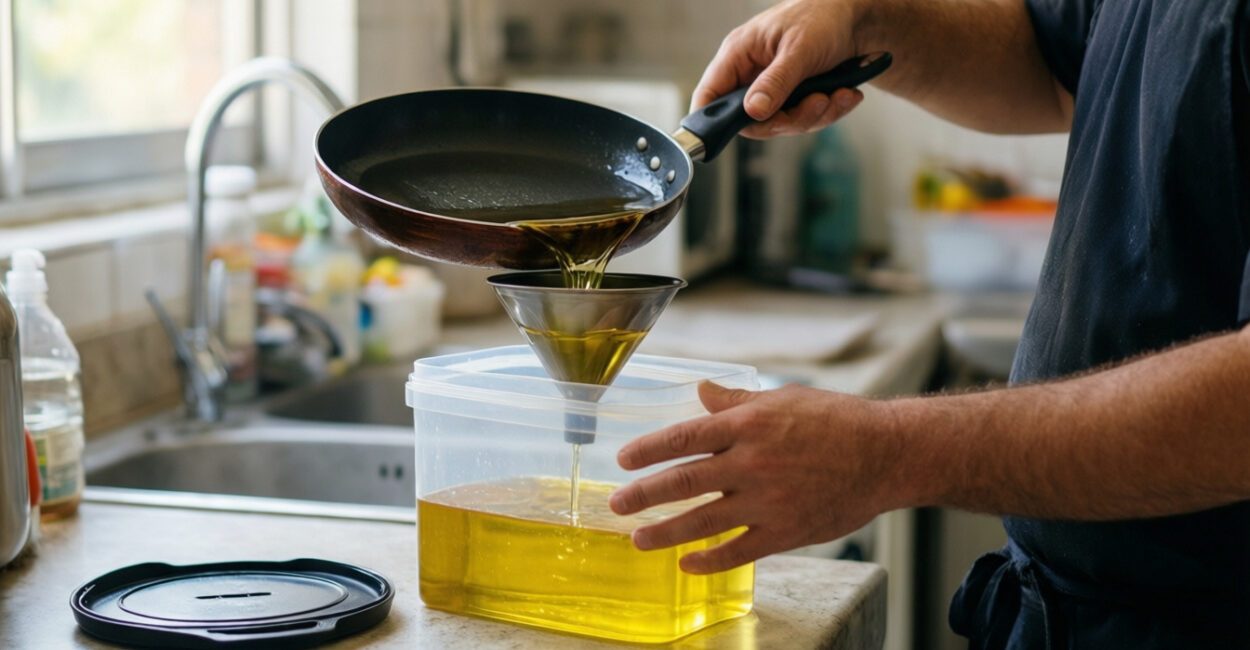
How to dispose of used cooking oil properly
After frying, waiting a few minutes and using a sealed container can make a difference: where the oil goes next depends on your city’s collection rules.

Used cooking oil disposal starts with a simple step: let the oil cool, pour it into a sturdy container, and seal it tightly. Then check with your local recycling program or a municipal drop-off site to find out where to take it.
Don’t pour oil down the sink or flush it down the toilet. The same guidance applies to olive oil: being plant-based or more expensive doesn’t make it safe for your plumbing. The right disposal option may vary from one city to another, so check local rules before heading out.
Used cooking oil disposal: what to do after frying
To dispose of used cooking oil, let it cool completely, store it in a sturdy, tightly sealed container, and take it to a drop-off site or collection service that accepts it. Don’t pour oil down the sink, into a drain, or down the toilet.
This sequence helps avoid the most common mistake: trying to get rid of oil while it’s still hot or liquid and ending up pouring it down the drain. Brazil’s Ministry of the Environment and Climate Change (Ministério do Meio Ambiente e Mudança do Clima) recommends proper waste disposal; your municipal sanitation service or a local collection organization can tell you where and how to drop it off.
First, cool it; then store it; finally, confirm where to take it. There’s no need to buy special equipment. A clean household container may work, as long as it’s sturdy, seals tightly, and is accepted by your local program.
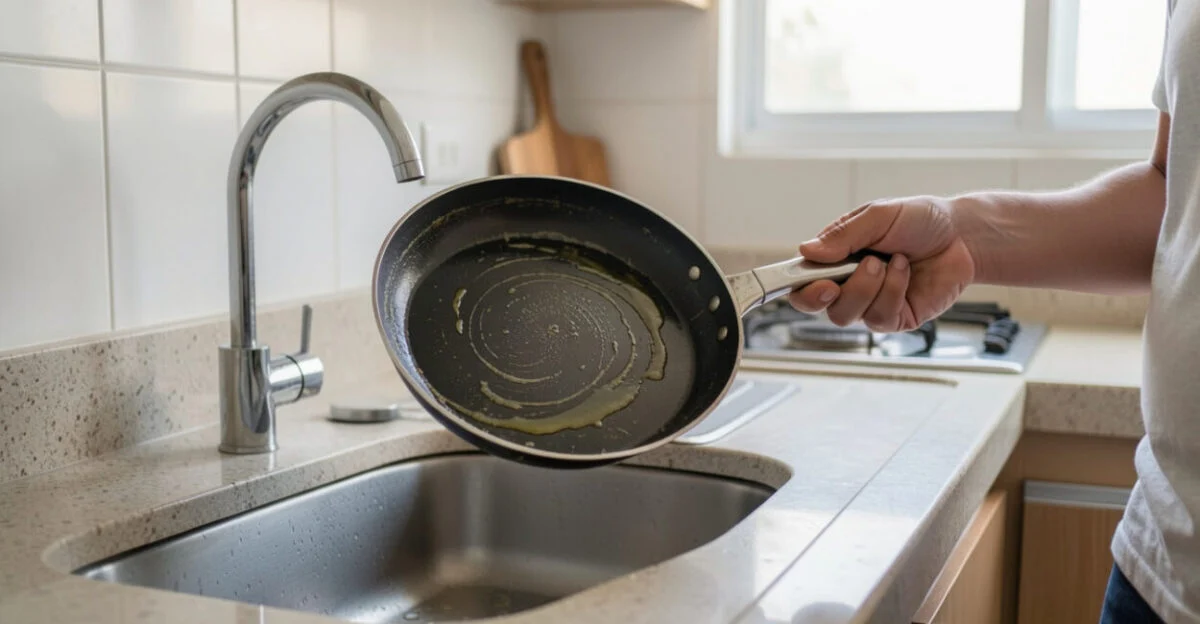
The belief that a little oil disappears down the drain
A spoonful or the residue in a frying pan may seem like a small amount. But grease can stick to the inside of pipes and contribute to clogs. The effect depends on the plumbing system, the amount of oil, and other waste; it doesn’t mean every pour will cause an immediate blockage.
Imagine someone washing a frying pan in the sink to “get just the excess off.” Water carries some grease down the drain, but that doesn’t mean it disappears from the system. Over time, buildup can slow drainage and increase the need for maintenance.
Your local water and sewer utility can explain the recommended precautions for your area’s system. Proper disposal helps keep grease out of the pipes, but it won’t solve sewer problems on its own, since those have many causes.
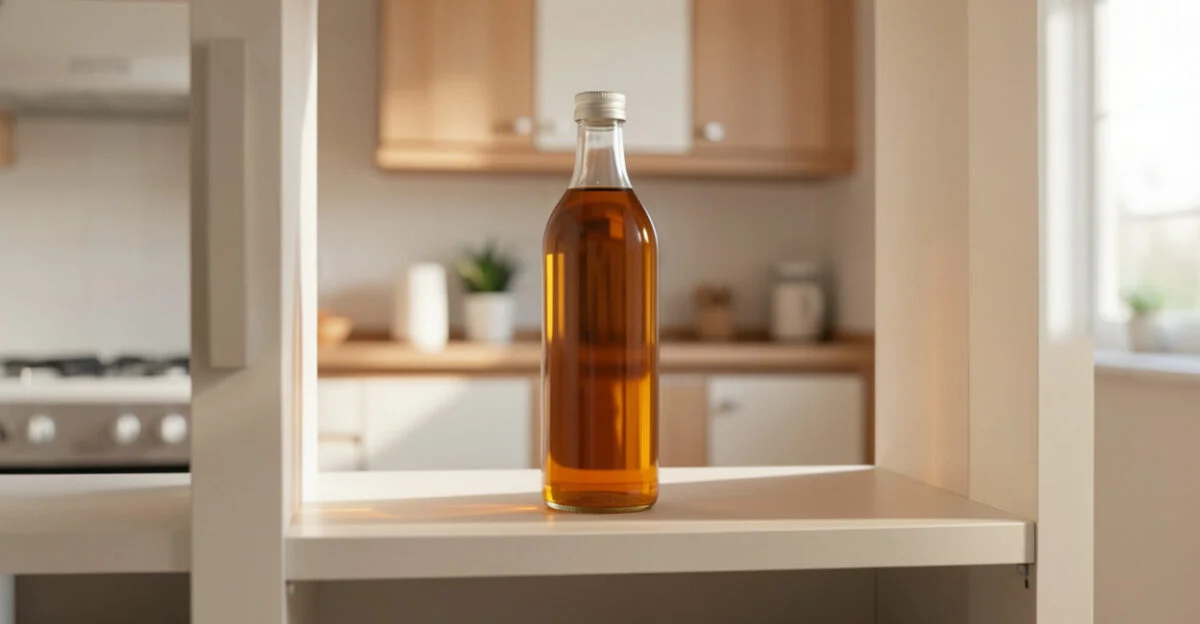
How to store oil until you find a drop-off site

Let the oil cool before transferring it. Store it in a sturdy bottle or container with a secure lid, and keep it somewhere safe, away from heat and out of reach of children and pets.
- Don’t pour in hot oil: besides posing a burn risk, it may warp containers that aren’t designed for it.
- Don’t mix water, food scraps, or other liquids into the stored oil.
- Close the lid tightly and wipe the outside if there are any spills.
- Check whether the drop-off site accepts that type of container and whether it has a quantity limit.
One tip to keep your kitchen clean: let food particles settle before transferring the oil, but don’t leave the container open for long. Disposal guidelines may differ for other household waste, such as electronic devices.
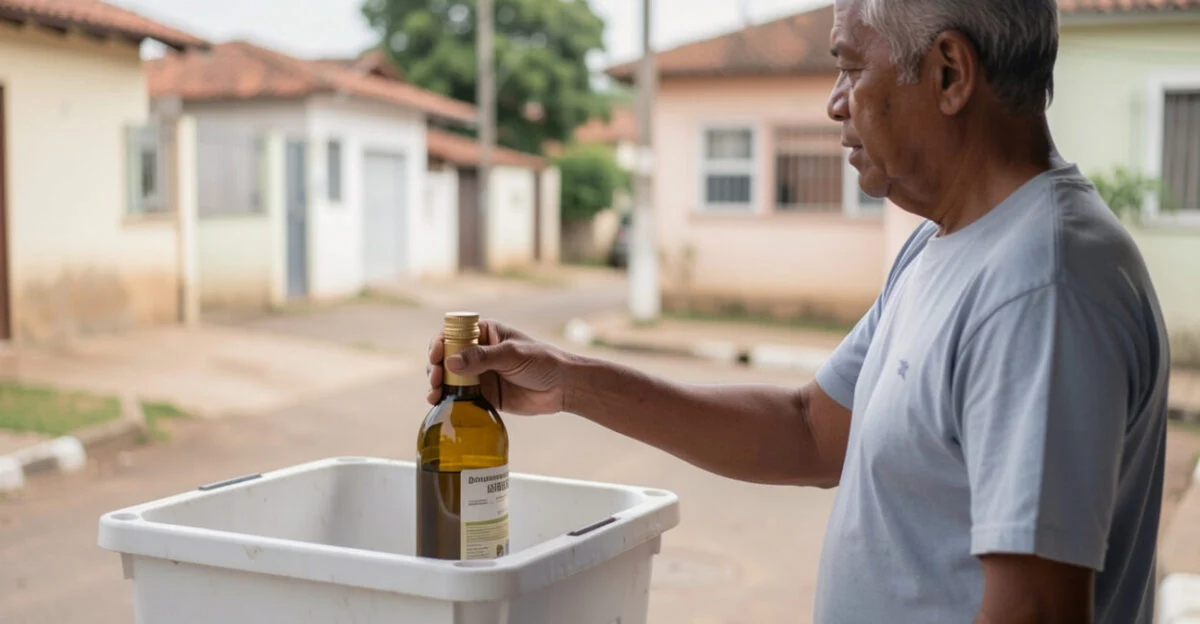
Can olive oil be poured down the sink?
No. Used olive oil can also leave grease residue in pipes; its plant-based origin or price doesn’t change that recommendation. Let it cool, store it in a sealed container, and check whether your local program accepts it along with frying oil.
If there’s a small amount left in the container, don’t use the sink to get rid of it. Your local water and sewer utility may have specific instructions, but the safest advice is not to pour oil or olive oil down a drain or toilet.
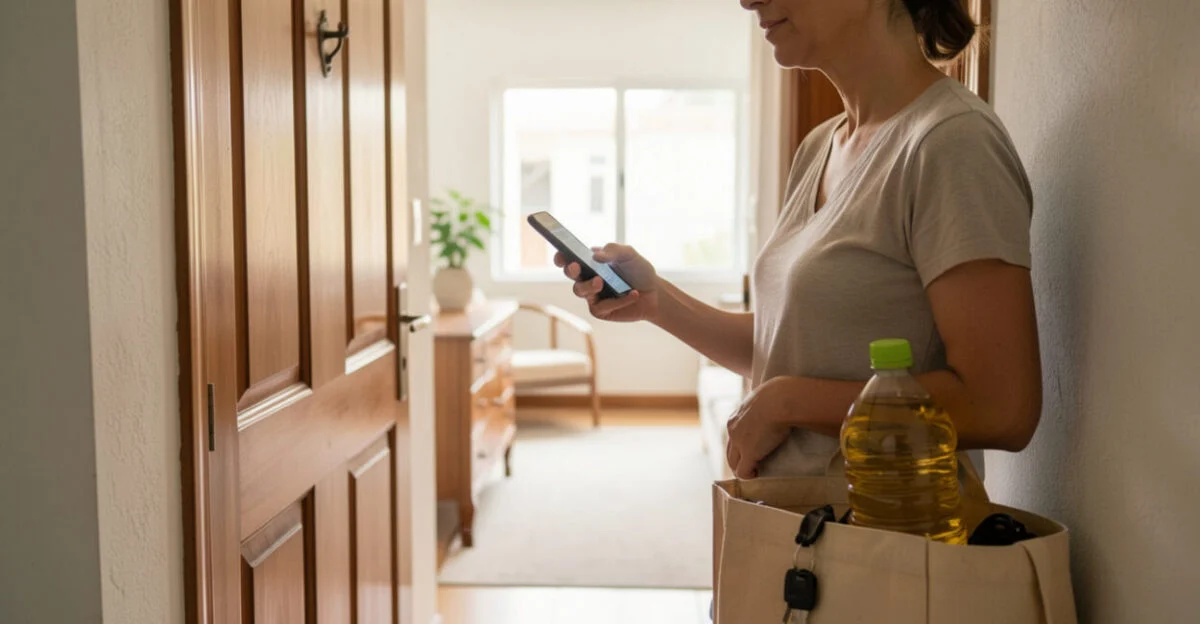
How much is a liter of used oil worth, and who accepts it?
There’s no set nationwide price per liter. The value and whether it’s accepted vary by location, quantity, oil quality, and program rules; some programs take it without paying for it.
Check your city government’s website or official channels, as well as local cooperatives and collection organizations. Before taking the container in, confirm the address, hours, accepted containers, and drop-off requirements. That way, you can avoid a wasted trip or having your oil turned away.
Where the oil goes depends on local programs
Used oil can be reused as a raw material, but what happens to it depends on the program that collects it and the quality of the oil. Don’t assume every collection program turns it into the same product; ask the organization that collects it what happens next.
Curbside recycling, a drop-off site, and a local organization may all have different procedures. In general, choose an available option that clearly explains what it accepts and how to drop it off. Proper waste management is also part of the conversation about sustainable cities, although one household habit can’t replace sanitation and collection policies.
Option What to confirm Municipal collection Whether it accepts oil and on which days or at which locations. Drop-off site Address, hours, accepted containers, and quantity limits. Local cooperative or organization Whether it accepts household oil and how it should be stored.
The habit that helps prevent improper disposal
Choose a container for your used oil and keep it somewhere easy to remember. When it’s full, check the drop-off requirements before taking it in. This simple routine is more reliable than trying to decide what to do in a hurry with a frying pan still in your hand.
For general waste guidance, consult Brazil’s Ministry of the Environment and Climate Change (Ministério do Meio Ambiente e Mudança do Clima). For specific instructions on used oil, the most useful information usually comes from your municipal service or the organization that actually accepts it.
Frequently asked questions
Can I put used oil in the regular trash?
There’s no one-size-fits-all answer: follow your local service’s guidance and first look for a collection option that accepts oil.
Do I need to filter the oil before storing it?
Rules vary. Don’t mix it with water or food scraps, and check with the collection program to see whether filtering is required.
Can I combine oil from multiple frying sessions?
Yes, as long as it’s cool and stored in a sealed container, without water or other liquids.
Does the drop-off site accept any amount?
Not necessarily. Some programs may have limits or other requirements, so check before bringing in your container.
Artigos Relacionados
 How to Plan the Purchase of Used Farm Equipment
 E-Waste: How to Dispose of Electronics Safely
 Graywater Reuse at Home: Safety and Options
 Greenwashing: How to Spot Misleading Environmental Claims
 Pollinator Garden: How to Attract Bees and Butterflies
 Biological Pest Control: Protect Your Vertical Garden Naturally
