

How to build a study routine for busy adults without waiting for the perfect week
Studying after work can fit into a busy schedule when your plan allows for short blocks, unexpected events, and low-energy days.
A study routine for adults doesn’t have to start with free hours that may never appear. Start by choosing one priority, setting aside realistic blocks during the week, and defining a minimum version for difficult days. That way, an unexpected commitment won’t turn the whole plan into a debt.

This method combines realistic planning with a way to get back on track: if you miss a session, you know what to do next. It may seem like a small idea, but it changes your relationship with studying, which no longer depends on a perfect week to continue.
Set a priority before filling your calendar
A sustainable study routine is a recurring plan that connects a learning goal with tasks, schedules, and ways to get back on track that fit a person’s life. In simple terms, you decide what comes first and what concrete action to take next. “Learn English” or “advance my career” are broad goals; they provide direction but don’t tell you what to do this week. Turn your priority into an observable task, such as reviewing a topic, completing exercises from a unit, or watching a lesson and writing down questions.
Choose one main priority at a time, and write down the next task starting with a verb. If you’re studying for a new qualification, this guide to professional development courses that can boost your career may help you make that decision.
Find blocks of time that already fit into your life

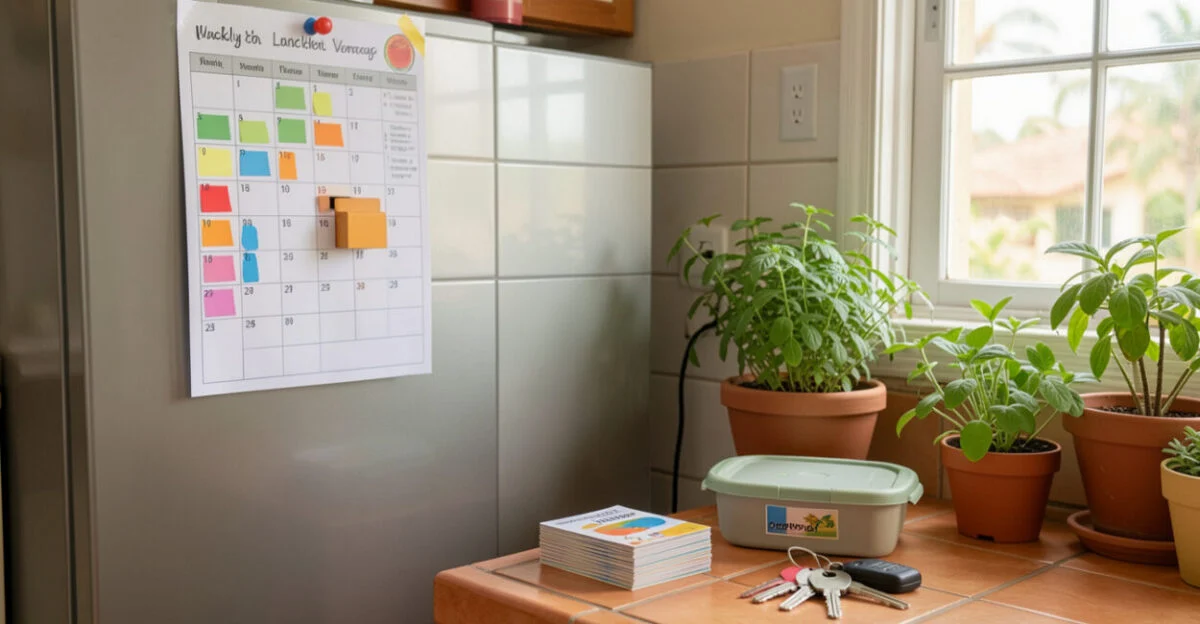
Instead of looking for an ideal time, take stock of your fixed commitments and the times when you tend to have more energy. A short block can work well for a clearly defined task; it doesn’t have to cover an entire chapter or wrap up a whole subject. Before scheduling sessions, ask yourself:
- Which commitments during the week are fixed?
- When do you usually have the most energy?
- Is there a recurring break that could fit a small task?
- Which block could you reschedule if something unexpected comes up?
A lunch break might work for reviewing flashcards, while a longer stretch at home could be set aside for exercises. If your morning routine is already predictable, consider how to organize the first part of your day without assuming that everyone does their best work early.
Read also: Study Routine for People Who Work and Study for the ENEM
Build a weekly plan with a minimum and a full version
The full version sets aside time to make progress; the minimum version helps you stay consistent when the week gets busy. Choose a duration that fits your schedule and energy instead of treating a fixed number of minutes as a universal rule.
Day Scheduled block Task Alternative Monday After dinner Study one topic Read a summary Wednesday Available break Complete exercises Review one question Saturday More open time Review the week Write down questions to revisit
Read also: How to Read More and Maintain the Reading Habit
These days are examples, not a prescription. Adjust them to your circumstances and be clear about what counts as the minimum. The idea of breaking a task down into one small step can also help on days when getting started feels especially hard.

Choose tasks that work in short sessions
Reviewing notes, answering questions about the material, and completing a few exercises are tasks you can keep to a defined scope. Reading can also fit into a short block if you set a goal, such as identifying the main idea of a section.
A study by Dunlosky and colleagues, published in Psychological Science in the Public Interest, compares learning techniques and identifies retrieval practice and spaced review as useful strategies. They won’t guarantee the same results for everyone, but they’re good reasons to include questions and spaced reviews in your plan.
A short session can accomplish a specific task without having to “cover” the entire subject. To learn more about how education and skills relate to adult life, see the OECD Skills Outlook 2023 report and UNESCO’s GRALE 5 report on adult learning and education.
Missed a day? Pick up with the next block
If you miss a session, get back to it at the next scheduled opportunity and choose a small task. Trying to make up all the lost material at once often overloads your schedule and can push studying off until later again.
A missed day calls for a clear next step, not a week of punishment.
Write down that next step before you put your materials away: “open the lesson and answer the first question,” for example. When you return, you won’t have to spend energy deciding where to start. If you’re having trouble staying focused, it can help to understand the causes of procrastination and ways to address it without turning every delay into a reason to feel guilty.
Review your routine and adjust what isn’t working
Once a week, check three things: whether the blocks fit your schedule, whether the tasks were clear, and whether the workload matched your energy. If you keep missing the same time slot, try another one; if a task felt too big, break it up.
The plan should work for you, not the other way around. Adult life may involve shift work, family caregiving, or unusually demanding weeks, so the right frequency depends on your circumstances and may vary. A flexible routine keeps the way back to studying open.
Frequently asked questions
How do I get back to studying after a long break?
Start with a small task and one priority at a time. Before increasing your workload, consider which times and formats are sustainable for you right now.
Can I study while working rotating shifts?
Yes. Instead of sticking to the same days and times, plan flexible blocks around your work schedule and choose a minimum task you can complete during an available window.
How long should I study each day?
There’s no universal amount of time. Consider your energy, the type of task, and the consistency your week allows.
What should I do if my weekly plan keeps falling apart?
Reduce the number of blocks or make the tasks smaller and more specific. If your chosen time is often interrupted, switch to a more predictable window.
Artigos Relacionados
 An Effective Study Routine for Busy Moms
 A Reading Routine at Home: How to Build the Habit Without Pressure
 Weekly Schedule: How to Build Your Study Plan
 School Routine: 7 Steps to Study Without Arguments at Home
 An At-Home Study Routine: Schedules That Actually Work
 Reading at Home and Family Engagement: Build Routines, Choose Books, and Motivate Kids to Improve Reading Habits and School Performance
