
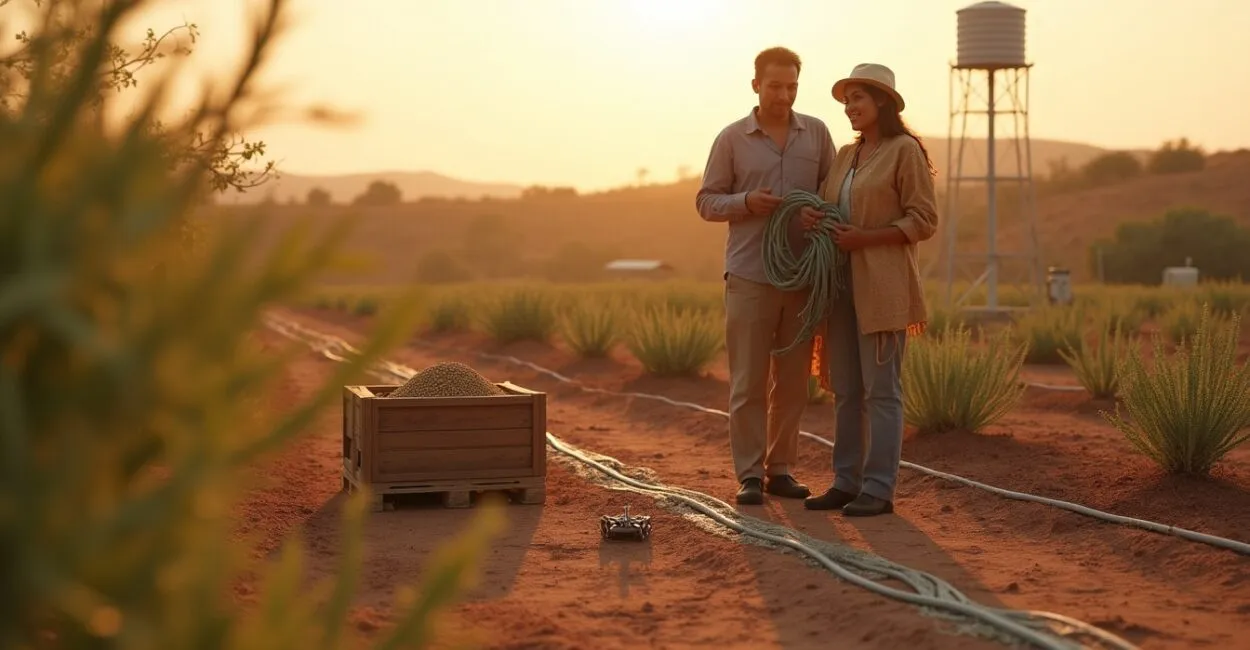
These are nontraditional production systems used in regions with limited water resources. They combine resilient species, conservation practices, and low-cost technologies. This straightforward technical definition helps guide crop choices and market selection, supporting informed choices.
Alternative crops are gaining importance because they can be profitable on poor soils and in unpredictable climates, though they require efficient irrigation practices and climate risk analysis. The challenge is balancing economic viability with environmental sustainability in semiarid settings.

Key Takeaways
- Choosing improved local varieties reduces the risk of crop failure and improves water-use efficiency.
- Integrating crops, livestock, and forestry makes systems more resilient and creates multiple income streams.
- Drip irrigation and soil monitoring are essential for scaling crops with financial returns.
Alternative Crops in the Semiarid Region: An Overview
Analyzing alternative crops in semiarid regions requires understanding the climate, soil profile, and local value chains, as well as evaluating management technologies adapted to water stress. I’ll discuss species selection, conservation practices, water management, and marketing models that influence economic viability and social impact.
Choosing Resilient Species
I’ve found that choosing resilient species involves analyzing their growth cycles and drought tolerance, including short growing seasons and deep roots. This approach reduces losses and increases the likelihood of a financial return in dry years. Experience shows that native varieties and adapted hybrids offer greater stability. In my view, genetic banks and technical consulting can speed adoption and improve production outcomes.
Using clear agronomic criteria helps prioritize cultivars with efficient water use and pest resistance. The result is lower operating costs and more predictable harvests.
Conservation Soil Management
My approach emphasizes keeping the soil covered and minimizing tillage to conserve moisture and organic matter, benefiting alternative crop systems by reducing water stress. These measures also protect soil from erosion. Technical data show that mulch improves water infiltration and creates a more favorable microclimate. In my experience, the benefits include better conditions for seedlings and less need for frequent irrigation.
Practices such as terracing and no-till farming require planning and technical oversight, but they can boost yields. Over time, they make farms more resilient to climate variability.
Irrigation Systems and Water Efficiency
I believe drip irrigation, soil moisture sensors, and adaptive automation can make alternative crops more viable by reducing waste and energy costs. Simple technologies are often best for local adoption at scale. Technical research indicates that microsprinklers and drip systems reduce water use. In my view, field data and remote monitoring support more precise, cost-effective management decisions.
Irrigation infrastructure investments should be evaluated based on cost, benefits, and payback period, taking available subsidies and credit lines into account. This directly affects the ability to expand cultivated areas.
Business Models and Marketing
Developing business models for alternative crops involves analyzing local markets, cold chains, and reverse logistics, as well as certifications that add value. I’ll also cover strategies for pooling production and using purchase contracts that benefit small-scale farmers.
Strategies for Market Access
I’ve found that cooperative marketing makes it easier to reach institutional buyers and reduces transportation costs, improving margins for alternative crops. Pooling supply also strengthens negotiations with larger buyers. In my experience, investors and distributors look for suppliers who can guarantee quality. This preference encourages standardization and traceability practices that increase the value of the finished product.
Marketing plans should identify niche markets and differentiators, such as value-added products or local certifications. This can boost competitiveness and help stabilize prices for growers.
Adding Value Through Certification and Origin
I’ve observed that sustainable production certifications can raise prices and open up more sales channels, making them valuable for alternative crops aimed at premium markets. Certifications can also open doors to exports. Market research shows that buyers prefer products with traceable origins. In our work, origin has helped secure recurring supply contracts and build stronger customer loyalty.
Certification requires upfront costs and training, but can pay off by providing access to higher-value markets. This dynamic favors organized growers who can scale up compliance.
Financing and Crop Insurance
I’ve found that specialized credit lines and index-based insurance reduce financial uncertainty for those investing in alternative crops, making it possible to acquire technology and water infrastructure. Public policy directly affects viability. Experience shows that partnerships with public and private institutions can speed up farm modernization. In my view, technical extension programs combined with financing produce better results in the field.
Risk mitigation tools support long-term planning and scalable investments. This creates the conditions for a transition to more economically resilient systems.
Plant Health and Postharvest Management

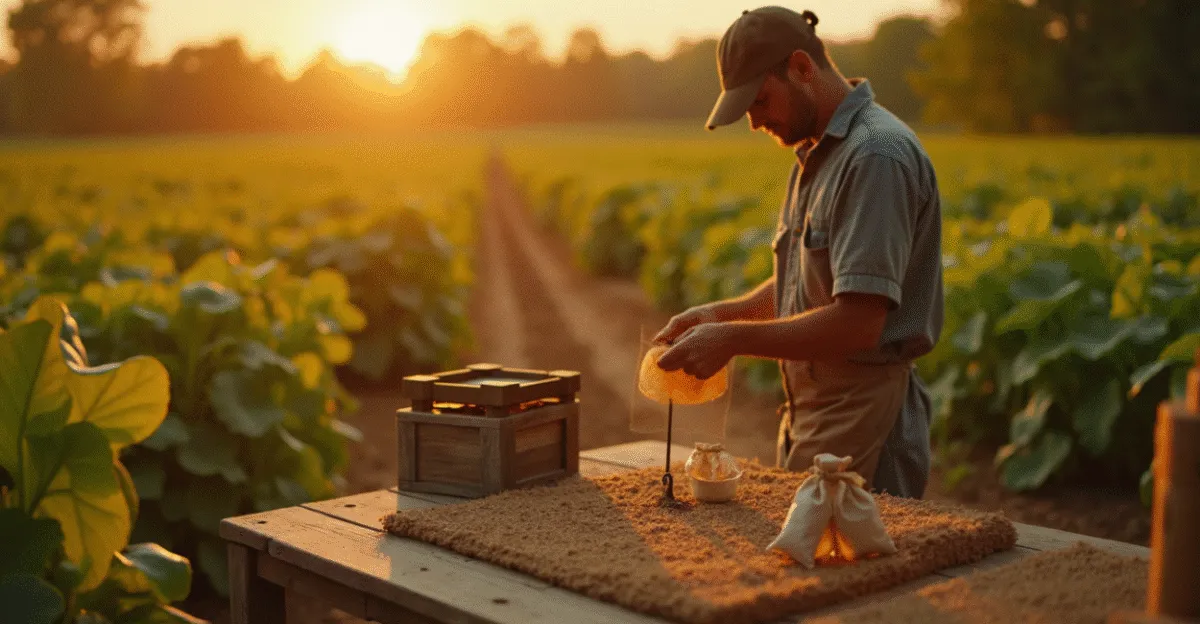
Plant health management for alternative crops requires ongoing monitoring, crop rotation, and integrated biological control to reduce dependence on agrochemicals. Postharvest management is just as critical for maintaining quality and market value.
Monitoring and Integrated Management
I’ve found that monitoring pests with traps and identifying them early reduces chemical applications and protects beneficial organisms, supporting more stable alternative crop systems. Preventive techniques improve efficiency. In my work, crop rotation and physical barriers have proven effective. In my view, these measures reduce pest pressure and control costs.
Integrating crop production with biological management requires training and technical support. The expected results are fewer pest outbreaks and a more sustainable production system.
Processing and Value-Added Products
My experience suggests that basic processing, such as drying and proper packaging, extends shelf life and increases the final price of products from alternative crops, reducing losses and opening up new markets.
Operational data show that investments in small processing facilities pay off by reducing waste. In my view, this integration strengthens local supply chains. Planning postharvest steps around quality standards requires attention to logistics and food safety requirements, resulting in competitive, certified products. The result is greater buyer confidence.
Managing Resistance and Diversifying
From a technical and analytical standpoint, I recommend genetic diversification and crop rotation to reduce resistance to pesticides and pathogens, protecting alternative crop systems from evolutionary pressure. This helps preserve productivity over time. Field observations show that intensive monocultures accumulate plant health problems. In my view, diversifying species and management practices reduces risk and improves economic stability.
Preventive strategies require planning and technical support, but promote sustainability. Their impact is clear in lower control costs and sustained productivity.
Comparing Crops and Economic Indicators
Comparing crops by yield, input costs, and financial returns helps prioritize options for semiarid regions, including forage cactus, other cacti, oilseeds, and forage legumes. I’ll present comparative indicators and economic considerations to support technical decisions.
Cost-Benefit Analysis by Crop
I’ve found that each crop has a different mix of fixed and variable costs, affecting payback periods and risk. Evaluating expenses for irrigation, inputs, and labor is essential to projecting operating margins for alternative crops. Economic models show that short-season crops can recover investments more quickly. In my view, matching demand with production capacity reduces seasonal fluctuations in revenue.
Robust financial analysis requires data collection and scenario modeling, giving investors and growers a clear basis for decisions. The result is more objective decision-making.
Crop Comparison Table
| Crop | Average Yield | Production Cost |
|---|---|---|
| Forage Cactus | 15 t/ha/year | Low |
| Fodder Cactus | 12 t/ha/year | Medium |
| Peanuts | 2 t/ha/year | Medium-High |
The table summarizes differences in yield and cost, providing a comparison to help prioritize alternative crops. It brings together economic and agricultural data to support informed decisions.
Risk and Return Indicators
In my assessment, key indicators such as return on investment, price volatility, and climate sensitivity determine how attractive alternative crops are. These measures guide capital allocation and insurance choices. Industry studies show that greater diversification reduces income risk. In my experience, a balanced mix of crops improves farms’ financial resilience.
Building conservative and optimistic scenarios supports realistic planning and cash flow management, affecting the ability to expand and secure credit.
Technology and Practical Innovation
Low-cost technologies and digital innovations are transforming alternative crop management through remote monitoring, weather forecasting, and irrigation optimization, reducing operating losses. I’ll explore accessible, scalable tools that improve decision-making.
Sensing and Telemetry
I’ve found that soil moisture sensors and weather stations provide crucial data for adjusting irrigation schedules, reducing water waste and energy costs while improving operational efficiency for alternative crops. Data quality determines how precise management decisions can be. Integrations with farm management platforms improve field visibility and create a record of past practices. In my view, gradual adoption and training are key to scaling up technology.
Automating irrigation based on repeatable thresholds requires initial calibration, but the benefits include lower water use and healthier plants. This also improves sustainability metrics.
Biotechnology and Breeding
I believe advances in breeding and biotechnology can produce more productive, tolerant varieties adapted to semiarid regions, expanding the range of alternative crops with commercial potential and a lower risk of losses.
Multi-location trials and partnerships with research institutions such as EMBRAPA, the Brazilian Agricultural Research Corporation, and universities strengthen the selection process. In my experience, local validation is essential for widespread adoption. Incorporating local genetics into breeding programs reduces incompatibilities and speeds acceptance by farmers. The practical result is higher yields and more resilient crops.
Management Platforms and Blockchain
I’ve found that farm management platforms and blockchain-based traceability increase transparency and market confidence, adding value to products grown as alternative crops. The technology creates a clear competitive advantage. Pilot projects show improved commercial relationships between growers and buyers. In my view, traceability makes certification easier and opens access to higher-value supply chains.
Adoption requires investment in training and digital infrastructure, but can improve prices and market access. It also encourages formalization and better governance of supply chains.
Social and Environmental Impact and Public Policy
Alternative crops can promote social inclusion and environmental conservation when supported by public policies that fund research, extension services, and financing, along with management practices that protect natural resources. I assess social and environmental impacts using clear metrics.
Benefits for Local Communities
My experience shows that diversifying with alternative crops creates local jobs and a more stable income, strengthening rural economies and reducing migration by creating nearby opportunities for processing and marketing.
Community development projects point to improvements in quality of life and food security. In my view, training amplifies these benefits. Strengthening local partnerships requires coordination among stakeholders and supportive policies, creating lasting impact. The practical result is greater productive and social autonomy.
Conserving Natural Resources
I’ve found that sustainable practices associated with alternative crops conserve water and soil, reduce erosion, and increase organic carbon, helping mitigate and adapt to climate change in semiarid regions.
Government studies on climate and land use demonstrate the benefits of conservation practices. In my view, adopting these practices protects long-term productive assets. Conservation strategies require monitoring and incentives, but deliver environmental and agricultural returns. The result is greater resilience across agricultural landscapes.
Support Policies and Regulation
I’ve found that public policies prioritizing credit, research, and extension services encourage the adoption of alternative crops, spurring innovation and reducing investment risks for small and midsize producers.
Well-designed programs connect technical specialists with growers and make it easier to access markets. In my view, clear regulations and tax incentives speed the transition to more sustainable systems. Aligning policies with local needs requires dialogue and data, leading to effective support measures. The impact can be seen in greater participation in local economic initiatives.
- Choosing unsuitable varieties reduces profits and increases plant health risks.
- Insufficient water infrastructure puts the entire production chain at risk.
- Poor marketing plans lead to postharvest losses and lower prices.
Avoiding common mistakes requires an initial assessment, planning, and ongoing training to ensure investments match production capacity and market demand. Prevention saves resources and protects the business’s viability.
Implementation and Scaling Techniques
Implementing and scaling alternative crops involves pilot projects, local adaptation, and replication with technical and financial support, along with ongoing monitoring of productivity and economic impact. I’ll outline operational techniques and scalability criteria.
Pilot Planning and Scaling
I’ve found that well-run pilot projects validate agronomic and commercial assumptions, reducing risk when scaling up. Statistical sampling and experimental plots provide data for informed decisions about alternative crops. In our work, pilots provide evidence of performance under different local conditions. In my view, this approach makes it easier to adjust management practices and financial plans.
Scaling up requires attention to logistics, supply chains, and production governance models. The practical result is a greater likelihood of success and economic sustainability.
Training and Technical Assistance
My experience shows that ongoing training and on-farm technical assistance increase adoption rates and reduce operational errors with alternative crops, supporting better management and more effective use of technology.
Extension programs that combine theory and hands-on practice produce measurable gains in productivity. In my assessment, training local trainers is an effective way to spread knowledge. Training teams requires investment in technical materials and practical demonstrations, leading to greater autonomy and problem-solving capacity. The payoff shows up in increased production.
Supply Networks and Logistics
I’ve found that efficient logistics and organized supply networks reduce unit costs and make products from alternative crops more competitive, while helping ensure consistent deliveries and quality.
Partnerships with distributors and firm contracts secure access to larger markets. In my view, logistics coordination is essential to maintaining added value. Structuring sales and transportation channels requires planning and traceability technology to meet buyers’ requirements. The result is greater commercial reliability.
- Relying on a single buyer increases vulnerability.
- Underestimating storage costs leads to losses and spoilage.
- Ignoring climate variability can derail financial plans.
Common mistakes can be mitigated through sensitivity analysis, financial reserves, and alternative marketing channels. Preventive strategies improve resilience and protect investments.
Assessment and Monitoring Tools
Measuring the performance of alternative crops requires agronomic and economic indicators, information systems, and forecasting models, making real-time adjustments possible. I’ll describe practical metrics and monitoring methods suited to small and midsize producers.
Essential Agronomic Indicators
My approach prioritizes indicators such as water-use efficiency, yield per unit of water, and seedling survival rates. These guide efficient management of alternative crops and show the real impact of practices in use.
Systematic data collection enables long-term analysis. In our assessment, consistent indicators help optimize inputs and reduce waste. Regular reports and trend analysis support strategic decisions and management adjustments, driving continuous improvement. The results show up in productivity and sustainability.
Climate Modeling and Forecasting
I’ve found that combining climate forecasts with growth models improves planting and irrigation schedules, reducing exposure to water stress and optimizing the performance of alternative crops in variable conditions.
Public and private tools provide high-resolution data for decision-making. In my view, combining forecasts with local knowledge makes the information more useful. Applying models requires local validation and ongoing adjustments, but improves the precision of management. The result is fewer losses and greater operational efficiency.
Production Management Platforms
In my experience, digital platforms that bring together field, financial, and logistics data make integrated planning and supply chain visibility easier, strengthening alternative crop management with accessible performance metrics.
Integrations with sensors and market systems improve decision-making. In my view, well-applied technology reduces uncertainty and improves production management. Choosing the right platform requires evaluating cost, scalability, and support. The payoff is more efficient processes and less loss of critical information.
- Failing to monitor economic indicators undermines the system’s sustainability.
- Using technology without training leads to frustration and poor results.
- Failing to connect field data with administrative decisions creates a disconnect between planning and execution.
Combining technical monitoring with training ensures that tools deliver practical value, reducing errors and improving efficiency. This approach connects data to concrete action in the field.
Get Started Today: Put What You’ve Learned Into Practice
I encourage you to adopt proven practices tailored to local conditions, prioritizing species selection, water management, and marketing strategies to turn potential into tangible results. Ongoing evaluation during implementation reduces risk and maximizes returns.
My recommendation is to develop an action plan with short- and medium-term goals, bringing together available resources and technical partners to strengthen production capacity and market competitiveness.
This final strategic summary highlights technical and commercial choices that support sustainable adoption of alternative crops, with a focus on water-use efficiency and added value. I recommend starting with well-designed, closely monitored pilot projects.
From a professional standpoint, integrating technology, training, and supportive policies is the path to scaling up, reducing vulnerability, and increasing the profitability of rural businesses.
Frequently Asked Questions
Which Crops Offer the Best Cost-Benefit in Semiarid Regions?
Species such as forage cactus, adapted cacti, and forage legumes offer a good cost-benefit balance thanks to their water tolerance and multiple uses. The decision should take local markets and management costs into account. Assessing water availability and logistics is essential to determine feasibility. Test crops locally before expanding, and conduct a detailed financial analysis to project returns.
How Can You Use Less Water Without Reducing Yields?
Drip irrigation and soil moisture sensors reduce water use while maintaining yields when paired with soil cover and root management. Choosing cultivars with efficient water use adds to the benefits. Ongoing monitoring and irrigation schedule adjustments help prevent waste. Operational training is important to ensure practices are carried out correctly.
What Are the Main Plant Health Risks?
Risks include the buildup of crop-specific pests in monocultures, pesticide resistance, and fungal outbreaks caused by poor management. These risks call for crop rotation and integrated pest management. Early monitoring and biological control reduce dependence on chemicals. Preventive strategies and genetic diversification are essential for mitigating risk and maintaining productivity.
What Type of Financing Is Most Suitable?
Long-term loans with grace periods for investments in water infrastructure and technology are well suited to alternative crops, as is index-based insurance that covers climate-related losses. Partnerships with public programs and development funds can reduce the cost of capital. Sound financial planning helps identify the most effective options.
How Can You Get Certified and Add Value to Your Product?
Sustainable production and origin certifications add value and expand sales channels, but require documentation, traceability, and practices that meet applicable standards. Investing in basic processing and packaging can also improve competitiveness. Working with market partners makes it easier to obtain certifications and establish distribution channels.
Artigos Relacionados
 Profitable Agroforestry: 3 Models That Became Businesses
 Physical Therapist: How to Choose a Profitable Specialty
 Educational Toys: 9 Options That Inspire Creativity
 Green Entrepreneurship: 7 Profitable Businesses for 2025
 Engineering and Construction: Building Profitable Projects
 Organic Farming: Profitable Niches for 2025
