
If the idea of living off the land with freedom, a stable income, and a self-renewing system speaks to you, the phrase “profitable agroforestry” is probably on your mind. But at the same time, you might feel uneasy: “Isn’t this just a nice-sounding idea from the internet?”
Today, I’ll show you—without romanticizing it—three real-world agroforestry models featuring coffee, cacao, fruit, and vegetables that are already putting money in people’s pockets. We’ll look at numbers, planting cycles, estimated payback periods, and, most importantly, how to turn your harvest into repeat sales at farmers markets and through local produce boxes.

You’ll learn what no one told you: why some systems become solid businesses… while others amount to nothing more than pretty greenery with no income.
Profitable Agroforestry in Practice: What No One Told You About Making Money with Trees
Think about it: You can find no shortage of beautiful agroforestry videos on YouTube. What’s missing is someone explaining clearly when money starts coming in, how much time it takes, and how to sell all that food before it spoils.
The key is to see agroforestry as a living cash flow. Fast-growing species pay the bills while coffee, cacao, and fruit trees grow quietly. It’s like building a “layered paycheck.”
The 3 Income Layers of Profitable Agroforestry
Picture it this way: vegetables at ground level. In the middle, bananas, papayas, and passion fruit. Up high, coffee, cacao, avocados, and citrus. Each layer comes into play at a different time.
- Vegetables: returns in 30 to 60 days
- Fast-growing fruit: 8 to 18 months
- Coffee and cacao: 18 to 36 months, with peak production after 4 to 5 years
When these layers work together, you’re no longer dependent on a single harvest and can earn income almost year-round.
Model 1: Shaded Coffee Rows with Vegetables That Pay the Bills
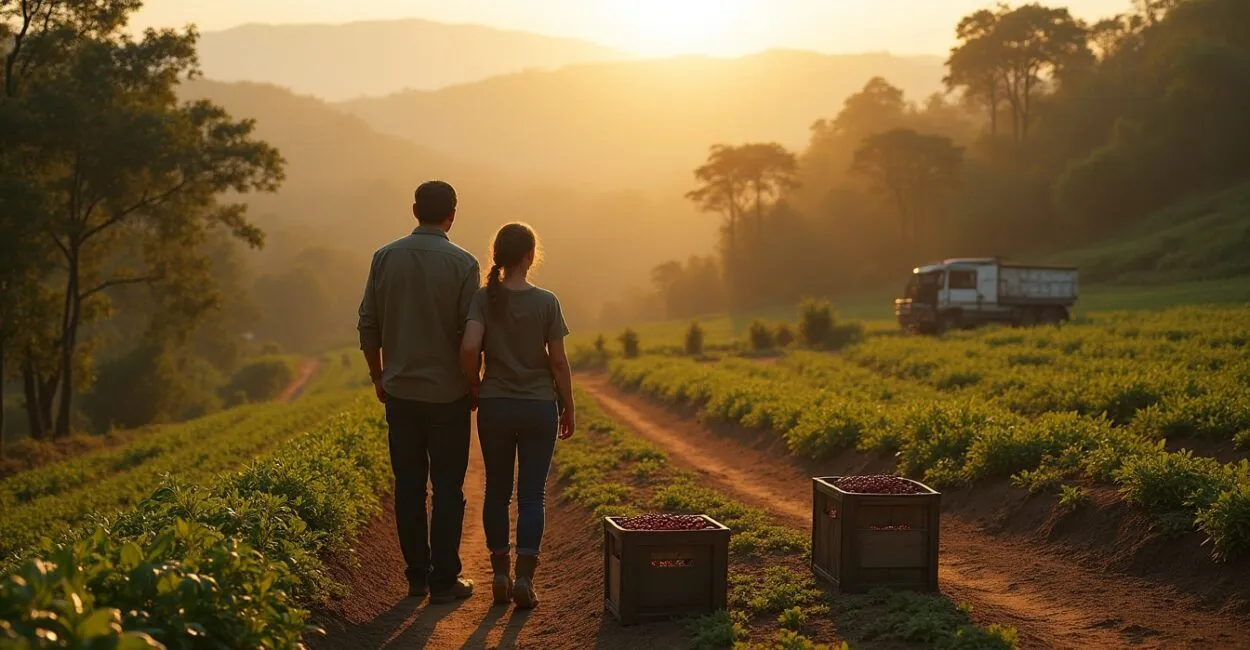
Imagine a row of coffee shaded by bananas and gliricidia trees, with a burst of color between the rows: lettuce, arugula, scallions, cilantro, and carrots. While the coffee is still a “promise,” the vegetables are already selling at the farmers market every week.
How Strip Planting Works
The layout is simple: coffee rows spaced 3–3.5 m apart, with banana plants interspersed, and 1 m-wide vegetable beds between them, planted in rotation. Gliricidia provides green manure and partial shade. The soil stays covered, moist, and cool—and you can feel the difference underfoot.
| Crop | Time to first harvest | Sales frequency |
|---|---|---|
| Leafy greens | 30–45 days | Weekly |
| Bananas | 10–14 months | Monthly / every other month |
| Shade-grown coffee | 20–30 months | Annual (with staggered harvests) |
Notice the difference: Before, you’d wait years for coffee. Here, the vegetables become your “quick paycheck” while the perennial crops mature at their own pace.
Income Cycles and Where to Sell All Those Greens
Here’s the key point: there’s no benefit to harvesting every week if you don’t have a reliable sales channel. Producers who make this model take off set up regular routes:
- Weekly farmers markets in nearby towns, with a regular booth and familiar faces
- Weekly subscription produce boxes delivered in town
- Partnerships with neighborhood grocery stores and natural food shops
It’s all about predictability: you plant knowing that every week you have X boxes and X market stalls lined up.
Model 2: Cacao, Bananas, and Root Crops Sold Directly to Craft Chocolate Makers

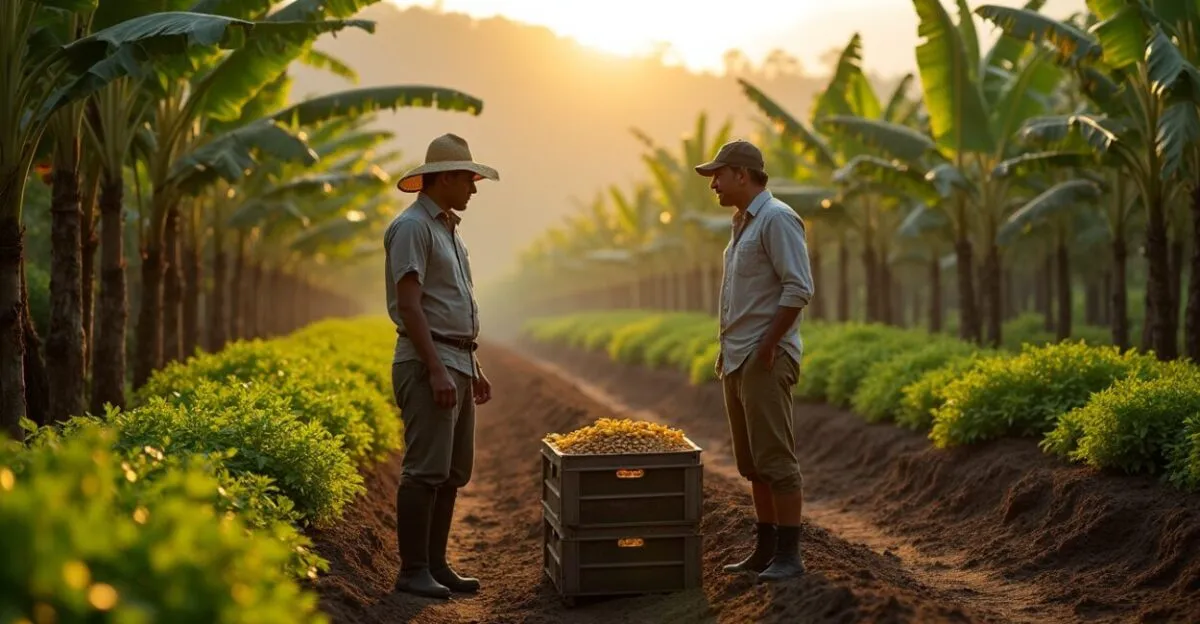
This model is a favorite among people in humid regions and the Atlantic Forest region. Cacao grows in the upper canopy, bananas and peach palms provide shade and early income, cassava and yams help keep cash flowing, and a living ground cover of jack beans and perennial peanut protects the soil.
A Real-Life Story of Profitable Cacao Agroforestry
On a small farm in southern Bahia, one family came close to giving up. The soil was exhausted, conventional cacao prices were low, and they were in debt. In 2017, they started a simple agroforestry system with cacao, bananas, cassava, and soil-building species.
At first, they earned income by selling bananas and cassava at the local farmers market. Three years later, they began selling high-quality cacao to a local bean-to-bar chocolate maker for up to three times the price of conventional cacao. Today, the farm covers its costs, provides jobs, and has even become a showcase for educational farm tours.
Payback Time and Who Pays More for Cacao
What many people overlook is that the biggest returns from agroforestry-grown cacao don’t come from volume alone, but from fruit quality. With healthy soil and balanced shade, cacao tends to develop better fermentation, aroma, and fat content—qualities that craft chocolate makers value highly.
- Income from bananas and cassava: 8–14 months
- First cacao harvest: 18–24 months, depending on the region
- Peak production: years 4 through 7, with increasing financial stability
With this model, it makes a big difference to explore niches like bean-to-bar chocolate; Ceplac’s website offers valuable technical information.
Read also: Pruning Fruit Trees: When to Do It and How to Get Started
Model 3: Mixed Fruit and Vegetables for Local Subscription Boxes
If you want to build a loyal customer base in town, this model is a winner. The idea is to create a “calendar of abundance”: mangoes, guavas, citrus, avocados, passion fruit, papayas, plus vegetables and aromatic herbs, so there’s always something fresh, sweet, and fragrant to put in the box.
How to Turn Your Farm into a “Food Subscription”
Here’s the reality: Plenty of people have beautiful agroforests but sell their produce like a roadside stand, competing on price. Those who earn more organize everything into subscription boxes. Customers pay monthly and receive one or two boxes a week, filled with a mix of vegetables, fruit, and greens.
You set up box tiers (basic, family, and premium) and scale production to match your regular customers. Less waste, less worry about making a sale, and more predictability.
Planning Crop Cycles to Avoid Shortages and Surpluses
For this model to work as a truly profitable agroforestry business, some basic technical planning is essential. Simple spreadsheet tools and planting calendars, such as those provided by Embrapa, Brazil’s agricultural research agency, can help you map out what will be available at each time of year.
- Stagger lettuce, arugula, cilantro, and scallion plantings every 7–10 days
- Mix in fruits with different harvest seasons, such as citrus, bananas, passion fruit, and avocados
- Set aside 10–20% of the land for trials and new items for your boxes
This contrast between planning and improvising is what separates farms with a waiting list for their boxes from those that come home from the farmers market with a full crate.
The Biggest Mistakes That Can Kill a Profitable Agroforestry Business Before It Starts
Here’s the hard truth: Most projects that “don’t work out” fail not because of poor planting techniques, but because of mistakes in mindset and business planning. They treat agroforestry as a romantic experiment, not as a living business.
Common Mistakes That Waste Time, Soil, and Money
- Planting dozens of species without knowing who will buy them
- Relying only on middlemen and accepting any price
- Ignoring the time it takes each layer to generate a return
- Failing to track production costs, including inputs, labor, and transportation
- Starting too big without first testing local sales channels
See a pattern? Most of these mistakes are about management, not the shovel. Fixing them can change everything without increasing the size of your growing area.
How Long Does It Really Take for Agroforestry to Pay the Bills?
You may be thinking, “Okay, sounds great. But how long until I can live off agroforestry alone?” There’s no magic answer, but experiences across Brazil suggest a realistic range, including projects studied by universities and reported on by sources such as IBGE, Brazil’s national statistics agency.
A Realistic Timeline
Here’s a general outline, assuming reasonably good management, recovering soil, and basic sales channels (farmers markets and produce boxes):
- 6–12 months: Vegetables and some fast-growing fruit already generate monthly cash flow
- 12–24 months: The system becomes more stable, and produce boxes offer more variety
- 24–36 months: Strong income begins from coffee, cacao, and higher-value fruit
Starting in year three, many producers report that agroforestry income exceeds what their former monoculture system earned on the same land.
How to Sell at Farmers Markets and Through Local Produce Boxes Without Getting into a Price War
Producing quality food isn’t enough: You need a compelling story, clear positioning, and strong customer relationships. In profitable agroforestry, trust is worth as much as a pound of tomatoes. Customers need to feel a connection to the person behind that box of fragrant herbs and ripe fruit.
Simple Strategies to Increase Perceived Value
A few small changes can make all the difference:
- Always bring products that are washed, neatly arranged, and clearly labeled with their names and origins
- Briefly tell the story of your farm and agroforestry system
- Offer samples of coffee, cacao, cut fruit, and simple prepared foods
It may seem like a small detail, but it isn’t: You stop being “just another booth” and become “the agroforestry booth,” where people are willing to pay a little more because they understand the value.
The Blind Spot: You’re Not Just Selling Food, You’re Selling an Ecosystem
What few people tell you is that when you build a profitable agroforestry business, you’re not just selling coffee, cacao, or lettuce. You’re selling living soil, infiltrated water, shade, and biodiversity, all brought together in the form of food.
Profitable Agroforestry as a Brand, Not Just a Technique
When you bring this into your communication—on signs at the farmers market, on social media, and in the way you talk to customers—your agroforest stops being just a production system and becomes a brand. Strong brands, even small ones, weather price swings much better than producers no one knows.
In the end, the path is clear: Combine planting skills, business sense, and human connection. That’s how agroforestry stops being a distant dream and becomes a reliable income rooted in the land.
Conclusion: The Decision That Separates Curious Onlookers from People Who Make a Living from Agroforestry
By now, you’ve seen that profitable agroforestry with coffee, cacao, fruit, and vegetables is possible. You’ve seen different models, payback periods, mistakes that hold back results, and practical ways to sell at farmers markets and through local produce boxes without selling yourself short.
The big question now isn’t “Does it work?” but What size first step will you take? Start small, test a model, build relationships in town, and then expand. The land responds to people who bring courage—and strategy.
Frequently Asked Questions About Profitable Agroforestry
Does Profitable Agroforestry Work on Small Plots, Like 1 or 2 Hectares?
Yes, and often even better. On 1- to 2-hectare plots, you can manage crops intensively, diversify what you grow, and focus on direct sales channels such as farmers markets and subscription boxes. The key is to design the system around cash flow: Vegetables and fast-growing fruit pay the bills while coffee, cacao, and larger fruit trees build income over the medium and long term, creating a more stable financial foundation.
How Much Can You Earn from a Well-Managed Profitable Agroforestry System?
Revenue varies widely depending on the region, soil, labor, and sales channels, but it’s not unusual for small producers to earn more per hectare from agroforestry systems than from traditional monocultures within 2–3 years. Direct sales without middlemen and a diverse product mix make a big difference: weekly vegetables, high-value fruit, and simple value-added products such as specialty coffee, jam, cacao beans, or artisanal cacao nibs.
Do I Need to Be an Agronomist or Have Technical Training to Start a Profitable Agroforestry Business?
No, but learning is essential. Many producers start with short courses, field days, and free technical resources from organizations such as Embrapa, universities, and state agencies. Ideally, combine hands-on learning at established farms with basic study of soil, crop combinations, and harvest planning. Even without a formal degree, this helps you make safer decisions and avoid costly design and management mistakes.
Does Profitable Agroforestry Require Much More Work Than Conventional Farming?
In the first few years, it often requires more detailed management: staggered planting, frequent pruning, and close observation. But as the system finds its balance, the mix of species itself suppresses weeds, protects the soil, and improves water retention. The work shifts from “fighting nature” to “fine-tuning a living organism.” It’s not a matter of eliminating work, but of making it more thoughtful and strategic—and often more physically sustainable.
How Can I Find Buyers for Products from a Profitable Agroforestry System in My Area?
Start by mapping what’s already out there: farmers markets, community-supported food groups, natural food stores, coffee shops, craft chocolate makers, and restaurants that value local products. Then start small: Bring samples, tell your story, and offer a reliable supply. At the same time, use social media to promote subscription boxes. Many producers build their customer base within a 30–50 km radius by focusing on direct relationships, on-time delivery, and clear communication about where their products come from and how they’re grown.
Artigos Relacionados
 Green Entrepreneurship: 7 Profitable Businesses for 2025
 2025 Local Businesses: Trends Reshaping Neighborhoods
 Organic Farming: Profitable Niches for 2025
 Rural Technology: Drones and Sensors That Boost Profits
 Rural Entrepreneurship: 7 Trends That Will Transform 2025
 New Businesses: 12 Innovative Ideas for Your Neighborhood
