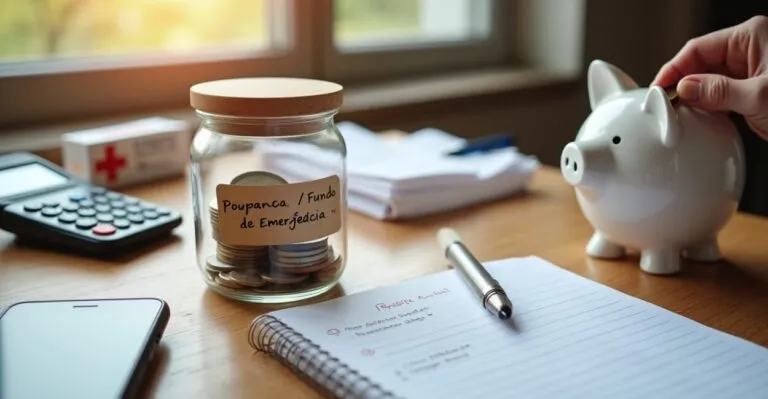
Have you ever lost sleep worrying about an unexpected bill, losing your job, or an expensive repair to the family car, with nowhere to turn? It’s a gut-wrenching feeling, and I know it. That’s exactly why you’re here.
I’ll walk you through practical steps to calculate a 6-month emergency fund in Brazilian reais, where to keep the money, and how to build it in 6 to 12 months. No fluff, just strategies that work. By the end, you’ll have a specific target, safe options like CDBs, savings accounts, and Tesouro Selic, and a simple timeline to get started today.

Emergency Fund: How Much Do You Really Need for 6 Months?
Here’s a quick first step: take your expenses from the past three months and add them up. Don’t forget streaming subscriptions, your cell phone plan, or credit card payments.
- Fixed monthly expenses, such as rent or mortgage payments
- Average variable expenses, such as groceries and transportation
- Occasional expenses spread over the year, such as vehicle registration fees (IPVA) or insurance
Add these expenses to get your average monthly spending, multiply it by 6, and that’s your target in reais. Here’s the key: increase it by 10 to 20 percent if your income is unstable.
How to Estimate Your Actual Expenses Without a Complicated Spreadsheet
If you don’t use a spreadsheet, open the Nubank app or your bank’s app, review the past 90 days, and sort your spending into categories. Think about it: three months give you a realistic picture of your spending habits.
- Track only essential expenses at first
- Leave out one-time expenses
- Use an average rather than the highest amount to avoid overestimating
This quick approach helps you avoid getting stuck and gives you a practical number to start with. You can fine-tune it later, but your initial target will already provide protection.

Where to Keep Your Money Right Now

Which should you choose: a CDB, a savings account, or Tesouro Selic? It depends on liquidity and safety. A savings account is simple, Tesouro Selic offers a better return, and CDBs from large banks may offer a middle ground.
| Product | Liquidity | Risk | Notes |
|---|---|---|---|
| Savings account | High | Very low | Convenient, low returns |
| Tesouro Selic | High | Very low | Better returns with security |
| CDB (large banks) | Varies | Low | A good option if it offers daily liquidity |
For official information on Tesouro Selic and how it works, visit Tesouro Direto, Brazil’s government bond program. For banking regulations, consult the Banco Central, Brazil’s central bank.
A Practical Plan to Build Your Fund in 6 to 12 Months
Divide the total by the number of months you have, and adjust the amount based on your income and priorities. If you need to reach your goal in 6 months, contribute more each month. If you have 12 months, contribute less and stay consistent.
- 6-month goal: make larger contributions
- 12-month goal: choose a sustainable contribution amount
- Automate transfers for payday
Automation is key. If you get extra money, such as a bonus, put it toward the fund. This reduces daily decision-making and helps you reach your goal faster.

What to Avoid When Building Your Emergency Fund
- Using the fund for recurring everyday expenses
- Investing in illiquid assets, such as CDBs with long maturities
- Underestimating variable expenses
Avoiding these common mistakes helps ensure your fund is there when an emergency arises—not as a “vacation fund” or a way to pursue risky returns.
When to Use Your Fund—and When Not To
Use the fund to cover lost income, medical emergencies, or essential repairs. Don’t use it for planned expenses, such as moving to a new home or buying a new phone like an iPhone if you can pay for it in installments. Rule of thumb: If it helps you maintain your ability to earn income, use the fund. If it’s a luxury, don’t.
How to Review and Maintain Your Fund Over Time
Review it every 6 months or after a major change in your financial situation. Increase your target if you move to a larger home, or lower it if your contract now covers more risks. Small adjustments keep your fund realistic and useful, without leaving too much money tied up in a poor investment.
Frequently Asked Questions
Exactly How Much Should I Save in Reais for 6 Months?
Calculate your average expenses over the past 3 months, add them up, and multiply the total by 6. Add 10 to 20 percent if your income is unstable. For example, if your average monthly expenses are R$ 3,000, your target will be R$ 18,000 to R$ 21,600. That’s a practical starting point for building your fund.
Which Is Best: a CDB, Savings Account, or Tesouro Selic?
Tesouro Selic usually offers the best balance of returns and liquidity. CDBs from large banks can offer good returns if they have daily liquidity, and a savings account is the simplest option. Choose based on whether you prioritize returns or quick, easy access to your money.
How Should I Prioritize My Emergency Fund If I Have Debt?
Prioritize paying off high-interest debt while making small contributions to your fund until your finances stabilize. If possible, negotiate your debts and put the money you save toward building your fund faster. It’s a balance between reducing interest costs and building a financial safety net.
Can I Use My Fund to Invest in Opportunities?
It’s not recommended. Your emergency fund should remain liquid to protect your financial well-being. Using it to pursue opportunities could leave you vulnerable when unexpected expenses arise. Keep a separate amount for speculative investments.
How Long Does It Take to Build a 6-Month Emergency Fund?
If you set a 6-month timeline, you’ll need to contribute more each month. Choose 12 months, and your contributions can be smaller. With discipline and automatic deposits, most people can build their fund in 6 to 12 months, especially by cutting unnecessary expenses and putting extra money toward it.