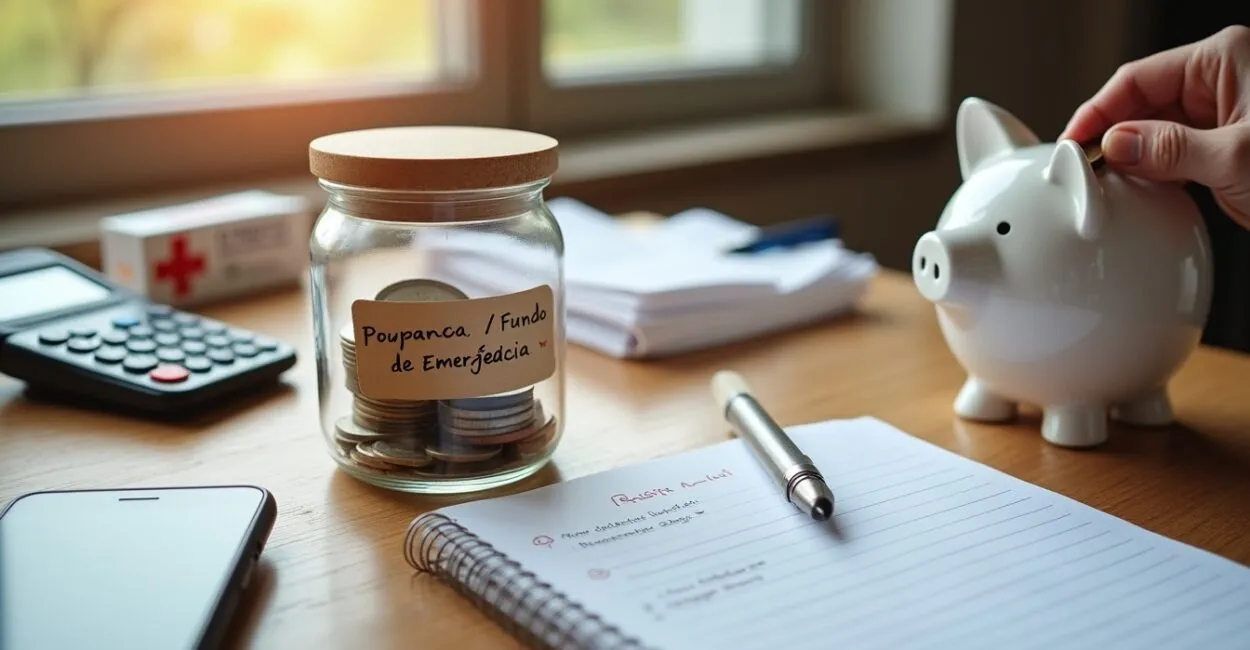
Savings are the foundation of financial security, helping you handle emergencies and opportunities without taking on debt. In this article, you’ll learn why saving matters, how to get started with realistic goals, and how to build an effective emergency fund.
Building and growing an emergency fund takes planning, discipline, and smart allocation choices. We’ll cover key concepts, practical steps, a comparison of different approaches, optimization tools, and techniques to save money consistently, with examples you can put to use in everyday life.

Key Savings Concepts
- Emergency fund: savings equal to 3–12 months of expenses
- Short-, medium-, and long-term goals
- Liquid reserves versus return-seeking investments
- Risk, inflation, and purchasing power
What savings are and how they help
Savings act as a financial cushion that can help you avoid debt when unexpected expenses arise. They preserve purchasing power and provide liquidity. Understanding terms like emergency fund, financial reserves, and liquidity helps clarify their practical roles.
For families, savings also make it possible to plan for smaller expenses, such as repairs or vacations, without disrupting the monthly budget. Businesses use reserves to manage cash flow and payment schedules.
Understanding the purpose of your reserves is the first step toward determining the right fund size based on your income, expenses, and risk tolerance.
Types of savings and financial instruments
Options vary in liquidity and returns, including savings accounts, interest-bearing accounts, DI funds (Brazilian fixed-income funds), Tesouro Selic (Brazilian government bonds tied to the Selic rate), and CDBs with daily liquidity (bank-issued certificates of deposit). Each instrument involves trade-offs between returns and ease of withdrawal.
Instruments such as Tesouro Selic offer low risk and liquidity, while fixed-income investments with a set term may earn more but be less accessible right away. The right choice depends on your goal’s time horizon, how quickly you might need the money, and your tolerance for returns that fluctuate relative to inflation.
Savings goals and how to divide your money
An effective strategy is to divide your savings by goal: emergencies, goals for the next 6–24 months, and goals more than two years away. Each goal calls for its own instrument and timeline, while taking liquidity into account.
For example, setting aside 3–6 months of expenses for emergencies and saving separately for home renovations or vacations makes it easier to stay organized and avoid dipping into the fund for other reasons. This approach builds discipline and clarity while helping you optimize returns based on each goal’s timeline and risk.
How to Build Your Savings Step by Step
- Calculate your essential monthly expenses and set a target for your fund
- Open a separate bank or investment account for the fund
- Automate monthly transfers for payday
- Cut nonessential expenses and put the savings toward your fund
Calculate your emergency fund target
Start by listing essential fixed and variable expenses to estimate your monthly needs. Multiply that amount by 3, 6, or 12, depending on how much security you want. According to Brazil’s Central Bank, practical guidelines suggest saving enough to cover 3–6 months of emergencies.
Include housing, food, healthcare, and minimum debt payments. Adjust the amount if your income is unstable or you have dependents.
This calculation gives you a clear, measurable target to guide your contributions and timeline.
Open a separate account for your goal
Keep savings separate from your day-to-day spending by opening a dedicated account or choosing a liquid investment. Digital bank accounts, CDBs with daily liquidity, or Tesouro Selic can help protect your money while keeping it accessible.
Keeping your money separate helps prevent impulse spending and makes it easier to track your progress. Automating monthly deposits reduces friction and keeps you consistent.
Review the account periodically and switch instruments if better risk-return options become available.
Automate and track your contributions
Set up automatic transfers as soon as you get paid to make saving a priority. Choose a fixed percentage of your income, such as 10–20%, and adjust it to fit your goals. According to Brazil’s IBGE (Brazilian Institute of Geography and Statistics), many households on tight budgets can save by developing better financial habits.
Check your balance and percentage of your goal reached each month, and make adjustments if your expenses have increased. Use spreadsheets or personal finance apps to stay on track.
Automation turns an intention into a habit, curbs the temptation to spend, and keeps your savings growing steadily.

Comparing Savings Methods

Overview of common methods
Comparing savings accounts, interest-bearing accounts, Tesouro Selic (Brazilian government bonds tied to the Selic rate), and DI funds (Brazilian fixed-income funds) can help you balance risk and liquidity. Each option has different costs, terms, and tax rules, all of which affect your net returns over time.
Factors such as coverage from Brazil’s FGC (Credit Guarantee Fund), income tax, and liquidity are essential when choosing the best option for your emergency fund. The right choice depends on your time horizon, how quickly you may need the money, and your goal of preserving its value against inflation.
| Instrument | Liquidity | Risk/Protection |
|---|---|---|
| Savings account | Immediate | Low risk, no FGC coverage |
| Tesouro Selic | Daily (sold on the market) | Low risk, backed by the Brazilian Treasury |
| CDB with daily liquidity | Immediate | Low to moderate risk, covered up to R$250,000 by the FGC |
| Digital interest-bearing account | Immediate | Low risk, depending on the institution |
Real returns and inflation protection
Compare nominal returns with inflation to assess your real gains. Tesouro Selic and CDBs indexed to the CDI benchmark rate tend to track interest rates, while savings accounts may lose purchasing power when inflation is high.
According to Brazil’s IBGE (Brazilian Institute of Geography and Statistics), annual inflation can vary and significantly affect reserves that fail to keep up with real returns. To protect your purchasing power, choose assets that at least outpace the IPCA, Brazil’s consumer price index, or conservative options such as Tesouro Selic for short-term goals.
When to shift from liquidity to higher returns
Once you’ve built an emergency fund covering 3–6 months of expenses, you can move some excess savings into longer-term investments to increase returns while keeping a liquid reserve. Consider withdrawal timelines and any fees before making the switch.
Balancing liquidity and returns is a smart strategy: keep some money immediately accessible and invest the rest in higher-return products. Review your plan periodically based on your goals, interest rates, and the economic outlook.
Benefits of Keeping Your Savings Organized
- Reduces the risk of debt and high interest payments
- Improves financial security and peace of mind
- Helps you take advantage of investment opportunities
- Makes it easier to plan for medical emergencies and repairs
- Strengthens your negotiating position during a crisis
Impact on your financial well-being
Savings make you less vulnerable to financial shocks and reduce the need for emergency credit. That can help you avoid interest rates exceeding 100% a year on some credit cards or personal loans.
A well-funded reserve makes household cash flow more predictable and helps you work toward long-term goals, such as buying a home or building retirement savings. The benefits aren’t just financial: they include less stress and more control over your decisions.
Opportunities created by saving
With savings available, you can take advantage of sales, special investment offers, or business opportunities without disrupting your budget. Larger reserves give you more strategic options, such as buying discounted assets.
Read also: Monthly Dividends in 2026: Where to Find Income Every Month
Savings can also help you navigate career changes without compromising essential expenses.
In short, having reserves turns risk into flexibility and opportunity.
Read also: The Green Economy: Turn Your Lifestyle Into a Force for Sustainability
Negotiating power and liquidity
Having liquid funds gives you more bargaining power when paying upfront or negotiating a purchase. Sellers often offer discounts for immediate payment, which can translate into direct savings. On a major purchase, a 5–10% discount may be worth more than an annual return below that percentage.
Having cash on hand also prevents you from being forced to sell investments at a loss.
This practical advantage is an indirect but meaningful benefit that contributes to the overall value of your savings.

Comparison Table: Features and Risks
| Feature | Low liquidity | High liquidity |
|---|---|---|
| Potential return | Higher | Lower |
| Immediate access | Limited | Immediate |
| Market risk | Higher | Lower |
How to assess risk versus return
Consider how soon you may need the money and how much volatility you can tolerate. For emergency funds, prioritize low volatility and high liquidity: a small trade-off in returns in exchange for immediate access to your money.
For medium-term goals, a balanced approach that combines some liquidity with higher-return instruments may be ideal.
Use financial calculators and projections to compare scenarios and choose the most suitable allocation.
Costs, taxes, and protection
Consider management fees, performance fees, and income taxes. Brazilian fixed-income investments are subject to regressive income tax rates; Tesouro Direto (Brazil’s government bond platform) and CDBs follow different rules. Check FGC coverage, which protects up to R$250,000 per institution.
According to the FGC (Brazil’s Credit Guarantee Fund), coverage is limited, which matters when choosing where to keep large reserves.
Planning for taxes and guarantees helps you avoid surprises when you withdraw your money.
When to review your strategy
Review your strategy if you change jobs, have a child, take on higher expenses, or see significant changes in interest rates. Reviewing it every six months helps ensure your fund still fits your financial situation.
Also reassess after a major drop in income or legislative changes that affect taxes and financial products.
Regular reviews help keep your goals on track and adjust your allocation as needed.
Savings Limitations and Risks
- Returns may fall below inflation
- Limited protection if a financial institution fails (FGC coverage limit)
- Misuse due to a lack of discipline
Negative real returns
Some traditional savings products can lose purchasing power when inflation outpaces nominal returns. That reduces the real value of your reserves over time, so it’s important to choose where you keep your money carefully.
Monitoring inflation and moving some money into assets that track it is a common way to respond.
Setting a clear time horizon can minimize the impact of negative real returns.
Counterparty risk and limited protection
Brazil’s Credit Guarantee Fund (FGC) covers up to R$250,000 per institution and per CPF, Brazil’s individual taxpayer ID. That may not be enough for large reserves. If a financial institution fails, amounts above the limit are exposed to loss.
Spreading your money across institutions or using government bonds can reduce this risk.
Understanding these limits is essential when allocating large sums to preserve your capital.
Financial behavior and discipline
The biggest limitation is often psychological: easy access to your money can tempt you to use it for nonemergency expenses. Without clear goals and separate accounts, savings become less effective.
Automating transfers, setting specific goals, and reviewing priorities can help you stay disciplined.
Financial education and automation are practical tools for reducing this human risk.
Practical Tips to Save and Grow Your Savings
- Automate transfers of at least 10% of your income
- Use apps to track spending and manage your monthly budget
- Negotiate subscription and service costs to cut expenses
- Set visible goals with clear deadlines
- Review your plan and move excess funds into higher-return instruments
- Spread your money across institutions to make the most of FGC protection
Cut fixed costs and make saving sustainable
Review your utility bills, phone plan, and subscriptions to cut unnecessary expenses. Small monthly reductions of 5–10% can free up meaningful amounts for savings. According to Brazil’s IBGE (Brazilian Institute of Geography and Statistics), households often make lasting cuts to spending after becoming more aware of their consumption.
Turn one-time savings into automatic deposits to your emergency fund.
Staying consistent lets your savings compound over time and helps you build your reserve faster.
Increase your income and put extra earnings to work
Use bonuses, overtime pay, and extra income to grow your fund faster. Putting 100% of your extra earnings into savings for a set period can cut the time it takes to reach your goal in half.
Pay off high-interest debt before investing, since high rates can undermine your ability to build savings.
Balance paying down debt with building your reserve based on interest rates and how urgently you need to meet your obligations.
Track performance and rebalance
Review returns quarterly and rebalance between immediately accessible cash and higher-return investments as you approach your goal. Use spreadsheets or apps with alerts to stay disciplined and spot deviations.
Once you’ve built a basic financial cushion, moving some excess funds into higher-return investments is a common recommended practice.
Regular tracking helps ensure your savings keep pace with inflation and continue to support your goals.
In short, building and growing your savings takes careful calculations, discipline, and informed choices about liquidity and returns. Set clear goals, automate contributions, and choose instruments that fit your timeline. Savings give you financial independence: start protecting your future today, and review your plan regularly to get the most from your money.
Frequently Asked Questions About Savings
What are savings?
Savings are money set aside to protect against unexpected expenses and fund goals without relying on credit. They act as a financial cushion for essential expenses, helping you manage emergencies, income loss, or opportunities. A sound strategy involves setting a target amount, choosing liquid instruments, and automating contributions to maintain good financial habits over time.
How do you build an emergency fund?
An emergency fund is built by setting aside enough to cover several months of essential expenses in low-risk, liquid investments. The process involves calculating your expenses, opening a separate account, automating deposits, and reviewing your goals regularly. This helps prevent debt and ensures quick access to money when something unexpected happens, protecting your financial stability.
What’s the difference between saving and investing?
Saving prioritizes liquidity and security for emergencies, while investing aims for higher returns and may involve risk or reduced liquidity depending on your time horizon. Savings keep your money accessible, while investments aim to grow your wealth over varying timelines and levels of volatility. The right choice depends on your goal: an immediately available reserve or long-term growth potential.
When should you save versus invest in fixed income?
Use a savings account or other liquid investments when you need immediate access to your money—for emergencies or a 3–6-month reserve. For goals more than a year away, consider higher-yielding fixed-income options, such as CDBs, Tesouro Selic (Brazilian government bonds tied to the Selic rate), or funds. The rule of thumb: keep enough money liquid and invest any excess to pursue higher returns.
How much does it cost to build an emergency fund?
The amount you need depends on your monthly expenses: aim to save 3–12 times your essential monthly costs. There’s no fixed fee to “build” the fund, but consider indirect costs such as bank fees and taxes on investments. Automating deposits makes saving easier and reduces opportunity costs; the main “cost” is giving up some spending today in exchange for future security.