
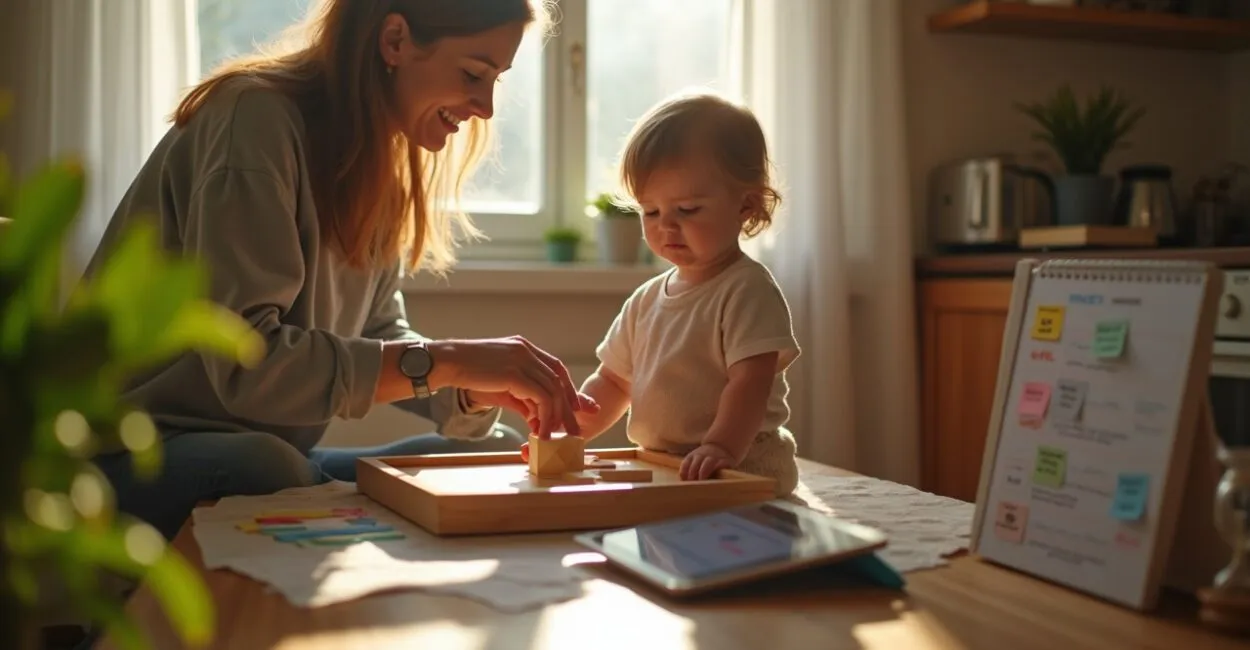
This refers to the total time set aside for learning activities, including lessons, reading, practice, and assessments. For online courses, defining the course length means accounting for synchronous and asynchronous time, students’ cognitive effort, and breaks needed to consolidate learning.
Setting an appropriate course length is crucial for first-time parents balancing childcare, work, and training. A poorly calibrated course length can lead to dropouts, low retention, and inadequate application of teaching practices.

A well-designed course length, on the other hand, makes the course manageable, helps parents apply what they learn in their family routines, and has a greater real-world impact on early childhood education practices.
Key Takeaways
- Course length should reflect the actual effort required: estimate active study time, observed practice, and repetition—not just video minutes.
- For first-time parents, short, modular courses (2–6 hours per module) with guided practice tend to support stronger participation and real-world application.
- Balancing learning and practice requires daily windows of 20–45 minutes or weekly blocks totaling 3–6 effective hours.
- Objective tools—such as learning journals, practical assessments, and observation—demonstrate effectiveness better than self-reported statements.
- Public policies and research (including data from IBGE, UNICEF, and early childhood education documents) should inform curriculum recommendations and minimum course length.
Why Course Length Determines Success for First-Time Parents
In early childhood education, the effectiveness of an online course is directly tied to whether the time allotted is enough to support behavior change. Course length stops being an abstract number when it translates into concrete activities: observing children, applying routines, and guided reflection.
First-time parents have fragmented windows of free time; without an appropriate schedule, the material remains theoretical and impractical.
Time Versus Transferable Learning
What matters is not just the total length of the course, but how much of that time promotes skill transfer. Sessions that combine demonstrations (10–20%), guided practice (40–50%), and reflection (20–30%) tend to drive behavior change.
Studies on educator training show that guided practice and feedback account for much of the improvement in competency.
Practical Constraints for First-Time Parents
Parents typically have short windows of free time: mornings, lunch breaks, and evenings. An ideal course length respects this reality by breaking content into micro-lessons and practice tasks to complete between real-life interactions with the child. I recommend planning around achievable weekly hours rather than a large cumulative total that depends on having uninterrupted time.
How to Calculate Course Length: A Practical Formula for Modular Courses
A simple formula helps estimate the actual time required: C = V + P + R, where C is the total course length, V is video/reading time, P is guided practice time, and R is review/reflection time. For early childhood education, guided practice should account for 40% to 60% of the total. This proportion ensures parents can apply techniques with children and receive feedback.
Recommended Components and Proportions
Example: a 4-hour module = 90 minutes of video (V), 120 minutes of guided practice (P), 30 minutes of review, and 30 minutes of formative assessments (R). Practice includes activities with a child, journal entries, and submitting videos for feedback. This prevents underestimating the time needed for meaningful behavior change.
Tools for Estimation and Tracking
Use simple spreadsheets or an LMS to track access time and submitted activities. Requesting weekly journals and scheduling instructor check-ins makes it possible to adjust C in real time. Usage data can help correct underestimates before students drop out.

Teaching Strategies That Reduce Course Length Without Sacrificing Effectiveness

Reducing course length does not mean cutting essential content; it means improving instructional efficiency. Active learning, microlearning, spaced learning, and effective feedback reduce the time needed to acquire skills. For parents, the focus should be on repeatable, observable practices—not extensive theory.
Microlearning and Spaced Learning
Microlearning breaks content into 5–15-minute segments, each followed by an immediate practice task. Spaced learning revisits concepts at gradually increasing intervals to consolidate procedural memory. Together, these approaches reduce the need for long study sessions and improve retention.
Targeted Feedback and Observable Models
Feedback on short practice videos is more effective than generic written feedback. Observable models—such as interaction scripts for parents—make it possible to quickly imitate desired behaviors, reducing the trial and error that would otherwise require more study time.
Read also: Early Childhood Education Courses for Parents
Designing Modules and Schedules for Family Routines
Designing modules around family routines increases participation. Each module should have clear objectives, tasks that fit into daily routines, and assessments of real-world application. The course should explain when and how to do activities with the child, taking typical sleep, mealtime, and play schedules into account.
Sample Weekly Schedule
Sample schedule: 3 modules per week, each with 45–90 minutes of activities (video + practice). Total per week: 3–5 hours. For parents with less time, a condensed version with 20–30 minutes a day, totaling 3 hours a week, can maintain progress. Adjustments should be allowed based on learner feedback and engagement data.
Read also: Early Childhood Education Courses for Parents
Integrating Learning into Daily Care
Recommending practices that fit into existing moments—bath time, reading before bed, and meals—turns learning into a routine. This reduces the need for additional blocks of time and makes consistent application more likely.
Measuring Results: Which Metrics to Track
Measuring the effectiveness of course length requires a mix of indicators: engagement, practical performance, and impact on childcare. Platform metrics (active time, task completion) show participation; practical assessments and observations show competency; interviews with parents and direct observation assess the real-world impact on children.
Quantitative and Qualitative Metrics
Quantitative metrics include completion rates, average time per activity, and the number of practice submissions. Qualitative metrics include the quality of practice videos, reports of changes to routines, and professional observations. Combine both types to determine whether the course is too short or too long.
Simple Assessment Protocols
Use behavior checklists from before and after the course, short recordings for review, and parent confidence scales. These tools help connect time spent with measurable gains, providing a basis for adjusting course length.
Common Course Length Mistakes and How to Avoid Them
Many courses overestimate the time parents have available or underestimate the need for practice. Common mistakes include counting only video time, ignoring breaks and interruptions, and failing to allow time for feedback. Avoid these mistakes by designing based on real data from parents and testing pilot versions before launch.
Calculation Mistakes and Their Consequences
When courses estimate only passive content time, many parents expect to finish faster than they actually can, leading to frustration. The result: low retention and incomplete application. The solution: track average completion time during pilot testing and add a 20–30% buffer.
Format and Communication Mistakes
Another mistake is failing to clearly explain what each hour involves. Describe specific activities, expected outcomes, and recommended time commitments. Transparency reduces dropouts and helps align expectations with the actual experience.
Policies, Standards, and References for Setting Course Length
Course length should be based on national guidelines and international research. In Brazil, documents from the Ministry of Education (Ministério da Educação, or MEC) and data from the Brazilian Institute of Geography and Statistics (Instituto Brasileiro de Geografia e Estatística, or IBGE) help put family circumstances in context. Organizations such as UNICEF and UNESCO provide evidence on time and quality in early childhood.
Useful Resources and Standards
Cite curriculum guidelines and early childhood education policies to align course length with developmental goals. Consult research on adult education and skill retention to support recommended practice proportions. Links and references make the course more credible and easier to cite.
How to Use Evidence to Persuade Stakeholders
Present data from local pilot programs, impact metrics, and references to official documents to secure approval from funders and partner institutions. Well-presented data can reduce resistance and support high-quality growth.
Next Steps for Implementation
I recommend two initial steps: 1) build a modular pilot with an estimated course length and measurement tools; 2) run the pilot with 30–50 parents, collect data on time and effectiveness, and adjust the proportions of practice. Prioritize audiovisual feedback and indicators of real-world application at home. These steps turn intuition into evidence and make decisions about course length defensible.
As you scale up, maintain short improvement cycles: analyze data, adjust modules, and communicate changes clearly. This ensures that course length stays realistic, effective, and aligned with parents’ routines.
Frequently Asked Questions: How Do You Calculate the Practice Time Needed for Each Module?
Allocate 40–60% of a module’s total course time to practice, depending on the complexity of the skill. For motor and interactive skills in early childhood education, aim for 50–60%. Estimate the time needed for each individual practice activity (e.g., 30–60 minutes), then add time for multiple attempts and guided reflection. During a pilot, track how much time parents actually spend and adjust the percentage. Objective measurements correct theoretical estimates and prevent allocating too little time, which can undermine real-world application.
Frequently Asked Questions: Is It Better to Spread Hours Across Daily Sessions or Weekly Blocks?
Daily sessions of 20–45 minutes support routine and retention, but not all parents have time available every day. Weekly blocks of 1–2 hours can work if they include immediate practice with the child. For the best results, combine both: daily microtasks to reinforce learning and a weekly block for longer practice and feedback. The right choice depends on each family’s circumstances, so offer flexible options to accommodate different needs.
Frequently Asked Questions: What Evidence Should You Use to Justify Course Length to Funders?
Use pilot data (completion rates, average time per activity, and number of completed practice activities), before-and-after practical assessments, and qualitative feedback. Correlate time spent with gains on behavioral checklists. Reference documents from the MEC and UNESCO/UNICEF studies on child development. Objective, comparable metrics make a more persuasive case than conceptual estimates.
Frequently Asked Questions: How Can You Reduce Course Length Without Compromising Instructional Validity?
Use microlearning, spaced learning, targeted feedback, and observable scripts. Replace lengthy text with practical videos and tasks built into daily routines. Prioritize exercises that support immediate skill transfer and request evidence of real-world application, such as short videos. These strategies maintain instructional validity while reducing the time needed to meet learning objectives.
Frequently Asked Questions: What Role Do Practical Assessments Play in Setting Course Length?
Practical assessments confirm whether the time spent led to real change. They show whether the course was long enough to build skills and help guide adjustments. Include checklists, short recordings, and expert observations. Assessment results can show whether adding practice or reorganizing content would be more effective than simply adding more hours.
Artigos Relacionados
 Early Childhood Education Courses for Parents
 Early Childhood Curriculum: What to Expect from Online Courses
 Early Childhood Education: Essential Practices for Development
 Early Childhood Education: A Guide for Parents
 Definitions and Concepts in the Evolution of Early Childhood Education
 Effective Brain Stimulation in Early Childhood Education
