Delivery drivers keep modern commerce moving by transporting goods from businesses to customers efficiently. They handle timely last-mile deliveries that affect customer satisfaction and operating costs. Their responsibilities include managing schedules, planning routes, interacting with customers, and handling packages safely to meet service expectations.
As e-commerce demand grows and customers increasingly expect same-day delivery, the delivery driver role offers opportunities as well as operational challenges. This article covers responsibilities, earning potential, tools, compliance, and practical guidance for drivers and fleet managers looking to improve performance and control costs.

The Delivery Driver Role: Core Concepts and Responsibilities
Core Responsibilities and Daily Tasks
Delivery drivers coordinate pickups and drop-offs, record proof of delivery, and keep their vehicles ready for the road. Their day-to-day tasks include loading, following routes, communicating with customers, and handling returns or delivery issues. Time management and spatial awareness are essential for meeting delivery windows and conserving fuel.
Drivers often use handheld devices or apps to access manifests, collect signatures, and scan barcodes, connecting their work with warehouse and dispatch systems. These tools speed up verification, cut paperwork, and improve supply chain tracking. Safety, customer service, and vehicle maintenance are ongoing responsibilities. Employers expect drivers to follow traffic laws, secure cargo properly, and communicate clearly about delays—all of which can affect a company’s reputation and repeat business.
Skills, Certifications, and Equipment
Strong navigation skills, basic vehicle maintenance knowledge, and customer service ability are essential for delivery drivers. Required credentials may include a commercial driver’s license (CDL) for heavier vehicles, food-handler permits for perishable cargo, and background checks for secure deliveries. Typical equipment includes a smartphone, GPS, insulated food bags, hand trucks for bulky items, and safety gear. Digital literacy helps drivers use route-optimization tools and respond to real-time dispatch updates.
Soft skills—including punctuality, problem-solving, and conflict resolution—can improve performance metrics such as on-time delivery rates and customer satisfaction scores, which many platforms track and reward.
Types of Delivery Driver Jobs
Delivery driving includes courier work, pizza and meal delivery, grocery shopping and delivery, package delivery, and long-haul freight. Each type has a different pace: gig couriers make many short stops, while package delivery drivers may cover dense urban routes with high volumes. Specialized deliveries—such as temperature-controlled food, medical supplies, or hazardous materials—require additional equipment and compliance, affecting pay and operational complexity. Fleet size, urban density, and order volume shape expectations for each role.
Understanding the differences between delivery types helps drivers and managers choose the right training, insurance, and vehicles for their needs, maximizing uptime and reducing incidents.
- Last-mile delivery: the final leg of a shipment to the customer
- Proof of delivery: a signature, photo, or electronic acknowledgment
- Route optimization: reducing the distance or time between stops
- Cold-chain handling: transporting goods under controlled temperatures
- Returns management: handling pickups and reverse logistics
Delivery Driver Workflows and Route Planning
Daily Preparation and Manifest Management
Start by checking the manifest and vehicle condition, giving priority to time-sensitive orders and fragile items. Confirm addresses, contact details, and delivery instructions before leaving to prevent delays and failed attempts. Check tires, fluid levels, and safety equipment to avoid unexpected downtime.
Review special requirements, such as delivery windows, gated communities, or signature requirements. Grouping stops by priority and location saves time and fuel, especially during rush hour.
Contact dispatch as soon as capacity or scheduling issues arise so loads can be reassigned and negative customer experiences and extra costs can be avoided.
Using Technology to Optimize Routes
Use route-optimization software that factors in real-time traffic, delivery windows, and driver availability to reduce mileage and improve on-time performance. Many platforms recalculate routes on the fly to avoid congestion and efficiently add high-priority stops.
Mobile apps offer turn-by-turn navigation, electronic proof-of-delivery capture, and automatic customer status updates. These tools reduce paperwork and make the delivery process more transparent.
Use telematics and fuel-monitoring tools to track idling, hard braking, and route efficiency. The resulting data can guide coaching, lower operating costs, and extend vehicle life.
Handling Delivery Issues and Customer Interactions
If a delivery problem arises—a wrong address, an inaccessible location, or an absent customer—follow the standard escalation process: try to make contact, take a photo as proof, and update the manifest. Clear, courteous communication helps prevent disputes and chargebacks.
For sensitive items, verify the recipient’s identity and collect any required signatures. Keep records of returns or damaged goods to support claims and reimbursement requests involving merchants, carriers, and insurers.
A positive interaction, even when there’s a delay, can turn a frustrating moment into a good customer experience. Polite updates and realistic arrival estimates can improve ratings and encourage repeat business.
- Check the manifest and inspect the vehicle before leaving.
- Group stops by location and prioritize time-sensitive deliveries.
- Use GPS with live traffic updates to follow an efficient route.
- Confirm deliveries electronically and notify customers.
- Record delivery issues, return items as required, and report problems to dispatch.
Comparing Delivery Methods and Service Options

Door-to-Door, Curbside, and Locker Delivery
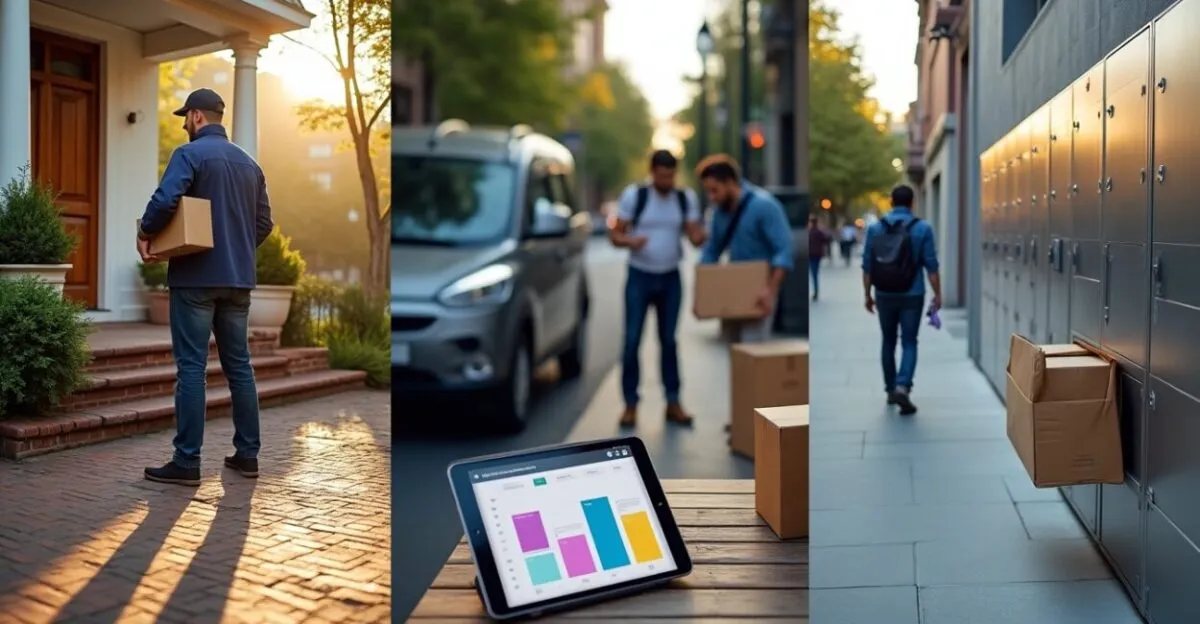
Door-to-door delivery provides a direct handoff and can boost customer satisfaction, but it takes more time per stop and increases operating costs. Curbside pickup reduces the time drivers spend away from their vehicles and speeds up each stop, but may be less convenient for customers. Lockers provide a central pickup location, reducing failed deliveries and improving efficiency in high-density areas.
The best option depends on urban density, package size, and customer expectations. Dense cities often favor lockers and curbside pickup to ease traffic congestion, while suburban customers may prefer door-to-door service.
Key performance indicators (KPIs)—including on-time delivery rate, failed-delivery rate, and average time per stop—should guide service choices and pricing to balance costs and service levels.
In-House Fleet vs. Third-Party Logistics (3PL)
An in-house fleet gives a company full control over its brand and customer experience, but requires investment in vehicles, maintenance, and management. Outsourcing to a third-party logistics provider (3PL) offers scalability and expertise, often with lower fixed costs, but may mean less control over last-mile interactions.
Compare total delivery costs, flexibility, and service-level agreements before deciding. Some companies use a hybrid model, operating their own vehicles on high-value routes while outsourcing during peak periods or in outlying regions.
Consider regulatory compliance, insurance coverage, and data integration to ensure smooth collaboration and consistent customer service.
Bike, Van, and Drone Delivery: Choosing the Right Capacity
Bikes work well in dense urban areas for small packages, offering speed and lower emissions. Vans handle medium volumes and a variety of package sizes. Drone delivery is an emerging option for fast, contactless delivery of lightweight packages, but regulations and payload limits remain challenges.
Cost per delivery, average distance, and package weight are key factors in choosing a delivery method. Use bikes for short routes with frequent stops, vans for medium-distance routes with mixed loads, and drones for experimental rapid delivery where regulations allow.
Combining delivery methods—for example, pairing micro-hubs with bike couriers or using vans to stock locker networks—can improve efficiency and meet different customer needs.
| Delivery Method | Best Use Case | Average Stop Time |
|---|---|---|
| Bike courier | Dense urban areas, small packages | 4–8 minutes |
| Van | Suburban routes or mixed packages | 8–15 minutes |
| Locker or pickup point | Consolidated pickups in high-density areas | 2–5 minutes |
| Drone (experimental) | Fast delivery of lightweight packages | 1–3 minutes (flight) |
Delivery Driver Pay, Economics, and Earnings
Pay Models: Hourly, Per Delivery, and Tips
Pay structures vary and may include hourly wages, per-delivery fees, or a combination of base pay and incentives. Gig platforms often pay per delivery, with surge pricing and customer tips adding to earnings. Employers may also offer performance bonuses tied to on-time rates and customer ratings.
Reducing unpaid wait time and increasing the number of deliveries per route can raise effective hourly earnings. Longer or specialized routes may include mileage allowances to help cover fuel costs.
Know your local labor laws and platform policies to ensure compliance with minimum-wage and benefit requirements, particularly when pay calculations include tips or variable incentives.
Earnings Data and Market Trends
According to the U.S. Bureau of Labor Statistics, the median pay for delivery drivers was about $17.20 per hour in 2023, with rates varying by region and role. Statista reports that package volume at many carriers has increased 25% since 2019, putting pressure on delivery networks to expand last-mile capacity. These changes affect competition for wages and demand for drivers.
Read also: Mechanic Basics and Core Concepts
Gig drivers often report that monthly earnings vary with seasonal demand. The holidays can increase demand by 30–50%, prompting platforms to offer peak-period incentives to attract drivers.
Understanding local demand patterns and how platform pricing works helps drivers forecast earnings and manage vehicle-related expenses.
Read also: Lawyer: A Complete Guide to Requirements, Practice Areas, and Career Tips
Costs: Vehicle, Fuel, Insurance, and Maintenance
Operating costs directly affect net earnings. Fuel, insurance, and maintenance can account for 20–35% of gross delivery income for small van operators. Telematics and preventive maintenance can reduce repairs and downtime, improving profitability over time.
Electric delivery vehicles reduce fuel costs but require charging infrastructure and have higher upfront costs. Total cost of ownership analyses help fleets choose the right mix of vehicles based on route length and duty cycles.
Track costs per mile and adjust pricing or pay models as needed to maintain sustainable margins while keeping delivery fees competitive.
| Cost Item | Estimated Annual Range | Impact |
|---|---|---|
| Fuel | $3,000–$8,000 | High |
| Insurance | $1,200–$4,500 | Medium |
| Maintenance | $800–$3,000 | Medium |
Operational Benefits and Performance Metrics for Delivery Drivers
Key Performance Indicators (KPIs) to Track
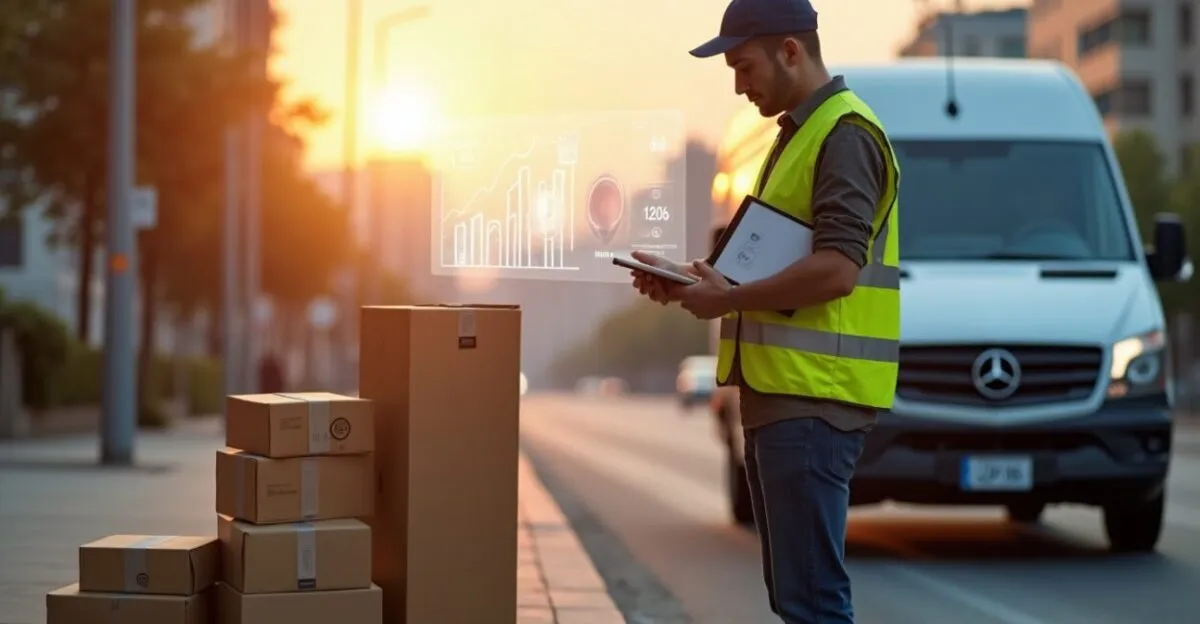
Key KPIs include on-time delivery rate, failed-delivery rate, average stops per hour, and cost per delivery. Tracking these metrics helps managers spot bottlenecks, coach drivers, and improve routes to boost customer experience and profit margins.
Use dashboards that compare KPIs by time of day, location, and vehicle type to make data-driven scheduling and delivery method decisions. Ongoing monitoring supports continuous improvements and targeted training.
Incentives tied to improved KPIs can encourage better performance, but they should be balanced to avoid unsafe driving caused by excessive time pressure.
Benefits for Businesses and Customers
Fast, reliable delivery boosts customer retention, average order value, and positive reviews. For businesses, efficient delivery operations reduce returns and improve inventory turnover. At the customer’s door, delivery drivers represent the brand and can influence long-term customer value.
Automated notifications and accurate arrival estimates reduce customer inquiries and contact center costs. Effective route optimization and delivery consolidation can cut last-mile shipping costs by up to 15%.
Investing in driver training and technology can deliver measurable returns through fewer incidents, more deliveries per route, and higher customer satisfaction scores.
- Higher customer retention through reliable last-mile service
- Fewer contact center inquiries thanks to accurate delivery estimates
- Fewer returns through proper handling and verification
- More scalable operations through a mix of delivery methods
- A stronger brand image through professional driver interactions
- Potential cost savings of 10–15% through route optimization
Training and Safety Programs
Regular safety training reduces incidents and insurance claims. Topics include defensive driving, securing loads, safe lifting and handling, and customer interaction protocols. Digital training modules make it easier to onboard employees and provide refreshers.
Combining safety programs with telematics can measurably reduce risky driving. Some fleets report 20–40% fewer hard-braking events after coaching, which lowers repair costs and improves driver retention.
Use bonuses and public recognition to reward safe driving and build a safety culture across teams, improving overall operational reliability.
Challenges, Limitations, and Regulatory Considerations
Urban Congestion and Environmental Constraints
Urban traffic, parking restrictions, and low-emission zones make deliveries slower and more complex. Drivers encounter bottlenecks that reduce the number of stops per route and increase fuel use, affecting costs and customer expectations.
Local regulations may require low-emission vehicles or restrict delivery hours, prompting fleets to invest in electric vehicles or micro-hubs. Adapting to these rules requires capital and strategic route changes.
Addressing urban challenges often involves working with local authorities and investing in multiple delivery methods to maintain service levels while complying with city policies.
Labor, Insurance, and Compliance Challenges
Disputes over worker classification—employee or independent contractor—can affect benefits, taxes, and legal risks. Follow wage and overtime laws to avoid fines. Insurance coverage should match operational risks, including cargo, liability, and commercial auto coverage.
Meeting health and safety standards, especially for food or medical deliveries, requires documented procedures and audits. Data privacy laws may also apply to stored customer signatures and contact information.
Work with legal and HR professionals to develop policies that balance operational flexibility with regulatory compliance and protect both drivers and the company.
Technology and Infrastructure Limitations
Dependence on GPS, mobile networks, and platform APIs creates potential single points of failure. Outages or poor connectivity can disrupt routes and lead to missed deliveries. Backup plans—such as offline manifests, alternative routing tools, and manual processes—help reduce these risks.
Electric vehicles require charging infrastructure, and limited access to public chargers can restrict their use. Warehouses and micro-hubs must be located to support quick turnarounds and efficient handoffs between delivery methods.
Invest in resilient systems and contingency plans to keep operations running during technology or infrastructure disruptions, preserving service reliability and customer trust.
- Regulatory changes affecting contractor models and wage obligations
- Parking and access restrictions in dense urban areas
- Limited charging infrastructure for electric delivery vehicles
Best Practices, Tools, and Growth Strategies for Delivery Drivers
Operational Best Practices for Drivers and Fleets
Plan stop sequences efficiently, group deliveries into small service areas, and use off-peak delivery windows when possible to increase stops per hour. Standardize proof-of-delivery procedures to prevent disputes and speed up payments from merchants.
Follow preventive vehicle maintenance schedules and track telematics data to reduce downtime. Give drivers clear escalation procedures and support for handling delivery issues to maintain consistent service quality.
Continuous improvement—through data reviews, driver feedback, and targeted training—can measurably improve delivery KPIs and customer satisfaction.
Essential Software and Hardware
Use route-optimization platforms, mobile proof-of-delivery apps, and telematics systems to connect dispatch, navigation, and performance analytics. Rugged smartphones, barcode scanners, and insulated carriers help keep operations reliable in a range of conditions.
Integrations with e-commerce platforms and warehouse management systems keep inventory accurate in real time and reduce picking errors. APIs automate status updates, reducing customer inquiries and manual work.
Choose scalable solutions with dependable support and strong security practices to protect customer data and remain reliable as delivery volumes grow.
Scaling Strategies and Future Trends
Combine company-owned vehicles with third-party partnerships to meet peak demand while controlling capital costs. Try micro-fulfillment centers, locker networks, and crowdsourced couriers to expand capacity and shorten last-mile routes.
Expect continued growth in vehicle electrification, micro-hubs, and advanced AI that can reassign routes based on real-time demand. Sustainability goals will encourage carriers to adopt lower-emission delivery methods and greener packaging.
Invest in flexible processes that make it possible to test new delivery methods and technologies quickly. Track KPIs closely to determine which initiatives are viable for long-term use.
- Standardize digital proof-of-delivery and issue-handling workflows
- Use telematics for preventive maintenance and driver coaching
- Test micro-hubs and combined delivery methods to reduce costs
- Use dynamic routing with live traffic and priority stops
- Reward drivers for safety, efficiency, and high customer satisfaction
Conclusion
Delivery drivers are essential to modern commerce, connecting warehouses with customers quickly and reliably. Optimizing routes, choosing the right mix of vehicles, and investing in technology and training can improve on-time rates and reduce costs. Understanding pay models, regulatory requirements, and urban challenges supports better operational decisions.
Whether you manage a fleet or work as an independent courier, prioritize safety, efficiency, and customer communication to improve earnings and satisfaction. Use data to guide improvements and build scalable strategies to succeed in a fast-changing delivery industry.
Frequently Asked Questions
What Is a Delivery Driver?
A delivery driver transports goods from a business or distribution center to customers. The job involves pickups, route execution, and proof of delivery, as well as package handling, customer communication, and documentation such as electronic signatures or photos. Delivery drivers work in several industries—including food, package delivery, retail, and medical supplies—and must balance speed, safety, and service quality to meet expectations and reduce failed deliveries and returns.
How Does the Delivery Process Usually Work?
The delivery process starts when an order is assigned and a manifest is created. The vehicle is then prepared and the route planned. Drivers make deliveries using optimized navigation, capture electronic proof of delivery, and handle problems by contacting dispatch or the customer. At the end of a shift, they record completed deliveries, returns, and issues. Route-optimization software, telematics, and mobile apps connect each step, providing transparency and real-time adjustments throughout the last mile.
What’s the Difference Between In-House and Third-Party Delivery?
In-house delivery is managed by a merchant or brand, providing greater control over branding and the customer experience but requiring investment in vehicles and operations. Third-party delivery uses specialized carriers or gig platforms, offering greater scalability and lower fixed costs but potentially less control over service details. Hybrid models combine the two to balance capacity, flexibility, and quality based on demand and business priorities.
When Should a Business Use Lockers or Curbside Pickup Instead of Home Delivery?
Lockers and curbside pickup can help reduce failed deliveries, parking time, and congestion in densely populated urban areas. They work well when customers can pick up orders at a convenient time or when consolidating packages improves route efficiency. Lockers are a good choice when secure, contactless pickup is important; curbside pickup is suited to quick handoffs. Consider customer preferences, cost per delivery, and local regulations before making a change.
How Much Does It Cost to Operate a Delivery Vehicle?
Typical delivery vehicle operating costs include fuel ($3,000–$8,000 per year), insurance ($1,200–$4,500 per year), and maintenance ($800–$3,000 per year), depending on the region and vehicle type. For small operators, these costs can account for 20–35% of gross delivery income. The U.S. Bureau of Labor Statistics and industry cost studies identify fuel and insurance as major cost variables. Use a total cost of ownership analysis to estimate local costs for budgeting.
Sources: U.S. Bureau of Labor Statistics, Statista, Forbes