
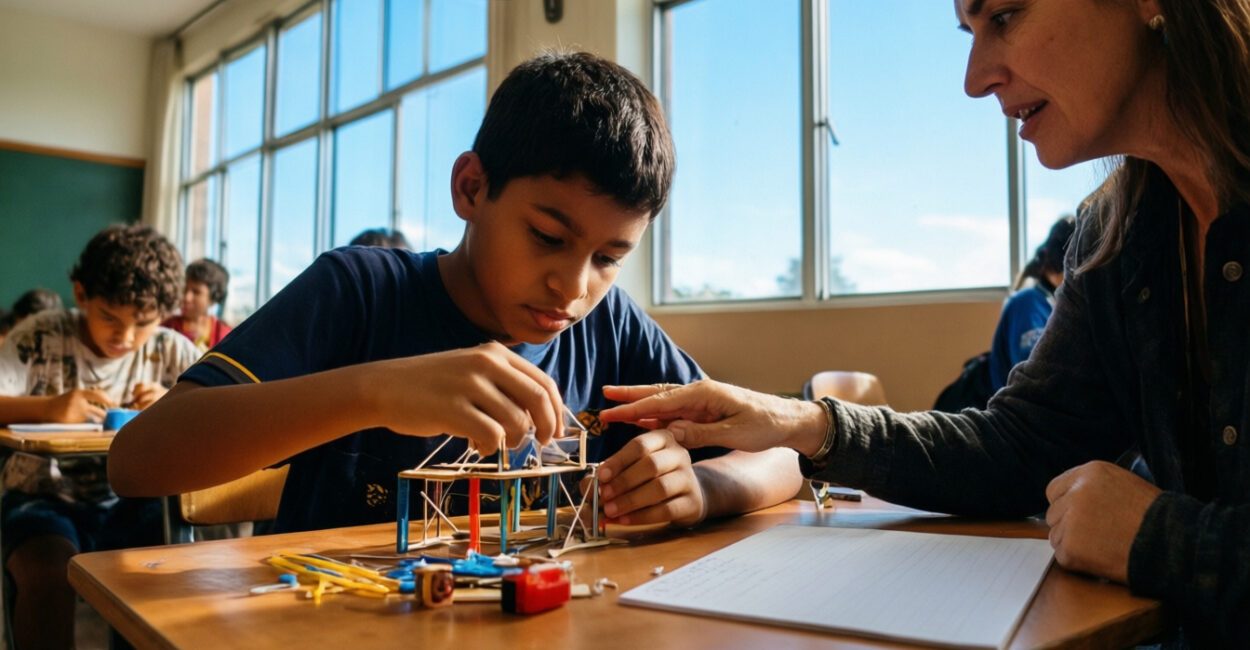
A student may solve complex science problems and still struggle to get started on an essay. Giftedness at school can show up in one or more areas without guaranteeing high grades in every subject. Recognizing this profile means observing how a student learns, what they produce, and what challenges they need to keep making progress.
Identification does not depend on a single sign or one test. It starts with educational observations in different situations and becomes more reliable when the school, family, and student share information. The goal is to arrange appropriate educational support without turning individual characteristics into a hasty label.

Before talking with the school
- Gather concrete examples of interests, questions, work, and learning experiences.
- Notice whether the pattern appears in a specific area or across different activities.
- Also consider what seems difficult, boring, or frustrating for the student.
- Be ready to discuss needs and strategies, not just a possible identification.
What giftedness means at school
Giftedness describes high potential or outstanding performance in one or more areas, such as academics, creativity, the arts, leadership, or psychomotor skills. At school, this may show up as rapid learning in a particular domain, original work, or unusually deep exploration of a topic, without the student showing the same profile in every subject.
Potential, observed performance, and identification are related but distinct. Performance also depends on opportunities, interest, participation conditions, and the type of task. A repetitive activity may not reveal what emerges in an open-ended project or a conversation about a topic the student cares about.
Educational identification is a contextualized process that brings together observations over time and information from more than one source. This distinction helps avoid two common mistakes: assuming high grades are enough to identify a profile, or assuming that a student with inconsistent results cannot be gifted.
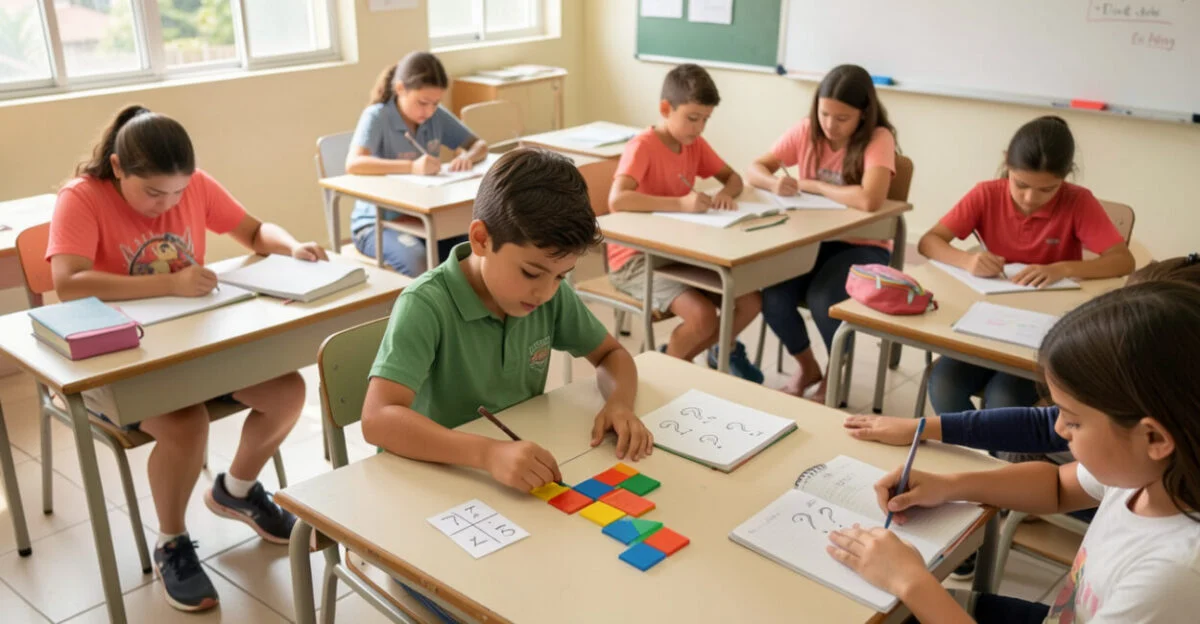
What signs may stand out
What matters is a consistent pattern of learning, interest, or work in certain situations—not a single characteristic. A student’s age, learning opportunities, and area of potential all affect how these signs appear.
What to observe Example at school Caveat Rapid learning in one domain Understands a math concept and quickly applies it to different problems. This is a sign to observe, not a conclusive criterion. Curiosity and in-depth exploration Asks follow-up questions and seeks explanations beyond the assigned material. This is a sign to observe, not a conclusive criterion. Original work Suggests an unexpected way to solve a task or develops an idea of their own. This is a sign to observe, not a conclusive criterion. Uneven interest or performance across areas Devotes intense attention to one topic but earns modest results in activities for other subjects. This is a sign to observe, not a conclusive criterion.
One detail that often goes unnoticed is how the format of a task affects a student. A student may seem distracted during repetitive exercises but stay engaged for a long time when asked to research, create, or explain an idea. Recording the activity and the conditions in which it took place makes the observation more useful than simply noting “picks things up easily” or “isn’t interested.”
Keep examples of work, questions, and specific situations over time. They help the team identify patterns without reducing the student to an impression or a grade.
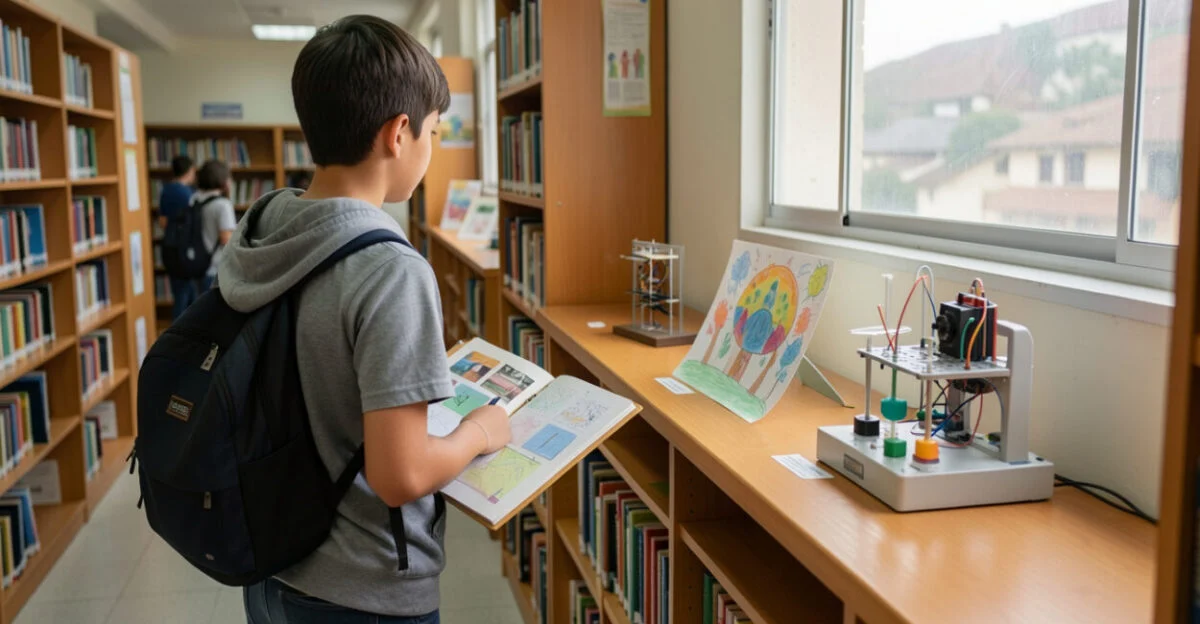
How the school can identify and support students

The school can identify and support this profile by combining educational observations, the student’s work, and conversations with the family and the student. The process should include a range of activities, since tests and grades show only part of what a student can do.
Portfolios, projects, classroom records, and family reports can all contribute to the overall picture. None of these tools, used alone, confirms giftedness. If questions go beyond the educational setting or there are related support needs, the team can discuss with the family whether a specialized evaluation would be helpful. This does not mean every school-based identification requires a clinical evaluation.
- Observe over time.
- Consider more than one area and context.
- Record work and specific situations.
- Talk with the student and family.
- Review strategies and their effects.
- Avoid drawing conclusions from a single test, grade, or behavior.
Ongoing support should also show whether the approach is working: Is the student participating more, learning something new, staying interested, and feeling part of the group? Formative assessment as a way to monitor learning can help the team track progress and adjust its plans.
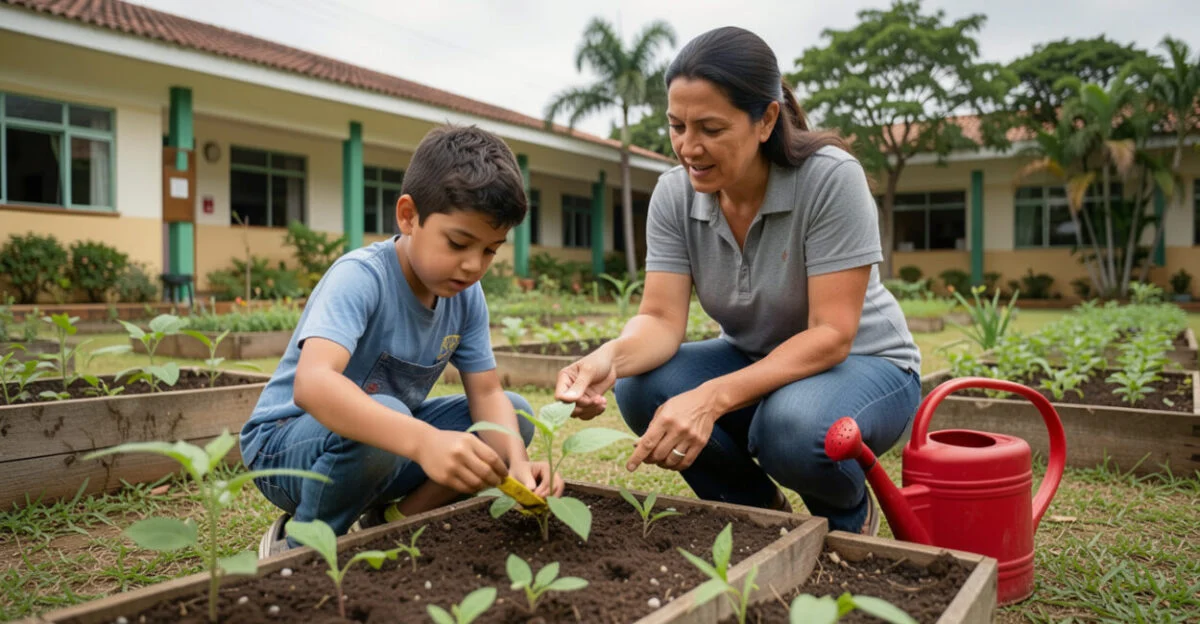
How to provide educational support
Support should offer challenges suited to the student’s area of interest and learning level, rather than simply adding more of the same exercises. Deeper exploration, inquiry projects, curriculum enrichment, flexible grouping, and greater autonomy are options the school can adapt to its context.
Observed need Possible strategy How to monitor progress Needs to explore topics in greater depth Assign an investigation using varied sources and a question that calls for analysis. Observe the quality of the questions, choices, and explanations produced. Loses interest in repetitive tasks Replace some repetition with an application or creative challenge while keeping any necessary practice. Compare participation and learning across different activities. Shows uneven performance Offer deeper exploration in the student’s area of strength and targeted support where they face barriers. Record progress in each area without expecting uniform improvement. Needs support to participate or feel comfortable Agree on ways to participate, check-in times, and opportunities to collaborate with classmates. Talk with the student and observe their sense of belonging, participation, and well-being.
For example, if a student is interested in ecosystems, the team could suggest an investigation of an environment near the school, with the student recording questions and presenting conclusions. This expands on the material without requiring a stack of extra worksheets. Follow-up looks at both what the student learned and how they participated in the work.
Acceleration and other specific measures should not be recommended automatically. Decisions depend on the student’s needs, educational planning, applicable regulations, and follow-up. Well-being, relationships, and a sense of belonging are also part of the decision. Strategies for adapting instruction to different ways of learning can help schools consider individual responses without assuming everyone needs the same kind of challenge.
How to align the school, family, and student
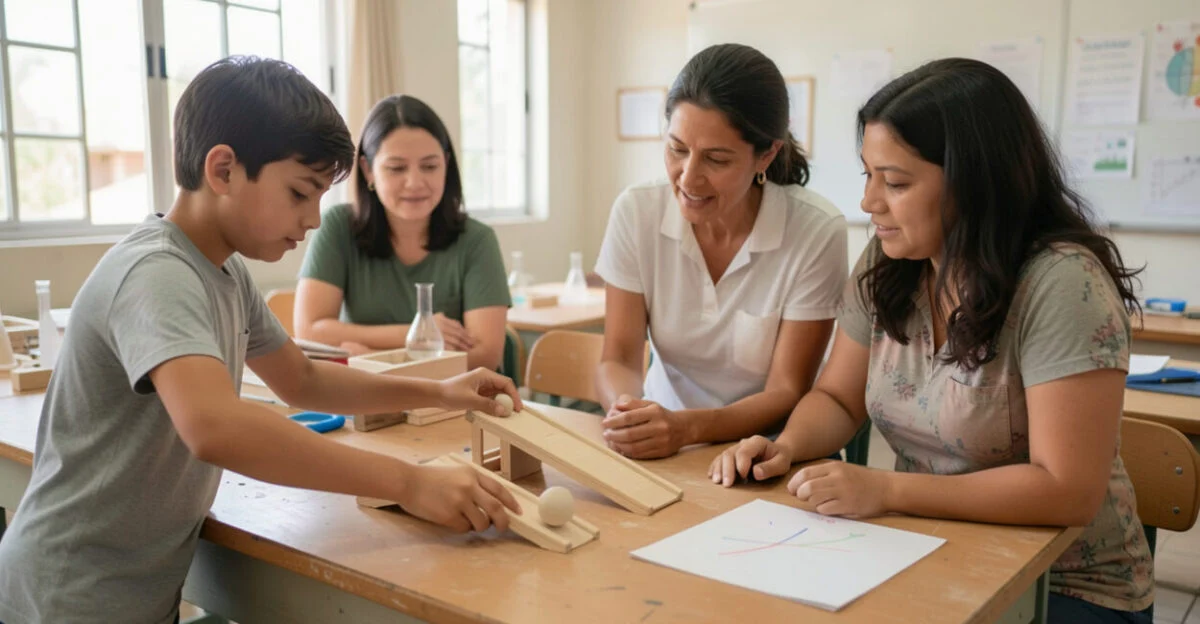
A productive conversation starts with observable examples and needs, not a demand to confirm a label. The family can share interests and work seen at home; the school team can describe classroom situations; and the student can explain which tasks inspire them or cause them to lose interest.
Next, agree on an initial strategy, who will be responsible for putting it into practice, and when everyone involved will review its effects. A lesson plan with clear objectives can turn the conversation into concrete proposals that fit the school’s capabilities.
The student should take part in this process in a way that suits their age and understanding. Questions like “Which activity made you want to keep going?” and “What has been difficult?” can reveal things that grades and adult observations may miss.
Inclusion, rights, and differing needs
In Brazil’s education system, students with giftedness are recognized as part of the special education population. This classification does not mean that giftedness is a disability, nor does it rule out the possibility of a coexisting disability or other support needs.
Brazil’s National Education Guidelines and Framework Law (Lei de Diretrizes e Bases da Educação Nacional) and guidelines issued by the National Education Council (Conselho Nacional de Educação) are references for understanding this educational classification. To check the legal text, see Law No. 9,394/1996 on the Legislation Portal and CNE/CEB Resolution No. 4/2009. Procedures and guidance may depend on current regulations and the school system, so it’s wise to verify them with official sources before making decisions.
Inclusion does not mean giving every student exactly the same activity. It means identifying barriers to learning and participation and arranging appropriate educational responses. The school can also consult its political-pedagogical plan to understand how support strategies fit with the institution’s practices.
Next steps for families and educators
Families can gather examples of work, interests, and situations in which the student learned or became deeply engaged, then ask to meet with the school team. Educators can start by recording observations across different activities and agreeing on a strategy to review after it has been put into practice.
If questions arise about development or needs beyond the scope of educational support, the family and school can discuss seeking specialized guidance. General rules have limits: the same behavior may have different explanations, and how potential is demonstrated varies with context and opportunity. The first goal is to understand the student and support their learning, not to obtain a label for its own sake.
Frequently asked questions
Does a gifted student need to earn high grades?
Not necessarily. Performance can vary across subjects and can also be affected by interest, context, and learning opportunities.
Can a single test confirm giftedness?
No. Identification requires considering information from different sources and situations. If a specialized evaluation is needed, it should be discussed in light of the student’s questions and needs.
Does every gifted student need acceleration?
No. Acceleration is one option among many and should not be recommended automatically. The school needs to consider the student’s profile, educational needs, applicable regulations, and ongoing follow-up.
Artigos Relacionados
 Cyberbullying Among Students: Prevention and School Support
 Dyslexia at School: How to Support Learning
 School Partnerships: How to Support Elementary Reading
 Inclusive Education in Elementary School: Practices and Support
 Dyslexia in Elementary School: Signs and Learning Support
 Parallel Remediation: How to Support Struggling Students
