

A student may be able to explain the water cycle and still freeze when faced with a long set of instructions. At school, supporting a student with dyslexia starts with identifying the barrier and separating the knowledge an activity is meant to assess from the difficulty of reading. Explicit instruction, access accommodations, and ongoing monitoring can help organize that support.
Dyslexia is a specific learning disorder primarily related to reading and writing. It does not indicate a lack of intelligence, laziness, or ADHD on its own. Needs vary from one student to another and should guide instructional decisions.

Schools do not need to wait for a formal diagnosis to teach clearly and remove observable barriers. They can document difficulties, try strategies, and talk with the family while considering a specialized assessment, when appropriate.
Quick summary
- Notice which tasks make reading or writing a barrier.
- Teach letter-sound relationships explicitly, gradually, and cumulatively.
- Adapt access to the activity without losing sight of what is being assessed.
- Monitor the student’s response and adjust support based on the results.
Before planning support
- Gather examples of tasks the student finds difficult.
- Identify the skill each activity is intended to develop or assess.
- Talk with the student and family about strategies that already help.
- Agree with the school team on how to document participation and progress.
Dyslexia at school: what to look for and how to respond
Schools can support students with dyslexia through explicit, gradual instruction in reading and writing, activities tailored to the skills they are developing, and accessibility resources. For assessments, consider whether reading is the goal or simply the means of demonstrating what the student has learned. The team documents barriers, monitors results, and reviews strategies with the student and family.
Signs may include persistent difficulty connecting sounds with letters, reading words accurately and fluently, using conventional spelling, or completing reading tasks without excessive effort. The degree of difficulty varies: a student may read familiar texts more easily and still struggle with unfamiliar words or long instructions.
A difficulty observed in the classroom does not confirm dyslexia. Identification requires an appropriate assessment that considers the student’s history and learning opportunities. The school’s role is to describe what is happening and share that information with the family and professionals involved. The overview and general guidance from the U.S. National Institute of Neurological Disorders and Stroke (NINDS), a federal health research institute can serve as a reference for understanding the disorder, but do not replace an individual assessment.
A useful record describes the barrier, the task in which it occurs, and the support that enables the student to participate.
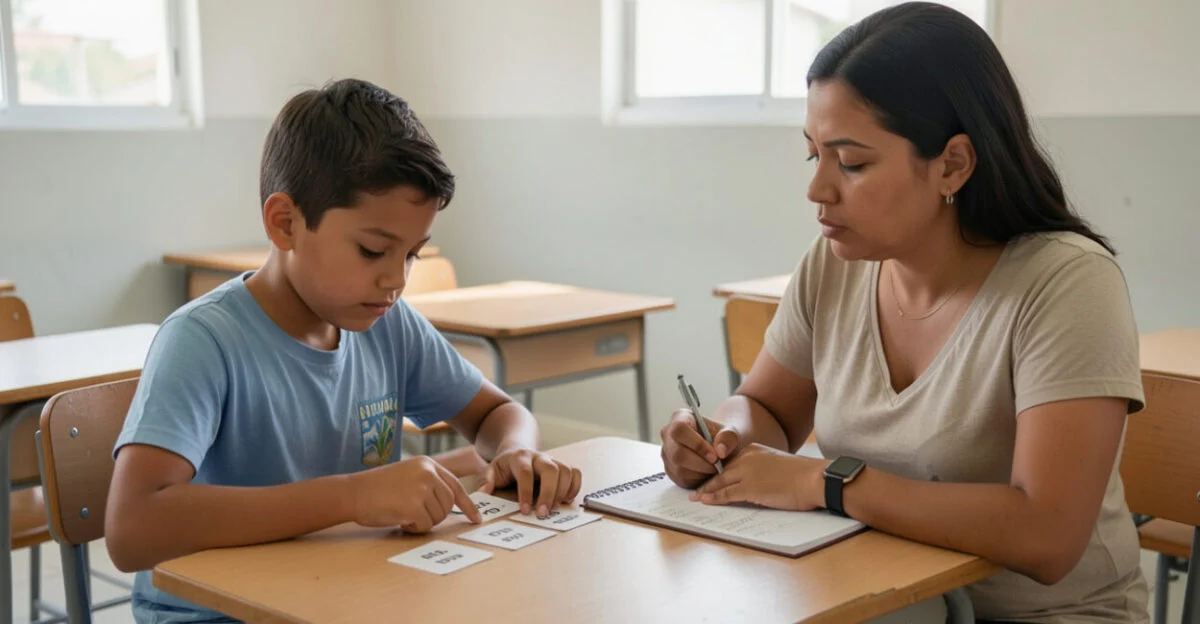
Document barriers and set instructional goals
Document specific situations instead of simply writing “has difficulty reading.” Note whether the barrier came up when sounding out words, understanding instructions, copying from the board, or organizing a written response. Also include what helped and how the student responded.
An instructional goal should identify an observable skill and a way to monitor its development. For example, the team might plan for the student to read words with a specific letter-sound pattern and observe whether they recognize those words in lists and short texts. The timeline and level of support should be appropriate for the student, not assumed based on a diagnosis or grade level.
A brief record, reviewed periodically, can include the activity, the barrier encountered, the strategy used, and the student’s response. This documentation supports communication among the teacher, Specialized Educational Support (AEE), family, and other professionals. It also helps distinguish a persistent difficulty from a one-time problem with instruction or access.
- Document the task and the observed barrier.
- Identify the skill the activity is intended to develop or assess.
- Choose a strategy that matches that skill.
- Agree on how to monitor participation and progress.
- Review the strategy with the student, family, and school team.
A common mistake is waiting for a diagnosis before providing more accessible instruction. Schools can support students while their families seek an assessment, without jumping to clinical conclusions. For ideas on adapting instruction to meet different needs, see the article on neuropedagogy and inclusive adaptations for each student.
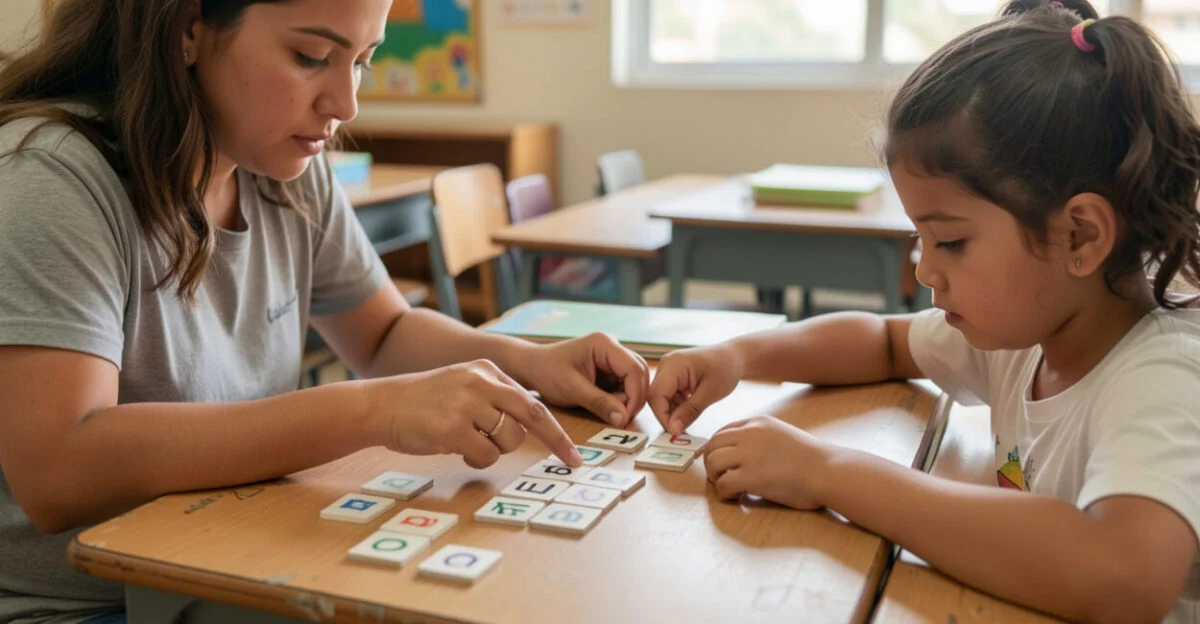
Teach reading and writing explicitly and gradually

Organize instruction into a planned sequence: letter-sound relationships, word reading, fluency, vocabulary, comprehension, and spelling conventions. Explain the skill, model how to use it, and provide supported practice before asking the student to work more independently. Revisit previously taught skills when new tasks require them.
Combining speaking, listening, reading, writing, and handling letters can make learning more accessible. For example, a student can hear a sound, choose the corresponding letter, say its name, and use letter tiles to build a word. This multisensory approach is one instructional option, not a cure or a one-size-fits-all method.
Long instructions can also be broken into short steps. Instead of asking students to read a text, answer several questions, and write a paragraph all at once, present the directions in parts, show an example, and give specific feedback on the next step. Goal setting can be connected to setting clear learning objectives.
Read also: Cyberbullying Among Students: Prevention and School Support
When the goal is to assess understanding of a subject, not decoding, students can access the text through shared reading or audio. If the activity is specifically intended to assess reading words with a particular pattern, that same resource may change what is being assessed. The decision depends on the skill in focus.
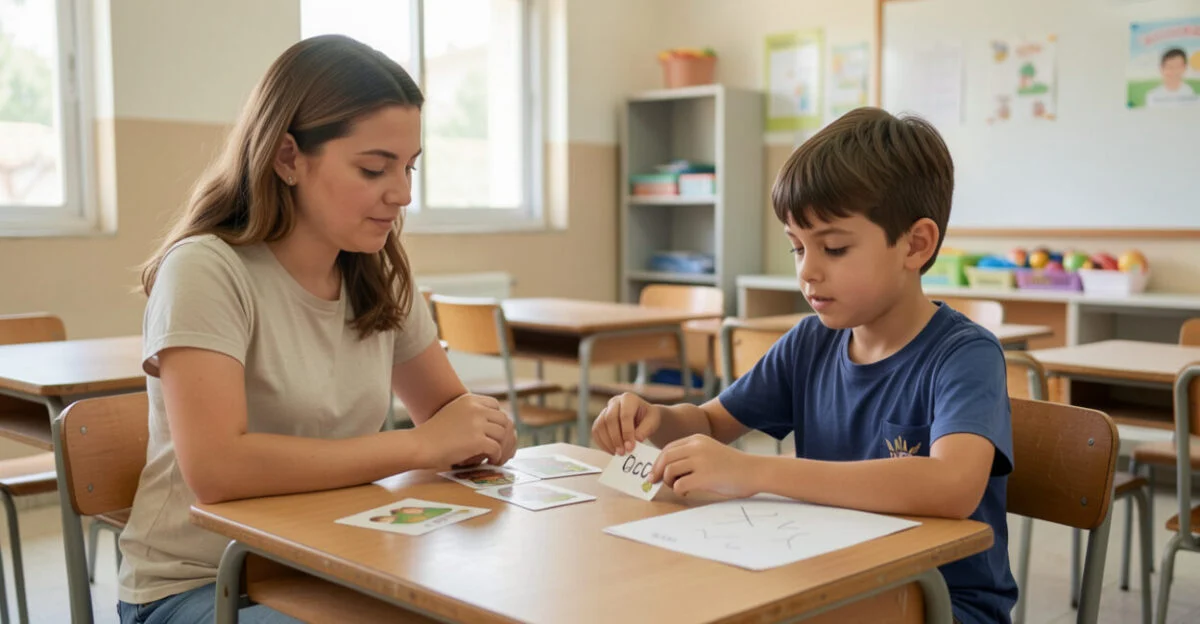
Choose activities that match the skill and grade level
A ready-made worksheet or activity book is useful only if it matches what the student needs to learn. Before printing materials, check that they address the intended skill, that the difficulty level is appropriate, and that the instructions are clear. Activities for students with dyslexia can support routine instruction, but a single worksheet will not resolve reading and writing difficulties.
The activities below can be adjusted based on skills the student has already mastered. Grade level helps put the content in context, but does not automatically determine each student’s reading level.
Skill addressed Sample activity Possible adaptation Teacher note Phonological awareness Identify words that rhyme or begin with the same sound. Start with pictures and spoken choices before introducing written words. Notice whether the task asks students to recognize sounds, name letters, or do both. Sound-letter correspondence Listen to a sound and build syllables or words with letter tiles. Use a few letters at a time and provide a model for reference. Increase complexity when the student is ready, without rushing through the steps. Fluency Reread a short text after listening to it or reading it together. Choose a short passage and let the student follow along with a finger or reading guide. Consider accuracy and comprehension; speed alone does not describe the skill. Reading comprehension Find information and explain the main idea of a text. Provide audio or shared reading when decoding is not the focus. Separate understanding the content from reading words independently. Spelling and written expression Plan a paragraph using key words and review one spelling convention at a time. Provide a graphic organizer, word bank, or option to type. Comment on the idea first and suggest a next step for revision, rather than marking only errors.
In third grade, an activity might use pictures and letter tiles to explore sounds and build words; students who have mastered those relationships can move on to more complex words. In fifth or seventh grade, short texts with vocabulary taught in advance can support reading and comprehension. For dyslexia activities in eighth grade or high school, adapt the format without making the content feel childish: a reading guide, highlighted key words, or an organizer for planning a response can reduce barriers without lowering intellectual expectations.
Searching for “free dyslexia activity workbook PDF,” “printable dyslexia activities,” or “101 dyslexia activities PDF” may turn up materials with very different levels and goals. Instead of choosing based on the number of pages, check whether the activity targets the intended skill and lets you observe what the student can do. A useful resource should fit into the instructional plan and be reviewed based on the student’s response.

Adapt assessments without losing sight of the goal
Before choosing an accommodation, define what the assessment is intended to measure. On a science test about ecosystems, for example, reading the directions may not be the skill being assessed; in a fluency activity, it is central. An accommodation should remove a barrier that is not part of the goal, without changing the knowledge the student needs to demonstrate.
Situation or barrier Resource or accommodation to consider How to preserve the goal Reading directions Read the directions aloud or provide audio. Do not use this resource when the assessment is intended to measure independent reading. Extensive copying Provide printed directions, digital text, or key words. Check whether copying is actually part of the skill being assessed. Written responses Allow typed responses, planning with an organizer, or oral responses. Choose a format that matches the goal; an oral response does not measure spelling. Content assessment Consider extra time, accessible instructions, or an alternative format. Keep the content and the defined learning criteria the same. Multistep directions Present one step at a time and provide a guide. Confirm that the student understands the task without giving away the answer.
Extra time, oral or typed responses, and directions read aloud can be considered based on individual needs. The team should agree on the resources and explain how they preserve the activity’s goal. Strategies for formative assessment and monitoring learning can also help organize observations of the student’s progress.
Feedback is also part of assessment. Instead of simply marking a word wrong, point out what the student has already applied and what strategy they can use in the next round of revision. You do not need to correct everything at once: focusing on one spelling convention per activity can make feedback clearer.
Coordinate the teacher, AEE, family, and professionals involved
The school’s instructional support organizes teaching and access to activities; assessment and clinical follow-up are the responsibility of qualified professionals acting within their scope of practice. The school does not diagnose based on one mistake or worksheet. It can, however, describe observed patterns, share records, and keep the student participating in activities while the family seeks an assessment.
The classroom teacher, Specialized Educational Support (AEE), and other professionals involved can agree on goals, resources, and ways to monitor progress. Records should be objective: which skill is in focus, what support was provided, and how the student responded. The family can receive brief, manageable suggestions for reading or writing at home, without turning home into an extension of excessive schoolwork.
Law No. 14,254/2021 addresses comprehensive support for students with dyslexia, ADHD, or other learning disorders. To read the law, see Law No. 14,254/2021 on the Office of the President of Brazil’s website. How the law applies depends on the case and school context; questions about specific rights and obligations should be checked against official sources and with appropriate guidance.
Review support when a strategy is not working
If an activity does not improve participation, do not immediately conclude that the student did not try. First check whether the instructions were understood, whether the task was at an appropriate level, and whether the accommodation preserved the skill being taught. Then adjust one factor at a time and observe the response.
A plausible example: on a science assessment, a student knows the material discussed in class but leaves questions blank when faced with long instructions.
The teacher reads the directions aloud and keeps the same questions and content criteria.
In another activity, the class works on independent reading; in that case, the teacher records that skill separately, without confusing it with science knowledge.
A common mistake is reducing the amount of content without identifying the barrier. If copying is the obstacle, for example, providing a guide may be more appropriate than removing questions that assess an important concept. To get started, choose an observable barrier, agree on a strategy, and record whether it made participation and learning easier; review the plan with the student, family, and team.
Frequently asked questions
Does a student need a diagnosis to receive classroom accommodations?
Schools can provide accessible instruction and document observed needs before a diagnostic assessment. Teachers should not assume a diagnosis; instructional accommodations can be planned based on specific barriers and the goal of the activity.
Is a multisensory activity required for every student with dyslexia?
No. Combining listening, speaking, reading, writing, and handling letters can be helpful, but the choice depends on the skill being taught and the student’s response. The school should monitor whether the strategy supports learning and adjust instruction when needed.
How can families support reading at home without feeling overwhelmed?
A brief shared-reading routine with texts suited to the student’s interests and level can support engagement with written language. Family members can take turns reading, talk about the meaning of the text, and stop if the activity becomes stressful; specialized interventions should follow the guidance of the professionals responsible for the student’s care.
Artigos Relacionados
 Dyslexia in Elementary School: Signs and Learning Support
 Executive Functions in Learning: How to Support Students
 School Partnerships: How to Support Elementary Reading
 Adapted Materials for Dyslexia: How to Support Writing
 Play-Based Learning in Elementary School: Learning Through Play
 Fun Middle School Activities to Engage Students and Make Learning Stick
