
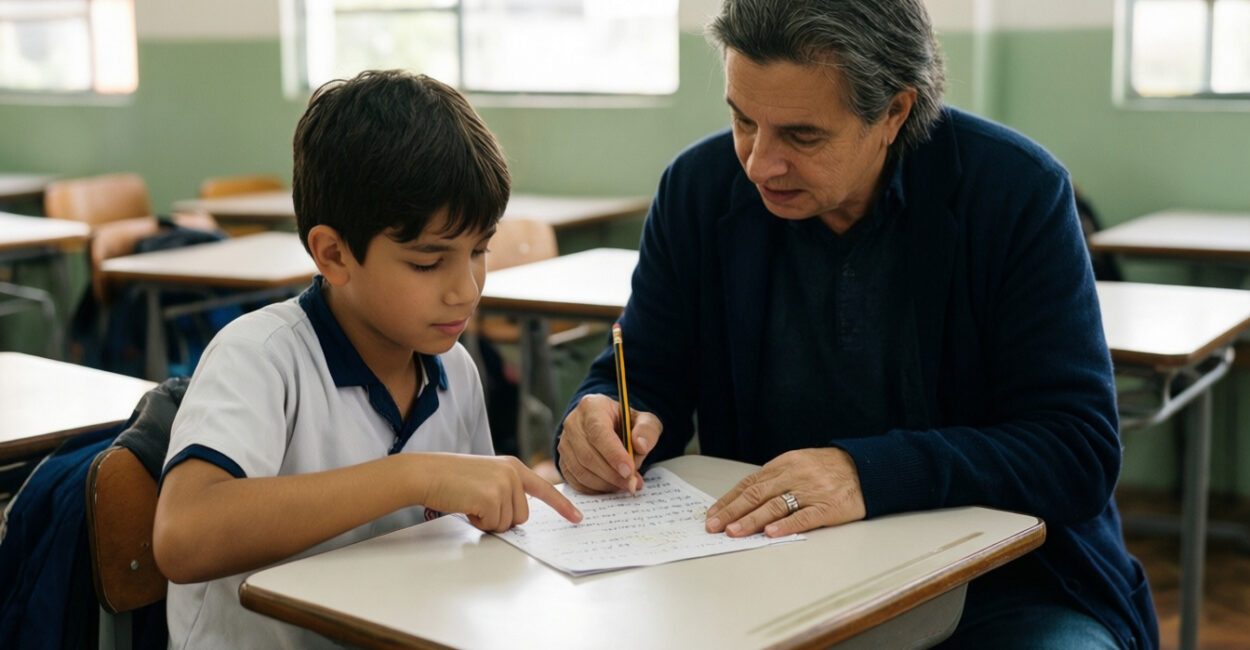
A low grade shows that something hasn’t been learned, but it doesn’t tell you what needs to change in instruction. School-based parallel remediation is a set of instructional interventions offered during the school year to support learning that has not yet been consolidated. To be effective, it starts with a specific difficulty, defines what the student should learn, and tracks evidence of progress.
An extra assignment can be part of this work, as long as it has a clear purpose and makes it possible to see what the student can already do. Repeating the same explanation or giving another test without identifying the need often leaves the difficulty unresolved.

Key Takeaways
- Instructional assessment should identify a specific skill or area of knowledge, not label the student.
- The goal should describe something observable that the student is expected to demonstrate.
- The support strategy should match the identified difficulty and can be adjusted based on the student’s responses.
- Requirements for providing and documenting support depend on the rules of the school system and the school’s policies.
What Is School-Based Parallel Remediation, and What Is It For?
School-based parallel remediation is instructional support provided during the school year to revisit knowledge or skills a student has not yet mastered. Its purpose is to promote learning through planned, monitored interventions rather than relying only on another assessment. How support is provided must comply with the rules of the school system and the school’s policies.
The word “parallel” indicates that support takes place throughout the learning process while instruction continues. This does not require a single format: schools can use classroom activities, small groups, or other formats allowed by their policies and resources.
There is a difference between supporting a specific learning difficulty, reviewing material with the whole class, and offering another assessment opportunity. A review can be helpful, but may not address one student’s needs; a retake, on the other hand, measures performance and does not, by itself, provide additional instruction. The table shows the distinction.
Practice Purpose How it differs from parallel remediation Parallel remediation Support learning that has not yet been consolidated during the school year Addresses identified needs and tracks progress General review Revisit material with the class May not address a student’s specific difficulties Retake Offer another assessment opportunity, as allowed by applicable rules Testing again is not, by itself, the same as providing instructional support
A remediation intervention is more focused when each activity addresses an identified learning difficulty.
How to Identify What Is Making Learning Difficult
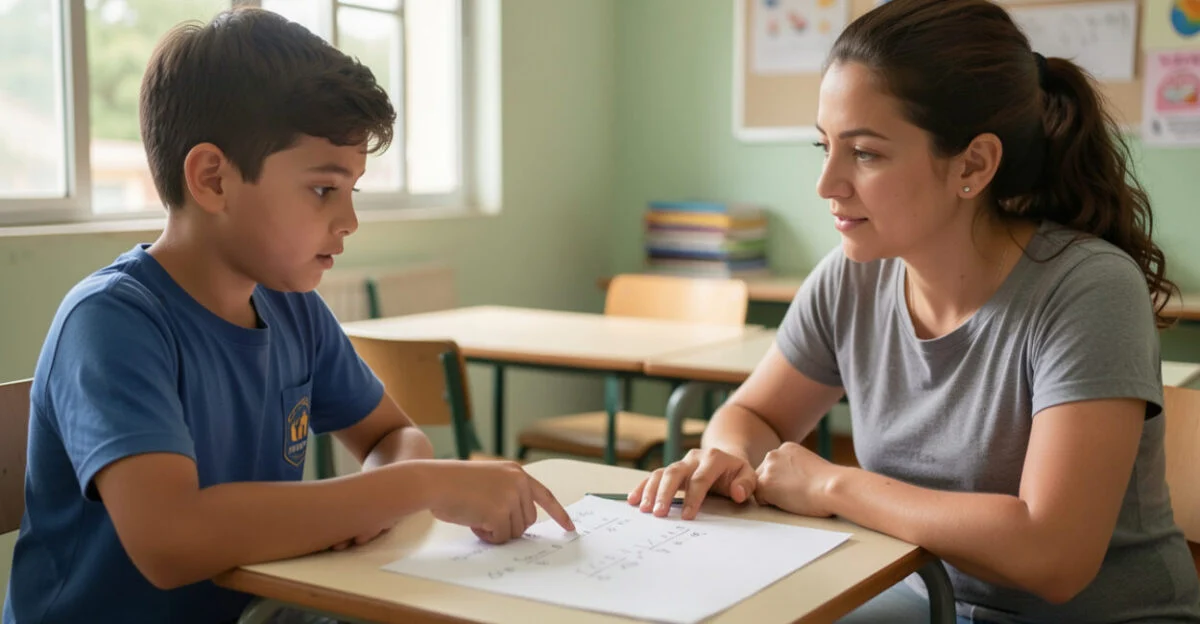
Teachers can gather evidence from classwork, assessments, classroom observations, participation, and student work. Then they need to pinpoint the knowledge or skill that has not yet been mastered. A grade indicates that something needs further investigation; on its own, it rarely reveals the source of the difficulty.
A student may get a problem wrong because they didn’t understand the directions, didn’t identify the operation needed, or haven’t mastered the calculation. Each possibility calls for a different intervention. A brief conversation with questions about how the student arrived at the answer can help distinguish between these obstacles without labeling the student.
It is also worth considering instructional and contextual factors, such as absences, changes in routine, or limited familiarity with the language used in an activity. These factors can guide the investigation, but they do not justify concluding that a student has a clinical condition. If signs emerge that call for a specialist evaluation, the school should follow its protocols and speak with the family discreetly.
How to Set Clear Learning Objectives

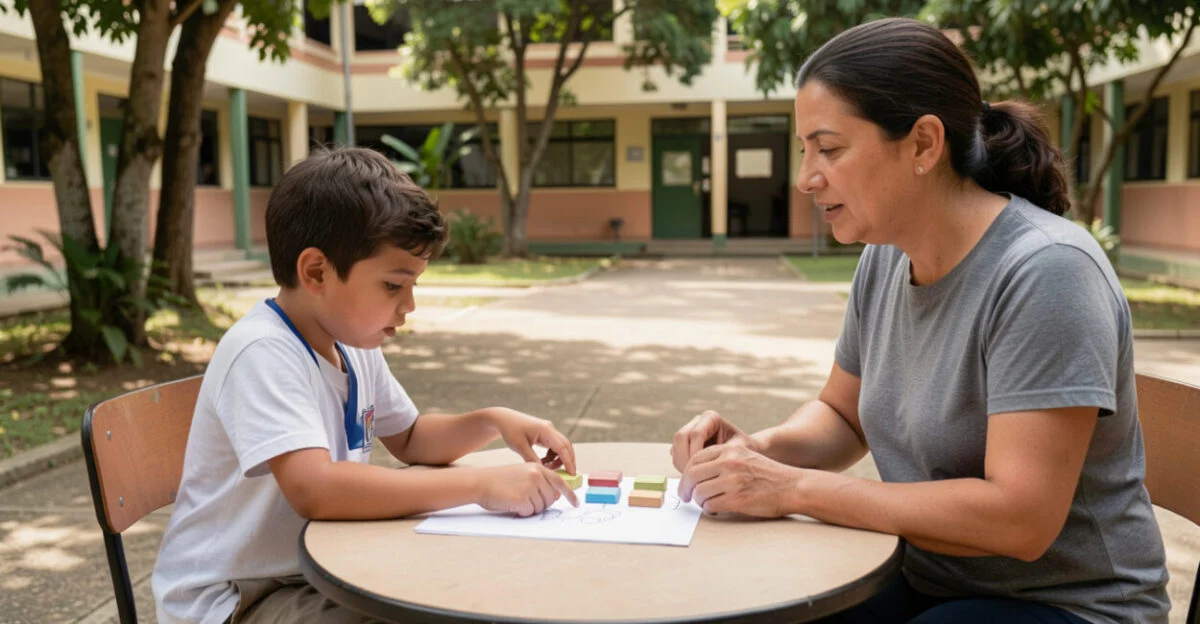
A learning objective describes what a student should be able to do or demonstrate by the end of an intervention. To be useful, it needs to connect to the observed difficulty and be verifiable through an activity, response, or work sample. “Improve in math” is vague: it doesn’t say what learning will be revisited or how progress will be recognized.
A more specific objective might be: “Identify the operation needed in addition and subtraction word problems and explain the choice.” Teachers can adapt the wording to the grade level and class curriculum, and consult the criteria for writing learning objectives.
The objective, activity, and progress check need to align. If students are expected to explain how they chose an operation, a worksheet of isolated calculations may not provide enough evidence. A discussion of their solution or a word problem can show whether they understood the choice.
Strategies for Supporting Students Throughout the Learning Process
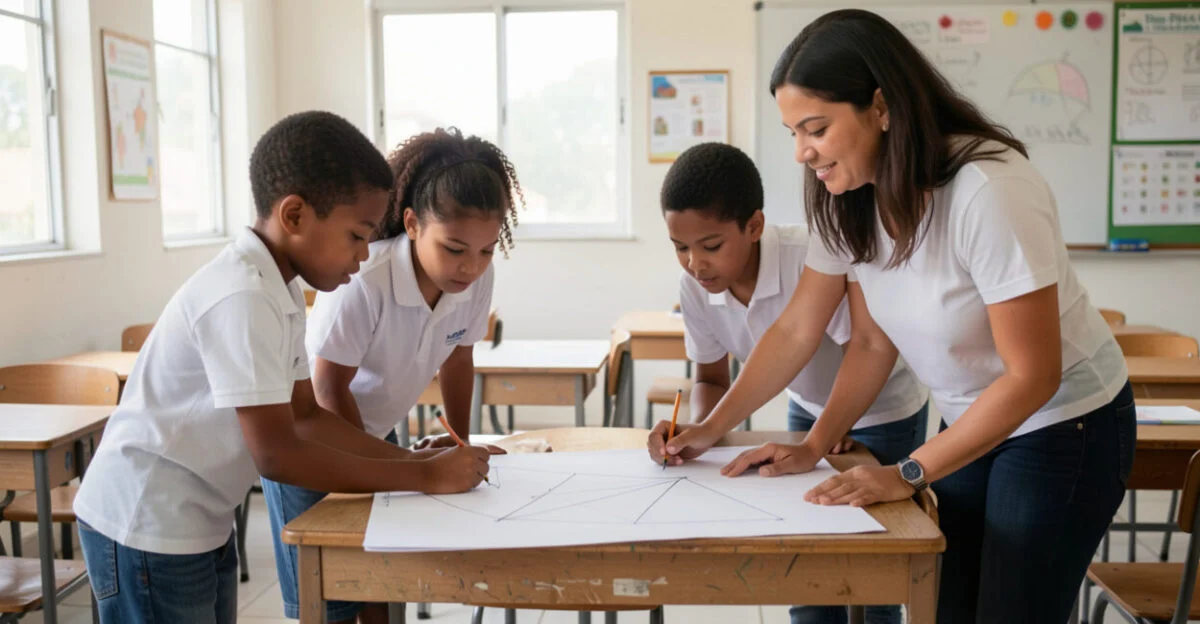
An intervention can combine step-by-step explanations, worked examples, guided practice, scaffolded activities, different representations, and a review of prerequisite skills. Teachers choose strategies based on the difficulty: diagrams may help students understand mathematical relationships, while shared reading can support those who struggle to understand the directions.
Read also: School Planning: Turn Goals Into Effective Actions
Small groups encourage students to share strategies when they have similar needs; more individualized support may be a better fit when a student needs a different pace or closer observation. No single format works for every case, and each school’s resources also affect what is possible.
Feedback should guide the next step. Instead of simply saying “That’s wrong,” a teacher can point out what the student did correctly, show where their reasoning went off track, and suggest a specific next attempt. To organize this follow-up, these ways to track learning through formative assessment can help identify evidence beyond a final test.
Read also: OAB: Essential Tips and Strategies for Passing the Brazilian Bar Exam
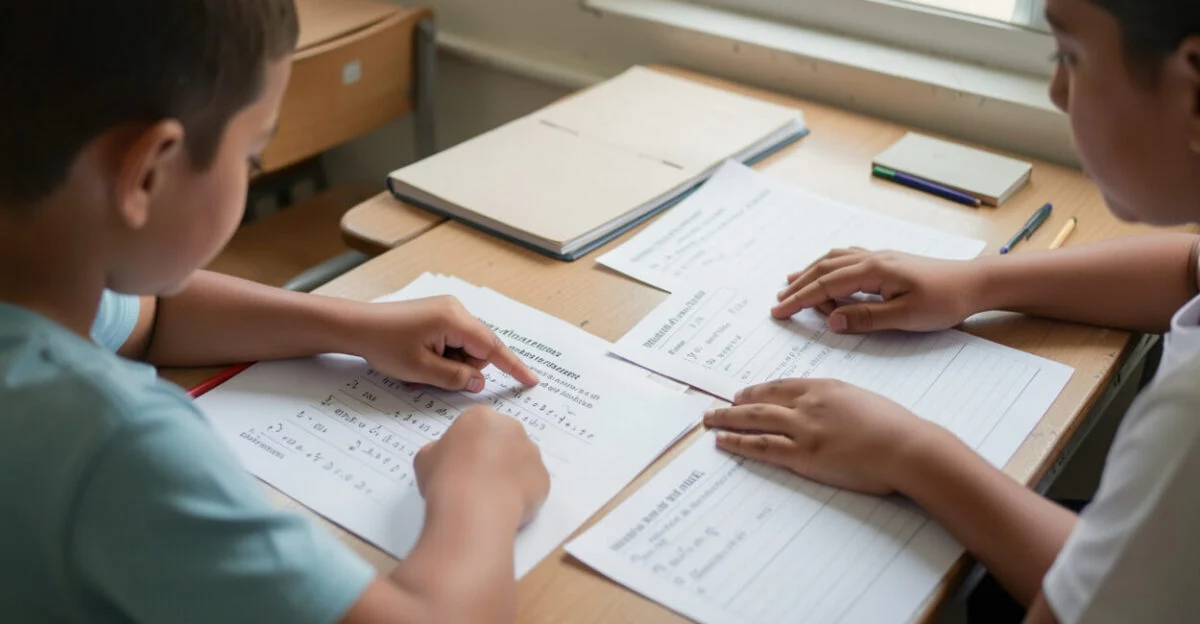
Five practices are especially useful for improving instructional support at school: identify difficulties early; plan interventions with defined objectives; vary strategies to match student needs; give specific feedback; and maintain communication between school staff and families.
Useful feedback turns mistakes into information that can guide the next instructional step.
How to Plan and Monitor Remediation
Documenting the plan lets teachers check whether the chosen strategy addresses the initial difficulty and decide when it needs to be adjusted. The plan should include what was observed, the objective, the intervention, the materials, the monitoring period, and the evidence that will indicate progress.
Observed difficulty Learning objective Support strategy Evidence of progress The student cannot identify which operation to use in addition and subtraction word problems Identify the operation needed and explain the choice Compare word problems, solve guided examples, and assign scaffolded problems Solve a new problem and explain the choice
Monitoring should use tasks or observations related to the objective. For example, if a student still cannot explain which operation to use, getting the right answer by guessing is not enough to conclude that learning has been consolidated. Classroom records and work samples over time help show whether progress carries over to different situations.
If the evidence does not show progress, it may be worth revisiting the initial hypothesis, the activity, or the amount of support. Documentation informs instructional decisions, but does not guarantee a particular outcome: progress varies based on the difficulty, instructional conditions, and each student’s response.
- What difficulty or skill was identified?
- What is the learning objective?
- What strategy will be used?
- What evidence will show progress?
- When will the intervention be reviewed or adjusted?
How to Involve Families and School Staff
A conversation with the family should explain what the school observed, what support it will provide, and how the student’s progress can be monitored. The message is clearer when it describes a specific situation, such as difficulty interpreting word problems, instead of labeling the student as “weak” or “uninterested.”
Families can support the agreed-upon routine, but they should not be expected to take the place of instructional support. Teachers, school leaders, and other staff involved need to align on objectives and monitoring methods while protecting the student’s confidentiality. Agreeing in advance on communication channels and update times helps prevent mixed messages.
Because the intervention is part of instructional planning, it is also important to align it with the school’s policies and practices. The school’s political-pedagogical project, a planning document used in Brazilian schools, can help explain how the institution organizes its instructional initiatives and communication with the community.
The Right to Remediation and School Policies
Brazilian education law provides for remedial studies, preferably alongside the regular school term, and requires institutions to set their procedures in accordance with the rules of the school system. The Lei de Diretrizes e Bases da Educação Nacional (LDB), Brazil’s National Education Guidelines and Framework Law, addresses this in Article 24, Section V, item “e.”
For this reason, there is no single number of tests, attempts, or remediation periods that applies to every student in the country. Families and school staff should consult the school’s policies and the rules of the district or school system to check the calendar, assessment criteria, support options, and documentation procedures.
The Base Nacional Comum Curricular (BNCC), Brazil’s National Common Core Curriculum, published by the Ministry of Education, provides a reference for learning objectives in basic education; the organization of support and specific procedures depend on the rules that apply to each institution. The BNCC document can be consulted alongside the school system’s curriculum and the school’s policies.
The right to remedial studies does not guarantee a passing grade or, by itself, determine how many assessments a student will take. To get started, the team can document a specific difficulty, check local rules, and agree on an intervention with clear ways to monitor progress. This initial plan provides a basis for talking with the family and revising strategies as the student progresses.
Frequently Asked Questions
How many remediation opportunities is a student entitled to?
There is no universal number of tests or remediation periods that applies to every school. The number and procedures depend on the rules of the school system and the school’s policies.
Does an extra assignment count as remediation?
It can be part of the support, as long as it addresses an identified difficulty and allows the student’s learning to be monitored. An assignment without a clear objective may not address what the student needs to revisit.
How can you tell if the chosen strategy is working?
Look for evidence related to the objective, such as solving a new problem, explaining a line of reasoning, or completing work at different points in time. If the student is not making progress, revisit the hypothesis about the difficulty and adjust the intervention.
Who should monitor the remediation plan?
The instructional team is responsible for monitoring, with teachers involved and coordination with school leadership as appropriate to the school’s structure. Families can follow agreed-upon updates without taking the place of instruction.
Does parallel remediation guarantee that a student will pass?
No. It provides support to help students consolidate learning, but passing and assessment follow the criteria and rules that apply to the school and school system.
What should you do if the difficulty persists despite support?
Review the evidence and check whether the objective, strategy, and monitoring period are appropriate. If signs suggest that a specialist evaluation may be needed, the school can follow its protocols and speak with the family without presuming a clinical diagnosis.
Artigos Relacionados
 Executive Functions in Learning: How to Support Students
 Improving Support for Students with Autism
 Moving from 5th to 6th Grade: How to Support Students
 Early Literacy at Home: Strategies to Support Your Child
 Neuropedagogy and Inclusion: Adapting for Every Student
 School Partnerships: How to Support Elementary Reading
