
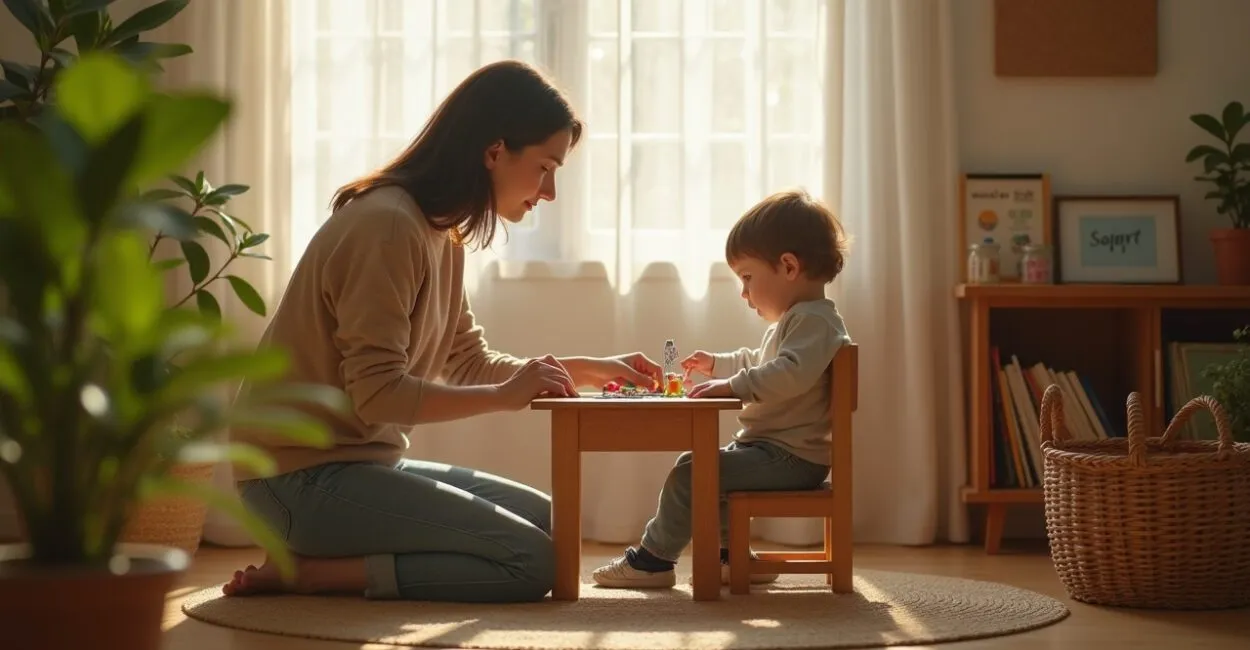
It’s the process of turning the theory covered in early childhood education courses into concrete actions that fit into family life. In essence, it means breaking learning goals down into daily activities and adjusting schedules, materials, and informal assessments so families can support a child’s development consistently. Practical application isn’t about copying lesson plans; it’s about adapting educational goals to the family’s circumstances, caregivers’ availability, and the child’s interests.
Key Takeaways
- Turning course objectives into routines requires prioritization: choose three measurable weekly goals and repeat them with daily variations.
- An effective weekly plan combines guided play, self-help routines, and interactive reading; adjust activities to the child’s age to keep the challenge appropriate.
- Informal tracking (a daily checklist) and brief notes (three observations per week) provide enough information to adjust activities without creating extra paperwork.
- Common mistakes include overscheduling the day, setting unrealistic goals, and failing to give the child clear cues. Break tasks into smaller steps and establish predictable routines.
- Using community resources and reliable references (IBGE, Brazil’s Ministry of Education (MEC), and pediatric guidance) strengthens credibility and enriches family practices.
Why Prioritize Goals When Applying Course Practices to Everyday Routines?
Prioritizing goals makes practical application manageable. Courses cover dozens of skills, while families have limited time. Choosing up to three goals per week keeps everyone focused and makes results easier to observe. Well-written goals specify the target behavior, context, criteria, and timeline. For example: “By Friday, the child will put away one toy with a verbal prompt in four out of five attempts.” Clear goals guide activity choices and make progress easy to assess.

How to Choose Goals That Work at Home
Start with a quick assessment: observe your child for three days and note behaviors that occur frequently or cause frustration. Prioritize goals that support independence and social interaction, such as picking up a utensil, naming emotions, or following simple routines. Avoid focusing solely on academic goals for very young children; emphasize language, coordination, and self-regulation.
Goals should be small, specific, and tied to everyday routines.
When to Change a Goal
Change a goal when your child demonstrates consistent success (more than 80% over two weeks) or shows persistent regression (less than 30% success). Family changes, such as moving or illness, may also warrant a change. Document why you’re changing the goal and what the new criteria are.
This helps prevent impulsive changes and keeps the plan aligned with real progress.
How to Structure a Weekly Plan Around Family Life
An effective weekly plan has five parts: preparation, a starting ritual, guided activities, self-care routines, and a wrap-up or reflection. Each part should be brief and have a clear purpose. Frequent repetition is the foundation of early childhood learning. Keep the plan somewhere visible and treat it as a flexible guide, not a rigid obligation.
Example: A Plan for Ages 3–4
Monday: 10 minutes of interactive reading (focus: vocabulary); 15 minutes of a simple game with rules (focus: taking turns); 10 minutes of self-care (washing hands). Tuesday: music and movement; Wednesday: a sensory activity; Thursday: free drawing with prompts to encourage language; Friday: a playful review of the week’s skills. Each session uses minimal materials and includes variations to prevent boredom. Weekly goal: add eight action words to the child’s vocabulary.
Adapting the Plan for Ages 0–2 and 5–6
Ages 0–2: Keep sessions shorter (3–7 minutes) and focus on sensory routines and bonding. Set up designated spaces for rest and meals. Ages 5–6: Increase guided activities to 15–20 minutes and introduce sequential projects and a brief study routine. Keep activities repetitive and use visual cues to help with transitions.

Simple Tools for Implementation and Progress Tracking

Practical tools make routines easier to stick with. Use a daily checklist, a visual chart showing the activities, and a quick journal with three lines per day. Apps can help, but paper is enough and often more accessible. The key is to keep records brief and consistent so you can make informed decisions each week.
Daily Checklists and Observable Indicators
Checklist: 1) Completed morning routine, 2) Guided play, 3) Interactive reading, 4) Self-care, 5) Sleep. Indicators: independence (0–3 points), engagement (0–3), behavior (0–3). Weekly totals can guide adjustments. This system turns observations into decisions without requiring a formal assessment.
Read also: Early Childhood Course Investment: How Much to Pay for Quality
Tracking Progress Without Extra Paperwork
Use a three-line journal: (1) what worked, (2) what didn’t, and (3) what to adjust tomorrow. Five minutes a day is enough for caregivers to spot patterns. Collect information for two weeks before revising the plan. This helps prevent reactive changes.
Activities by Age Group and Learning Goal
Effective activities connect a learning goal with materials and context. The table below matches age groups with goals and practical examples, making it easier to choose activities that fit both the course and everyday life.
| Age Group | Goal | Example Activity |
|---|---|---|
| 0–2 years | Bonding and sensory exploration | Sensory bin with fabric and spoons; playful bath time naming body parts |
| 3–4 years | Language and self-regulation | Interactive reading with open-ended questions; turn-taking game with a visual timer |
| 5–6 years | Sequencing, attention, and independence | Three-step project (plan, do, present); routine for making a simple snack |
How to Scale Activities Without Sacrificing Quality
To scale activities, create short, five-minute scripts that different caregivers can follow. Spend 15 minutes training a caregiver, then check how it’s going through observation. Use photos and step-by-step cards. Standardized routines help maintain consistency and make it easier for other family members to participate without compromising quality.
Common Mistakes and How to Fix Them Quickly
Common mistakes can undermine practical application: trying to introduce too many goals, planning activities that are too long, and failing to give the child clear cues. Break tasks into smaller steps, shorten activities, and use visual cues such as timers and charts. Quick adjustments can get the routine back on track in days, not weeks.
Examples of Quick Fixes
If your child loses interest, split the session into two shorter parts and offer immediate positive feedback. If caregivers forget, post visual reminders and set fixed times after predictable events (for example, after a snack). Small changes can make a big difference when applied consistently.
When to Seek Professional Support
Seek professional guidance if your child shows persistent regression, you suspect a global developmental delay, or sensory difficulties interfere with daily routines. Use information from the checklist and journal to share specific examples. Professionals can use these details to tailor strategies instead of relying on repeated trial and error.
Resources and References to Support Family Practices
Using reliable sources can help you feel more confident about applying these practices. Consult guidelines from Brazil’s Ministry of Education for educational principles and data from IBGE, Brazil’s national statistics agency, for information about families. For children’s health recommendations, consult pediatric associations and peer-reviewed articles. These sources can help ensure your practices are evidence-based.
Additional Reading and Courses
Look for courses that offer clear goals, practical materials, and simple ways to assess progress. Courses that include sample weekly plans and video demonstrations make it easier to apply what you learn at home. Combine professional reading with small, controlled experiments at home, and track the results each week.
Useful Online Tools
Checklist apps, visual timers, and libraries of lesson plans can make it easier to get started. Prioritize tools that let you export data for your records. Offline tools such as charts and cards work just as well and are more accessible for many families.
Next Steps for Getting Started
In short: choose up to three weekly goals, create a plan with five brief sections, track progress with a checklist and a three-line journal, and use real data to make adjustments every two weeks. Start small with a two-week cycle and clear goals. If it doesn’t work, change one element at a time. This approach reduces frustration and makes the routine easier to maintain.
Immediate Action Plan
Day 1: Observe and record three target behaviors. Day 2: Set three goals and create a checklist. Days 3–14: Do the activities and fill out the journal. Day 15: Review the information and revise the plan. This short cycle helps caregivers learn and children make progress without becoming overwhelmed.
Decisions That Make a Difference
The most important decision is to prioritize consistency over quantity. Five focused minutes every day are better than 60 minutes now and then. Involving a second caregiver and documenting progress can amplify results. Put these practices in place from the first cycle.
Frequently Asked Questions
How Can I Adapt Course Activities Right Away When Time Is Limited?
Start by choosing one core skill from the course and breaking it into three- to 10-minute micro-tasks. Replace expensive materials with household alternatives and make a visual card showing the steps. Schedule the activity at a consistent time after a predictable event (for example, after a snack). Track success with a simple checklist and adjust the duration or level of support as needed. This approach makes daily practice possible without long sessions or special materials.
How Often Does a Child Need to Practice to Make Progress?
Measurable progress usually comes with consistent practice: at least five days a week, for 10–20 minutes a day, depending on the child’s age and the skill. For fine motor skills and early language, short, repeated sessions work better than one long session each week. Keep records for two weeks before deciding there’s been no progress; small adjustments are better than stopping altogether.
How Can I Involve Other Family Members Without Losing Consistency?
Standardize the steps with short scripts and visual cards. Train each person for 10–15 minutes by demonstrating the activity and asking them to practice it. Use a visible schedule to show who does what and when. Have everyone record observations on the same checklist to keep the information consistent. Standardized routines reduce differences between caregivers and preserve consistency in the strategies you use.
What Signs Mean My Child Needs a Professional Evaluation?
Seek an evaluation if you notice persistent delays in multiple areas (language, motor, or social development) or regression that doesn’t respond to simple adjustments after two weeks. Losing previously acquired skills, frequent crying for no apparent reason, or sensory difficulties that interfere with daily routines are also reasons to seek support. Bring your checklist and journal to the professional to help speed up assessment and intervention.
How Can I Measure Progress Without Extensive Formal Assessments?
Use observable, repeatable indicators: how often your child acts independently, how long they stay focused, and how many prompts they need. Assign simple scores (0–3) and add them up each week. If possible, take photos or short videos to compare over time. Collect information for two weeks before revising the plan. This approach provides enough evidence to make practical adjustments without extra paperwork.
Artigos Relacionados
 Early Childhood Activities: A Daily Routine for Emotional Development
 Effective Brain Stimulation in Early Childhood Education
 Collaborative Learning in Early Childhood Education
 Early Childhood Education: The Importance of Play in Child Development
 Evaluating Early Childhood Courses: Essential Criteria
 Methodologies in Early Childhood Courses: Montessori and More
