
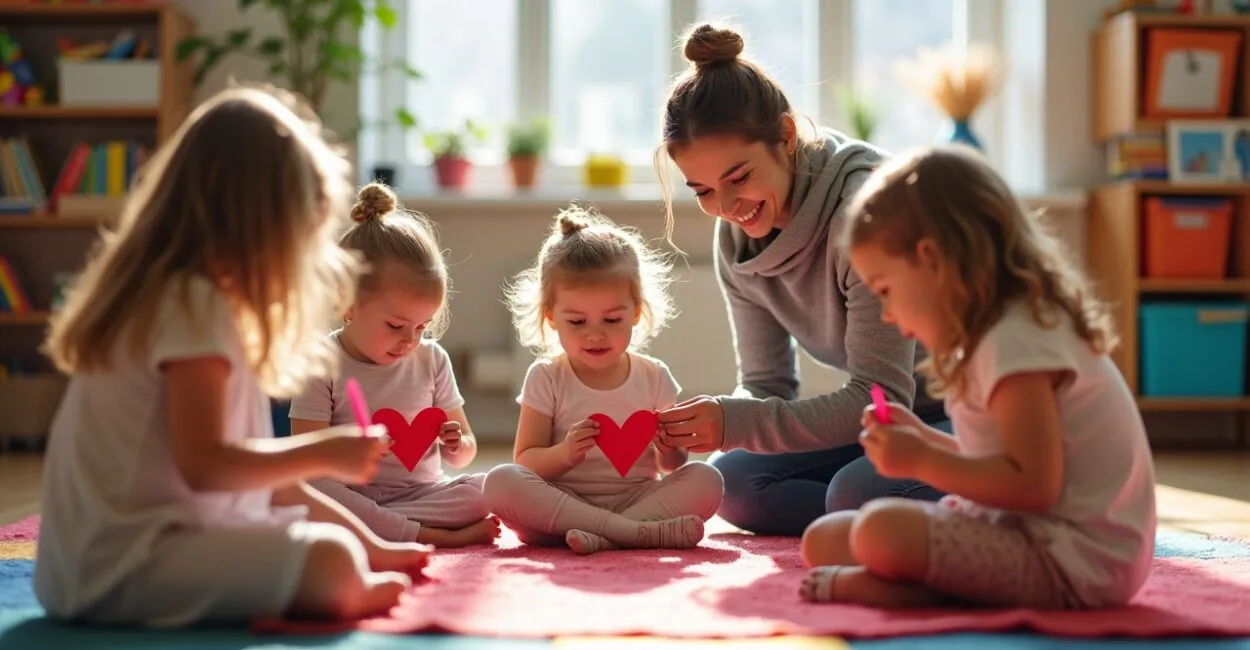
A well-chosen phrase can change how a child sees others—and that matters when it comes to Women’s Day messages. In the classroom, on a handmade card, or during a group discussion, short words can have a powerful impact when they express respect, affection, and meaning. For early childhood education, the challenge isn’t to “sound fancy”; it’s to say something a child can understand, remember, and carry with them. Women’s Day messages should be simple, sincere, and free of stereotypes, because that’s the first step toward teaching appreciation, equality, and empathy from an early age.

What You Need to Know
- Short messages work better for young children because they understand concrete phrases more easily than long speeches.
- Women’s Day can be an opportunity to teach respect, not just a day for generic compliments.
- Phrases focused on courage, care, intelligence, and diversity help avoid stereotypes about “what women should be like.”
- Activities involving cards, drawing, and reading aloud strengthen the connection between language, memory, and social values.
- A good message for children highlights human qualities, not appearance, and recognizes the role women play at home, at school, and in society.
Women’s Day Messages for Early Childhood Education: How to Choose Words That Shape Values
In practice, children repeat what they hear. If they hear empty messages, they tend to remember only the date. If they hear meaningful phrases, they begin to associate Women’s Day with respect, visibility, and recognition.
The central idea here is formative communication: a short message that doesn’t just inform but helps shape attitudes. Put simply, it means choosing words that help children understand that women deserve admiration for who they are and what they do.
A good Women’s Day message doesn’t dress up reality: in just a few words, it teaches that respect is a value that starts in childhood.
What Works Best with Young Children
- Phrases with 5 to 10 words tend to have more impact than long passages.
- Concrete words like “strength,” “kindness,” “courage,” and “friendship” are easier to understand.
- Messages that connect women to real actions are more helpful than abstract compliments.
A useful reference for this approach is UNICEF in Brazil, which emphasizes the importance of educational practices that support children’s holistic development. It’s also worth reviewing guidance on community life and human rights in resources from the Ministry of Education, Brazil’s national education agency.
Short, Powerful Women’s Day Phrases for Cards
Cards made by children call for phrases that are easy to read, remember, and illustrate. The goal isn’t to impress adults; it’s to reach the child and give them simple words to express admiration.
Phrases That Fit Well on Cards
- You are strength, kindness, and light.
- Your example inspires the world.
- Women make life bloom.
- Respecting women is an act of love.
- The way you care makes everything better.
- Courage has a woman’s voice, too.
- Today, we celebrate all that you are.
More Affectionate Options for Young Children
- You are special and deserve kindness.
- Your presence makes everything more beautiful.
- Women matter every day.
Anyone who works in early childhood education knows that a card comes to life when the message matches the child’s drawing. A flower, a heart, a teacher, a mom, or a grandmother can help the message make sense without requiring advanced reading skills.
When a phrase is short and concrete, children don’t just memorize words: they begin to understand the value of recognition.
Women’s Day Message Ideas for Moms, Teachers, and Grandmothers

Not every message needs to be generic. When you tailor the words to a woman the child knows, the result feels more sincere and heartfelt.
For Moms
- Mom’s care makes you feel at home.
- Your love makes our home happier.
- You teach with patience and kindness.
For Teachers
- Teacher, your work opens doors.
- You teach with dedication and wisdom.
- Your presence helps our school grow.
For Grandmothers
- Grandma, your hugs hold stories.
- The way you love is unforgettable.
- Your kindness spans generations.
A real-life example helps illustrate the idea: in a class of five-year-olds, a teacher asked each child to finish the sentence “A woman is…” At first, the answers were simple, like “pretty” and “nice.” After listening to stories and having a guided discussion, the children came up with deeper words: “brave,” “caring,” and “smart.” Their vocabulary changed because the activity had a clear purpose.
How to Avoid Stereotypes When Talking About Women’s Day
This matters more than it might seem. If a message focuses only on gentleness, beauty, or fragility, it presents a narrow view of women. Children learn through repetition, so the words we choose should reflect the full range of who women are.
Read also: Short Messages for Elementary School Students: 25 Options
The best approach is to balance emotional qualities with real abilities: leadership, creativity, work, care, courage, and knowledge. This applies to family, school, and printed materials.
Avoid These Pitfalls
- Focusing only on physical appearance.
- Describing every woman as “sweet” or “sensitive” all the time.
- Using phrases that diminish women’s strength or independence.
- Repeating empty compliments that aren’t tied to actions.
Resources from UNESCO offer a helpful foundation for this discussion, connecting education, equality, and civic development. For a broader view of women’s participation in Brazil, data from IBGE, Brazil’s national statistics agency, can help show the presence of women across different areas of society.
Simple Classroom Activities for Exploring These Messages
A message becomes more powerful when it turns into an experience. Instead of simply handing out a premade card, make the message part of an activity involving speaking, drawing, cutting, and reading together.
Practical Ideas
- Illustrated card: Each child chooses a short phrase and draws an important woman in their life.
- Group reading: The teacher reads three messages and discusses what each one means.
- Class mural: Each student adds a word that represents a quality women have.
- Finish the sentence: “My mom is…,” “My teacher is…,” “Women are…”
These activities work because they connect language with emotion. When children draw, choose words, and speak in front of others, they engage with the day more deeply than they would by simply copying phrases onto paper.
Where to Use Women’s Day Messages Without Losing Their Meaning
Not every phrase works in every setting. A poetic message might look great on a bulletin board but may not fit on a small favor. A simple, direct phrase works better on a card, in a school planner, or on a craft project.
| Setting | Best type of message | Example |
|---|---|---|
| Individual card | Short and heartfelt | You are strength, kindness, and light. |
| School bulletin board | Inclusive and inspiring | Women make life bloom. |
| Small gift or favor | Direct and easy to read | Respecting women is an act of love. |
| Group discussion | Thought-provoking | Courage has a woman’s voice, too. |
There’s an important nuance here: not every class responds in the same way. With very young groups, messages need to be more concrete; with older children, there’s more room for discussion and comparing ideas. This approach works well when the goal is educational, but it falls flat when it becomes nothing more than holiday decoration.
Ready-to-Use Messages to Inspire Your Materials
If you want to save time without sacrificing quality, start with ready-made examples and adjust the tone to fit the activity. These phrases work well in materials for children and use respectful language.
Neutral and Inspiring Messages
- Women make history every day.
- Your work, your voice, and your presence make a difference.
- The world is better when women are respected.
- Strength and gentleness can go hand in hand.
- Valuing women means valuing life.
More Heartfelt Messages
- Your love brightens our days.
- You deserve flowers, kindness, and recognition.
- Your example teaches us without many words.
These options don’t have to compete with one another. The best choice depends on your goal: to move children, teach them, or involve the class in a group project. Quality depends less on finding the “perfect phrase” and more on matching the message to the audience and activity.
What to Do Next
If you want to make the day meaningful, start by choosing phrases that get children thinking about respect, not just giving praise. Create cards, bulletin boards, or reading activities with short language, simple images, and examples of real women in the children’s lives. Here’s a practical rule for getting it right: each message should be easy for a child to understand while also broadening their view of women’s roles. When that happens, Women’s Day messages stop being decoration and become a way to teach values.
Frequently Asked Questions
What are the best Women’s Day messages for early childhood education?
The best messages are short, positive, and easy to understand. Phrases like “You are strength, kindness, and light” or “Women make life bloom” work well because they combine warmth and meaning.
Can I use ready-made phrases on cards for children?
Yes, especially when the children are young or just learning to read. Choose simple phrases and pair them with drawing, collage, or painting to reinforce understanding.
How can I avoid stereotypes in Women’s Day messages?
Don’t focus only on beauty, gentleness, or appearance. Choose words that highlight courage, care, intelligence, work, and presence.
How long should a phrase for young children be?
In general, phrases with 5 to 10 words are easier to remember. If a child isn’t reading independently yet, an image should help reinforce the message.
Can these messages be used for moms, teachers, and grandmothers?
Yes, as long as you tailor the tone to each person. Personalized messages are more meaningful because children understand who they’re speaking to and why.
Can Women’s Day be taught in the classroom as more than a celebration?
Yes. When an activity includes discussion, reflection, and creative work, the day becomes a meaningful learning experience rather than just a symbolic gesture.
%%AGPTRH13%%
Artigos Relacionados
 Early Childhood Activities: A Daily Routine for Emotional Development
 Entrepreneurship for Young Children: Early Childhood Activities
 Early Childhood Education Courses for Parents
 Household Chores That Build School Independence Early
 Play at School: Bringing Free Play Into the Early Childhood Curriculum
 Creative Play: 8 Activities That Inspire Creativity
