

An alarming message lands in the family group chat, complete with a chart and the words “science has proven it.” Should you share it, believe it, or investigate? Learning how to develop critical thinking helps you decide what to do next by asking questions and looking for evidence, rather than simply reacting to the apparent credibility of whoever posted it. You can practice this skill in everyday decisions without any specialized training.
Practice begins when you separate what you know from what you’re assuming. Then check where the information came from, consider alternative explanations, and revise your conclusion if better evidence emerges. The process takes time: the goal isn’t to doubt everything, but to reason more carefully when a claim or decision matters.

How to Develop Critical Thinking in Everyday Life
Developing critical thinking means deliberately practicing how to interpret information, evaluate evidence, and revisit conclusions. To get started, choose a specific claim, identify what could confirm or disprove it, consult independent sources, and write down what you still don’t know. Repeat this process in everyday situations, gradually taking on more complex questions.
This process involves interpretation, analysis, evaluation, inference, explanation, and self-regulation—the skills described in Peter A. Facione’s consensus report on critical thinking. The Stanford Encyclopedia of Philosophy entry “Critical Thinking” also explores different approaches to the subject and related debates. There’s no one-size-fits-all formula: evaluating medical research requires specific expertise that isn’t needed to decide whether an ad exaggerates a product’s benefits.
A well-supported conclusion shows which evidence supports it and what could still change it.
What Critical Thinking Is—and What It Isn’t
Critical thinking is the deliberate, self-regulated process of interpreting information, analyzing arguments, evaluating evidence, and considering the consequences of a conclusion. Put simply, it means examining why you believe something and whether the available reasons justify that belief.
“Reflective thinking” and “critical reasoning” are closely related terms, though they aren’t perfect synonyms in every context. Searches for critical thinking synonym may turn up different uses: in philosophy, education, and other fields, the meaning depends on the question and the method being used.
Critical thinking doesn’t mean being negative or looking for flaws in every idea. It also doesn’t mean accepting a claim just because it sounds reasonable. Skepticism can be part of the process, but a responsible skeptic changes their position when the evidence warrants it; rejecting everything outright simply replaces one certainty with another.
In the tradition of critical thinking philosophy, scholars debate which dispositions and skills belong in the definition. In practice, the useful distinction is this: questioning means asking what reasons support an idea; criticizing for its own sake means rejecting it before examining those reasons.

How to Evaluate a Claim in Four Steps

When information grabs your attention, avoid making a snap judgment. Use the steps below as a tool for investigation, not as a checklist you have to complete in every conversation.
- Define the claim. Turn vague statements into something you can verify. “This method works” doesn’t tell you much: Who does it work for, in what situation, and according to what outcome?
- Examine the evidence. Look for the original source, the date, the method, and the data supporting the claim. A testimonial may describe one person’s experience, but it doesn’t prove the same result will occur for everyone.
- Consider alternatives. Ask what else could explain the same result and what evidence would change your mind. This step reduces the risk of accepting only what confirms your initial impression.
- Calibrate and revisit your conclusion. Match your level of confidence to the quality of the evidence. If better information emerges, update your conclusion without treating a change of mind as a failure.
A common mistake is treating the number of shares as proof. Popularity and trustworthiness may seem to go hand in hand, but they measure different things. Before reposting something, find the study or document it cites, check whether it actually says what the post claims, and look for independent confirmation.
Examples of Critical Thinking in News, Research, and Decisions
If a news story says a food “cuts risk in half,” ask which risk was measured, in what group, and whether the article gives absolute figures or only a relative comparison. A relative effect can sound dramatic without showing how many people were affected; without the full data, a headline isn’t enough to guide a health decision.
On social media, check who posted the content, when it was created, and where the images or numbers came from. To evaluate a source, see whether it identifies authors and documents, explains how it reached its conclusion, distinguishes opinion from evidence, and corrects errors. Also compare the claim with independent sources that are appropriate to the topic. For questions involving health, law, or finances, look for relevant professional or institutional sources; a quick search isn’t a substitute for expert advice.
At work, a team might blame delays on a lack of effort. A closer look separates the observation (“the deadline was missed”) from the interpretation (“people didn’t try hard enough”) and checks other possibilities, such as an unclear scope, external dependencies, or unrealistic estimates. The discussion can then focus on verifiable causes instead of accusations.
Leia também: SSD vs. HDD for a Budget PC: Which Is Better for Studying?
When studying, comparing a textbook explanation with the source cited by your instructor can help you spot the difference between a summary, evidence, and interpretation. To make this practice easier, try these simple changes to your study space to reduce interruptions when a task calls for close reading.
For personal decisions, such as signing up for a course, list what you need to accomplish, which criteria matter most, and what information you’re missing. If two options seem similar, decide in advance what will determine your choice: total cost, time, content, or support. Having a criterion in mind can keep you from changing your preference every time you see a persuasive ad.
Critical Thinking and Analytical Thinking: What’s the Difference?
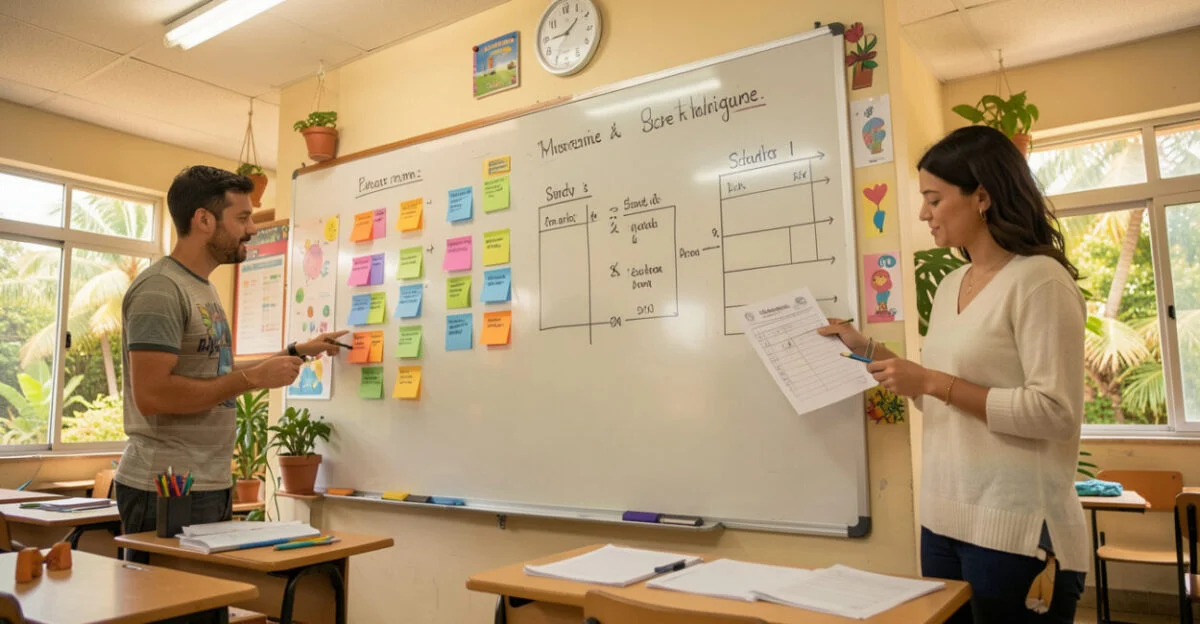
Analytical thinking breaks a problem into parts and examines how they relate; critical thinking evaluates whether interpretations and conclusions are justified. The two complement each other: analyzing data can reveal a pattern, while critical judgment asks whether that pattern is relevant, reliable, and sufficient to support a decision.
Aspect Analytical thinking Critical thinking Goal Break down a problem and identify relationships. Evaluate arguments, evidence, and conclusions. Typical question What are the parts of the problem? Does the evidence justify this conclusion? Example Sort monthly expenses by category. Check whether a change in one expense explains the difference in the budget. Relationship Creates a framework to examine. Evaluates the quality of the framework and the inferences.
One example of analytical thinking is dividing study time into reading, practice problems, and review to pinpoint where a difficulty arises. The critical-thinking step comes next: check whether the assessment method actually measures what the student learned or whether other factors affected the result.
Habits, Knowledge, and the Limits of This Skill
Active listening is a useful practice: before pushing back on someone’s opinion, restate their argument in a way they would recognize as accurate. If your paraphrase doesn’t reflect what they said, you haven’t fully understood their reasoning yet. This care also connects to other interpersonal skills you can develop, such as communication and collaboration.
Another practice is to keep a brief record of one decision each week: What was the question? What evidence did you consult? What alternative hypothesis did you consider? What would make you reconsider your choice? Reviewing your notes later can show whether you mistook a coincidence for a cause or ignored an inconvenient fact.
Can You Think Critically Without Specialized Knowledge?
Yes. You can assess the quality of reasoning and recognize your own limits without mastering every subject. You can check whether a source cites studies, whether its conclusion matches the data, and whether relevant institutions agree. But when it comes to technical topics, these checks don’t turn a layperson into an expert; they help you recognize when you need qualified expertise.
Does Critical Thinking Mean Questioning Everything?
No. Questioning everything indiscriminately takes time and can create a false equivalence between strong evidence and unsupported claims. Prioritize claims that affect important decisions, have consequences that are difficult to reverse, or depend on uncertain information.
Time, attention, and access to good sources are limited, too. A provisional conclusion may be the best one available, as long as you know what gaps remain. For matters involving health, safety, or legal rights, critical thinking should support consultation with qualified professionals and sources, not replace it.
The scope of a conclusion should match the scope of the evidence supporting it.
Books About Critical Thinking
When choosing a book about critical thinking, consider whether it teaches you to evaluate arguments and evidence through examples or just offers general advice. Also think about your goal: philosophy explores the foundations of knowledge and justification; logic helps you analyze inferences; and books on argumentation connect these ideas to everyday debates.
The Power of Logic and Argumentation, by Walter A. Carnielli and Richard L. Epstein, is one option for readers interested in logic and the structure of arguments. Before buying, check the edition, how formal it is, and whether the examples fit what you want to study. If you’re searching for “critical thinking book” or “book on critical thinking,” review the table of contents and sample pages, if available.
If you’re searching for a PDF of The Power of Logic and Argumentation, check the publisher’s website, library catalogs, and authorized digital book platforms. Whether a free edition is available depends on the rights and the copyright holder’s permission; a file on a third-party website isn’t necessarily legal.
Why Is Critical Thinking Important in Society?
In society, critical thinking helps people evaluate public information, discuss disagreements with clear reasons, and make decisions that take consequences and uncertainty into account. This matters for issues that affect entire communities, where distorted information can influence other people’s choices as well as those of the person who received it.
Rigorous debate doesn’t require everyone to reach the same conclusion. It requires distinguishing evidence from opinion, representing others’ arguments accurately, and correcting claims when the data don’t support them. In educational and workplace settings, combining these practices with listening and communication can make collaboration more productive; the outcome still depends on the context and the quality of the available information.
To get started today, choose a claim that affects one of your decisions. Write down what it says, find the original source, and note one piece of evidence that could change your assessment. This brief exercise gives you a record you can check against your conclusion later.
Frequently Asked Questions
What’s a good daily exercise to practice?
Choose a claim you came across that day and look for the original source. Also write down what you still need to know before accepting or sharing the information.
Can critical thinking be taught in school?
Yes. Students can develop critical thinking through activities that ask them to explain their reasoning, compare sources, and identify the limits of an argument. Learning improves when these practices are included across different subjects rather than in just one standalone class.
How can you tell a fact from an opinion?
A fact is a claim that can be verified with evidence; an opinion expresses an evaluation or preference. Some statements combine the two. In that case, separate the verifiable part from the judgment that comes with it.
What phrases sum up this approach?
One useful question to guide your investigation is: “What evidence would change my mind?” Another is: “What do I know, what am I inferring, and what don’t I know yet?” These are working questions, not formulas that guarantee a correct answer.
Can critical thinking help with debates and difficult conversations?
It can help you separate the idea from the person and respond to the actual argument instead of attacking a distorted version. Still, it can’t guarantee a productive conversation: participants also need to be willing to listen and treat one another with respect.
Do you need to study formal logic to reason better?
No, not to get started. Formal logic can be useful in advanced studies, but many everyday improvements come from checking sources, distinguishing a claim from its evidence, and seeing whether the conclusion actually follows from the premises.
Artigos Relacionados
 How to Develop Emotional Intelligence in Everyday Life
 Does Creative Education Develop Critical Thinking? An Analysis
 Hard Skills: How to Develop Technical Skills
 Perfectionism: How to Ease Self-Criticism in Everyday Life
 Kids’ Day Motor Skills Course: Movement With Everyday Objects
 Conscious Shopping: The Mistake That Makes Everyday Life More Expensive
