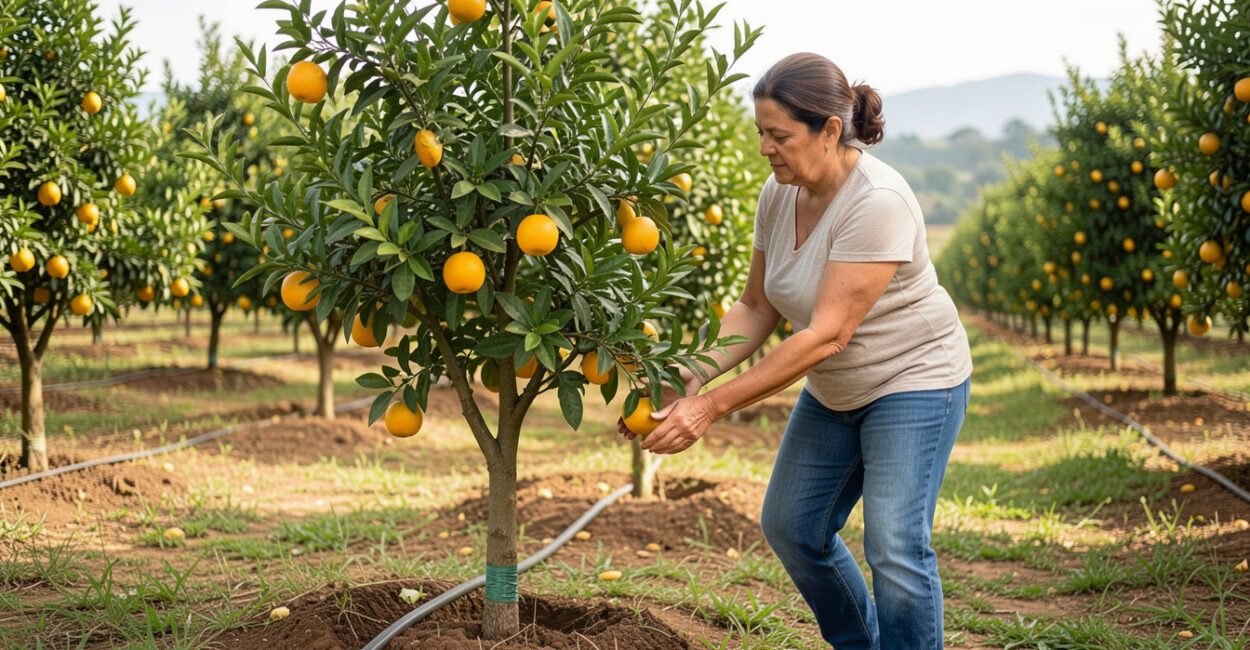
A citrus sapling may grow well for the first few months and still struggle years later because of waterlogged soil, an unsuitable rootstock, or a disease introduced to the orchard. Citrus growing involves planning and management decisions that need to account for climate, soil, cultivar, and production goals. Orange and tangerine trees share some care requirements, but they are not interchangeable crops.
To get started with fewer risks, choose trees from a reputable source, test the soil, and plan irrigation before planting. Then monitor plant growth and adjust fertilization, pruning, and pest and disease management to local conditions. Regional guidance from agricultural extension services can help you avoid generic recommendations that may not work on your property.

Quick summary
- Choose a cultivar and rootstock suited to your climate and orchard goals.
- Use a healthy grafted tree from a traceable source.
- Test the soil before amending or fertilizing the site.
- Monitor for pests and symptoms; confirm the diagnosis before taking action.
Before you start
- Decide whether the orchard is for home use, fresh-fruit sales, or processing.
- Check water availability and whether the site can be adequately drained.
- Look up cultivar and rootstock recommendations for your region.
- Set aside funds to buy certified trees and maintain the orchard during its first few years.
What to consider when growing citrus
Citrus growing involves producing citrus species, such as orange and tangerine trees, using practices for establishing, nourishing, irrigating, and pruning trees and protecting them from pests and disease. To manage an orchard successfully, choose plant material suited to the site’s climate and soil, decide how the fruit will be used, and adapt your approach to the plants’ growth.
Temperature, frost, rainfall, and humidity affect growth, flowering, and fruit quality. Terrain and drainage also matter: standing water around the roots reduces soil aeration and can contribute to root problems. Before choosing a site, see how it holds up after heavy rain.
Your orchard’s purpose will guide your cultivar choice. For fresh-fruit sales, appearance, ease of harvest, and harvest timing may carry more weight; for processing, industrial characteristics are also part of the decision. Orange and tangerine trees also differ in ripening time, canopy shape, and fruit characteristics. For regional technical information, consult Embrapa Mandioca e Fruticultura, Brazil’s agricultural research agency for cassava and fruit crops, and your local agricultural extension service.
How to choose a citrus tree, cultivar, and rootstock
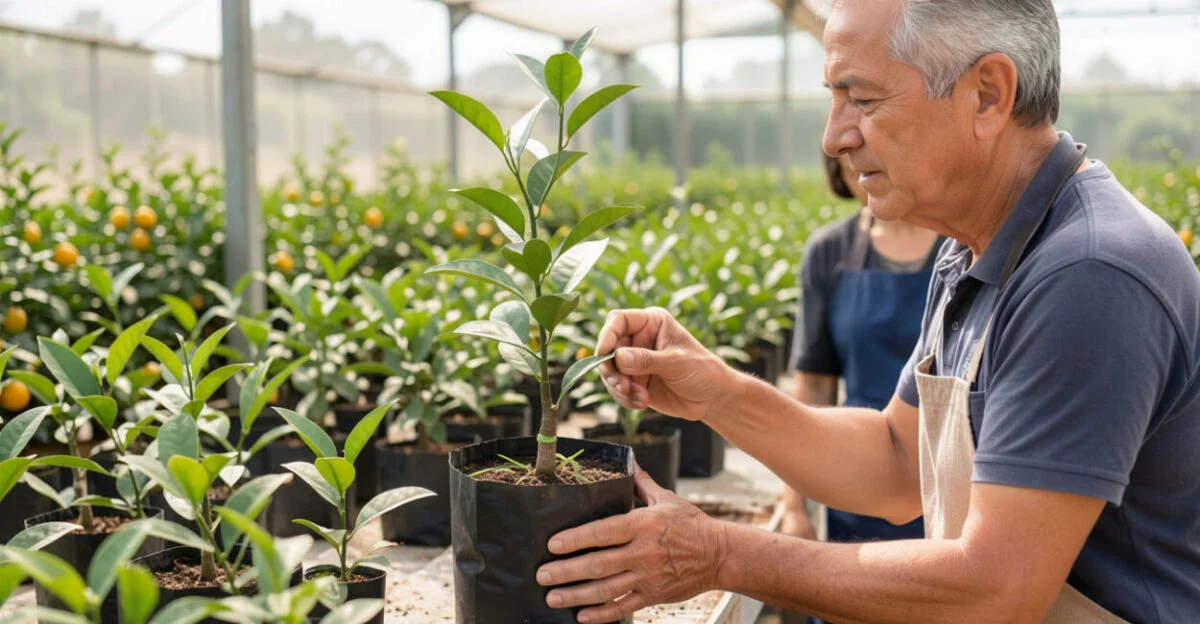
Choose a healthy, labeled grafted citrus tree from a licensed nursery. Grafting combines a scion, which produces the fruit, with a rootstock, which forms the roots and influences traits such as vigor and soil adaptation. A tree grown from seed may take longer to produce fruit and may not grow true to the characteristics of the original fruit.
Check that the tree is well formed and has no major injuries, visible pests, or signs of disease. The graft union should be firm, and there should be no shoots growing from below it. A healthy appearance is important, but it does not replace a reliable source and proof of origin.
Do not choose a citrus rootstock simply because it is common or inexpensive. Compatibility with the cultivar, soil type, water availability, and regional diseases can all affect the outcome. The Instituto Agronômico (IAC), Brazil’s agronomic research institute, maintains citrus research resources; visit its official website and ask about combinations recommended for your area.
How long does it take for a tree to produce fruit?
A grafted orange or tangerine tree often starts bearing fruit a few years after planting, but timing varies with the cultivar, rootstock, climate, tree vigor, and care. Seed-grown trees may take much longer and produce fruit that differs from what you expect. The first fruiting also does not mean the tree is ready to support a commercial harvest.
Soil preparation and citrus planting

The best time to plant citrus depends on the local climate and water availability. In regions with a distinct rainy season, planting is often timed to take advantage of the moisture, as long as the soil does not become waterlogged. Where irrigation is available, the planting window may be longer. Check the recommended timing for your region before digging the holes.
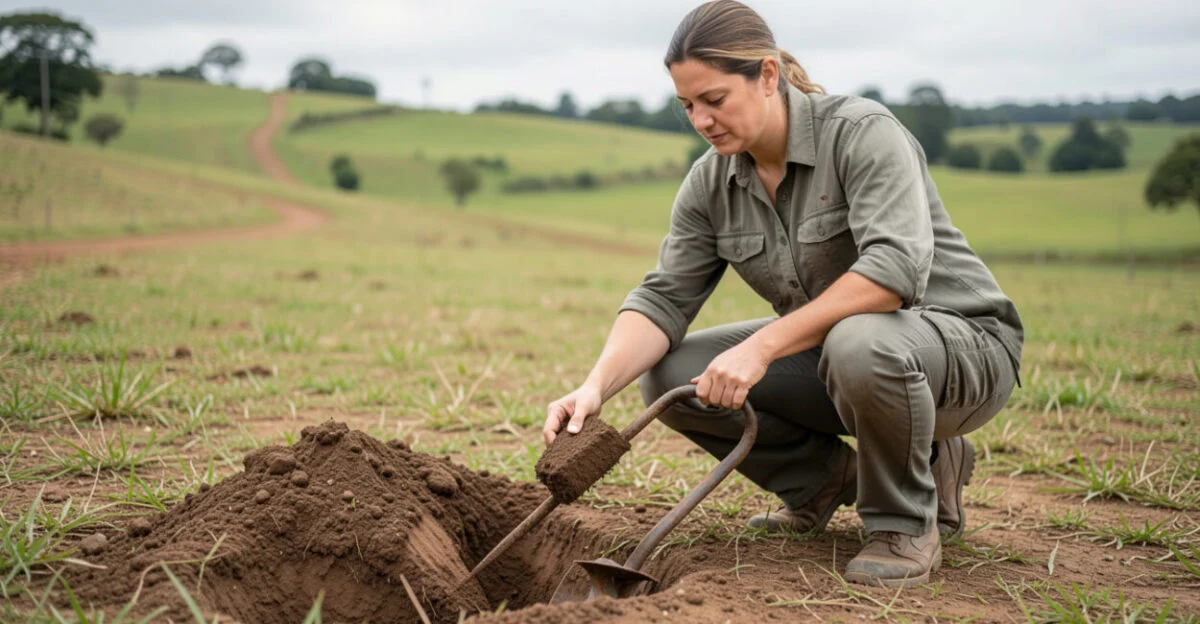
- Test the soil. Collect samples according to technical guidance and request an analysis before applying amendments or fertilizer.
- Assess the site. Check drainage, slope, wind exposure, and water access. Avoid low-lying areas where water tends to collect.
- Set the spacing. Consider rootstock vigor, cultivar, equipment, training system, and regional recommendations; there is no one-size-fits-all distance.
- Prepare the planting site. Follow local recommendations for soil amendments and preparation, and do not concentrate fertilizer where it can touch the roots.
- Plant without burying the graft union. Position the roots, firm the soil without compacting it too much, and water to settle the soil around the tree.
A common mistake is covering the graft union with soil during planting or after the soil settles. This can encourage the scion to develop roots and undermine the rootstock’s role. When you finish planting, make sure the graft union is still above soil level.
Citrus can also be grown in containers, provided you choose a suitable variety and rootstock, along with a pot that drains well and leaves room for root growth. Pot size, sun exposure, and watering require more attention than when growing in the ground. In small containers, the plant may grow less and produce less fruit.
Irrigation, fertilization, and soil management
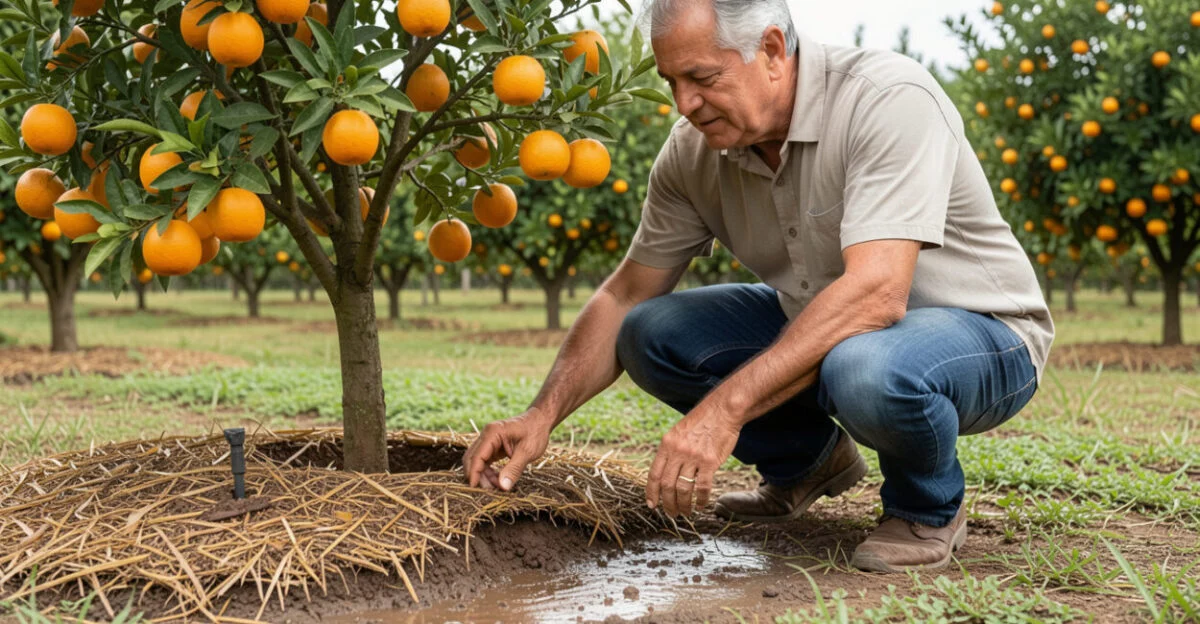
Citrus irrigation should be based on soil moisture and the plant’s growth stage, not a fixed schedule. Newly planted trees need attention to prevent them from drying out, but overwatering can also damage the roots. Check moisture below the soil surface before irrigating, taking recent rainfall, soil texture, and heat into account.
Citrus fertilization depends on soil test results, tree age, nutritional status, and expected yield. Applying fertilizer without a diagnosis can throw nutrients out of balance or cause losses. To guide adjustments, monitor growth and leaf color, but do not diagnose a deficiency based on appearance alone: similar symptoms can have different causes.
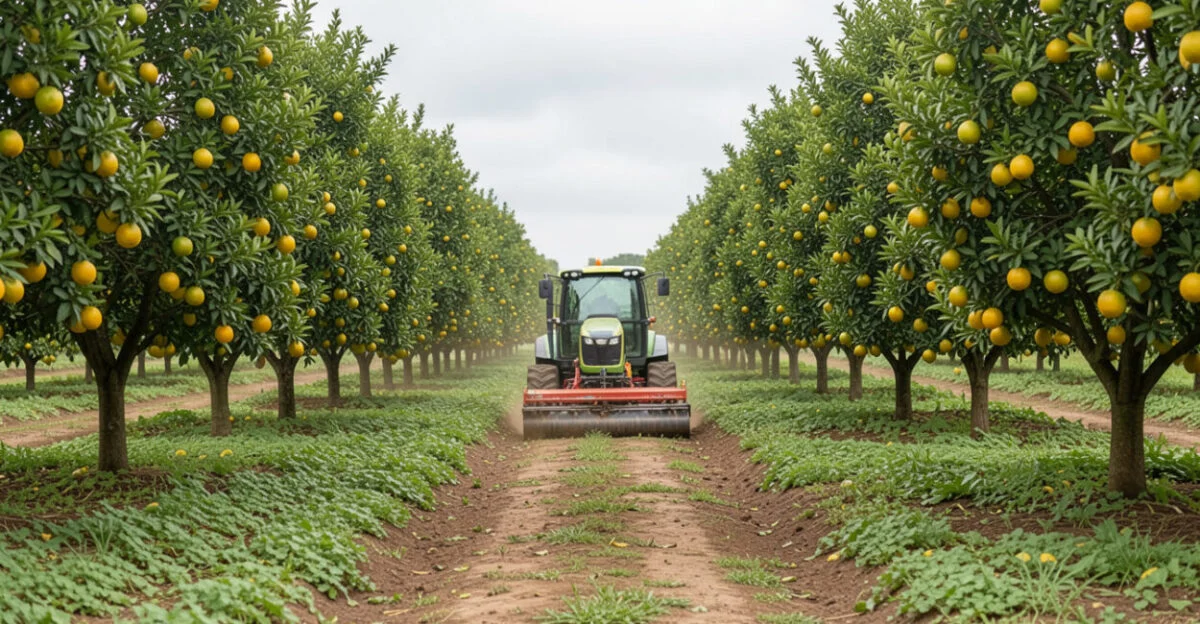
Keep the soil covered with managed vegetation or mulch, but do not let damp material touch the trunk. Control weeds around young trees, especially while they are getting established. If you manage a family farm, you can incorporate sustainable agriculture practices for soil management, adapting them to the orchard and local conditions.
Citrus pruning and routine care
Citrus trees usually need only moderate pruning. Remove branches that are dead, broken, diseased, or growing inward and restricting airflow through the canopy. On young trees, pruning helps form a balanced structure; unnecessary heavy cuts remove productive growth and can trigger vigorous new shoots.
Remove shoots that emerge below the graft union, as they belong to the rootstock and can compete with the desired canopy. Use clean tools suited to the branch diameter. Avoid unnecessary pruning during water stress or when you suspect a disease that could spread on tools.
Manage vegetation between rows to allow movement and access for inspection and harvest, without leaving the soil bare for long periods. Adjust mowing and ground cover to the cover-crop species, irrigation system, and competition with young trees.
Citrus pests and diseases: monitoring and prevention
Inspect leaves, shoots, fruit, and trunks regularly for recent changes: spots, deformities, unusual fruit drop, insects, or drying branches. Note where in the orchard symptoms appear and how they develop. These records can help a specialist distinguish a localized problem from one requiring prompt action.
Prevention starts with healthy trees, sanitized tools, and management practices that reduce plant stress. Some citrus diseases can have a major impact and require attention to plant health regulations. Suspected symptoms should not be treated solely with home remedies or trial-and-error pesticide applications. Brazil’s Ministry of Agriculture and Livestock (MAPA) provides information on seeds and seedlings and plant health requirements.
If you notice unusual signs, photograph the whole plant and close-up details, record its location, and contact an agricultural specialist or your state’s agricultural defense agency. Control recommendations depend on the identified cause, the crop, and current regulations. Do not select a pesticide without a diagnosis and guidance from a qualified professional.
Harvesting oranges and tangerines and postharvest care
Peel color alone does not confirm ripeness: temperature and cultivar can affect color even when the fruit is not at its ideal stage. Also consider the variety’s typical harvest period and taste a few representative fruits. When harvesting oranges and tangerines, avoid pulling or dropping the fruit, as cuts and impacts speed up deterioration.
Aspect Oranges Tangerines Signs of ripeness Color typical of the cultivar, developed aroma and flavor; confirm by tasting fruit from different parts of the canopy. Peel color and aroma typical of the cultivar; also check flavor and how easily the fruit separates, rather than relying on just one sign. Removing fruit from the tree Harvest carefully to avoid tearing the peel or breaking branches; pruning shears can help reduce damage. Handle gently, as the peel may loosen or bruise easily, depending on the variety. After harvest Separate bruised fruit and keep the rest in a clean, well-ventilated place out of direct sunlight. Avoid stacking under pressure and remove damaged fruit to reduce losses in the batch.
A tree may flower but produce little fruit for various reasons, including age, water stress, unbalanced nutrition, climate, or pest and disease problems. Before increasing fertilizer or pruning more, record when the symptoms started and which trees are affected. A local diagnosis is safer than trying to fix the orchard with a single measure.
Frequently asked questions
Do I need to plant more than one cultivar to get fruit?
It depends on the cultivar and pollination conditions. Some produce well without another variety nearby, while others may benefit from compatible pollinators. Check this trait before buying trees.
Can I use seeds from store-bought fruit to start my orchard?
You can germinate seeds, but the resulting tree may not produce fruit like the original tree and will usually take longer to bear fruit. For a predictable orchard, choose a labeled grafted tree.
How can I tell if a tree is diseased before I buy it?
Check the leaves, branches, trunk, and any visible roots for spots, deformities, insects, and injuries. Buy from a licensed nursery and ask for the cultivar, rootstock, and source information; a visual inspection alone cannot guarantee the tree is disease-free.
Should I remove all the fruit during the first harvest?
There is no single rule. A heavy crop can compete with vegetative growth on small trees; get expert advice on the tree’s vigor and size before deciding how much fruit to leave.
What information should I give a specialist when requesting a diagnosis?
Provide the cultivar and rootstock, approximate age, soil type, irrigation and fertilization history, and when the symptoms began. Photos of leaves and fruit, along with the location of affected trees in the orchard, make the assessment more useful.
Next steps
Before buying trees, test the soil and define the orchard’s purpose. Use this information to consult your local agricultural extension service about cultivars, rootstocks, planting time, and spacing suited to your site.
If your property also requires planning for other agricultural activities, learn about the work of an agricultural technician, a professional who may provide guidance and field support.
Artigos Relacionados
 Grape Growing: Climate, Training, and Vine Care
 Strawberry Growing: How to Plant and Manage Production
 Agroforestry: How to Combine Trees and Crops on a Farm
 Hydroponics: How to Start Growing Without Soil
 African Mahogany Planting: A Complete Guide to Profitable, Sustainable Growing
 Entry-Level Legal Jobs: 5 Growing Areas to Explore