Australia has six states and two mainland territories, with Canberra as its national capital. Exploring Australia takes some planning: Sydney, Melbourne, and Perth are far apart, and each region offers its own landscapes and experiences. Understanding the map before you book can help you plan a trip that fits your schedule and interests.
The country occupies an entire continent in Oceania. That scale changes how you plan a trip: trying to fit far-flung cities into a few days can turn your vacation into a string of transfers, leaving little time to experience each place. So start with what interests you most: city life, coastline, nature, or history. The political structure helps you understand these contrasts; from there, you can choose a region without treating the country as if it were a compact destination.

Australia: One Country, Many Distances
Australia is a federation, meaning a country where states and territories have their own governments and responsibilities within a national framework. Put simply, its administrative map and regional differences matter when it comes to understanding the country. The mainland spans vast distances. Traveling between Sydney on the east coast and Perth in the west is nothing like taking a trip between neighboring cities. Depending on your destination and how much time you have available, you’ll generally need to choose between domestic flights and long drives.
In Australia, the distance between two cities is part of choosing where to go.
States and territories: How the map is organized
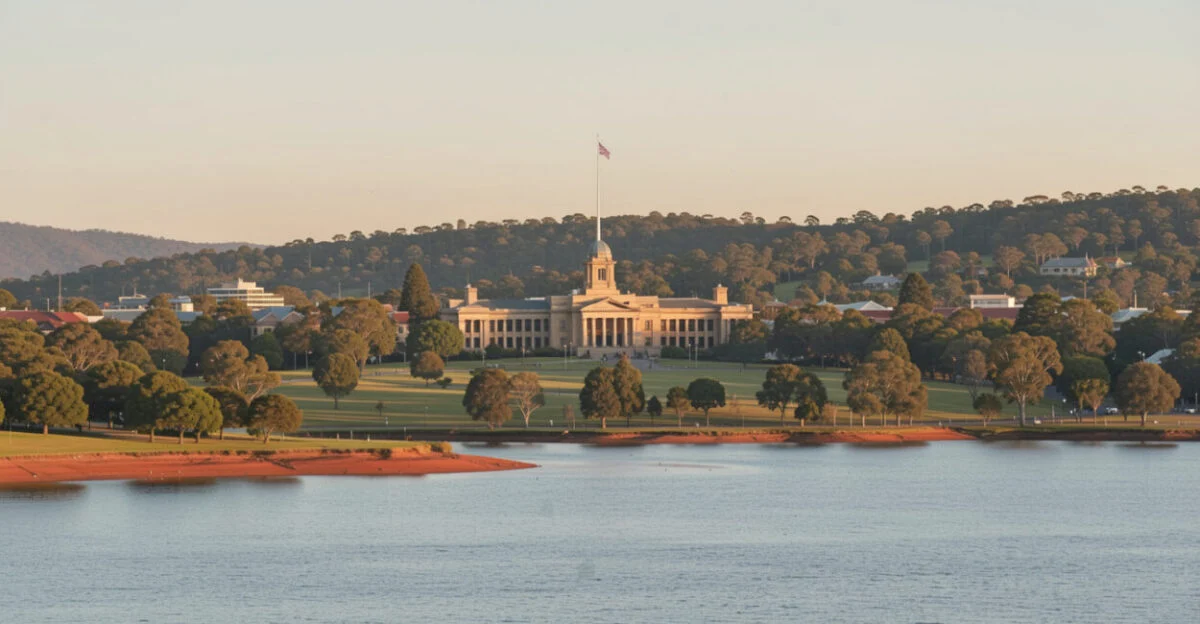
The six states are New South Wales, Victoria, Queensland, Western Australia, South Australia, and Tasmania. The continent also includes territories, among them the Australian Capital Territory (ACT) and the Northern Territory. Canberra is in the ACT and serves as the national capital. It should not be confused with the state capitals: Sydney, Melbourne, Brisbane, Perth, Adelaide, and Hobart. For the country’s administrative divisions and official information, see the page on Australia’s states and territories.
This structure helps you picture the size of the country, but it doesn’t capture the distinct identities of its regions. Comparing Australia with other large countries can help put its scale in perspective; the article on the United States and its regions offers another example of diversity within a federation.
Which cities should you visit in Australia?

The best city for you depends on what you want from your trip. Sydney combines a harbor, beaches, and urban landmarks; Melbourne is known for its cultural scene and cafés. Brisbane has a subtropical climate and is a major urban hub in Queensland.
On the west coast, Perth offers an urban experience far from the major eastern cities. Adelaide is known for its culture and food; Hobart, in Tasmania, brings city life close to natural landscapes. Canberra, meanwhile, is home to national institutions and museums.
There’s no one city that’s right for everyone. If you’re interested in museums and politics, Canberra may be a good fit; if you prefer the coast and city life, other options may be more appealing. For another look at a country’s regions, see the article on Brazil and its regional landscapes.

Australian culture: More than beaches and outdoor living
Australian culture reflects British influences, immigration from around the world, and living Indigenous cultures. Aboriginal and Torres Strait Islander peoples have histories, languages, and connections to their lands that predate colonization and remain strong today. Their presence should not be reduced to a tourist attraction. To learn more about these communities and their histories, visit the Australian Institute of Aboriginal and Torres Strait Islander Studies (AIATSIS).
It’s also worth avoiding the idea that there’s only one way to be Australian. Cultural experiences differ across cities, communities, and regions. Respectful engagement starts with listening to local stories and recognizing that Indigenous peoples are not just part of the past.
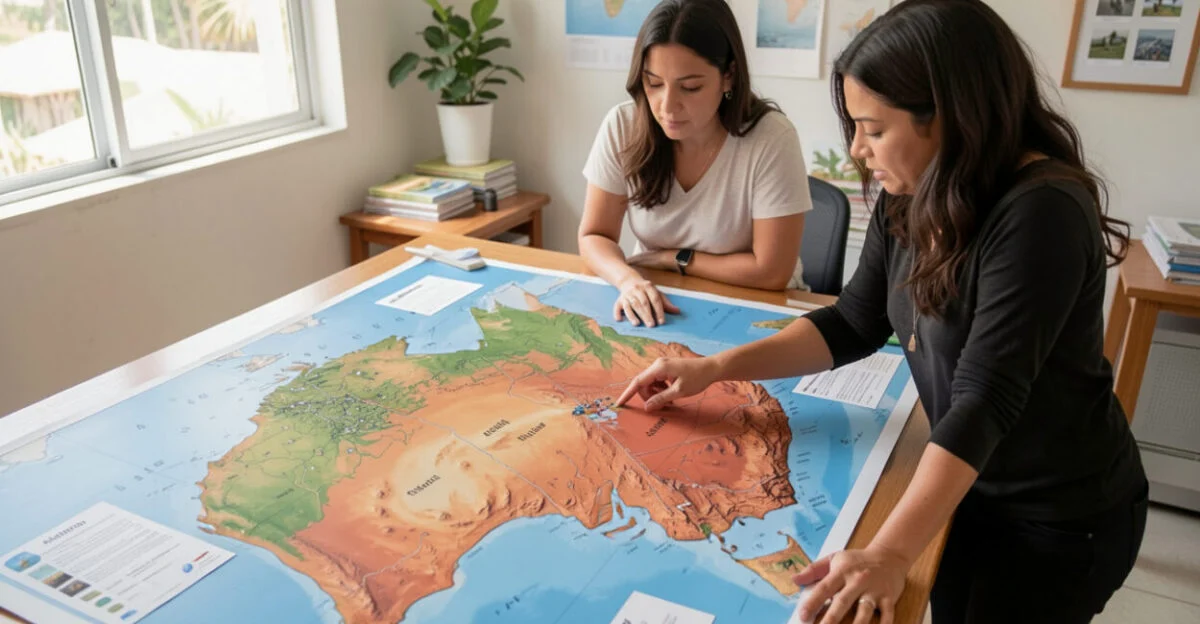
Landscapes that change from one region to another
The coastline is dotted with beaches and port cities; urban areas are hubs for museums, food, and cultural life; and the interior features arid landscapes and vast distances between communities. The famous beach scenes don’t capture the variety of such a vast country.
Imagine planning a short trip to Sydney, Melbourne, and Perth because they all look close together on the map. As you put your itinerary together, you realize that getting between them will take up a considerable amount of your time. The solution is simple: focus on one main region and save the others for a future trip.
When researching your trip, avoid these mistakes:
- Treating cities on different coasts as if they were close together.
- Choosing destinations based only on photos without considering travel time.
- Assuming beaches, climate, and experiences are the same throughout the country.
How to choose regions for your first trip
Start with your interests and the time you have. To combine city life and the coast, focus your research on one part of the coastline. If nature is your priority, choose a specific area and check how to get to the places you want to see.
If you want to learn about the country’s history and visit its museums, Canberra may be a worthwhile stop. For a diverse urban experience, compare Melbourne, Sydney, or Adelaide rather than trying to fit them all in. A well-chosen region often makes for a better trip than a map packed with far-flung destinations.
Before you plan: distances and connections
Your route from the United States to Australia will depend on your departure city, final destination, and available connections. Routes and schedules can change, so confirm your options and total travel time directly with the airlines before you book.
The same advice applies to travel within the country. A flight between cities can change the pace and order of your itinerary; if you’re driving, keep distances and local conditions in mind. Check current transportation and tourism information before finalizing your plans.
Frequently Asked Questions
How many hours does it take to fly from the United States to Australia?
There’s no single answer: travel time varies based on your departure city, destination in Australia, and layovers. Check the total travel time with the airlines.
Which countries are near Australia?
New Zealand is in the region, as are Indonesia, Timor-Leste, and Papua New Guinea. What counts as “near” depends on your point of reference and the route you take.
Is Canberra a state capital?
No. Canberra is Australia’s national capital and is located in the Australian Capital Territory.
Can you see all of Australia on a short trip?
Given the country’s size and distances, that’s not realistic for most itineraries. Focus on one or a few regions and save other destinations for another trip.
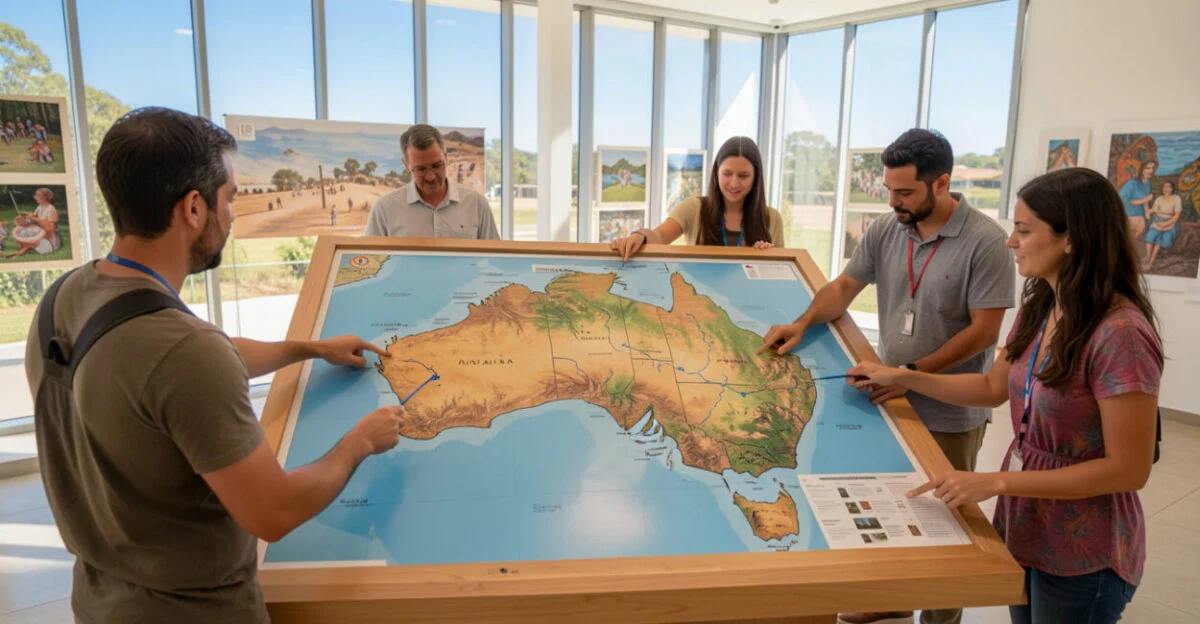
Before you book, open a map and mark the places that really fit the trip you want to take. If they’re spread across different coasts, shorten your list: in Australia, choosing where to go also means giving each place enough time.