
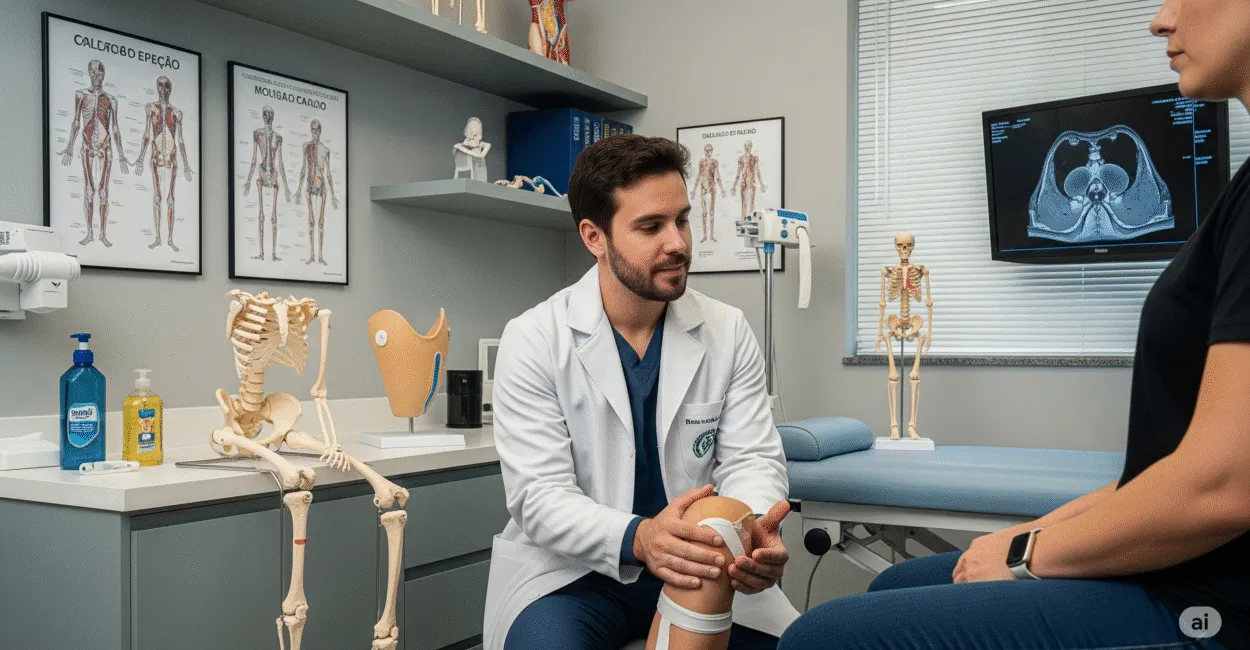
A knee that hurts again every time you go for a run, a fall that causes swelling, or a hand that has lost strength may call for a medical assessment. An orthopedist evaluates problems involving the musculoskeletal system and recommends care for bones, joints, muscles, tendons, and ligaments. A visit does not automatically mean surgery or imaging tests. The approach depends on your medical history, the findings on physical examination, and how the problem affects your daily activities.
Knowing when to seek care and how to choose a provider can help you arrive at your appointment with useful information and realistic expectations.

What an orthopedist does and the conditions they treat
An orthopedist diagnoses, treats, and monitors diseases and injuries affecting the musculoskeletal system, which includes bones, joints, muscles, tendons, and ligaments. In simple terms, orthopedists care for conditions that affect movement, support, and function, from fractures and sprains to osteoarthritis and deformities. Their work may be nonsurgical, surgical, or a combination of both. Areas of specialization include the spine, knee, hip, shoulder, hand, foot and ankle, pediatric orthopedics, trauma care, and sports medicine. For a specific problem, such as knee pain after a run, it may make sense to see someone with experience treating that area; however, an initial evaluation can also be done by a general orthopedist.
The Brazilian Society of Orthopedics and Traumatology (SBOT), a professional organization in Brazil, provides information about the specialty and its areas of practice. An orthopedist may recommend medications as part of a care plan, but the choice depends on the medical evaluation, the patient’s history, and any other medications they take.
When to see an orthopedist and when to seek emergency care
Schedule an evaluation if bone or joint pain persists, limits your movement, or keeps coming back. You should also seek care after a sprain, fall, or other injury, if you notice a deformity, or if you lose strength. An acute injury involving severe pain, significant swelling, or an inability to bear weight needs prompt evaluation.
- After an injury, seek emergency care if there is a deformity, an open wound, loss of sensation, or a change in the color or temperature of your hand or foot.
- Get medical attention right away if you cannot use the affected limb or put weight on it after a fall.
- For pain that persists without emergency warning signs, schedule an appointment and note when it started, what makes it worse, and which movements are limited.
Not every ache requires a trip to the emergency room. On the other hand, waiting for a significant injury to “go away on its own” can delay appropriate care. If symptoms are severe or getting worse, an emergency department is a better choice than waiting for a routine appointment. Information about accessing health care and public services is available from Brazil’s Ministry of Health.
What to expect at your first appointment and which tests may be ordered

At your first appointment, the orthopedist will ask about your symptoms, when the problem began, previous injuries, medical conditions, activities, and treatments you have already tried. They will then examine the affected area and assess movement, strength, sensation, and pain. Based on this information, they will decide whether tests are needed or whether care can begin without imaging. X-rays can help assess bones and alignment; ultrasound, CT scans, or MRI may be considered depending on the clinical question and the structure that needs to be examined. Blood tests may be useful in some situations, such as when investigating inflammation or infection. The choice depends on the medical question: ordering imaging “just to be safe” does not always provide useful information.
Read also: Urologist: A Complete Guide to the Specialty and Urological Care
One simple way to make your evaluation easier: bring previous reports and images, if you have them, and write down the medications you take. Imaging may be less useful than describing how the pain started and which movements trigger it, so try to give specific examples, such as having trouble climbing stairs or making a fist.
What conditions orthopedists treat and what care options are available
Orthopedic care covers fractures, dislocations, sprains, sports injuries, tendinitis, arthritis, osteoarthritis, and congenital or acquired deformities. Recommendations depend on the cause, severity, age, overall health, and the effect of symptoms on daily life. A care plan may include monitoring, temporary activity changes, physical therapy, braces or other orthoses, and prescribed medications. Surgery is an option for certain conditions when the evaluation suggests it may help; it is not required for every fracture, persistent pain, or abnormal test result.
Treatment may also involve professionals in other fields. Physical therapy, for example, can help improve strength and mobility, while the orthopedist monitors the condition and adjusts medical decisions. Recovery time varies: the type of injury and each person’s response matter more than a generic timeline.
Orthopedist or trauma specialist: which should you see?
Orthopedics and traumatology are closely related fields, and a physician trained in both can evaluate musculoskeletal problems as well as traumatic injuries. In general, this provider can treat a recent fracture or sprain. For severe cases involving an open wound, deformity, or loss of circulation or sensation, go to an emergency department first.
For pain that develops gradually, such as recurring shoulder discomfort, you can schedule an appointment based on the affected area and the doctor’s experience. If the cause of your symptoms is unclear, an initial evaluation can help determine whether you need a referral to another specialist.
How to choose an orthopedist based on specialty and insurance
Start with the problem: for back pain, look for experience treating the spine; for a knee injury, check the doctor’s focus on that joint. Verify the doctor’s license and credentials through official channels. Brazil’s Federal Council of Medicine offers a physician lookup tool; if you cannot confirm information, ask the doctor or the regional medical council for clarification.
For searches such as “orthopedist near me,” “orthopedist in Curitiba,” “orthopedist in Rio de Janeiro,” or “orthopedists in Uberlândia,” confirm the address, area of practice, and availability directly with the office. For appointments covered by an insurance plan, including searches for “Unimed orthopedist,” “Unimed orthopedist in Curitiba,” or “Unimed orthopedist in Fortaleza,” check the provider network and plan rules. Coverage and provider availability vary by contract and location. Unimed is a Brazilian health insurance cooperative network.
Aspect Self-pay appointment Insurance-covered care Cost and coverage The office provides the price before you book. Depend on the contract, provider network, and plan rules. Choosing a provider Check the doctor’s area of practice and credentials before booking. Check which providers and services are in the available network. What to confirm Address, availability, cost, and required documents. Whether the provider is in network, whether authorization is required, and any referral rules.
There is no standard price for an orthopedic appointment, so confirm the cost directly with the office. Likewise, there is no universal answer to “Who is the best knee specialist?” Consider the doctor’s credentials, relevant experience, and the practicalities of accessing care, and don’t treat online reviews as a guarantee of results.
How to reduce the risk of sports injuries and childhood injuries
When playing sports, increase your workload gradually, use equipment suited to the activity, and pay attention to pain that changes how you move. Returning to your usual training routine right after an injury can put too much strain on an area that is still healing. Your return should reflect your functional progress and follow guidance from your health care team.
Falls and aches are common in childhood, but deformities, persistent differences between limbs, changes in the way a child walks, or limited movement should be evaluated. Not every difference in posture or gait indicates a medical problem; age, growth, and clinical findings all inform the assessment. A pediatric orthopedist can determine whether a child needs specialized follow-up.
If an injury is not improving as expected, do not increase your exercise load on your own or take someone else’s medication. Talk with the professional overseeing your care; based on your symptoms and examination, they may revisit the diagnosis or rehabilitation plan. Clear communication about pain, limitations, and goals helps guide decisions throughout your care.
Frequently asked questions
Who treats the spine: an orthopedist or a neurologist?
It depends on your symptoms and the suspected cause. An orthopedist evaluates the musculoskeletal structures of the spine; a neurologist investigates disorders of the nervous system. Pain accompanied by weakness, tingling, or other neurological signs may require a medical evaluation to determine whether you need a referral.
What should I bring to my appointment?
Bring previous test results and reports, a list of medications you take, and information about relevant medical conditions or surgeries. It can also help to note when the pain started and which movements make it worse.
Does every orthopedic problem require surgery?
No. Treatment may involve monitoring, rehabilitation, or other nonsurgical measures. Whether surgery is recommended depends on the diagnosis, severity, and goals of care.
How much does an orthopedist earn?
Pay varies by location, employment arrangement, hours, experience, and whether the doctor works in a private practice, hospital, or other setting. Without those details, there is no single figure that represents earnings across the specialty.
Artigos Relacionados
 Gardener: The Complete Guide to Mastering the Profession and Advancing Your Career
 User Experience (UX/UI) Designer: A Complete Guide for Professionals and Enthusiasts
 Cybersecurity Analyst: The Complete Guide to Protecting Your Business
 Endocrinologist: A Complete Guide to Hormone Health Specialists
 Film Director: A Complete Guide to Starting Your Career in Film
 Fashion Designer: A Complete Guide to Building a Successful Career
