
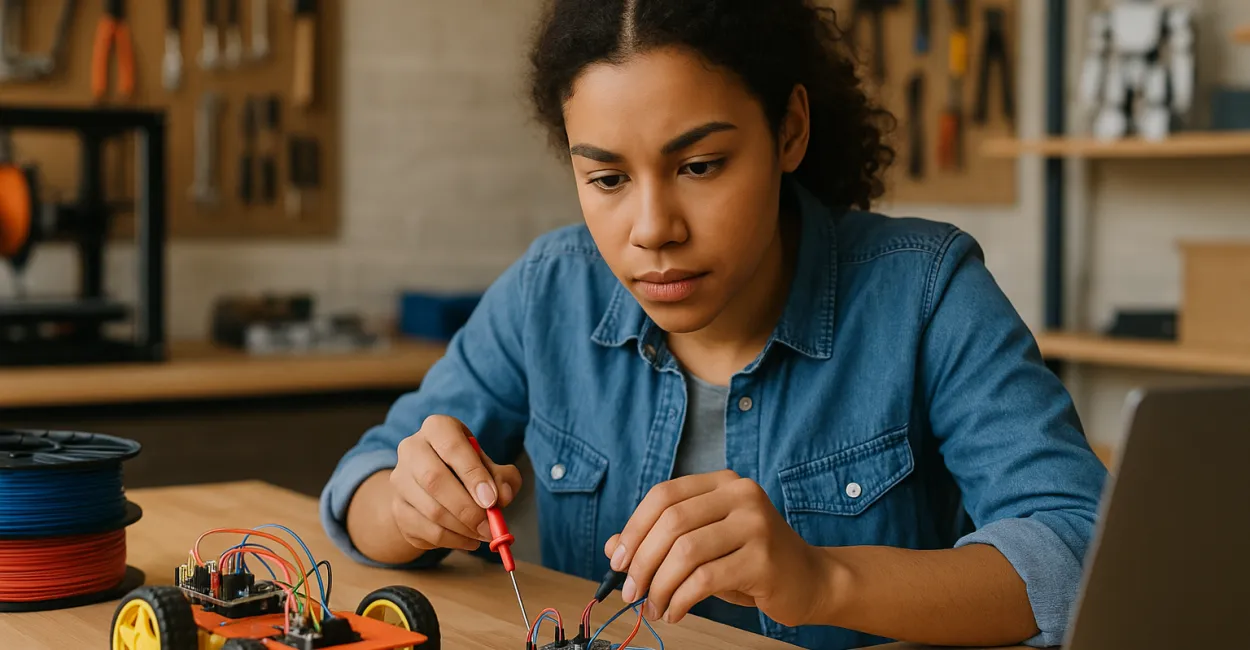
Maker Education: The Power of Making and Experimenting to Develop Critical Thinkers
Maker Education is revolutionizing the way we learn by putting making and experimenting at the center of the educational process. This approach encourages students to take charge of their own learning and develop essential 21st-century skills. But why is Maker Education so important for developing critical thinkers?

In this article, we’ll take an in-depth look at the concept of Maker Education, its practices, benefits, challenges, and impact on contemporary education. Get ready for a comprehensive exploration that will transform how you think about teaching and learning.
What Is Maker Education? An Active Approach to Learning
Definition and Origins of Maker Education
Maker Education is an educational approach that values hands-on, collaborative learning through creating, building, and experimenting. Rooted in the maker movement and DIY (do-it-yourself) culture, it combines digital technologies, hand tools, and creativity to foster skill development.
This educational philosophy emerged in response to the demands of a constantly changing world, where skills such as problem-solving, critical thinking, and innovation are essential. It breaks away from the traditional model and promotes a more dynamic and meaningful approach to teaching.
Core Principles of Maker Education
The core principles of Maker Education include hands-on learning, student agency, interdisciplinary learning, and collaboration. The focus is on the creative process, where mistakes are seen as a natural part of learning and a reason to keep experimenting.
In addition, technologies such as 3D printers, robotics, and programming introduce students to the world of technology, preparing them for real-world challenges and future careers.
Benefits of Maker Education for Cognitive Development
By promoting “learning by doing,” Maker Education encourages critical thinking, creativity, and independence. Students take an active role in building their knowledge, which strengthens memory and deepens their understanding of the material.
- Development of social-emotional skills
- Increased motivation and engagement
- Encouragement of teamwork and empathy
- Support for interdisciplinary learning
Maker Methods and Active Learning Techniques
Project-Based Learning (PBL) in Maker Education
Project-Based Learning is an effective method in Maker Education because it connects theoretical knowledge with real-world practice. Students work on projects involving concrete challenges, encouraging research, planning, and collaborative execution.
This process develops technical and social-emotional skills, preparing students for academic and professional life. PBL also promotes interdisciplinary learning by bringing together different fields of knowledge.
Design Thinking as a Maker Tool
Design Thinking is a user-centered approach that encourages creativity and innovation. In Maker Education, it is used to understand problems, generate ideas, prototype solutions, and iterate to improve them.
This method is key to developing critical thinking and the ability to solve complex problems—essential qualities for the critical thinkers Maker Education aims to develop.
Gamification and Maker Education
Gamification uses game elements in educational settings to make learning more motivating and engaging. When integrated into Maker Education, it encourages student engagement through challenges, rewards, and ongoing feedback.
This technique promotes healthy competition and collaboration, while helping students retain information through fun, hands-on experiences.
Tools and Technologies in Maker Education

3D Printing and Rapid Prototyping
3D printing allows students to quickly turn their ideas into physical objects, making prototyping and experimentation easier. It’s a powerful tool for Maker Education because it combines creativity, technology, and hands-on learning.
Students use it to develop design, planning, and problem-solving skills, while learning about engineering and materials.
Educational Robotics and Programming
Educational robotics is another essential technology in Maker Education. It encourages logical reasoning and teamwork, while helping students understand concepts in physics, math, and computer science.
Programming robots lets students experiment with trial and error, strengthening their critical-thinking skills and persistence.
Maker Labs and Creative Spaces
Maker labs are spaces equipped with a range of digital and hand tools that enable experimentation and creation. They are essential for bringing Maker Education to schools and communities.
These spaces encourage collaboration, knowledge sharing, and student independence, enhancing learning through hands-on activities.
Maker Education and the Development of Critical Thinking
How Making Encourages Thinking
In Maker Education, building, testing, and modifying projects encourages critical thinking because it requires analysis, evaluation, and informed decision-making. Students become active participants, questioning assumptions and learning to tackle real-world challenges.
This process strengthens the ability to reflect on problems, find creative solutions, and learn from mistakes—essential skills for developing critical thinkers.
Solving Complex Problems Through Maker Education
By working on challenging projects, students develop the skills to solve complex problems that have no ready-made answers. This practice broadens their systems thinking and analytical skills, which are essential in professional and social settings.
In addition, Maker Education encourages collaboration, allowing different perspectives and skills to come together in the search for innovative solutions.
Reflection and Independence in the Maker Process
The maker approach encourages ongoing reflection on one’s own learning and the decisions made during the creative process. This self-reflection is essential for developing intellectual independence and self-confidence.
Students learn to identify their strengths and areas for improvement, becoming independent learners who are prepared to face future challenges.
Implementing Maker Education in Schools
Challenges to Adopting Maker Education
Introducing Maker Education in schools can be difficult due to obstacles such as a lack of infrastructure, inadequate teacher training, and resistance to changes in the traditional curriculum. Identifying and overcoming these barriers is crucial to the success of the approach.
It is also important to ensure digital inclusion and equitable access to technology for all students.
Educator Training and Professional Development
Teachers play a key role in Maker Education, serving as learning facilitators and guides. That’s why ongoing professional development is essential to help them master the tools and methods used in this approach.
Training that includes maker activities, educational technology, and social-emotional skill development is recommended to strengthen teaching practice.
Curriculum Integration and Flexibility
For Maker Education to be effective, its principles need to be integrated throughout the school curriculum while respecting its content and educational goals. A flexible curriculum makes it possible to adapt projects to local realities and student interests.
This integration supports meaningful, contextualized learning by connecting theory and practice.
Maker Education and Social Inclusion
Promoting Accessibility and Diversity
Maker Education can be a powerful tool for social inclusion because it values different ways of learning and expressing knowledge. Accessible maker spaces and adapted projects encourage students with a range of needs to participate.
This approach promotes respect for diversity and the creation of solutions that serve different groups, strengthening educational equity.
Empowering Communities and Marginalized Groups
By making technology and hands-on knowledge more accessible, Maker Education empowers communities and historically marginalized groups. Local projects can create positive social, economic, and cultural impact.
This active participation helps build civic engagement and digital inclusion while reducing inequality.
Maker Education in Informal Learning Environments
Beyond schools, Maker Education is offered in informal settings such as libraries, community centers, and nonprofits, expanding its reach and social impact.
These environments encourage collaborative learning and social innovation, bringing people and ideas together to transform communities.
Maker Education and the Job Market
Skills Employers Are Looking For
Today’s job market increasingly values skills developed through Maker Education, such as creativity, problem-solving, collaboration, and adaptability. These skills are essential in innovative, fast-changing professions.
Maker Education therefore prepares students to become versatile professionals who are ready for the challenges of the future.
The Connection Between Maker Education and Entrepreneurship
Maker culture encourages entrepreneurship by inspiring people to create original solutions and test business ideas. Students learn to identify opportunities, validate prototypes, and develop products or services.
This entrepreneurial mindset is a competitive advantage in the job market and contributes to economic development.
Internships and Partnerships with Companies
Connections between Maker Education and the job market can be strengthened through partnerships between schools and companies, offering internships, mentorship, and collaborative projects.
These initiatives make it easier for students to apply their knowledge and build professional networks early on.
A Comparison of Traditional Education and Maker Education
| Aspect | Traditional Education | Maker Education |
|---|---|---|
| Method | Passive, teacher-centered, and focused on delivering content | Active, student-centered, and focused on hands-on learning |
| Focus | Memorization and reproduction of information | Building and experimenting with knowledge |
| Assessment | Standardized exams and tests | Projects, prototypes, and self-assessment |
| Teacher-student relationship | Hierarchical and directive | Collaborative and facilitative |
| Use of technology | Limited and often passive | Integrated into the creative process |
Innovative Maker Education Practices Around the World
Success Stories in Public Schools
Many public schools have implemented Maker Education with positive results, including greater student engagement and improved academic performance. Community projects and local partnerships are common in these initiatives.
These examples show that the approach is practical and effective even in settings with limited resources.
Private and Technology-Based Initiatives
Private institutions and education startups are investing in modern maker labs and digital platforms that expand opportunities for hands-on, personalized learning.
These initiatives drive innovation in education and help develop technology talent.
Maker Education and Public Policy
Governments have recognized the importance of Maker Education and included initiatives in public policies, such as funding and teacher training programs. These measures aim to broaden access and foster maker culture.
Links to official sources, such as Brazil’s Ministry of Education, are essential for keeping up with these initiatives.
How to Start a Maker Education Project at Your School
Planning and Setting Goals
The first step in implementing Maker Education is careful planning, with clear goals that align with the needs of the school community and the curriculum.
It’s important to involve everyone in the school community to ensure engagement and the project’s long-term success.
Necessary Resources and Infrastructure
Identifying the materials, technology, and people you’ll need is essential for creating a functional maker environment. Even with a limited budget, you can get started with recycled materials and affordable tools.
Investing in teacher training and technical support is also essential.
Project Monitoring and Evaluation
Setting success indicators and ongoing evaluation methods helps refine the project and ensure it achieves its goals. Feedback from students and teachers should be taken into account to make improvements.
Documenting experiences helps share best practices and inspire other institutions.
Maker Education Resources and Materials
Online Platforms and Maker Communities
Many online platforms and virtual communities offer tutorials, projects, and support for educators and students interested in Maker Education. Joining these networks expands knowledge and creates opportunities to share experiences.
Examples include Maker Ed and Instructables.
Relevant Books and Publications
Specialized literature provides theoretical and practical foundations for Maker Education. Books covering active learning methods, educational technologies, and skill development are recommended for educators.
These resources support ongoing professional development and pedagogical knowledge.
Educational Tools and Kits
Kits for robotics, electronics, and programming make it easier to introduce Maker Education in the classroom. These resources are designed to be intuitive and safe for different age groups.
Investing in quality tools enhances student engagement and learning.
The Impact of Maker Education on Society and the Future
Cultural and Educational Change
Maker Education helps build a culture of innovation, collaboration, and lifelong learning. It changes how people view education by valuing individual agency and creativity.
This shift is essential for addressing the social and technological challenges of the 21st century.
Developing Critical and Engaged Citizens
By developing critical thinking and practical skills, Maker Education prepares citizens to participate actively in society, question information, and contribute to collective solutions.
This kind of education strengthens democracy and social responsibility.
Preparing for a Digital and Sustainable World
The approach encourages the responsible use of technology and the search for sustainable solutions, aligning with the Sustainable Development Goals (SDGs). It prepares students to participate in a world that is increasingly digital and environmentally conscious.
Maker Education therefore plays a vital role in creating a fairer, more innovative future.
Conclusion
Maker Education is transforming education by putting making and experimenting at the center of learning. This active approach develops students’ critical thinking, creativity, and independence, preparing them for the challenges of the 21st century.
Bringing Maker Education into schools requires planning, resources, and training, but the benefits for developing innovative, socially conscious citizens are significant. Share this article with educators and school leaders who want to transform education!
Frequently Asked Questions
What is Maker Education?
It’s an educational approach that emphasizes hands-on learning through creating, experimenting, and collaborating, while encouraging critical thinking and innovation.
What are the main benefits of Maker Education?
It develops technical and social-emotional skills, increases engagement, encourages creativity, and prepares students for the job market.
How can schools implement Maker Education?
By planning projects that align with the curriculum, training teachers, investing in infrastructure, and encouraging active student participation.
What technologies are used in Maker Education?
3D printers, robotics, programming, and digital and hand tools that support creation and experimentation.
How does Maker Education affect critical thinking?
It encourages reflection, complex problem-solving, and intellectual independence—all essential to developing critical thinkers.
Artigos Relacionados
 How to Develop an Entrepreneurial Mindset in Education
 Big Data in Education: Turning Data Into Better Teaching Practices
 Environment and Education in the 21st Century: Pathways to a Sustainable Future
 Critical Reading: 12 Essential Tips for Competitive Exams
 Bilingual Education: Benefits, Challenges, and Impact on Learning
 Early Childhood Education: The Importance of Play in Child Development
