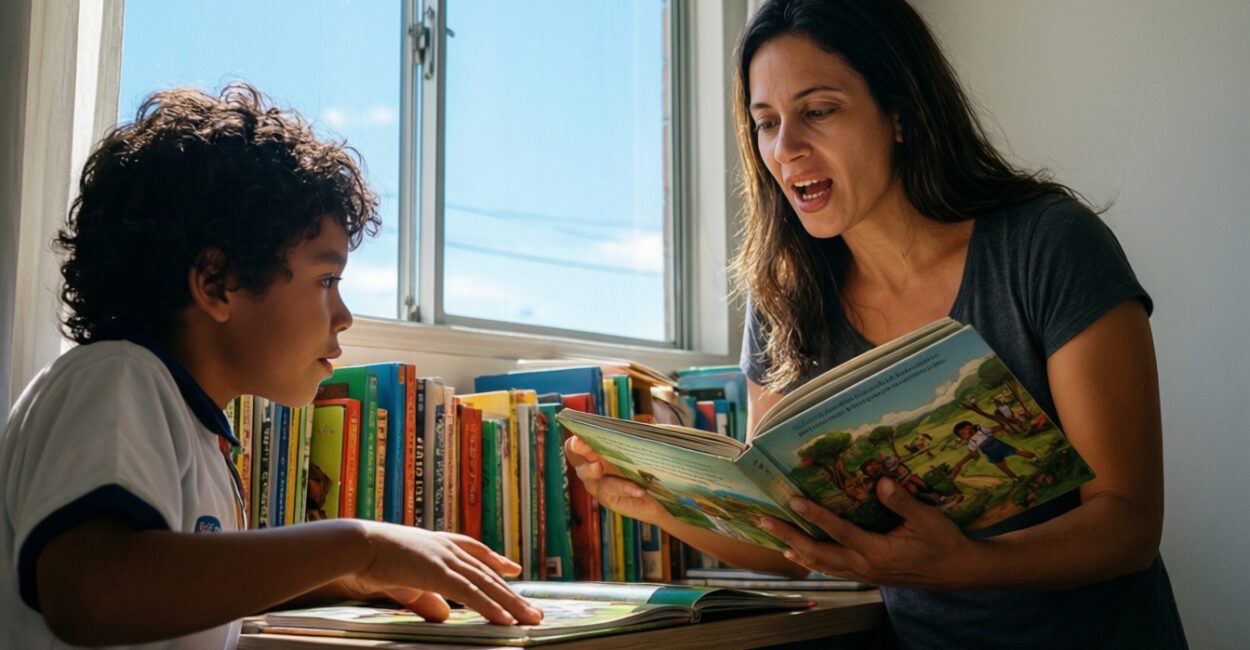
Encouraging children to read means creating opportunities for them to engage regularly with texts and stories, with support suited to their age and independence. At home and at school, you can start with accessible books, choices that reflect their interests, and shared reading time, without pressuring them to read quickly or without mistakes.
The ten strategies below move from the reading environment and material choices to routines, activities, and respect for each child’s pace. They’re for families and educators, including those with limited time or few books available. The goal is to foster a connection with reading, not replace formal literacy instruction.

1. Keep books within easy reach
A reading-friendly environment starts with texts a child can reach. Keep a few books in a low bin, on a living room shelf, or in a corner of the classroom where children can choose what to browse. You don’t need to build a library: book loans, public libraries, and swaps between families can help refresh the collection.
Include a variety of formats, such as picture books, comics, poems, age-appropriate magazines, and informational texts. For young children, sturdy covers and books that are easy to handle can make exploring them feel more natural. A common mistake is keeping books out of reach to prevent wear and tear; when a child always needs an adult to get a book, making a free choice becomes harder.
This strategy helps when a child hasn’t yet asked to read or when books are out of sight. Even a small, accessible selection offers chances to explore, even if the child starts by looking at the pictures.

2. Choose books that interest your child
Themes, characters, humor, and illustrations can draw a child into a story. If they like animals, soccer, mysteries, or comic books, those interests can guide your choices. Let them take part in choosing, and reread favorite titles: returning to the same book can feel reassuring and help them notice new details.
Children who are learning to read can also follow a story through pictures or by listening to an adult. You don’t have to wait until they can read independently to offer them engaging texts. If a book doesn’t hold their attention, put it aside and try another format without treating the change as giving up.
This works well at home, at the library, or during a classroom story time. For ideas on choosing books and activities for different age groups, see these teaching practices for early childhood education.

3. Read aloud and share the story

Reading aloud is when an adult reads a text to one or more children. Simply put, the adult reads while the child follows along, even if they can’t decode the words yet. This strategy is included because it turns books into a starting point for conversation and makes it possible to share stories from early childhood.
Read clearly, and vary your tone if it feels natural; there’s no need to give a theatrical performance. Pausing to look at an illustration or comment on a character can make the experience richer. Just avoid stopping on every page to quiz the child or correct every answer. The U.S.-based organization Reading Rockets offers guidance on reading aloud and comprehension.
This is a good option for children who aren’t reading independently yet and for classroom groups. If a child loses interest, ending the session or picking up the story another day can also be part of a welcoming reading experience.
4. Create a flexible reading routine
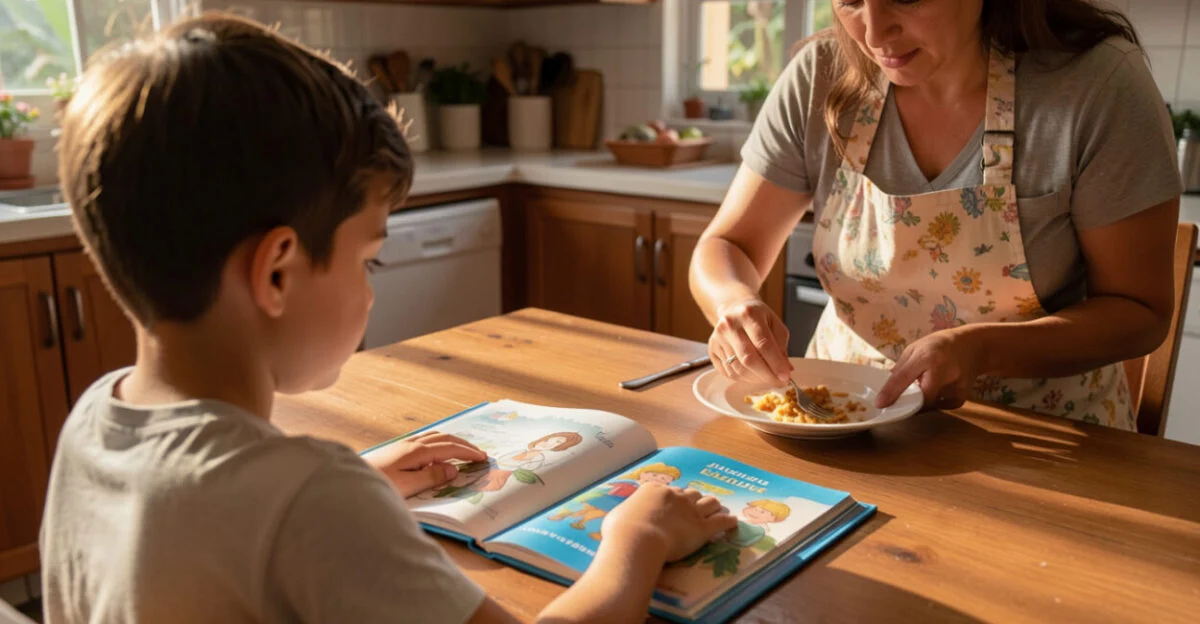
A routine gives reading a familiar place in the day without requiring a rigid schedule. It might happen before bed, after a meal, or during a quiet break. There’s no universal number of minutes or pages that works for every age, family, and situation.
Choose a time that works for your household or classroom. A short story may fit on busy days; at other times, a child may want to keep talking about it. If reading doesn’t happen on a particular day, pick it up again when you can, without turning the habit into an obligation.
For teachers planning regular reading sessions, the article on planning each lesson step may help you work this practice into the school routine.
5. Talk about what you read
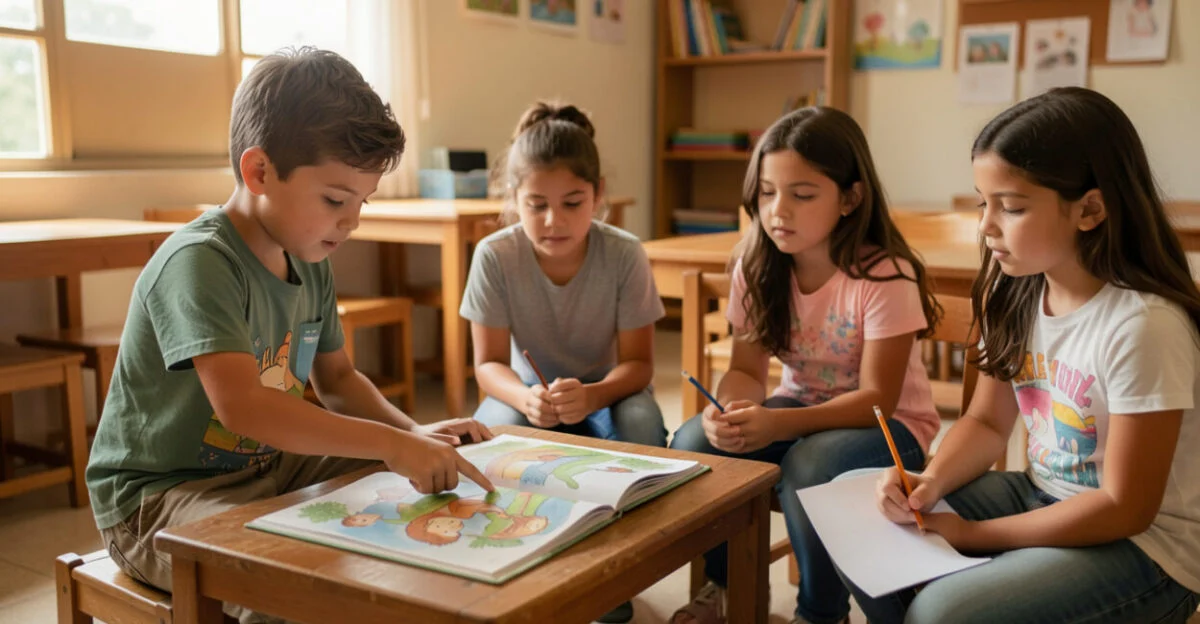
A brief conversation helps children connect a story to their own interests. Invite them to pick a favorite scene, share what they thought of a character, or talk about something they recognized. Open-ended questions like “Which part stood out to you?” leave room for different answers.
Not every child wants to talk much right after reading. Some point to pictures, draw something, or simply prefer to listen. Respect these ways of participating, and avoid turning the conversation into a school-style book report with right and wrong answers.
In a classroom, students can share their thoughts in a group discussion. Tracking participation without comparing students aligns with formative assessment, as long as the conversation doesn’t become a test about the book.
6. Set an example and share what you read
When adults read as part of daily life, children see that reading serves many purposes. A caregiver might look up a recipe, read the news, or pick up a book; a teacher might share something interesting they found in a text. These everyday actions show real reading practices without suggesting that only reading literature matters.
Setting an example works best as an invitation, not a comparison. Saying “I read, so you have to read too” can turn a shared activity into an obligation. Instead, share why a particular text caught your attention or read a passage together.
This approach works for families and schools that want to make reading part of everyday life. If an adult doesn’t usually read books, they can start by sharing other texts, such as recipes and instructions, without pretending to have a habit that isn’t part of their routine.
7. Include reading in everyday activities
Recipes, signs, lists, invitations, and instructions show that we read for different reasons. A child can help choose a recipe, follow the ingredients on a list, or look at a sign during an outing. These are brief opportunities tied to a practical need.
These situations bring children into contact with texts, but they serve a different purpose from reading literature together: a recipe guides a task, while a short story or poem offers a narrative or artistic experience. Both kinds of reading can coexist without turning every daily activity into a literacy exercise.
Use this strategy when there’s little time to sit down and read. For example, if a child doesn’t want to help with the grocery list, there’s no need to insist; another opportunity will come along.
8. Use playful activities based on stories
After hearing or exploring a story, children can play with its characters and ideas. In early childhood education, activities involving speaking, pictures, and imagination let children take part without requiring independent reading. Let each child join in at a level that feels comfortable.
Some ideas include:
- Retell the story through drawings.
- Act out a scene or play a character.
- Use puppets to make up dialogue.
- Come up with a different ending.
- Look at the illustrations and talk about the details.
These activities work at home or at school, especially when a child enjoys drawing, acting, or making things up. Don’t treat the activity as a comprehension test: a different version of the story can be a perfectly valid way to play with the text.
9. Make school a place for shared reading
At school, reading can have its own place beyond literacy assignments. Reading aloud, choosing books freely, group discussions, book loans, and recommendations among classmates can help get stories circulating, depending on the resources available.
To make participation welcoming, avoid comparing students’ fluency, speed, or number of pages read. One child may follow along by listening; another may want to read a passage. Reading sessions can align with the school’s political-pedagogical project, a Brazilian school planning document, while taking the circumstances of each school community into account.
When a school has few books, rotating the selection or lending books between classes can expand the options. What’s possible depends on local resources and organization, so there’s no single model that works for every institution.
10. Respect each child’s pace and offer different ways to engage
Children’s preferences change, and they may enjoy different genres at different times. Audiobooks and stories read by an adult also provide access to narratives, although they don’t automatically replace the experience of reading independently. These formats can expand access, including when independent reading isn’t an option yet.
If a difficulty persists or you’re concerned about a child’s learning, talk with the school to understand what the child can already do and what support is available. When appropriate, the family can seek a professional evaluation. A preference for listening to stories, by itself, isn’t evidence of a problem.
This strategy helps adapt reading to each child’s needs and interests. General guidance has its limits: what engages one child may not work for another, and access to books, reading conditions, and available support vary among families and schools.
Strategy summary table
Item Best for Key benefit Access to books Home and school Accessible materials and varied formats Choosing books Discovering interests Child-selected themes and rereading Reading aloud Sharing stories Pauses and conversation without quizzes Flexible routine Finding regular opportunities Consistency without a universal goal Talking about the story Sharing impressions Open-ended questions and respect for responses Adult role modeling Families and educators Reading as part of everyday life Everyday texts Practical activities Real-world uses for reading Playful activities Exploring stories through play Drawing, retelling, and acting A reading-friendly school Classes and school communities Choice, sharing, and circulation Pace and access Different needs Respect for preferences and formats
How to choose among four key strategies
As a practical summary, four approaches can help with planning: access to books, independent choice, shared reading, and a welcoming routine. They complement one another; they aren’t required steps and don’t guarantee the same results for every child.
Strategy Example at home Example at school Access to books Keep a few titles in a bin within easy reach Set up an accessible book collection in the classroom Independent choice Let the child choose from a few options Set aside time for free choice Shared reading Read together and discuss an illustration Read aloud to the class Welcoming routine Pair a story with a time that works Include reading in the class routine
To decide where to start, consider: What topics interest the child? What texts are available? Do they prefer listening, browsing, reading, or talking about stories? What time fits into the routine without feeling like a demand? The answers can help you choose a manageable activity and adapt it to your situation.
A possible place to start
Choose a book, magazine, or another text that sparks the child’s curiosity, and share it during a quiet moment. Ask what they like, let them choose from accessible options, and follow their lead in how they participate. A flexible, respectful routine is usually more manageable than rigid goals.
- Ask what the child likes.
- Choose an accessible, engaging text.
- Set aside a time that works for sharing the reading.
Frequently asked questions
How can I encourage reading when my child can’t read yet?
Read aloud, explore the pictures, and let your child choose books to browse. Children can follow stories before they master independent reading.
How much time should a child read each day?
There’s no single amount of time that works for every child. Consider their age, interest, routine, and the type of activity; a short, enjoyable session may work better than a goal that causes conflict.
Does rereading the same book mean a child isn’t making progress?
Not necessarily. Rereading can make a story feel familiar and help a child notice things they missed before. If they want to read it again, respect that choice.
Do audiobooks count as reading?
Audiobooks provide access to stories and can make narratives more accessible. They don’t, by themselves, replace independent reading practice, but they can complement print and digital books and stories read aloud by an adult.
What should I do if my child has persistent difficulty?
Talk with the school to share your observations and learn how your child participates in activities. If your concern continues, your family can seek professional guidance without drawing conclusions from a single difficulty.
Artigos Relacionados
 Reading at Home for Children With Dyslexia: Strategies
 Reading at Home and Family Engagement: Build Routines, Choose Books, and Motivate Kids to Improve Reading Habits and School Performance
 Reading Comprehension Strategies for Children: Guided Questions, Mind Maps, and Summaries to Improve Interpretation and Retention in Elementary School
 School Partnerships: How to Support Elementary Reading
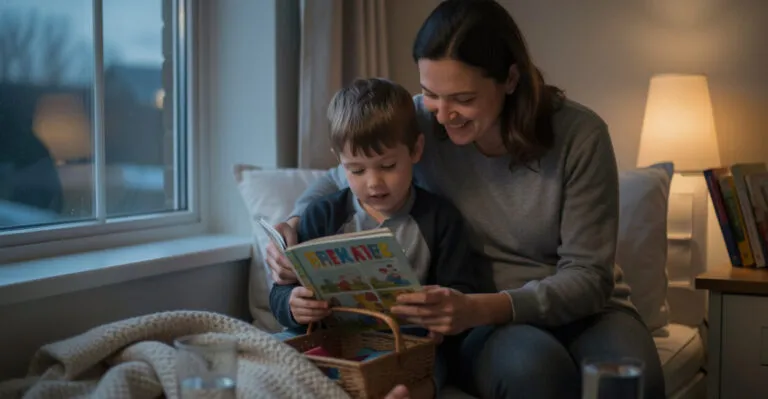 A Reading Routine at Home: How to Build the Habit Without Pressure
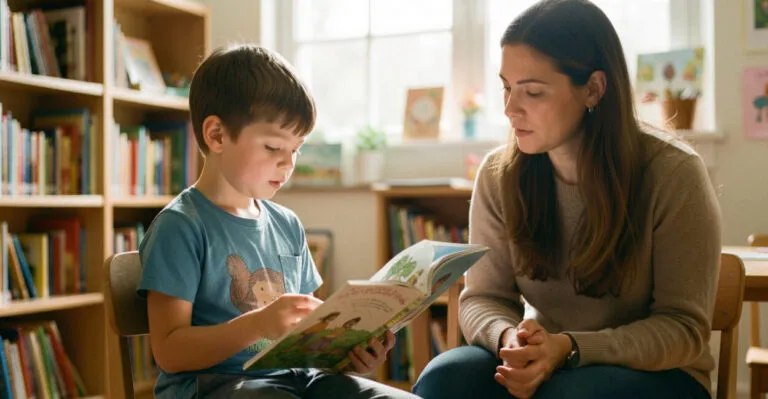 Slow Reading in Elementary School: When to Seek an Evaluation