
LISTEN TO THE PODCAST
Bilingual education is gaining prominence in today’s educational landscape, drawing interest from parents, educators, and education experts. As globalization advances and language skills become increasingly important, understanding this educational model is essential for anyone seeking a well-rounded education that meets the demands of the 21st century.

This in-depth article explores the key aspects of bilingual education, including its benefits, teaching methods, challenges, social impact, and tips for choosing the right school. Read on for a comprehensive overview to help you make informed, thoughtful decisions about this approach to education.
What Is Bilingual Education, and Why Does It Matter Today?
Definition and Core Concepts of Bilingual Education
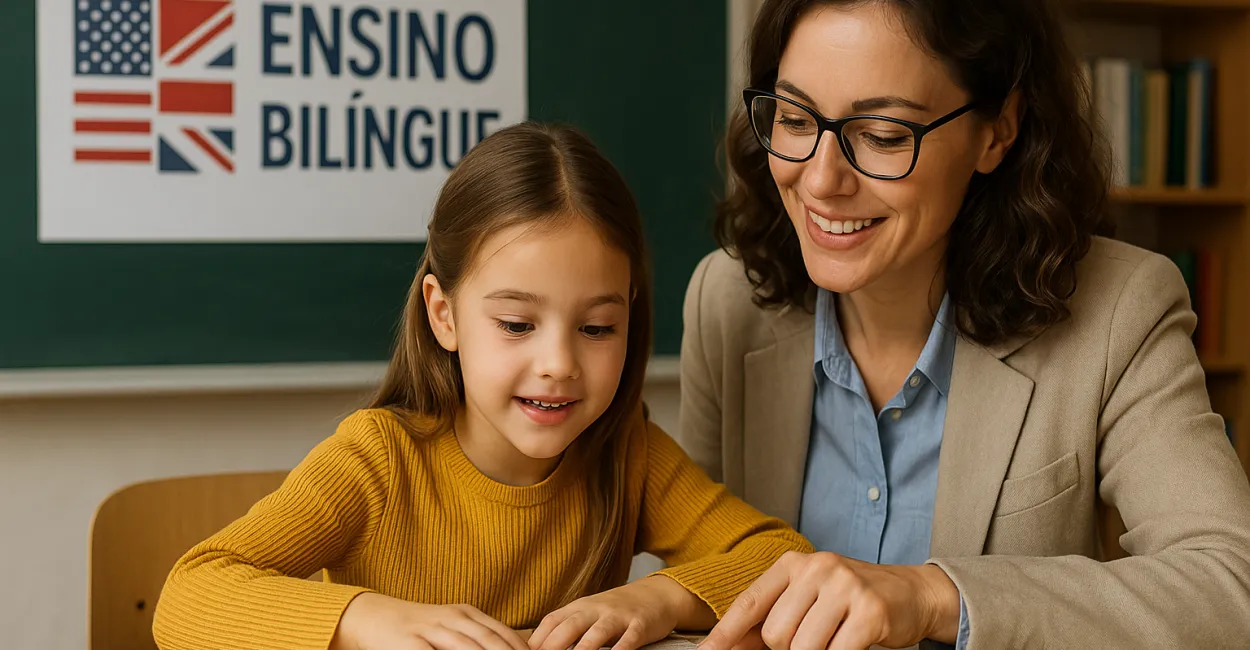
Bilingual education is an educational model that uses two languages as the medium of instruction in the classroom, supporting the simultaneous learning of academic content and the development of proficiency in both languages. This approach goes beyond traditional foreign-language instruction by integrating an additional language into the curriculum across different subjects.
Bilingual education can involve national languages such as Portuguese and English, Spanish, French, and others, depending on the cultural context and the institution’s educational approach. The goal is for students to develop communication, cognitive, and intercultural skills naturally and gradually.
This model is becoming increasingly valued because of the demands of the global job market and the need to build skills for communicating in multicultural settings.
The History and Evolution of Bilingual Education in Brazil
In Brazil, bilingual education began to expand in recent decades, following global trends that emphasize learning foreign languages from an early age. At first, bilingual schools were limited to private institutions and served more specialized communities.
Over time, public policies and educational initiatives began encouraging models that promote bilingualism, especially in border regions and areas with Indigenous communities. Today, many public and private schools use bilingual practices, expanding access.
Technological advances and increased international mobility have also contributed to the growth of this model, making it an increasingly common choice for families seeking a different kind of education.
Why Bilingual Education Matters for Students’ Futures
Learning two languages from an early age gives students a competitive edge in the job market, greater adaptability, and a broader multicultural perspective. Bilingual education prepares students to interact in international settings, take part in exchange programs, and access academic materials in different languages.
Research also suggests that bilingualism supports cognitive development, improving memory, concentration, and the ability to solve complex problems. These skills are essential to a well-rounded education.
Investing in bilingual education is therefore an investment in the future, expanding students’ personal and professional horizons.
Key Benefits of Bilingual Education for Child Development
Cognitive and Linguistic Development
Scientific studies indicate that bilingual children tend to have greater mental flexibility and stronger attention and memory skills. This is because the brain is constantly activating two linguistic systems, stimulating neural connections and strengthening executive functions.
Learning two languages simultaneously also expands vocabulary and grammatical understanding, making it easier to learn additional languages in the future. Bilingual children also show a better understanding of how languages are structured and greater metalinguistic awareness.
These cognitive benefits have a direct impact on school performance and the ability to learn independently.
Social and Intercultural Skills
Bilingual education exposes students to different cultures and forms of expression, enriching their social experience. Using two languages fosters empathy, tolerance, and openness to intercultural dialogue.
These skills are essential in an increasingly globalized and diverse world, preparing students to engage respectfully and effectively in multicultural settings.
Bilingual education also helps children develop communication skills that make it easier to interact in multilingual environments and expand their social circles.
Preparation for the Global Job Market
Proficiency in English, Spanish, or other foreign languages is becoming an increasingly valuable asset in the job market. Bilingual education gives students a solid foundation for working at multinational companies, participating in international projects, and accessing global academic and scientific content.
Bilingualism also strengthens soft skills valued in today’s job market, such as effective communication, critical thinking, and adaptability.
Bilingual education therefore not only builds language skills but also supports broad, competitive professional development.
Methods and Approaches to Bilingual Education

Bilingual Education Models: Immersion, Dual-Language, and Other Approaches
Schools use different bilingual education models, each with its own characteristics. In an immersion model, for example, the second language is used as the primary language of instruction for much of the curriculum, supporting more natural, contextualized learning.
A dual-language model divides instructional time between the two languages, often 50% in each, with the goal of developing skills in both.
Other approaches include subject-based instruction, in which specific subjects are taught in different languages, and transitional models, which begin with an emphasis on the student’s first language and gradually increase exposure to the second.
Using Technology in Bilingual Education
Technology plays an important role in bilingual education. Interactive resources, digital platforms, and multimedia content make learning easier and lessons more engaging.
Language-learning apps, educational games, videos, and online communication tools give students more opportunities to use the target language outside the classroom, reinforcing practice and immersion.
Virtual learning environments also make it possible to personalize instruction and tailor teaching methods to students’ individual needs.
Training and Professional Development for Bilingual Teachers
The quality of bilingual education depends directly on the qualifications of the educators involved. Teachers need to be fluent in the languages they teach and have the specialized pedagogical knowledge required for this setting.
Ongoing professional development, cultural exchanges, and training in bilingual teaching methods are essential to effective practices that support students’ language and academic development.
Investing in teacher training helps ensure that bilingual education is high-quality and credible.
Challenges and Considerations in Bilingual Education
Implementation and Infrastructure Challenges
Establishing a bilingual program requires detailed planning, adequate resources, and appropriate facilities, such as bilingual libraries, specialized teaching materials, and supporting technology.
Schools face challenges such as a shortage of qualified teachers, cultural resistance, and the need to adapt the curriculum, all of which can affect the program’s effectiveness.
Overcoming these obstacles requires investment and commitment from schools and educational leaders.
Impact on Families and the School Environment
For bilingual education to succeed, families need to be involved and support the learning process by encouraging students to practice both languages at home.
At school, it is essential to create an inclusive, motivating environment that respects differences and helps students feel at home in both languages.
Ongoing communication between schools and families helps identify difficulties early and encourage students’ bilingual development.
Assessing Students in Bilingual Settings
Assessment in bilingual education should cover both language and academic skills, taking students’ progress in both languages into account. This calls for tailored assessment tools and clear criteria to measure student performance fairly and accurately.
Formative assessments can also help identify specific needs and adjust teaching strategies, supporting more effective learning.
The challenge is to balance academic rigor with the flexibility needed to respect each bilingual student’s pace.
How to Choose the Best School for Bilingual Education
Criteria for Evaluating the Quality of Bilingual Education
When choosing a bilingual school, it’s important to consider factors such as teacher qualifications, the teaching approach, facilities, academic support, and parent involvement.
Check whether the school has recognized certifications and a proven track record in bilingual education, as well as a clear educational approach aligned with your child’s needs.
You can also research other parents’ opinions and students’ satisfaction to make a confident, informed choice.
Differences Between Public and Private Bilingual Schools
Private schools generally offer more extensive facilities, a wider range of resources, and specialized approaches to bilingual education, but they also charge higher tuition.
Public schools, meanwhile, have expanded their bilingual programs, especially in strategically important regions, helping make multilingual education more accessible.
When choosing between public and private schools, consider factors such as location, quality, cost, and your family’s expectations.
Tips for School Visits and Interviews with Staff
Before enrolling your child, schedule visits to see the facilities, observe classes, and talk with teachers and administrators to ask questions about the bilingual program.
Ask how the school tracks students’ progress, communicates with parents, and uses extracurricular activities to reinforce bilingualism.
These conversations can help you assess the school environment and determine whether it meets your student’s needs.
Comparing Bilingual Education Models
| Model | Description | Advantages | Disadvantages |
|---|---|---|---|
| Immersion | Instruction is primarily in the target language, with limited exposure to the student’s first language. | Rapid, natural development of the second language. | Can make complex content difficult to understand at first. |
| Dual-language | Instructional time is divided evenly between the two languages. | Balanced language proficiency and curricular integration. | Requires careful planning and qualified bilingual teachers. |
| Transitional | Instruction begins in the student’s first language, with gradually increasing use of the second language. | Supports initial understanding and a gradual adjustment. | Students may have limited exposure to the second language in the early stages. |
Future Outlook and Innovations in Bilingual Education
Technology and Teaching Trends
The future of bilingual education is closely tied to the integration of advanced technologies, such as artificial intelligence, augmented reality, and adaptive learning platforms, which offer personalized, immersive experiences.
These innovations are expected to transform language learning, making it more efficient and enjoyable for students.
Hybrid learning and project-based learning are also gaining ground, further supporting bilingual development.
Inclusion and Accessibility in Bilingual Education
Making bilingual education accessible to everyone, regardless of socioeconomic circumstances or special needs, is a priority challenge for the education sector.
Inclusion programs, scholarships, and educational accommodations can help expand access and promote equity in bilingual education.
Making bilingual education more accessible strengthens cultural and social diversity in schools.
Social and Cultural Impacts of Bilingual Education
Bilingual education helps affirm cultural identities and strengthen dialogue between different linguistic communities.
By promoting bilingualism, schools encourage intercultural understanding and challenge prejudice, helping create more inclusive, open societies.
This social transformation is essential to building a more harmonious and collaborative future.
Conclusion
Bilingual education is a powerful tool for supporting students’ overall development, offering cognitive, social, and professional benefits that go beyond learning two languages.
Although implementation comes with challenges, investing in appropriate teaching methods, teacher training, and infrastructure is essential to ensuring a high-quality education. For families and educators, understanding the nuances of bilingual education is key to making informed choices and getting the most out of its benefits.
If you want to provide your child with an effective bilingual education, research the available options, visit schools, and get involved in the educational process. A bilingual future starts with informed decisions today.
Leave a comment to share your experiences or questions about bilingual education, and explore more expert content to deepen your understanding.
FAQ: Frequently Asked Questions About Bilingual Education
How is bilingual education different from traditional foreign-language instruction?
Bilingual education integrates two languages into the curriculum on an ongoing, balanced basis. Traditional instruction generally teaches a foreign language as a standalone subject, without using it to teach academic content.
What is the ideal age for children to start bilingual education?
It’s best to start in early childhood, preferably in preschool, when children are especially receptive to language acquisition and learning tends to happen more naturally and easily.
Is bilingual education right for every child?
Yes, but it’s important to consider each child’s individual needs and family circumstances. Children with special needs can benefit from bilingual education when appropriate accommodations are in place.
What are the main challenges bilingual schools face?
Challenges include training qualified teachers, adapting the curriculum, providing appropriate facilities, and involving families in the learning process.
How can parents support bilingual learning at home?
Parents can encourage language practice, provide bilingual materials, take part in school activities, and create an environment where both languages are used in everyday life.
For more information and research on bilingual education, consult reliable sources such as the UNESCO website and Brazil’s Ministry of Education (the federal agency responsible for education).
Artigos Relacionados
 Bilingual Education: Benefits, Challenges, and Impact on Learning
 Continuing Education: The Key to Ongoing Professional Growth
 Inclusive Education in Schools: Transformative Paths for Every Student
 Digital Transformation in Education: How to Revolutionize Learning
 Maker Education: The Power of Making and Experimenting to Develop Critical Thinkers
 Big Data in Education: Turning Data Into Better Teaching Practices
