
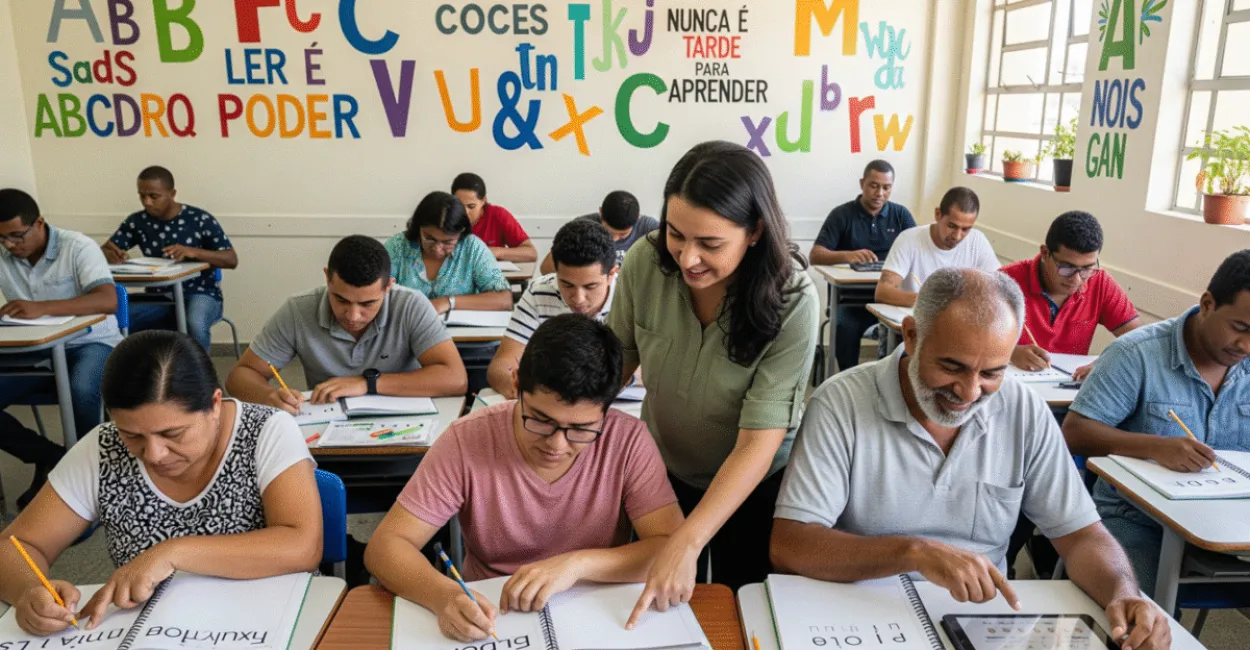
Adult and Youth Education (EJA, its Portuguese acronym) is an essential public policy and educational practice that helps ensure basic rights to reading, writing, and civic participation. It serves people who did not complete basic education at the usual age, offering flexible, relevant learning options designed for adult life. With a direct impact on social inclusion, career development, and empowerment, EJA is a vital tool for reducing inequality.
The challenge of literacy in education for youth and adults involves pedagogical, social, and institutional issues: students leaving school before completion, stigma, limited resources, and the need for relevant teaching methods. Overcoming these obstacles requires specialized teacher training, adapted materials, and coordination between education, employment, and social policies. Adult and youth education needs to be integrated with support networks and employment opportunities.

This article covers concepts, practices, methods, public policies, educational technology, assessment, and strategies for strengthening literacy in adult and youth education.
Literacy in Adult and Youth Education: Concepts and Goals
Definition and Scope
Literacy in adult and youth education refers to learning to read, write, and perform basic math in ways that reflect adults’ real-life circumstances. It involves more than recognizing letters: it means understanding texts, writing practical materials, and using written language in the contexts of work, health, and civic life. It serves young people ages 15 and up, as well as adults, many of whom face social and economic challenges.
This concept expands the traditional view of literacy by taking learners’ prior experiences, cultural backgrounds, and immediate needs into account. It also includes basic digital literacy, which is essential for participation in today’s world. Adult and youth education should connect social skills, communication, and independence.
Effective programs consider the whole person: a learner with family responsibilities, a work schedule, and career goals. Their aims therefore go beyond formal schooling to promote self-determination, build self-esteem, and expand economic and civic opportunities.
Educational Goals
The educational goals of literacy in adult and youth education include developing critical readers, capable writers, and effective users of information and technology. The aim is to build practical reading skills for interpreting labels, documents, contracts, and notices, as well as writing clear, coherent texts for everyday and workplace situations.
Another goal is to develop basic math skills and logical reasoning, which are essential for managing a household, working, and starting a business. Connecting core academic skills with meaningful topics such as rights, health, and civic life makes learning relevant and motivating for youth and adults.
Teachers plan relevant activities, interdisciplinary projects, and formative assessments that recognize students’ backgrounds and prior knowledge. Adult and youth education prioritizes meaningful, applicable learning that combines local knowledge with technology.
Main Challenges
Challenges in literacy instruction for adult and youth education include the wide range of reading and writing skills and differing school experiences within a single class. This calls for differentiated planning and assessment practices that track individual progress. Students leaving school before completion remains a problem, driven by economic pressures, social stigma, and a lack of support policies.
Another challenge is insufficient teacher training for EJA’s specific needs, which call for active teaching methods, social-emotional support, and the use of technology. Inconsistent availability of class openings, poor facilities, and a lack of relevant instructional materials limit the quality of education.
Overcoming these challenges requires investment in ongoing professional development, cross-sector coordination, and community engagement. Relevant LSI keywords such as social inclusion, functional literacy, and adult education policies should inform the design of effective programs.
- Identify needs: Learn about students’ backgrounds and learning priorities.
- Organize classes: Group students by literacy level and schedule availability.
- Set the curriculum: Prioritize practical skills and topics that matter to the community.
- Use formative assessment: Track progress with a variety of assessment tools.
- Connect students with services: Coordinate with social services and employment programs to support persistence.
Active Learning Methods for Adult and Youth Education
Project-Based Learning
Project-based learning (PBL) is highly effective in adult and youth education because it connects academic content to real problems in the community and workplace. As students develop a project, they use reading, writing, math, and research skills, building their abilities in authentic contexts. The process encourages active participation, decision-making, and collaboration.
Projects can address topics such as public health, local entrepreneurship, workers’ rights, or sustainability. Every stage—research, planning, implementation, and presentation—requires functional literacy skills, making literacy a tool for tangible change. This approach increases engagement and makes learning more relevant.
Teachers serve as facilitators, organizing project stages, providing materials, and assessing students through portfolios and presentations. LSI terms such as meaningful learning, contextualized instruction, and community projects naturally apply to this practice.
Blended Learning and Technology
Blended learning combines in-person classes with remote activities and digital resources. This is especially useful in adult and youth education, where flexible schedules are often essential. Digital tools—videos, podcasts, learning platforms, and literacy apps—make personalized practice and asynchronous support possible. Basic digital inclusion becomes a complementary goal of literacy instruction.
Implementation requires access to devices and internet connectivity, as well as training for educators and students in educational technology. Digital activities should be brief, focused, and connected to students’ everyday lives, such as reading local news or filling out online forms.
Terms such as digital literacy, digital inclusion, and educational platforms should be incorporated into lesson planning. Combining technology with in-person instruction expands learning opportunities and accelerates skill development.
Dialogic Practices and Critical Literacy
Dialogic practices, inspired by popular education, value learners’ prior knowledge and foster critical literacy. By working with real-world texts and situations, teachers encourage reflection on rights, power, and inequality. This approach turns literacy into a tool for empowerment and civic participation.
Critical literacy requires selecting meaningful topics, leading guided discussions, and assigning writing that engages with real problems. Students develop argumentation skills and the ability to critically evaluate information—essential skills in an age of misinformation. Partnerships with social movements and local groups can increase the impact.
LSI terms such as popular education, critical consciousness, and civic participation reinforce this approach. In this sense, EJA becomes a space for political and social development, as well as for building practical skills.
Public Policies and Programs for Adult and Youth Education

Overview of National Policies
In Brazil, adult and youth education is supported by laws such as the Lei de Diretrizes e Bases da Educação (LDB), Brazil’s National Education Guidelines and Framework Law, as well as specific policies that guarantee access through different formats. Federal and state programs aim to expand enrollment, fund materials, and train teachers, but implementation varies depending on municipal capacity and available resources. Coordination across levels of government is essential to ensure broad access.
Current priorities include strengthening foundational literacy in EJA, integrating career training, and promoting digital inclusion. Outcomes and educational indicators inform policy adjustments. LSI terms such as education funding, literacy policy, and school infrastructure are central to these efforts.
Official sources and research recommend investing in teacher training and strategies to help students stay in school. International experience also offers ideas for program innovation and success indicators.
Successful Programs and Models That Can Be Replicated
Successful adult and youth education models combine flexible services, connections to employment, and extensive use of active learning methods. Pilot programs developed through public-private partnerships and NGOs have shown progress in functional literacy and workforce participation. Programs that offer child care, transportation, or financial assistance help reduce attrition among adults with family responsibilities.
Models that can be adapted elsewhere include literacy initiatives integrated with the workforce, where short technical courses accompany literacy instruction. Combining formal education with practical training accelerates employability and encourages students to stay in school. Studies and reports from INEP, Brazil’s National Institute for Educational Studies and Research, and international organizations show positive results.
LSI terms such as cross-sector coordination, integrated programs, and career training are essential when analyzing these models. Local adaptation and ongoing evaluation are necessary for successful replication.
Funding and Sustainability
The sustainability of adult and youth education programs depends on reliable funding, effective use of resources, and strategic partnerships. Public funds, partnership agreements, and tax incentives for participating businesses are among the mechanisms used. Effective allocation requires participatory planning and monitoring of learning and persistence indicators.
Providing relevant instructional materials, facilities, and ongoing professional development requires a budget commitment. Diversifying funding sources, including support from community organizations and the private sector, is also recommended, while keeping the public sector responsible for ensuring the right to education.
LSI terms such as education funding, program sustainability, and impact assessment can help guide policy. Transparency and accountability help ensure continuity and build community trust.
| Program | Focus | Key Outcome |
|---|---|---|
| Program A | Functional literacy and technical training | 45% of graduates entered the workforce |
| Program B | Comprehensive education with social support | 30% reduction in attrition |
| Program C | Digital literacy and reading and writing skills | 60% improvement in digital skills |
Teacher Training and Assessment Practices
Essential Teaching Skills
Adult and youth education teachers need specific skills, including adult education methods, formative assessment, social-emotional support, and the use of educational technology. Along with knowledge of literacy instruction, teachers need to understand students’ circumstances, show empathy, and use strategies that encourage them to stay in school. Both preservice and ongoing training should address these areas.
Professional development programs have included modules on active learning methods, instructional project design, and managing classes with students at different skill levels. Reflective practice and instructional coaching help teachers adapt materials and assess real progress. LSI terms such as professional development, reflective practice, and ongoing training frequently arise.
Investing in teacher recognition, including fair salaries and incentives, also helps improve the quality of instruction. Coordination among universities, school systems, and education departments expands access to courses and training resources.
Formative Assessment and Learning Indicators
Assessment in adult and youth education should be primarily formative, tracking skill development throughout the learning process. Tools such as portfolios, reading circles, writing assignments, and contextualized assessments provide evidence of progress. Common indicators include reading proficiency, functional writing, and student retention.
Standardized assessments can be used with caution and supplemented by diagnostic assessments and self-assessment. The goal is to adjust teaching practices and provide constructive feedback to learners. LSI terms such as learning monitoring, assessment tools, and individual progress are relevant.
Periodic reports and educational systems make longitudinal analysis and evidence-based policymaking possible. Connecting indicators to clear goals helps guide resource allocation and program improvement.
Teaching Tools and Resources
Teaching resources for literacy in adult and youth education include relevant print materials, collections of useful texts, educational games, and digital platforms. Flexible materials that can be adapted to local contexts are preferable. Teachers and communities can enrich educational resources by developing materials together.
Technology tools such as reading apps, everyday situation simulators, and multimedia content libraries can enhance the learning process. Accessibility must be ensured, and students should be guided in how to use these tools for learning. LSI terms such as contextualized materials, multimedia resources, and educational repositories should be used.
Partnerships with universities and civil society organizations can support material development and teacher training. Encouraging methods that incorporate music, theater, and artistic expression expands opportunities for literacy and engagement.
Curriculum and Relevant Content for EJA
Relevant, Competency-Based Curriculum
The adult and youth education curriculum should be relevant, competency-based, and focused on the needs of adult life. This includes reading and writing skills applied to everyday situations, social-emotional skills, and career preparation. Organizing the curriculum into modules or thematic units makes it easier for students to progress and earn credentials.
Developing the curriculum with community input makes it more relevant and motivating. Assessing local needs and identifying priorities such as employment, health, and rights help determine essential content. LSI terms such as flexible curriculum, life skills, and contextualized instruction should guide planning.
Credentialing should recognize modular programs and allow prior learning to be validated. Connecting education with career training and continuing education programs expands opportunities for graduates.
Cross-Cutting Topics and Civic Engagement
Cross-cutting topics such as human rights, health, sustainability, and civic engagement are fundamental to EJA because they promote well-rounded, critical development. Working with these topics through texts and projects helps learners understand public documents, take part in elections, and claim their rights. In this sense, literacy serves as a tool for social participation.
Discussing gender, diversity, and inclusion strengthens the school environment and promotes mutual respect. Activities involving case studies, the creation of informational materials, and community organizing connect learning with civic action. LSI terms such as civic education, rights, and social inclusion arise naturally.
Coordinating activities with local services, such as health centers and child protection councils, expands the educational and social impact. EJA should connect education with the exercise of rights to promote lasting social change.
Integrating Technical and Vocational Training
Integrating literacy with technical and vocational training can improve employability and make adult and youth education more relevant. Short courses that combine functional literacy with practical skills—such as repair work, food preparation, sewing, and maintenance—expand local opportunities. Partnerships with businesses and public services facilitate internships and workforce entry.
Integrated projects allow students to practice reading and math in real work settings, reinforcing what they learn. Professional credentials linked to progress in school encourage students to complete their education and continue learning. LSI terms such as career training, integrated technical education, and workforce participation are essential.
Planning partnerships with local employers, unions, and employment agencies helps keep the curriculum current and makes training programs more effective.
| Format | Advantage | Limitation |
|---|---|---|
| In person | Direct interaction and social-emotional support | Less flexible for work schedules |
| Blended | Flexibility and use of technology | Requires access to devices and internet connectivity |
| Modular | Competency-based progress and recognition of prior learning | Requires coordination for credentialing |
Community Engagement and Partnerships
Community Outreach
Community engagement is a key factor in the success of adult and youth education. Bringing together families, community leaders, and local organizations helps identify needs, recruit students, and support persistence. Developing the educational plan collectively strengthens identity and belonging, reducing attrition and stigma.
Extracurricular activities, knowledge fairs, and public presentations recognize students’ achievements and bring the community closer. Social recognition of the learning process is an important motivator. LSI terms such as community participation, local networks, and family engagement are especially relevant in this context.
Communication strategies and local campaigns help promote educational offerings and learners’ rights, expanding the reach of adult and youth education. Involving graduates as peer advocates can create a ripple effect.
Cross-Sector Partnerships
Partnerships with social services, health care providers, employment programs, and the private sector strengthen EJA. Cross-sector coordination helps students access psychosocial support, career training referrals, and basic services that remove barriers to learning. Partnerships can provide facilities, resources, and internship opportunities.
Well-designed agreements include clear goals, defined responsibilities for each partner, and evaluation methods. Collaboration with universities contributes research, teacher training, and instructional materials. LSI terms such as cross-sector coordination, partnership agreements, and social support are central.
Maintaining collaborative networks and local governance groups ensures sustainability and alignment with the real needs of the population served by adult and youth education.
Connection to the Workforce
Aligning educational offerings with workforce needs makes adult and youth education more valuable and appealing. Identifying local occupations, providing training for small businesses, and promoting microloans are strategies that connect education with the local economy. Training aligned with employers’ needs makes it easier to find work or earn an income.
Entrepreneurship projects and local cooperatives can be launched in schools, giving learners hands-on experience and confidence. LSI terms such as employability, social entrepreneurship, and workforce training support this connection.
Involving businesses in curriculum development and internship offerings keeps skills up to date and expands opportunities. It also helps position EJA as a legitimate path to education and career development.
- Build local partnerships with public services and civil society organizations.
- Create support networks to reduce barriers to participation.
- Encourage graduates to serve as mentors.
Impact Assessment and Monitoring
Success Indicators
Assessing the impact of adult and youth education requires broad indicators beyond test scores: graduation rates, persistence, workforce participation, improved quality of life, and social participation. Monitoring functional reading, writing, and numeracy skills is essential for adjusting teaching practices.
Qualitative indicators, such as accounts of personal and community transformation, complement quantitative data. Educational information systems should be able to combine these indicators and provide accessible reports for administrators and the community. LSI terms such as educational indicators, impact assessment, and ongoing monitoring are important.
Setting clear, time-bound goals makes it possible to track progress and adjust programs. Sharing results transparently builds trust and helps attract resources.
Research and Assessment Methods
Mixed methods—quantitative and qualitative—are recommended for evaluating EJA programs. Follow-up studies, interviews, focus groups, and portfolio reviews provide a detailed view of the learning process and its social effects. Longitudinal studies help identify medium- and long-term outcomes.
Partnerships with academic institutions strengthen research methods and support the use of robust tools. Participatory assessments that involve students and the community increase the legitimacy and quality of findings. LSI terms such as educational research, participatory assessment, and longitudinal study reinforce this approach.
Ongoing assessment and feedback cycles make it possible to improve curricula, teacher training, and engagement strategies, ensuring that adult and youth education remains responsive to social needs.
Using Data to Make Decisions
Reliable, up-to-date data are essential for strategic decision-making in adult and youth education. Indicator dashboards, school management systems, and periodic reports support resource allocation, teacher training, and curriculum adjustments. Effective governance requires information that is accessible and analyzed in context.
Training administrators to interpret data and plan based on evidence is crucial. Digital tools and heat maps can identify areas with the greatest gaps and help direct public policies. LSI terms such as data-driven management, indicator dashboards, and informed decision-making are central.
Sharing results with the community increases transparency and allows people to participate in ongoing improvement, strengthening the collective commitment to literacy in adult and youth education.
Conclusion
Adult and youth education is essential to protecting rights, reducing inequality, and promoting social inclusion. Literacy, understood as functional and critical reading and writing, enables full participation in economic and civic life. Strategies that combine active learning methods, teacher training, technology, and cross-sector coordination are more likely to deliver lasting results.
Investing in strong public policies, sustained funding, and community engagement helps adult and youth education fulfill its empowering purpose. If you work in this field, start by identifying local needs, building partnerships, and prioritizing formative assessment—concrete steps toward changing lives through literacy.
Frequently Asked Questions About Adult and Youth Education
What defines adult and youth education?
Adult and youth education provides instruction adapted to people who did not complete basic education at the usual age, with flexible formats and relevant curricula. It includes literacy, functional reading and writing skills, and technical training when needed. It focuses on skills that apply to everyday life and work, values prior knowledge, and respects students’ family and work responsibilities.
How can literacy instruction in EJA be accelerated?
Accelerating literacy instruction in EJA requires relevant teaching methods, formative assessment, and integrated projects that connect reading and writing to real-life situations. Ongoing teacher training, educational technology, and social support such as child care and transportation help reduce barriers. Organizing classes by literacy level and offering intensive modules can also support faster, sustainable progress.
Which technology resources are most useful for EJA?
Useful resources include learning platforms with modular content, reading and writing apps, short videos, podcasts, and asynchronous assignments that offer flexibility. Communication tools such as messaging and group chats make coordination easier. It is essential to ensure access to devices and digital skills training, and to integrate technology into meaningful, relevant teaching practices.
How can the community be involved in the educational process?
Community involvement includes bringing together local leaders, holding public events where students can present their work, and including family members in decisions about the educational plan. Partnerships with local organizations, businesses, and public services can provide logistical and social support. Recognizing students’ achievements and inviting graduates to serve as mentors strengthen connections and encourage new enrollments.
Which indicators should be monitored in EJA?
Indicators to monitor include enrollment, attendance, graduation rates, reading proficiency and functional writing skills, workforce participation, and socioeconomic outcomes after graduation. Qualitative indicators, such as accounts of personal change and civic participation, complement the assessment. Information systems and monitoring dashboards guide decision-making and policy adjustments.
Recommended sources and further reading: INEP – National Institute for Educational Studies and Research, UNESCO – Adult Education, and academic studies available through university repositories.
Artigos Relacionados
 Youth and Adult Education in Brazil: Better Preparation for a Successful Future
 How to Motivate Adult Education Students to Keep Studying
 How to Introduce Literacy in Early Childhood Education
 Early Childhood Education: The Importance of Play in Child Development
 Teaching Literacy to Children With Special Needs
