
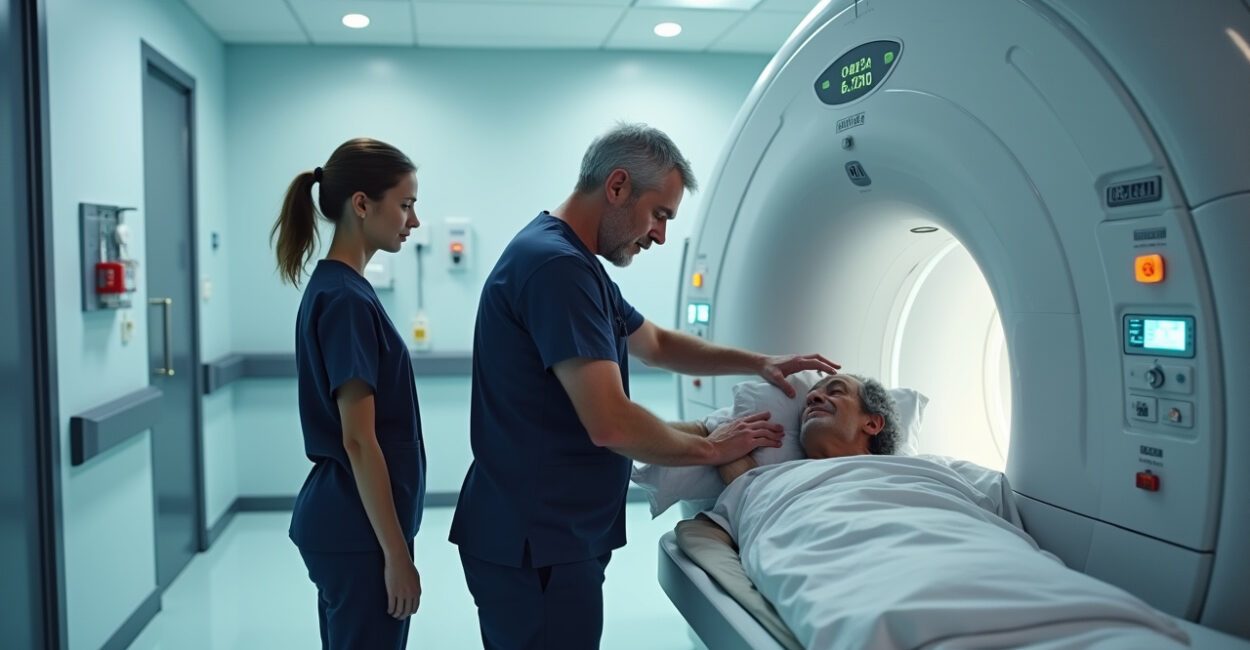
A radiology technician is a technical-level professional who prepares for and performs diagnostic imaging exams, positions patients, operates equipment, and applies radiation protection measures. To enter the field, you’ll need to choose an approved program, complete the required clinical training, and check the requirements for professional registration. Experience in different departments can then broaden your career options.
This career combines technical knowledge, a focus on safety, and direct interaction with patients and healthcare teams. This guide explains the job duties, the differences between technicians, technologists, and radiologists, how to choose a program, and what factors affect pay and career advancement.

What does a radiology technician do?
The work starts before the exam: the technician checks the order and the patient’s identity, explains the procedure, prepares the patient, and positions them. Next, the technician selects the settings specified in the protocol, operates the equipment, and checks that the images were captured properly, aiming to avoid unnecessary retakes.
Depending on their training, professional scope, and workplace, technicians may perform conventional X-rays, bedside exams, mammograms, CT scans, MRIs, bone density scans, and fluoroscopy. Each modality has its own protocols and precautions. For example, MRI requires screening for metal objects; for exams involving contrast, technicians must follow workplace guidelines and stay within the scope of their role.
- Check patient information and explain the exam.
- Position the patient and adjust the equipment according to the protocol.
- Apply radiation protection and biosafety measures.
- Manage the room workflow and report any issues to the team.
- Identify technical problems that could affect image quality or require review by the person in charge.
A useful image depends on an appropriate protocol, correct positioning, and safety measures applied throughout the exam.
Health regulations for radiology services include guidance from Brazil’s Ministry of Health and Anvisa Resolution RDC No. 611/2022, issued by Brazil’s National Health Surveillance Agency and available in the Official Gazette of the Union. Professional duties should also be checked against applicable regulations and with the regional professional council.
Radiology technician, technologist, and radiologist: What’s the difference?
A technician completes a technical program at the secondary-school level and performs exams within the scope of their role. A technologist completes a technology-focused undergraduate degree, with broader training in radiology processes and technology; the degree alone is not equivalent to a physician’s specialist qualification.
A radiologist is a physician who graduates from medical school and completes specialized training in diagnostic imaging. Radiologists interpret exams and prepare reports, in accordance with their qualifications and professional regulations. These are distinct career paths with different responsibilities, although the professionals work together.
How to choose a program and enter the profession

Program length, format, and cost vary by institution. Before enrolling, contact the relevant education authority and confirm that the school and program are properly approved in the applicable official records. Request the curriculum, total hours, clinical training arrangements, and clear information about tuition and fees.
Read also: What Does an Industrial Automation Technician Do?
Be wary of promises of accelerated or fully online training that don’t explain how in-person classes and clinical training work. This field requires hands-on practice with equipment and patients. Requirements may depend on the law and the program’s curriculum, so confirm directly with the school and professional council which requirements apply to you.
Use this checklist before choosing a program:
Read also: Humanities Careers: Fields, Programs, and Opportunities
- Which agency recognizes or approves the program, and how can I verify that?
- How many clinical training hours are required, where will they take place, and who will supervise them?
- What documents and steps are needed to apply for professional registration after graduation?
- Does the quoted price include enrollment, materials, uniforms, exams, and any clinical training fees?
- How does the school organize in-person practice and access to equipment?
Clinical training provides an opportunity to learn how a clinic or hospital operates, practice positioning under supervision, and see how the team handles different clinical situations. The quality and organization of this experience are worth considering when choosing a program; however, completing the program does not guarantee a job.
Career paths, skills, and professional growth
Your first job may be at an imaging clinic, hospital, outpatient facility, or emergency care unit. Conventional X-rays can provide a foundation in positioning and workflow. CT requires close attention to protocols and patient preparation; mammography calls for precision and careful communication; and hospital work includes bedside exams and interactions with people who have limited mobility.
Area Common requirements Experience you can gain Conventional X-rays Positioning, efficiency, and radiation protection A foundation for routine exams CT Protocols and patient preparation Familiarity with exams that involve more complex operations Mammography Precision and communication Experience in a specialized modality Hospital and emergency care Adapting to changing priorities and different clinical situations Experience with a range of workflows
To advance, choose an area to specialize in and list the departments you’ve worked in, the equipment you’ve used, and the training you’ve completed on your resume. Continuing education in radiation protection, biosafety, and protocols can help keep your practice aligned with workplace requirements. Brazil’s Anvisa, the National Health Surveillance Agency, publishes health regulations; always consult current documents instead of relying only on third-party summaries.
Consistent positioning, communicating with patients who are anxious or in pain, and following protocols also affect how your work is evaluated. Any adjustments must remain within safety rules and the scope of your role. If a situation falls outside the protocol or your professional scope, ask the responsible team for guidance.
Job openings and pay: What to consider
Job openings may be available at hospitals, imaging clinics, and outpatient facilities. Read the requirements carefully: some positions call for professional registration, experience with a specific modality, or availability for shifts, nights, and weekends. When preparing your resume, highlight your education, clinical training, registration status, and verifiable experience. Don’t claim responsibilities you haven’t had.
Pay varies by region, employer, work hours, shift schedule, experience, modality, and benefits. On-call shifts and specialized departments may affect earnings, but there is no single pay range that represents the entire country. Before comparing offers, check the base salary, hours, differentials, and applicable collective bargaining agreement. Data from Novo Caged, a Brazilian government employment registry maintained by the Ministry of Labor and Employment, can help track reported hires and wages in formal jobs, but it does not replace a review of the specific job’s terms.
The local job market matters, too: the number of imaging services and the types of employers vary from one city to another. Research opportunities in your area and compare requirements from different employers before choosing additional training.
Frequently asked questions
Does a radiology technician program involve math?
Yes. The curriculum may include calculations and concepts related to radiation physics, image acquisition settings, and units of measurement. The depth of coverage varies by program; a solid math foundation can help you keep up with classes and understand technical material.
Is the program difficult?
How difficult it is depends on how familiar you are with anatomy, physics, math, and hands-on work. Staying organized, reviewing material regularly, and taking part in practical sessions can make learning more manageable. Before enrolling, review the curriculum and ask the school what academic support it offers.
Is a radiology technician a doctor?
No. A radiology technician completes professional technical training and performs exams within the scope of the profession. A radiologist attends medical school and completes specialized training to interpret exams and issue reports.
Artigos Relacionados
 Radiology Technician: A Complete Guide to a Successful Career
 Surveying Technician: Career and Job Market
 Nursing Technician: The Complete Guide to a Successful Career
 Complete Guide to Becoming a Laboratory Technician: Career, Training, and Job Market
 Data Engineer: Strategies to Advance Your Career
 Professional Training in Agriculture: Advance Your Rural Career
