

A drop in oxygen saturation, a prescribed dose, or an incomplete record can change the course of care. A nursing technician provides direct patient care, performs procedures within the scope of their training, and reports changes to the care team under a nurse’s direction and supervision. To work in this field in Brazil, you must complete an accredited technical program and register with the Regional Nursing Council (Coren) in your state. Before enrolling, check that the program is in good standing, review its clinical training hours, and look into the available job opportunities in your area.
Quick Facts
- Scope of work: Technical-level nursing care within the limits set by law.
- Supervision: Works under a nurse’s direction and supervision.
- Training: A technical program with classroom instruction and hands-on training, including clinical placements as required by the program.
- Registration: Active registration with the Coren is required to practice.
- Work settings: Hospitals, primary care clinics, medical offices, emergency services, and home care, among others.
What a Nursing Technician Does
A nursing technician is a mid-level technical professional who takes part in nursing care, performing tasks and procedures permitted by law and included in the team’s work plan, under a nurse’s direction and supervision. Day to day, this may include monitoring vital signs, administering prescribed medications, and documenting the patient’s response.

Duties vary depending on the facility, patient population, and local protocols. Common tasks include assisting with hygiene and comfort, moving patients who are confined to bed, collecting samples for tests when authorized, and reporting clinical changes to the care team.
Documentation is not optional paperwork. Recording the time a medication was given, whether a patient accepted care, or a change you observed helps the team maintain continuity of care.
A routine but important step is to verify the patient’s identity and the prescription before administering any medication. Skipping this check because you’re in a hurry increases the risk of an error.
Accurate documentation turns a single observation into useful information that supports continuity of care.
How a Nursing Technician Differs From a Nurse
Nurses have a college degree and are responsible for duties such as planning, organizing, coordinating, and evaluating nursing care, as well as activities reserved for them by law. Nursing technicians complete a mid-level technical program and provide care within the scope of their training as part of a team under a nurse’s supervision.
Law No. 7,498/1986, which regulates nursing practice in Brazil, defines professional scopes of practice. The Federal Nursing Council also publishes rules and guidance for the profession.
Whether a task is appropriate may depend on the situation, the prescription, local protocols, and current regulations. If in doubt, consult the nursing supervisor and the facility’s policies.
Training, Program Length, and Professional Registration
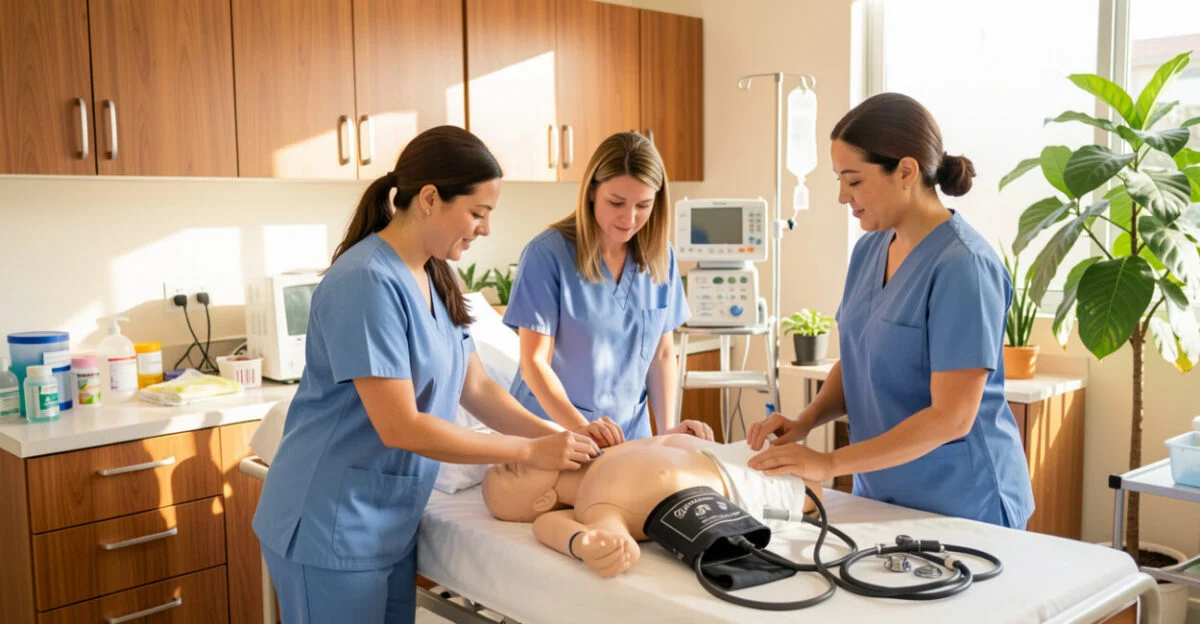
A nursing technician program combines classroom instruction, hands-on lab work, and supervised clinical placements. Program length varies by institution, depending on the curriculum, total hours, and applicable education requirements. So if you’re wondering, “How long does a nursing program take?” check the curriculum of the school you’re considering rather than relying on a general estimate.
Before enrolling, check that the institution is authorized to offer career and technical education and that the program meets applicable requirements. Ask for the curriculum in writing, and confirm how many hours are devoted to clinical placements, where they take place, and who supervises them. Clinical practice is a crucial part of training: classroom lessons alone won’t prepare you for the pace and responsibilities of a health care setting.
Do You Need to Be Registered to Work?
Yes. After completing the program and gathering the required documents, you must apply for registration with the Coren in the region where you plan to work. Check with the regional council for current document, fee, and application requirements, as these administrative details may change.
Is a Nursing Technician Program Difficult?
The program requires consistent study and a strong sense of responsibility, especially in subjects such as anatomy, pharmacology, infection control, and patient care procedures. How difficult it feels depends on your academic background and how much time you can spend practicing. Reviewing calculations, protocols, and core concepts throughout the program is usually more effective than cramming right before exams.

Program Costs and How to Find Free Training

The cost of a nursing technician program varies by city, school, format, lab facilities, and what tuition covers. Supplies, uniforms, transportation, and additional fees can also add to the total. Ask for a written breakdown of all costs and find out how make-up lab sessions and clinical placements are handled.
To look for a free program, check admissions notices from public career and technical schools, state education networks, and government-funded training programs. Availability depends on funding, location, and the application process; there may not be an open class at any given time. Brazil’s Ministry of Health publishes information about health policies and initiatives, but you’ll need to confirm educational openings directly with the institution offering the program.
Compare the total cost and quality of hands-on training, not just tuition. A low-cost school can end up being expensive if you have to pay for make-up sessions, unexpected travel, or materials that weren’t disclosed in the agreement.

Where to Work and How to Find Job Openings
Opportunities are available at general and specialty hospitals, primary care clinics (UBSs, Brazil’s local basic health units), medical offices, urgent care centers, laboratories, long-term care facilities, and home health services. Job openings vary by municipality, type of facility, experience requirements, and hiring arrangements; none of these settings guarantees immediate employment.
To search for “nursing technician jobs,” use several channels: hospital and health care network career pages, job boards, hiring processes run by municipal and state governments, and professional contacts made in accordance with privacy rules. Read job requirements carefully. Some positions require experience in a specific area, such as an operating room or intensive care unit; others welcome recent graduates and provide initial onboarding.
Population data from IBGE, Brazil’s national statistics agency, can help you understand the demographic context of a region, but it doesn’t replace checking local job postings and hiring notices. Information from Brazil’s Ministry of Health can also help you learn about the sector and available services. Job openings change frequently and can’t be inferred from population size alone.
Pay, Hours, and Working Conditions
A nursing technician’s salary depends on factors such as location, employer, work setting, experience, contracted hours, and applicable collective bargaining rules. When comparing offers, check the base salary, hours, any applicable differentials, benefits, employment arrangement, and schedule. Also confirm whether the advertised amount is total monthly pay or just the base rate.
The term “nurse salary” refers to a different role: nurses have a college degree, distinct responsibilities, and a separate job classification. Don’t automatically use a nurse’s salary as a benchmark for a technical position. For current figures, check local hiring notices and collective bargaining agreements, as well as the employer’s formal offer. Job-site averages may combine different schedules and employment arrangements.
The job may involve night shifts, weekends, physical exertion, and exposure to distressing situations. When considering a position, ask about staffing levels, training, protective equipment, breaks, and how to report incidents. Working conditions vary between institutions, even when the job title is the same.
Skills and Challenges in Patient Care
Technical knowledge is essential, but quality care also depends on attention to detail, organization, and communication. Giving the nurse clear information, documenting what you observed, and confirming instructions can prevent miscommunication between shifts. To strengthen your professional communication, practice giving concise reports: what changed, when it started, and how the patient responded.
Infection prevention, hand hygiene, proper use of protective equipment, and correct disposal of materials are part of everyday care, not separate tasks. Emotional resilience matters, too, but that doesn’t mean ignoring the impact of the work. Asking for support in a difficult situation and following the facility’s procedures are responsible steps.
In patient care, safety depends both on performing the procedure correctly and on making sure the team receives complete information.
This career may not be a good fit for someone unwilling to follow protocols, work as part of a team, or handle demanding schedules and high-pressure settings. Before choosing this path, learn about the day-to-day work in different settings and consider whether the working conditions fit your needs and expectations.
How to Choose a Program and Get Started
A sensible path starts with checking the school, comparing costs, and confirming your professional registration before applying for jobs. Use this checklist to avoid making a decision based on advertising alone:
- Confirm that the program is authorized and in good standing with the relevant education authorities.
- Ask for the curriculum, total hours, and detailed information about clinical placements and lab training.
- Request the total cost, including fees, supplies, and expenses related to hands-on training.
- Ask the school about clinical placement sites, supervision, and graduation requirements.
- After completing the program, gather your documents and apply for Coren registration before practicing.
- When applying for jobs, tailor your resume to the position and accurately describe relevant clinical placements, courses, and experience.
If you’re comparing job offers, consider hours, pay, commute, schedule, and the support provided. For more information about care costs and health coverage, you can also read about health care. This topic can help you understand the sector, but it doesn’t replace reviewing the employment agreement.
Frequently Asked Questions
Can Nursing Technicians Work in More Than One Type of Setting?
Yes, as long as they have active registration and meet the requirements for each job. Some areas may require specific experience, training, or additional qualifications.
Can You Start Looking for a Job Before Finishing the Program?
You can follow hiring processes and prepare your resume, but you must complete your training and obtain the required registration before practicing. Read the hiring notice carefully: some institutions accept applications for a candidate pool or future hiring, while others require complete documentation at the time of application.
Does a Clinical Placement Guarantee a Job?
No. A clinical placement helps you build skills and learn what the work is like, but hiring depends on an available position, the selection process, and the employer’s criteria. Use the placement to learn protocols and ask for guidance on skills you still need to practice.
What Should a New Graduate Include on a Resume?
Include your education, registration status, clinical placements, hands-on experience, and courses related to the job. Don’t claim proficiency in procedures you can’t yet perform safely.
How Can You Tell Whether a Job Offers Appropriate Working Conditions?
Ask for written details about hours, schedule, pay, and employment arrangement. Also ask about onboarding, what protective equipment is provided, and who you should go to with patient care concerns.
Artigos Relacionados
 Complete Guide to Becoming a Laboratory Technician: Career, Training, and Job Market
 Fashion Designer: A Complete Guide to Building a Successful Career
 Anesthesiologist: A Complete Guide to Building a Successful Medical Career
 Software Engineer: A Complete Guide to Building a Successful Career
 Successful YouTuber: A Complete Guide to Building Your Career on the Platform
 Digital Influencer: The Complete Guide to Building a Successful Online Career
