
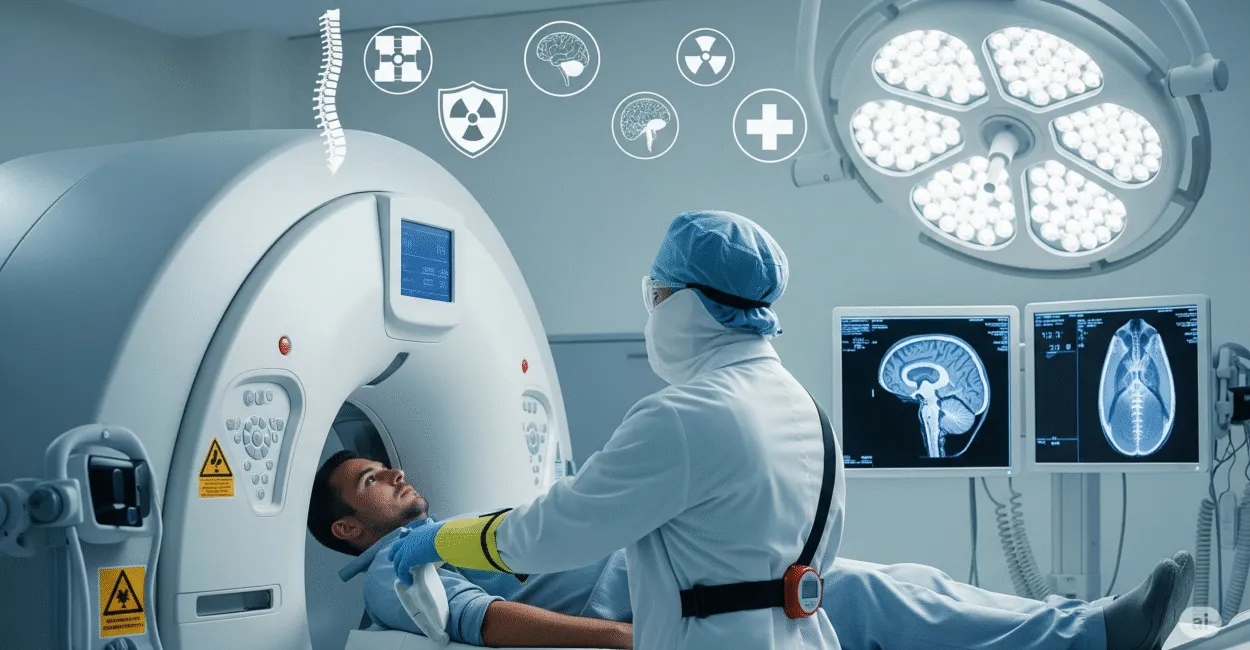
A single imaging exam can change a medical decision in minutes—and behind that precision is the work of the Radiology Technician. This professional operates equipment, positions patients, follows safety protocols, and helps produce images that support diagnosis, whether through X-rays, CT scans, mammograms, or hemodynamic procedures.

In practice, this career involves much more than “operating a machine.” It requires technical skill, attention to detail, knowledge of radiation protection, and a routine in which every detail matters: preparing the patient, setting exposure parameters, ensuring image quality, and monitoring radiation dose.
Here, you’ll learn what this professional does, what training is required, where they work, how much they can earn, and what factors really matter before choosing this career.
What You Need to Know
- Radiology technicians produce medical images with a focus on diagnostic quality and patient safety.
- Training requires a specific technical program, and professional practice is governed by the CONTER/CRTR system, Brazil’s federal and regional radiology councils.
- Common areas of practice include conventional radiology, CT, mammography, MRI, and nuclear medicine, depending on qualifications and the workplace.
- Success in this field calls for precision, ethical conduct, communication with patients, and a strong command of biosafety and radiation protection protocols.
- The job market can be stable, but shift work, hospital settings, and demanding routines are part of everyday life in many workplaces.
Radiology Technician: What They Do, Where They Work, and Why They Matter
Technical definition: A Radiology Technician is a qualified professional who operates equipment that emits ionizing radiation and imaging systems, performs radiological exams, and supports diagnostic and interventional procedures in accordance with safety standards. Put simply, they turn a clinical order into an image that is useful, clear, and safe for a physician to review.
The role may seem operational, but it is strategic. A poor-quality image can delay a diagnosis, require a repeat exam, and increase the patient’s radiation dose. That’s why the difference between an average experience and a good one often comes down to details: correct positioning, protocol selection, clear communication, and verifying the patient’s identity.
Common workplaces
- Public and private hospitals
- Diagnostic imaging clinics
- Emergency departments and operating rooms
- CT, mammography, and bone densitometry departments
- Radiation therapy and nuclear medicine services, depending on training and the facility’s procedures
In practice, a good radiological image depends on more than the equipment. It comes from combining correct positioning, appropriate technical settings, and effective communication with the patient.
Anyone who works in this field knows that the way you interact with patients changes everything. An older adult in pain, a frightened child, or a patient with limited mobility each requires a different approach. That kind of adjustment isn’t in the equipment manual; it comes from day-to-day experience.
Organizations and terms in the field
You’ll see some names and terms frequently in this field: CONTER, Brazil’s Federal Council of Radiology Technicians; CRTR, its regional councils; ANVISA, Brazil’s health regulatory agency; CNEN, Brazil’s National Nuclear Energy Commission; digital radiography; computed tomography; mammography; radiation protection; and dosimetry. Understanding this vocabulary helps you see the profession more clearly and realistically.
Training, Registration, and Professional Qualifications
To work legally, it’s not enough to “have an interest in imaging.” The path starts with recognized technical training, followed by registration with the appropriate regional council. In Brazil, the profession is regulated by the CONTER/CRTR system, which sets standards for professional practice and enforcement.
Program length, curriculum, and qualification names can vary by school, but the core subjects are similar: anatomy, radiation physics, radiation protection, positioning techniques, image production, and biosafety. One thing many people underestimate is the scientific foundation. Without it, a professional may be able to “perform the exam” but not understand why the result was poor or how to improve it.
What’s typically covered in the program
- Anatomy and physiology for medical imaging
- Radiation physics and radiation protection
- Radiographic techniques and patient positioning
- Image processing and quality
- Ethics, regulations, and patient care
A useful source for checking regulations and updates is ANVISA, Brazil’s health regulatory agency, especially when it comes to safety in healthcare settings. To understand the occupational context and job market, you can also review IBGE data on health, employment, and the distribution of services across Brazil. IBGE is the country’s national statistics agency.
An important limitation of training
Not every program prepares students equally well for the realities of the job. Some schools offer strong hands-on training, while others focus too heavily on theory. That difference becomes clear when a student starts a shift, has to manage a heavy workload, and realizes that operating the equipment is only part of the job.
Day-to-Day Work: Safety, Technique, and Patient Relations

A Radiology Technician’s routine often combines repetitive tasks with a high level of responsibility. Every exam has a protocol, but no two patients are exactly alike. Standardization helps, but it doesn’t solve everything; quickly assessing the situation can make a difference in the final result.
What happens before, during, and after an exam
- Reviewing the order and confirming the patient’s identity
- Asking the patient to remove metal objects or unsuitable clothing
- Positioning the patient correctly for the exam
- Adjusting the equipment settings
- Checking the image and repeating the exam only when necessary
In radiology, radiation protection isn’t a bureaucratic detail. It’s part of the job. Lead aprons, thyroid shields when indicated, barriers, and dosimeter monitoring are all used to reduce unnecessary exposure. When protocols aren’t followed, patients, staff, and the facility can all pay the price.
What separates a technically good exam from one that’s merely “acceptable” isn’t the most expensive equipment—it’s discipline in following protocols, positioning patients, and controlling dose.
I’ve seen cases where an apparently simple image had to be repeated because the patient was positioned too hastily and wasn’t checked properly. The result was delayed care and additional radiation exposure. This kind of mistake is common when people think the field is purely operational. It isn’t.
Read also: Anesthesiologist: A Complete Guide to Building a Successful Career in Medicine
Skills that matter most on the job
Beyond technical skills, communication, attention to detail, composure under pressure, and ethical conduct all matter. In an emergency department, for example, the volume of cases often requires speed without sacrificing quality. In mammography, a compassionate approach is especially important because the exam can cause discomfort and anxiety.
Career Paths and In-Demand Specialties
The range of career options is broader than many people realize. Diagnostic imaging has expanded, equipment has become more sophisticated, and facilities increasingly need professionals familiar with different modalities. This has opened up opportunities, but it has also raised the technical bar.
| Area | Characteristics | Common fit |
|---|---|---|
| Conventional radiography | Quick exams, high volume, and frequent patient positioning | Someone who enjoys a fast pace and precision |
| Computed tomography | Specific protocols, contrast agents in many cases, and greater operational complexity | A professional with strong technical judgment |
| Mammography | Requires a careful approach and attention to compression and image quality | Someone who is technically skilled and communicative |
| Nuclear medicine | Involves radiopharmaceuticals and tightly regulated procedures | Someone who works well with strict rules |
| Radiation therapy | Support with cancer treatment planning and delivery, with significant responsibility | A disciplined, detail-oriented professional |
Not every facility hires for all these areas under the same job title. The role may be listed as X-ray operator, imaging technician, or diagnostic imaging technician. The title may vary, but the real expectation is almost always the same: delivering safe, technically sound work.
Is specialization worth it?
Yes, especially in hospitals and clinics that perform a high volume of advanced exams. But there’s a caveat: specialization only provides a real advantage when the workplace recognizes and uses that expertise. In facilities with very basic resources, additional training may matter less than accumulated hands-on experience.
Job Market, Salary, and What Really Influences Hiring
The job market for this profession is generally supported by steady demand for diagnostic imaging. Chronic disease, emergency care, and population screening keep services running year-round. Even so, job availability and pay vary considerably by location, facility size, schedule, and imaging modality.
There’s no single salary figure. Pay varies based on collective bargaining agreements, schedules, shifts, and responsibilities. A facility with CT, 24-hour emergency care, and high-complexity services will tend to pay differently from an outpatient clinic with a predictable routine. Night-shift and hazardous-duty differentials can also significantly affect total pay.
What employers typically look for
- Active professional registration
- Experience with specific equipment
- Knowledge of radiation protection
- Strong patient-care skills
- Availability for shifts and on-call work
According to safety and healthcare management guidance published by regulatory agencies, technical qualifications reduce the risk of harm and improve workflow efficiency. To follow this context more closely, you can also consult publications and reports from Brazil’s Ministry of Health, which help explain how diagnostic services fit into the broader healthcare system.
Common Mistakes People Make When Entering the Field
A common mistake is thinking the job is “just pushing a button.” That mindset trips up many beginners because the reality demands technical judgment and clinical responsibility. Another mistake is ignoring regulations and radiation protection, as if they were secondary concerns. They aren’t.
Mistakes that show up early
- Underestimating the importance of applied anatomy
- Ignoring how positioning affects image quality
- Treating radiation safety as a formality
- Failing to adapt to the pace of a hospital or emergency department
- Entering the field without genuine interest in technology and patient care
Another pitfall is choosing a program based only on price. In healthcare fields, a cheap program can end up costing you during clinical training, on the job, or even when you apply for registration if the school lacks strong academic organization and proper supervision. Ideally, evaluate the program length, facilities, clinical placements, and local reputation.
The biggest mistake people make when entering radiology is assuming technology replaces technical judgment; in reality, it only magnifies the impact of a good or bad decision.
How to Choose the Right Career Path in Radiology
If you want to build a career, it helps to think in stages. First, get a solid education and maintain active registration. Next, gain hands-on experience in a setting where you can learn real-world workflows. Then, pursue a specialty that matches the type of imaging you’re most interested in.
It’s also worth considering the work environment. Some people do better with the fast pace of emergency care; others thrive in an outpatient clinic with scheduled appointments. There’s no one-size-fits-all answer—it depends on the facility, your work style, and your availability for shifts.
Practical criteria for evaluating the field
- Interest in technology applied to healthcare
- Comfort with protocols and standards
- Ability to work with patients who are anxious or in pain
- Interest in continuing education
- Willingness to take on real technical responsibility
Radiology Technician is a career for people who treat precision as a rule, not an exception. Someone who enters the field thinking only about getting a job may get started; someone who understands the principles of diagnostic imaging is more likely to build a consistent and rewarding career.
Next Steps for Those Interested in This Profession
The best next step is to compare technical programs based on hands-on training, clinical placements, and institutional standing, and to check the professional registration requirements in your area. After that, consider which type of workplace best suits you: a hospital, clinic, emergency department, or specialized service.
If you want to enter the field with confidence, the smartest approach is to verify three things before enrolling: program recognition, practical training resources, and alignment with the regulatory system. Doing so can help you avoid regret and give your career a stronger start.
Frequently Asked Questions
What’s the difference between a radiology technician and a radiologic technologist?
A technician typically completes a secondary-level technical program focused on the operational and patient-care aspects of performing exams. A technologist holds a college-level degree, with more in-depth study of management, processes, and specialized imaging areas. Their scope of practice may vary depending on regulations and the employer.
Do you need a license or registration to work in the field?
Yes. After completing the required training, professional practice generally requires registration with the appropriate regional council. Without it, professionals may have difficulty securing formal positions at hospitals and clinics.
Which exams can a technician perform?
It depends on their qualifications, training program, and workplace policies. In general, technicians may perform X-rays, CT scans, and mammograms and assist with other imaging modalities, always within legal and institutional limits.
Is this profession risky because of radiation?
There is some risk, but it’s controlled through protocols, shielding, monitoring, and training. The field aims to keep exposure as low as reasonably achievable. Problems arise when safety measures are neglected.
Is a technical program in radiology worth it?
It can be, if you’re looking for a career that combines healthcare, technology, and patient care. The profession carries responsibility but offers the chance to work in essential services. The choice is more likely to pay off when it’s backed by good training and genuine interest in the field.
%%AGPTRH11%%
Artigos Relacionados
 Nursing Technician: The Complete Guide to a Successful Career
 Complete Guide to Becoming a Laboratory Technician: Career, Training, and Job Market
 Fashion Designer: A Complete Guide to Building a Successful Career
 Software Engineer: A Complete Guide to Building a Successful Career
 Successful YouTuber: A Complete Guide to Building Your Career on the Platform
 Digital Influencer: The Complete Guide to Building a Successful Online Career
