
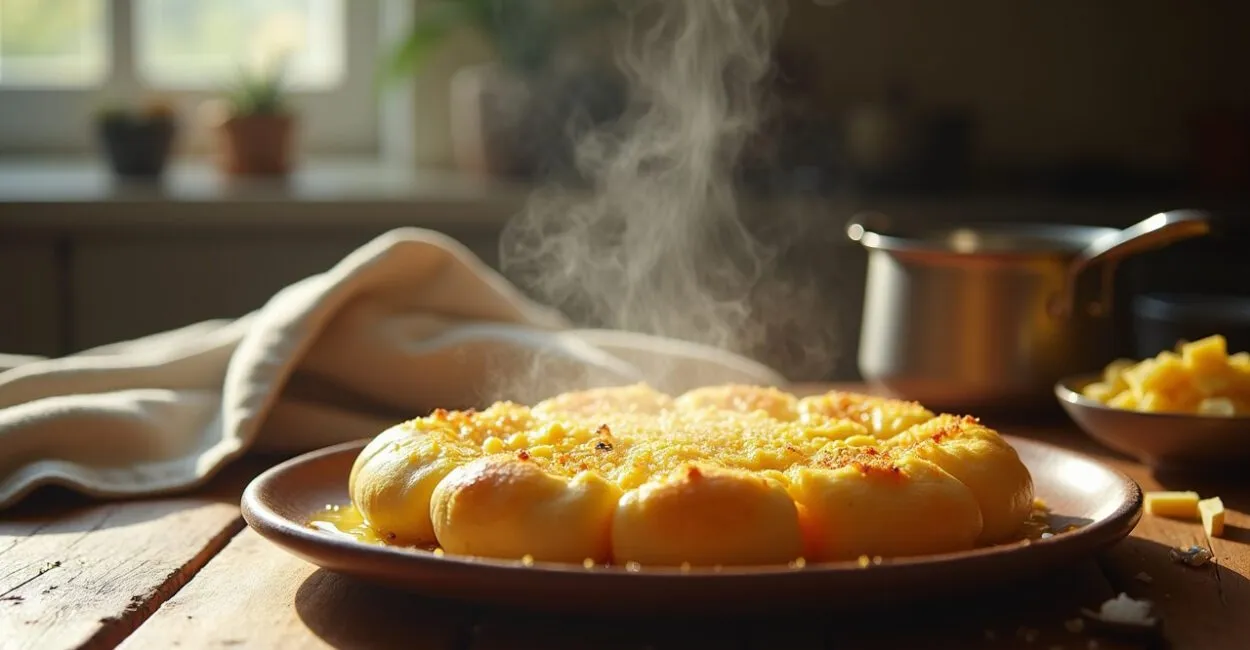
Northeastern Brazilian Couscous
Northeastern Brazilian couscous is like a warm hug on a plate: golden, perfectly moist, and filled with the aroma of corn that wafts through the kitchen. Fresh from the couscous steamer, it’s light, fluffy, and tender, ready for a pat of melting butter, eggs, cheese, or whatever makes your day a little more delicious.
Equipment Needed
- Couscous steamer or a pot with a steamer insert
- Medium bowl for hydrating the corn flakes
- Spoon or fork for fluffing the flakes
- Small saucepan for heating water, if needed
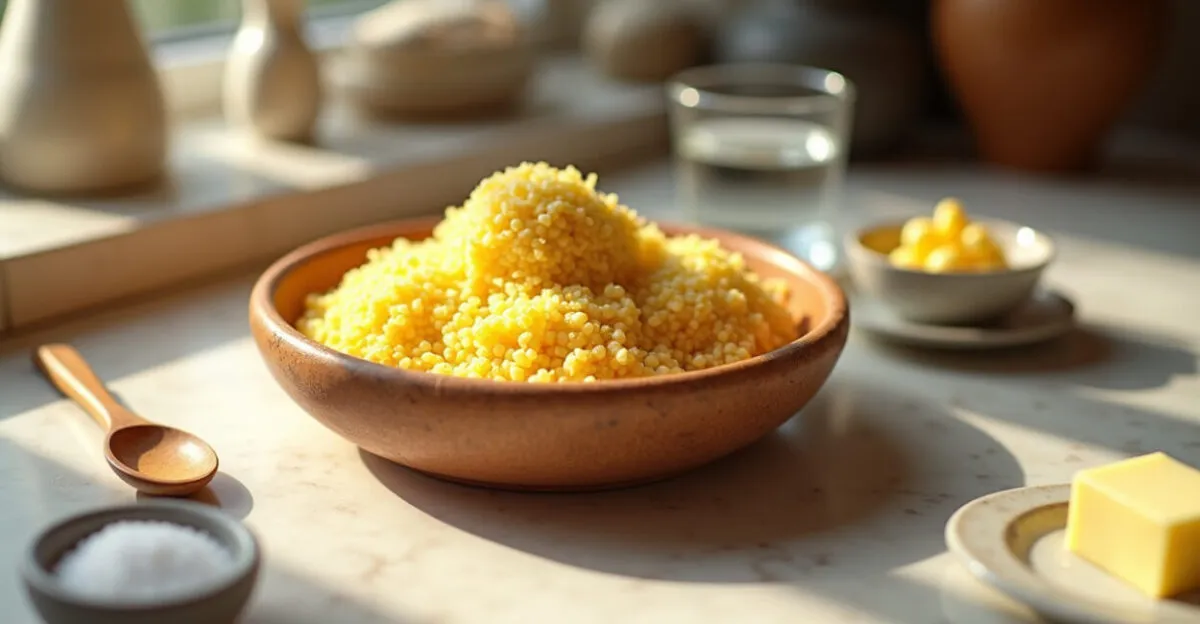
Ingredients Needed

- 2 cups flaked cornmeal (flocão)
- 1 cup water
- 1/2 teaspoon salt
- 1 tablespoon butter, for serving
- 2 tablespoons grated or diced queijo coalho (Brazilian grilling cheese), optional
Instructions
- Step 1: Mix the flaked cornmeal and salt in a bowl, distributing the seasoning evenly.
- Step 2: Gradually add the water, stirring with a fork until evenly moistened but not soggy.
- Step 3: Let the mixture rest for 10 minutes, until the flakes feel soft and loose.
- Step 4: Fluff the mixture with a fork without pressing it down, so the couscous stays light after cooking.
- Step 5: Pour water into the bottom of the couscous steamer and heat until steam begins to form.
- Step 6: Transfer the mixture to the top of the steamer without packing it down, and add the queijo coalho, if using.
- Step 7: Steam over medium heat for 10 to 12 minutes, until the couscous is set, fluffy, and fragrant with corn.
- Step 8: Carefully unmold and top with butter, letting it melt over the hot surface.
👨🍳 Chef’s Tip
Getting the hydration right makes all the difference: when you squeeze a handful of the mixture, it should hold together in a light clump that easily breaks apart when touched. If it’s too dry, the couscous will crumble; if it’s too wet, it will be heavy. Another key is not packing it into the steamer, since the steam needs to circulate for a fluffy, even texture.
Substitutions and Variations
Missing an ingredient or need to adapt the recipe? Here are some easy swaps.

- No butter: Use 1 tablespoon of olive oil or margarine instead. The flavor will be a little different, but the finish will still be moist and glossy.
- No queijo coalho: Substitute 2 tablespoons of grated Minas cheese or mozzarella. The result will be meltier and less salty.
- Dairy-free version: Finish with olive oil or dairy-free butter and keep the rest of the recipe the same. The texture won’t change, but the final flavor will be milder.
- More nutritious version: Add 1 tablespoon of chia or flaxseed to the hydrated cornmeal. This boosts the fiber and makes the center a little moister.
- Hearty variation: Serve with scrambled eggs, shredded carne de sol (salt-cured beef), or seasoned shredded chicken. The couscous stays the star, but makes for a more substantial meal.
How to Store
- Refrigerator: Store cooked couscous in an airtight container for up to 3 days.
- Freezer: Freeze portions in a freezer-safe container for up to 1 month. To thaw, transfer to the refrigerator overnight and reheat before serving.
- Reheating: Microwave for 40 to 60 seconds, covered with a lid or plate to keep it from drying out. Or steam it for a few minutes.
Common Mistakes and How to Avoid Them
- Overhydrating the cornmeal: This happens when all the water is added at once and the mixture turns mushy → add the water gradually and stop when the mixture is moist, not wet.
- Dry, crumbly couscous: This often happens when the mixture doesn’t rest long enough → give it the full 10 minutes to absorb the water.
- Heavy texture: This happens when the mixture is pressed into the steamer → spoon it in loosely, without pressing, so the steam can circulate.
- Uneven cooking: This can happen when there isn’t enough steam in the pot → keep the heat at medium and wait for the water to boil before starting the timer.
- Flat flavor: This happens when the salt isn’t evenly distributed → mix the salt into the cornmeal before adding the water.
Nutrition Information (per Serving)
Nutrient Amount Carbohydrates 38g Protein 5g Fat 7g Fiber 2g Sodium 210mg
Approximate nutrition values are based on average ingredient amounts. Variations in brands and exact quantities may affect the final results. This information is not a substitute for professional nutritional guidance.
Served with melted butter, queijo coalho, or a soft-cooked egg, Northeastern Brazilian couscous is irresistible. It’s the kind of dish that fills the whole table with its aroma and makes any meal feel like a proper breakfast, full of tradition and comfort.
Frequently Asked Questions
Why Is My Northeastern Brazilian Couscous Soggy?
This usually happens because there’s too much water or the mixture was packed too tightly into the steamer. The key is to add water gradually and keep the flakes loose so the steam can cook them evenly.
Can I Use Fine Cornmeal Instead of Flaked Cornmeal?
It’s not the best substitute for this traditional recipe, because fine cornmeal absorbs water differently and significantly changes the texture. For classic Northeastern Brazilian couscous, flaked cornmeal is the right ingredient.
What’s the Difference Between Loose and Pressed Couscous?
Loose couscous is lighter, airier, and more delicate, while pressed couscous is denser and firmer. In this recipe, the loose style gives you the soft, tender texture typical of Brazil’s Northeast.
Can I Season the Mixture Before Hydrating It?
Yes, and it helps a lot. Mixing in the salt before adding the water distributes it evenly and prevents bland spots in the couscous.
How Can I Tell When It’s Done?
The couscous is ready when it feels firm to the touch but is still tender inside, with a pronounced aroma of cooked corn. If the surface looks dry and feels very hard, it needs more steam.
What Goes Best with Northeastern Brazilian Couscous for Breakfast?
Classic accompaniments include butter, scrambled eggs, queijo coalho, and Brazilian drip coffee. They bring out the corn’s flavor and make for a satisfying meal that isn’t too heavy.
Artigos Relacionados
 Unlocking Entrepreneurial Dreams: 15 Innovative, Low-Cost Business Ideas for Young Brazilians in 2025
 Subject-by-Subject Organization in a 3-Month Study Schedule: How to Prioritize Tested Subjects, Allocate Hours, and Build Targeted Review Cycles for Brazilian Civil Service Exams
 Brazilian Real Estate Fund Returns: How to Forecast Recurring Payments in 2025
 Defensive Brazilian REIT Portfolio: Steady Income in 2025
 Brazilian Ecotourism Is Booming: Why It’s Trending Now
 Fruit Farming: Profitable Crops Adapted to Brazil’s Northeastern Semi-Arid Region
