A Fluffy, Fragrant Orange Cake That Tastes Like Home
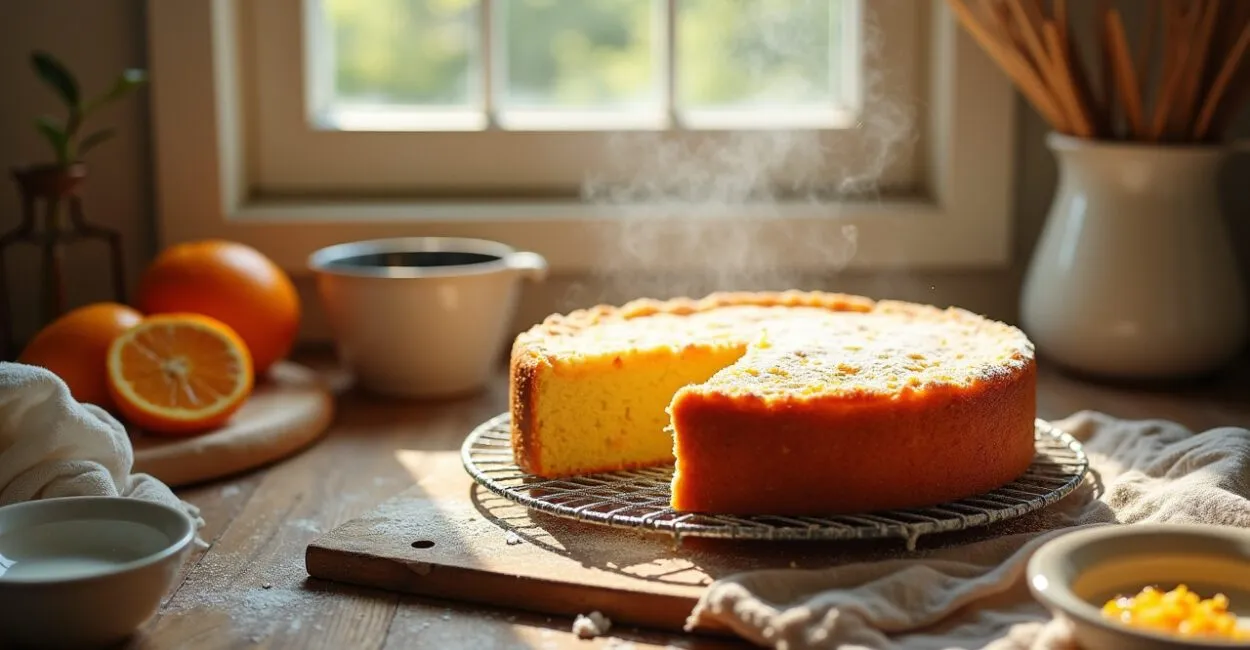
Orange cake is the kind of recipe that fills the kitchen with fragrance and gets your appetite going before it even comes out of the oven. The cake is soft and just the right amount of moist, with a delicate citrus flavor that pairs perfectly with fresh coffee or afternoon tea. When the golden crust breaks with the first slice, the aroma feels like a warm hug.
Read also: Fluffy Carrot Cake with Chocolate Frosting

Equipment Needed
- 1 large mixing bowl
- 1 whisk
- 1 medium round or rectangular baking pan, greased and floured
- 1 oven preheated to 180°C
- 1 citrus juicer

Ingredients Needed

- For the cake: 3 eggs, at room temperature
- 1 cup oil (240 ml)
- 1 cup fresh orange juice (240 ml)
- Zest of 1 orange
- 2 cups sugar (400 g)
- 2 1/2 cups all-purpose flour (300 g)
- 1 tablespoon baking powder (15 g)
- 1 pinch of salt
Instructions
- Step 1: Preheat the oven to 180°C and grease and flour a medium baking pan.
- Step 2: Beat the eggs, oil, orange juice, and sugar until smooth and well combined.
- Step 3: Add the orange zest and pinch of salt, stirring until the batter is fragrant.
- Step 4: Gradually add the flour, stirring just until the batter is smooth, with no large lumps.
- Step 5: Gently fold in the baking powder until it disappears into the batter.
- Step 6: Pour the batter into the pan and smooth the top with a spatula.
- Step 7: Bake for about 35 to 40 minutes, until golden and a toothpick inserted in the center comes out clean.
- Step 8: Let the cake cool until just warm before removing it from the pan, so it can set and come out in one piece.
✨ Final Touch
The secret is to use strained orange juice and add the zest only after the liquid mixture is ready. That brings out the aroma and keeps the cake from tasting bitter. For an even moister crumb, take the cake out of the oven as soon as a toothpick comes out with a few moist crumbs—not completely dry.
Substitutions and Variations
Missing an ingredient or need to adapt the recipe? Here are the best substitutions.
- No oil: Use 1 cup melted butter instead. The cake will taste richer and have a slightly firmer texture.
- No all-purpose flour: Use 2 cups of a ready-made gluten-free cake flour blend. The texture will be a little more delicate, so take care not to overbake it.
- Dairy-free version: This recipe can already be made without milk, so just check that the pan and other ingredients don’t contain hidden dairy.
- More fragrant version: Add 1 teaspoon vanilla extract or 1/2 teaspoon cinnamon. This adds depth without masking the citrus flavor.
- Extra-special version: Finish with an orange glaze made with 1/2 cup juice and 3 tablespoons sugar, simmered until slightly thickened.
How to Store
- Refrigerator: Store in a covered container or wrapped in plastic wrap for up to 5 days.
- Freezer: Freeze individual slices, tightly wrapped in plastic wrap and placed in a freezer bag, for up to 2 months. To thaw, leave at room temperature for a few hours.
- Reheating: Microwave each slice for 15 to 20 seconds, just long enough to bring back its aroma and softness without drying it out.
Common Mistakes and How to Avoid Them
- Dense or flat cake: This happens when the batter is overmixed after adding the flour. Mix just until combined, then stop.
- Bitter flavor: This can happen when the zest includes the white pith. Use only the orange part of the peel.
- Raw center: This can happen if the oven isn’t hot enough or the pan is too small. Preheat the oven thoroughly and use the recommended pan size.
- Dry cake: This is usually caused by leaving it in the oven too long. Start checking it with a toothpick at 35 minutes.
- The cake sinks after coming out of the oven: This usually happens when the baking powder is mixed in too roughly or the oven door is opened too soon. Fold in the baking powder gently and avoid opening the oven during the first 25 minutes.
Nutrition Information (per Serving)
Nutrient Amount Carbohydrates 36g Protein 4g Fat 13g Fiber 1g Sodium 95mg
Approximate nutritional values, calculated using average ingredient values. Differences in brands and exact quantities may change the final results. This information is not a substitute for advice from a nutrition professional.
Serve this orange cake while it’s still slightly warm and let its citrus aroma take over the table. It’s lovely with a cup of freshly brewed coffee, but it also pairs well with black tea or a drizzle of glaze. This is the kind of recipe that calls for a second slice—no hesitation needed.
Frequently Asked Questions
Why Does My Orange Cake Turn Out Dense?
This usually happens because the batter is overmixed after adding the flour or the baking powder is expired. Mix just until combined, and always check the baking powder’s expiration date.
Can I Use Valencia or Sweet Oranges?
Yes. Valencia oranges give the cake a more pronounced flavor, while sweet oranges make it milder and more delicate.
Can I Blend Everything in a Blender?
You can, but avoid blending the flour for too long. Ideally, blend the liquids first and stir in the flour separately so the cake doesn’t turn out dense.
How Can I Make the Crust More Fragrant and Attractive?
Top with fresh orange zest after baking or drizzle with a light orange juice and sugar glaze. This boosts the aroma and gives the top a lovely shine.
Can I Bake It in a Tube Pan?
Yes. The cake may bake faster in a tube pan, so it could take less time to brown. Start checking it a few minutes earlier than the recipe suggests.
What Goes Best with This Cake?
Freshly brewed coffee, chamomile tea, or a thin orange glaze are classic pairings that bring out the citrus flavor without making the cake feel too rich.