
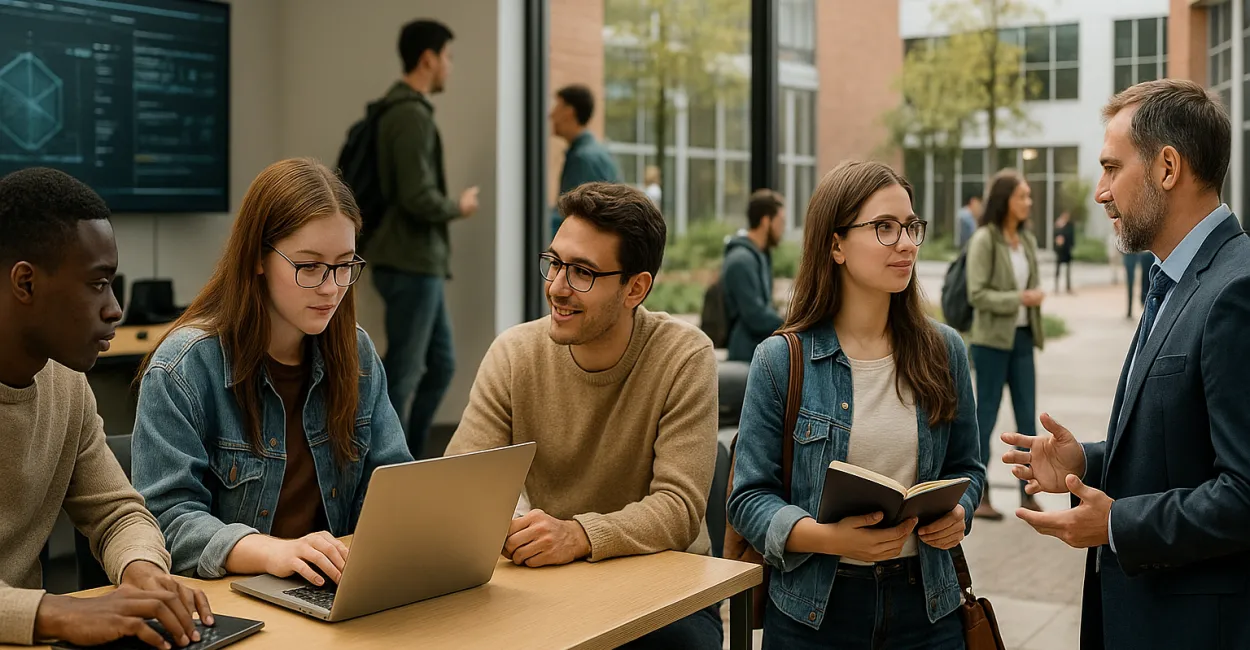
Higher education has traditionally been seen as the primary path to entering the workforce and building a successful career. But with the job market changing so quickly, what role does higher education really play in preparing students for the professional world?
This article takes an in-depth look at the challenges, opportunities, and outlook for higher education and career entry, offering a critical, evidence-based analysis for students, educators, and academic leaders.

The Role of Higher Education in Professional Preparation
Definition and goals of higher education
Higher education is the stage of formal education that provides in-depth knowledge in specific fields and prepares students for qualified professional practice. Its primary goal is to develop skilled, critical-thinking, and innovative professionals who can contribute to society and the job market.
Beyond teaching technical content, higher education aims to develop skills such as critical thinking, problem-solving, and interpersonal communication—essential qualities in dynamic professional environments.
This multidimensional education sets higher education apart from other levels of schooling, making it a decisive factor in graduates’ employability.
Impact on graduate employability
Data indicate that people with higher education tend to have higher employment rates and earn more than those with only a high school diploma. This is because the job market values the in-depth knowledge and skills developed during college.
In addition, a college degree can open doors to specialized careers and leadership roles, offering a significant competitive advantage.
However, the quality of the program and how current its curriculum is are key factors in determining whether that advantage translates into success in the job market.
Essential skills developed
Higher education fosters technical skills specific to a field of study as well as transferable skills such as communication, teamwork, and adaptability. Employers value these skills as they look for versatile professionals who are ready to meet challenges.
In addition, developing critical thinking and analytical skills helps graduates stay current and innovate in their fields.
In this way, higher education does more than qualify students for a profession: it also prepares them for lifelong learning throughout their careers.
- Specialized technical training
- Development of interpersonal skills
- Training in critical thinking
- Preparation for lifelong learning
- Encouragement of innovation and creativity
Current Challenges for Higher Education and Career Entry
The gap between curricula and the job market
One of the main challenges facing higher education is the gap between academic content and the real-world demands of the job market. Curricula often fail to keep pace with rapid technological and management changes across industries.
As a result, graduates may lack practical or up-to-date skills, making it harder for them to enter the workforce and adapt to professional settings.
Regular curriculum reviews and collaboration between universities and businesses are therefore essential to keeping programs relevant.
Students’ lack of practical experience
Many higher education programs prioritize theory over hands-on experience, which is essential for developing professional skills. A lack of internships, real-world projects, and lab work limits students’ preparation for the challenges of the job market.
Integrated internship programs, partnerships with businesses, and active learning methods can help address this gap.
This gives students the confidence and skills to work effectively from the start of their careers.
The impact of technology and automation
The digital revolution and automation have profoundly changed the professional profiles employers seek. Higher education must adapt to prepare students to work with advanced technological tools and automated processes.
In addition, skills related to artificial intelligence, data analysis, and computational thinking are becoming essential across many fields.
Universities that build these skills into their curricula offer greater value to their graduates.
| Challenge | Impact on Career Entry | Potential Solutions |
|---|---|---|
| Outdated curricula | Graduates unprepared for current demands | Regular reviews, partnerships with industry |
| Lack of practical experience | Difficulty adapting to professional settings | Internships, applied projects, active learning methods |
| Technological change | Need for new digital skills | Integrating technology and innovation into education |
Strategies for Improving Career Entry Through Higher Education

Connecting universities with the job market
Close ties between educational institutions and businesses are crucial to aligning academic content with market needs. Internship programs, partnerships for applied research, and input from industry professionals in curriculum design are effective examples.
This collaboration helps students develop real-world skills and improve their chances of finding a job.
It also makes it easier to update programs in response to emerging trends and needs.
Implementing active learning methods
Methods such as project-based learning, case studies, and simulations encourage greater student engagement and the development of practical skills.
These approaches promote independence, critical thinking, and the ability to solve complex problems, better preparing students for the professional world.
Universities that use these methods tend to develop better-prepared, more adaptable professionals.
Promoting the development of soft skills
Social and emotional skills such as communication, leadership, and emotional intelligence are increasingly valued in the job market. Higher education should incorporate the development of these skills into the curriculum.
Workshops, extracurricular activities, and dedicated courses can help students strengthen these abilities.
This helps graduates work effectively in teams and lead projects.
- Build strategic partnerships with businesses
- Invest in participatory learning methods
- Add courses focused on interpersonal skills
- Encourage multidisciplinary projects
- Host events that connect academia and industry
Higher Education and Changing Professional Demands
New professions and emerging fields
Technological advances are creating new fields, including data science, cybersecurity, and artificial intelligence. Higher education must adapt by offering programs and specializations in these areas to prepare professionals for emerging demands.
This requires curriculum reviews and investment in technological infrastructure.
Interdisciplinary learning is also becoming more important in preparing professionals to work in complex settings.
The importance of continuing education
Given how quickly professional requirements change, higher education should not be seen as a final step, but as part of an ongoing learning process.
Graduate programs, continuing education courses, and training are essential for keeping knowledge current and staying competitive in the job market.
Universities that support continuing education provide added value to their current and former students.
More flexible and innovative teaching formats
Growing demand for online and hybrid education requires higher education to innovate in its teaching models and technology.
These formats expand access and make it easier to balance education with work, especially for people already in the workforce.
Investment in digital platforms and faculty training is essential to ensuring the quality of these programs.
The Role of Institutions in Preparing Students for the Job Market
Universities’ social responsibility
In addition to educating professionals, higher education institutions have a role to play in the country’s social and economic development.
Community outreach projects, community partnerships, and applied research are ways to fulfill this mission by promoting inclusion and innovation.
In this way, universities act as agents of change and advocates for equity.
Program quality and accreditation
Ensuring program quality is essential to the credibility of higher education and the value of a degree in the job market.
Rigorous evaluation and accreditation processes, along with regular updates, ensure that degree programs meet national and international standards.
Brazil’s Ministry of Education (MEC), the government agency responsible for education, and other regulatory bodies play an essential role in this context (Official MEC source).
Student support and career counseling
Institutions that offer career counseling, mentoring, and psychological support help students chart a more purposeful academic and professional path.
These resources support decision-making, adjustment to change, and career planning.
Career services and job fairs are also important for connecting students with the job market.
- Invest in community projects and university outreach
- Maintain evaluation and accreditation processes
- Develop support and counseling services
- Host networking and career events
- Provide ongoing faculty development
Future Trends in Higher Education and Career Entry
Personalized learning
Educational technology makes it possible to personalize instruction by adapting content and pace to individual students’ needs.
This approach increases engagement and learning effectiveness, better preparing students for their careers.
Artificial intelligence tools and educational data analysis are driving this trend.
Integrated, multidisciplinary education
The job market needs professionals who can work across multiple fields and take a broad view of problems.
Higher education is likely to become more integrated, encouraging dialogue between disciplines and the development of a wider range of skills.
This multidisciplinary approach prepares graduates for complex, innovative environments.
Digital certifications and microcredentials
Microcredentials and digital certifications point toward a modular, continuous approach to education, allowing professionals to update their qualifications quickly and flexibly.
These formats complement traditional education and respond quickly to new market needs.
Institutions that embrace these initiatives can expand their reach and relevance.
The Impact of Globalization on Higher Education and Careers
Academic and professional mobility
Globalization encourages the exchange of students and professionals, creating new opportunities and challenges for higher education.
Study abroad and dual-degree programs enrich students’ education and support entry into international markets.
These experiences broaden graduates’ cultural and professional perspectives.
Intercultural skills
Working in a global market requires the ability to interact across cultures and in diverse environments.
Higher education should incorporate the development of these skills to prepare professionals for global careers.
This includes language learning, global ethics, and multicultural collaboration.
Competition and collaboration among institutions
Around the world, universities compete to attract talent and secure partnerships while collaborating on research and projects.
This dynamic strengthens educational quality and expands opportunities for students and faculty.
Investing in internationalization is an increasingly common strategy for high-performing institutions.
Higher Education and Social Inclusion in the Job Market
Expanding access to higher education
Public policies and private initiatives have sought to expand access to higher education for historically excluded groups.
This contributes to greater diversity in the job market and helps reduce inequality.
Scholarships, affirmative action policies, and online learning are effective examples.
Equity challenges in education
Ensuring that all students have the resources they need to learn and develop is an ongoing challenge.
Differences in socioeconomic status, infrastructure, and support affect academic performance and entry into the workforce.
Support and follow-up strategies are essential to overcoming these barriers.
Impact on workforce diversity
More inclusive higher education promotes diversity in gender, race, and socioeconomic background across professions.
This diversity enriches workplaces, encourages innovation, and improves organizational outcomes.
In this way, higher education plays a decisive role in social change.
- Implement inclusion and diversity policies
- Provide individualized academic and psychological support
- Promote diversity in internship and employment programs
- Expand flexible and online learning
- Track equity indicators
The Role of Technology in Higher Education and Its Connection to the Job Market
Digital education and technological resources
Technology has revolutionized higher education by enabling access to digital content, interactive platforms, and virtual learning environments.
These resources expand access to education and make it easier to personalize instruction.
They also prepare students to use technology in professional settings.
Artificial intelligence and data analysis in education
Artificial intelligence makes it possible to analyze educational data to identify challenges and personalize instructional interventions.
These tools help teachers and administrators improve educational quality and student retention.
They also provide simulations and virtual environments for developing skills.
Technology preparation for the job market
Higher education should ensure that students become proficient in emerging technologies and digital tools used in the job market.
This includes programming, specialized software, and an understanding of technological trends.
This preparation makes graduates more competitive and adaptable.
Measuring the Success of Career Entry Through Higher Education
Employability indicators
Employment rates, time to find a job, and starting salaries are essential indicators for evaluating how effectively higher education supports career entry.
These data help universities and regulatory bodies identify areas for improvement.
Regular surveys and tracking graduates’ outcomes are recommended practices.
Assessing employer satisfaction
Getting feedback from employers about graduates’ performance is essential for adjusting curricula and teaching practices.
These assessments highlight skills gaps and the abilities employers value.
Programs that build relationships with the private sector make this dialogue easier.
Tracking graduates’ career growth
Studying professional development over time helps clarify the impact of higher education on individuals’ career paths.
This analysis includes promotions, career changes, and the acquisition of new skills.
Universities that keep in touch with alumni can provide ongoing support and improve their programs.
Higher Education and New Ways of Working
Freelancing and the gig economy
The growth of freelance and temporary work means higher education must prepare professionals to manage their careers independently.
Entrepreneurial skills, personal finance management, and networking are essential in this context.
Including these topics in the curriculum improves employability across different work arrangements.
Remote and collaborative work
The rise of remote work requires specific skills, such as effective digital communication and self-management.
Higher education should incorporate activities that develop these abilities.
Simulations, online projects, and collaborative tools are valuable resources.
Entrepreneurship and innovation
Encouraging entrepreneurship at universities helps create new job opportunities and drive innovation.
Incubators, hackathons, and courses focused on startups are examples of effective initiatives.
This culture strengthens the economic and social ecosystem.
- Include content on managing an independent career
- Develop skills for remote work
- Encourage entrepreneurship and innovation
- Foster a culture of lifelong learning
- Promote support and mentoring networks
Conclusion
Higher education plays a central role in helping people enter the workforce by providing technical training, transferable skills, and preparation for changes in the job market. However, it faces significant challenges, including the need to update curricula, build stronger connections with industry, and adopt innovative teaching methods.
To maximize their impact, institutions should invest in partnerships, technology, inclusion, and graduate follow-up. Students and professionals should also embrace continuing education and develop adaptable skills to thrive in an increasingly dynamic environment.
Want to explore this topic further? Share this article with colleagues and leave a comment below so we can continue the conversation about the future of higher education and the job market.
Frequently Asked Questions
Why is higher education important for employability?
Higher education provides specialized knowledge and essential skills that increase the chances of entering and succeeding in the job market.
How can higher education adapt to changes in the job market and support career entry?
By updating curricula, building partnerships with businesses, and incorporating technology and active learning methods.
What skills beyond technical expertise should higher education develop?
Social and emotional skills such as communication, leadership, critical thinking, and adaptability.
How does technology affect higher education and career entry?
It expands access to knowledge, personalizes learning, and prepares students for the job market’s technological demands.
Why is continuing education important after graduation for career entry?
It enables professionals to keep their skills and knowledge up to date, helping them stay relevant in a constantly changing job market.
Artigos Relacionados
 Contemporary Education: Integrating Artificial Intelligence in Colleges and Its Impact on Careers
 Physical Education Teacher: A Complete Guide to Training and Career Paths
 Tomorrow’s Professions: How AI Is Transforming Education and Work
 AI Advances: Transforming 21st-Century Education
 Rural Education: Transforming Lives and Driving Development in Rural Communities
 Educational Games: How Games Are Transforming Modern Education
