
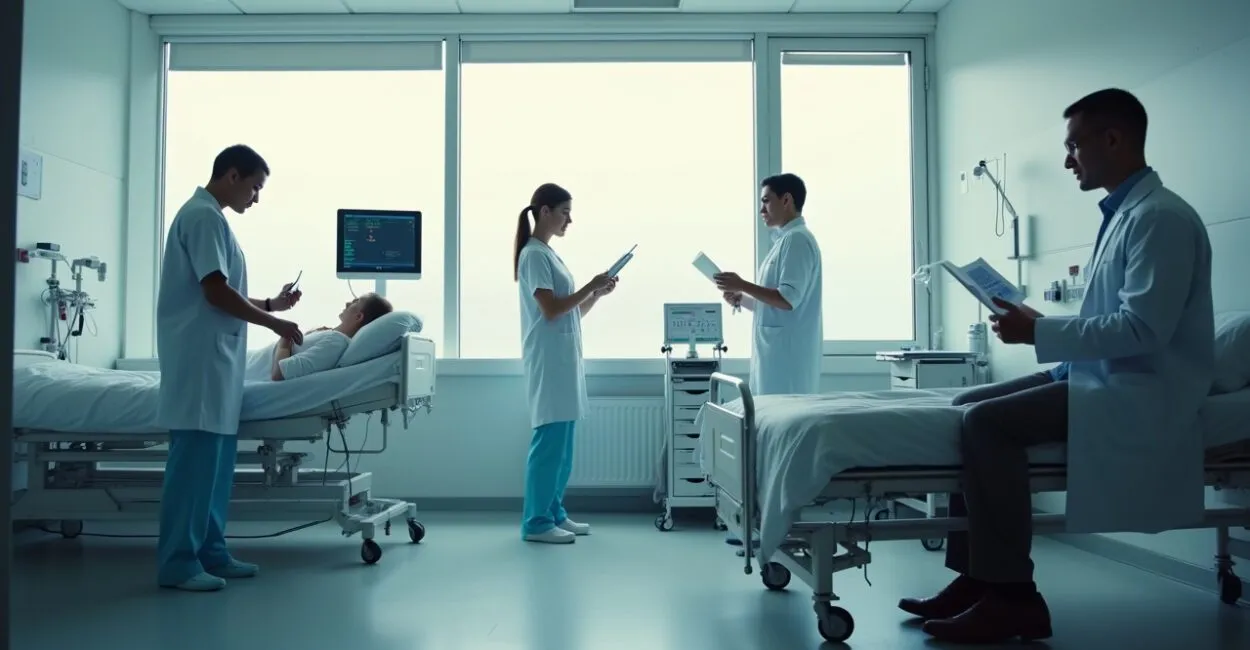
Healthcare work goes far beyond appointments in a doctor’s office or hospital. The responsibilities of healthcare careers include prevention, triage, diagnosis, rehabilitation, health education, therapeutic support, and care management—and each role varies significantly depending on the setting, the patient, and the complexity of the services provided.
In practice, two people on the same team rarely do the same things at the same pace: nurses monitor vital signs and medications, physical therapists focus on functional recovery, dietitians tailor nutrition plans, clinical pharmacists help prevent medication errors, and physicians and dentists make diagnostic and treatment decisions that directly affect patient care. Here’s how these routines are organized, where each profession works, and what truly sets one field apart from another.

What You Need to Know
- Healthcare careers fall into three practical groups: direct patient care, diagnostic support, and prevention and health education.
- Daily routines depend more on the work setting than on the job title: hospitals, primary care clinics, laboratories, private practices, and home care all involve different tasks.
- Technical skills alone aren’t enough; communication, documentation in medical records, and teamwork across disciplines matter as much as the procedures performed.
- Not every role involves patient care. Public health surveillance, auditing, research, care coordination, and management all help keep the system running.
- Protocols distinguish safe practice from risky practice: professionals who don’t understand workflows, prescribing rules, and the scope of their role are more likely to make mistakes.
Healthcare Career Responsibilities and What Each Team Actually Does
Technically, healthcare career responsibilities are the set of clinical, preventive, diagnostic, therapeutic, administrative, and educational activities carried out by qualified professionals within their legal and ethical scope of practice. In everyday terms, that means “what each professional actually does day to day to care for people and prevent their conditions from getting worse.”
This matters because healthcare works through interdependence. A good appointment depends on a thorough medical history, a physical exam, clear guidance, accurate documentation, and, in many cases, support from other professionals.
Focusing only on the final procedure means missing the logic behind patient care.
Three Major Areas of Practice
A practical way to understand the field is to divide roles into three groups:
- Direct care: clinical services, follow-up, procedures, and patient monitoring.
- Diagnostic and therapeutic support: testing, analysis, imaging, medications, rehabilitation, and technical support.
- Prevention and management: health education, campaigns, surveillance, auditing, care coordination, and service organization.
Where the Confusion Usually Starts
Many people assume that “healthcare” means hospitals. It doesn’t. For example, someone working in Brazil’s Atenção Primária à Saúde (Primary Health Care) may handle vaccinations, chronic disease follow-up, outreach, and family guidance. In a clinical laboratory, the focus is on samples, analytical quality, and traceability. A job title tells you little without the work setting.
What separates an efficient care routine from a makeshift one isn’t the number of tasks—it’s how clearly each professional’s role is defined within the care process.
The Role of Professionals in Direct Patient Care
Direct patient care is the most visible part of healthcare, but also the most misunderstood. It includes attentive listening, clinical assessment, procedures, guidance, follow-up, and a prompt response to signs of deterioration. Precision matters: an overlooked detail in a patient’s history or a medication given at the wrong time can change the outcome.
Medicine, Nursing, and Dentistry in Practice
Physicians focus on diagnosis, prescribing, ordering tests, and making treatment decisions. Nurses coordinate ongoing care, monitor clinical progress, administer medications, change dressings, and promote patient safety. Dentists prevent, diagnose, and treat oral conditions, which can also affect nutrition, pain, appearance, and quality of life.
What Rarely Makes It into the Institutional Brochure
Anyone who works in healthcare knows that much of the job is doing routine tasks consistently: checking vital signs, reviewing allergies, verifying patient identity, updating medical records, explaining the plan, and reassessing the response to treatment. It may sound simple, but this is where errors are prevented. In hospitals, the stakes are even higher because shift changes and heavy patient loads increase the risk of miscommunication.
In healthcare, routine doesn’t mean improvisation: safe care depends on repeated tasks being performed consistently, documented, and checked.
Prevention, Health Education, and Surveillance: Work That Prevents Problems

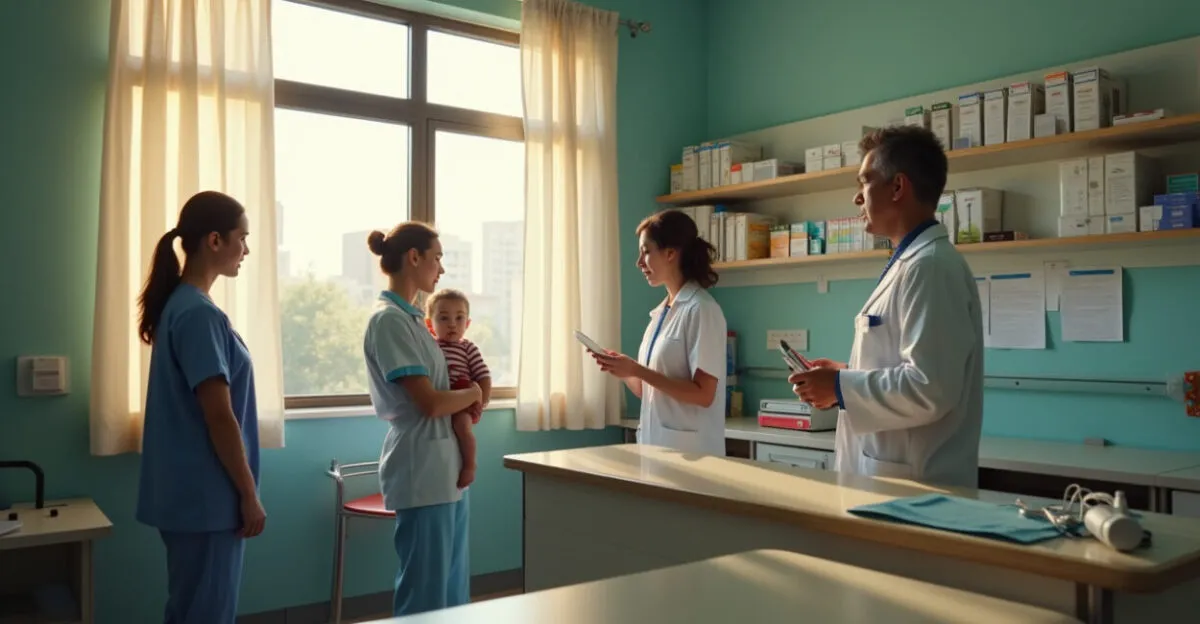
A large part of the healthcare system exists to keep patients from becoming seriously ill. That’s where vaccination, screening, public health campaigns, nutrition guidance, sexual health, fall prevention, chronic disease management, and epidemiological surveillance come in. This work reduces costs, hospitalizations, and suffering—and is often undervalued because it doesn’t draw as much attention as a complex procedure.
Read also: Healthcare Careers Starting With M: 12 Promising Paths
Primary Health Care as the First Point of Contact
In Brazil’s Atenção Primária à Saúde (Primary Health Care), teams work close to the community and support people before illness disrupts their lives. Nurses, physicians, nursing technicians, dentists, dietitians, and community health workers focus on the local community, building relationships and providing continuity of care—not just responding to walk-in needs.
Health Surveillance Is More Than Paperwork
Epidemiological, sanitary, and environmental surveillance involve reporting, outbreak tracking, inspections, and risk control. The Brazilian Ministry of Health website outlines guidelines and programs that show how prevention and care go hand in hand. In practice, a well-filed report can help trigger an entire intervention sooner.
Read also: School Career Fair: 9 Activities That Engage Students
Diagnostic and Therapeutic Support: What Happens Before the Final Decision
Not all care happens in front of the patient. Laboratories, imaging, pharmacy, physical therapy, speech-language pathology, and occupational therapy support clinical decisions every day. Without reliable diagnostic information, treatment becomes guesswork; without rehabilitation, recovery is incomplete.
Laboratory and Imaging
Clinical laboratories process samples and require quality control, identity verification, and technical validation. In radiology and ultrasound, the job goes beyond “taking images”: it includes preparation, positioning, safety, and technical consistency. A test is truly useful only when its results are reliable and support clinical decision-making.
Clinical Pharmacy and Medication Safety
Pharmacy is no longer just about dispensing medications. Today, pharmacists help reconcile medication lists, identify interactions, explain proper use, and reduce adverse events. The field is growing because medication errors remain one of the most critical concerns in patient care.
Field
Core activity
Practical impact
Laboratory
Sample analysis
Confirms or rules out clinical hypotheses
Imaging
Diagnostic tests
Identifies abnormalities and guides treatment
Clinical pharmacy
Medication review
Reduces interactions and medication errors
Physical therapy
Functional rehabilitation
Restores mobility, strength, and independence
A good test doesn’t end with the report. It ends when the team understands the findings and turns them into safe action.
How Daily Routines Differ Across Hospitals, Primary Care Clinics, Private Practices, and Home Care
The work setting shapes a profession more than the name on a badge. In a hospital, care is intensive, protocol-driven, and responsive to complications. In a Unidade Básica de Saúde (UBS, Brazil’s primary care clinic), the focus is long-term: follow-up, prevention, guidance, and care coordination. In a private practice, workflows are usually more segmented and appointment-based. In home care, professionals need to adapt their approach to the family’s actual environment.
Differences That Affect the Entire Workday
- Hospital: urgent needs, continuous monitoring, and quick decisions.
- UBS: ongoing relationships, prevention, and long-term follow-up.
- Private practice: structured schedules, specialized care, and referrals.
- Home care: patient independence, limited resources, and adapting care to the setting.
This framework is useful for understanding different settings, but it falls short if treated as a rigid rule. Not every hospital is the same, and neither is every UBS—the details depend on the care network, community, team, and local management. Brazil’s SUS (Unified Health System), for example, organizes much of this work through care networks and access coordination. You can learn more in public resources from the National Supplementary Health Agency and the Ministry of Health.
A Short Case Study
At a neighborhood UBS, a patient with hypertension came in every week with a headache. The physician adjusted her medication, but her blood pressure stayed high. Conversations with the nurse, a medication review by the pharmacist, and guidance from the dietitian revealed the problem: she wasn’t taking the medication consistently, her diet was high in sodium, and she was taking the medicine at the wrong time. She improved once the team stopped treating each appointment in isolation and started seeing care as an ongoing process.
Top Skills in the Job Market: Technical Expertise, Communication, and Documentation
From the outside, healthcare can look like a field driven purely by a calling to serve. That’s part of it, but not all. Employers expect technical expertise, professionalism, the ability to work under pressure, and—more and more—strong documentation skills. Poorly completed medical records, unclear instructions, and communication breakdowns create patient safety risks and legal problems.
What Often Sets Strong Professionals Apart
- Active listening and clear communication with patients and families.
- Knowledge of protocols and safety goals.
- Ability to document care clearly and accurately.
- Critical interpretation of test results and clinical signs.
- Collaboration across professional disciplines.
Experts may disagree about exactly how much each skill matters in each career, but the pattern is consistent: professionals who understand processes, communicate well, and make sound clinical decisions tend to provide safer care. Universities and professional organizations, such as the Federal Nursing Council of Brazil and CREMESP, the Regional Council of Medicine of the State of São Paulo, publish practical guidance that reinforces this point.
How to Understand Healthcare Without Oversimplifying It
The best way to understand healthcare careers is to let go of the idea that there’s one “main role” and several secondary ones. The system works only because each link in the chain performs a specific task at the right time. When that breaks down, delays, repeated work, duplicate tests, and a worse patient experience follow.
If you’re studying the field, choosing a career, or analyzing the industry, look at the actual care process: intake, assessment, diagnosis, intervention, follow-up, and discharge. Then compare how each profession contributes to that process. That’s how the picture becomes concrete—and how you can better judge where your work can make a real difference.
Next Steps
To move forward with confidence, map professions by work setting, read the code of ethics for the field you’re interested in, and compare the scope of practice with education and residency requirements. Anyone choosing a career can benefit from understanding how Brazil’s SUS, the private healthcare network, and diagnostic support services work. This perspective helps avoid choices based on idealized images and brings the decision closer to what the job is really like.
Frequently Asked Questions
What Are the Main Responsibilities in Healthcare Careers?
The main responsibilities include direct care, prevention, diagnosis, treatment, rehabilitation, surveillance, and care management. In practice, this ranges from appointments and procedures to health education, test analysis, and follow-up for patients with chronic conditions. The key is that each profession works within its legal and technical scope, usually as part of a multidisciplinary team.
What Does a Healthcare Professional Do Day to Day?
Daily work varies by field, but it almost always involves assessing people, documenting information, making decisions based on protocols, and tracking a patient’s progress. Hospital work tends to be more intense and unpredictable; primary care usually focuses on continuity and prevention. In every setting, communication and patient safety matter greatly.
Which Healthcare Careers Focus on Prevention?
Nursing, medicine, nutrition, dentistry, physical therapy, pharmacy, and public health all play important preventive roles, each with its own focus. Prevention includes vaccination, healthy habit guidance, disease screening, educational activities, and risk surveillance. This work often has a broad impact because it reduces complications before patients need highly specialized care.
What’s the Difference Between Direct Care and Diagnostic Support?
Direct care involves interacting with patients to assess, guide, treat, and follow up with them. Diagnostic support includes activities that provide information for clinical decision-making, such as laboratory and imaging tests. The two depend on each other: without reliable diagnostic information, treatment decisions are less sound; without high-quality patient care, diagnostic results lack context.
Do Healthcare Responsibilities Differ Much Between Hospitals and UBS Clinics?
Yes, they differ considerably. Hospital routines focus more on urgent needs, monitoring, and managing complications; UBS clinics emphasize ongoing care, prevention, and relationships with the community. The profession may be the same, but the pace, resources, and workflow change significantly depending on the setting.
Artigos Relacionados
 Healthcare Careers: Promising Paths and Specialties
 Telemarketing Operator Roles and Responsibilities
 SEO Analyst: Roles and Responsibilities
 Healthcare Careers: Innovations, Challenges, and Opportunities
 The Delivery Driver Role: Core Concepts and Responsibilities
 Restaurant Manager: Roles and Responsibilities
