
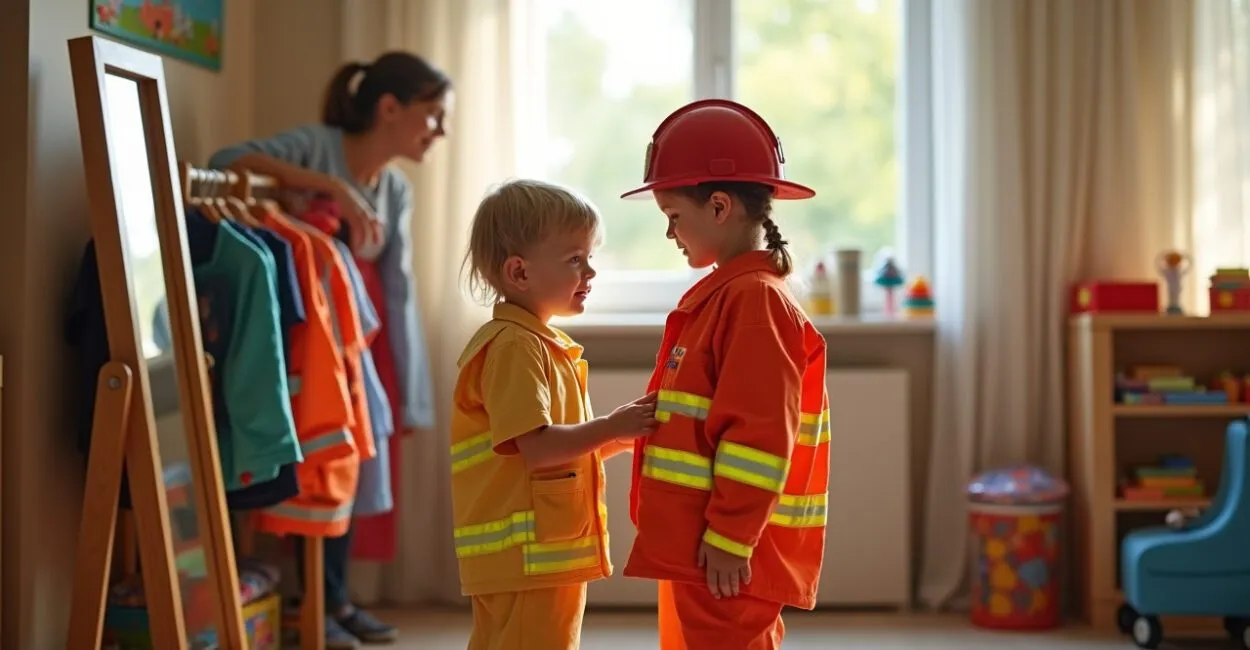
A good costume does more than change what a child is wearing: it changes how they step into play. With the right choice, a kids’ career costume helps set the scene, encourage imaginative play, and make parties, performances, and school activities much more organized. The wrong one can mean discomfort, overheating, a poor fit, and a child who wants to take it all off after ten minutes.
In practice, the best choice combines three things: comfort, a clearly recognizable role, and safety. That goes for doctors, firefighters, chefs, scientists, astronauts, police officers, teachers, engineers, and any other career a child wants to portray. Here’s how to choose wisely, which materials make a difference, what to avoid, and how to find a costume that looks good in photos and works well in real life.

What You Need to Know
- The best costume for a child isn’t the one with the most details; it’s the one they can play, run, and sit in comfortably.
- Fabric matters more during wear than it does in photos: cotton, stretch knit, and lightweight knits tend to work better than stiff, hot materials.
- The career should be recognizable in seconds, so a few key elements matter more than a complete outfit.
- Fit, ventilation, and the absence of loose parts are the three things that help prevent problems at parties and school.
- For repeated wear, choose versatile costumes that work with interchangeable accessories instead of a “one-time-only” outfit.
Kids’ Career Costumes: How to Choose for Comfort, Safety, and Realism
To be precise, a kids’ career costume is a playful outfit inspired by a real occupation and adapted to a child’s body, mobility, and sensitivities. In other words, it’s not a shrunken adult uniform; it’s play clothes that communicate a career with as little discomfort as possible. That distinction makes all the difference, because children quickly get bothered by tight collars, scratchy fabric, poor elastic, and accessories that keep slipping.
The One Rule That Prevents Most Mistakes
Here’s the most useful rule: if a child can’t play in the costume for 20 or 30 minutes at a time, it wasn’t the right choice. This happens often at kids’ parties, where an outfit looks adorable on the hanger but gets hot, itchy, or in the way. I’ve seen kids love playing “doctor” but ditch the lab coat because the sleeves bothered them and the stethoscope kept banging against their chest. Looks matter, but comfort in use matters more.
What sets a good kids’ costume apart from one that merely looks good is how well it handles movement, heat, and quick changes while still making the career recognizable.
How to Make the Career Recognizable Without Going Overboard
Instead of putting together an outfit packed with accessories, choose two or three strong visual cues. A helmet says firefighter. A white lab coat and name badge suggest doctor, scientist, or veterinarian. An apron, chef’s hat, and toy utensil are enough for a chef. This keeps costs down, improves comfort, and avoids a cluttered look. At school, having fewer pieces is usually an advantage: it makes the day easier and reduces the risk of losing things along the way.
Materials That Work Best for Parties, School, and Play
The most common fabric mistake is prioritizing photos and shine without considering how long the costume will be worn. For kids, lightweight, breathable materials tend to work better than stiff fabrics, heavy synthetics, and bulky embellishments. This matters even more in hot weather. An outfit that feels fine in the early afternoon can become uncomfortable by four o’clock as the heat builds. For a long day of activities, this goes from a minor detail to a top priority.
What Usually Works Well
- Cotton and knit fabrics: Good for the base of a costume because they’re breathable and move with the child.
- Stretch knit and lightweight polyester: Work well when the outfit needs to hold its shape without feeling too heavy.
- Simple closures: Velcro, short zippers, and soft elastic help children get dressed on their own.
- Moderate use of printed designs: Adds character without bulk or skin irritation.
What to Use with Caution
Too much glitter, stiff tulle, bulky seams, and an excess of small glued-on decorations can be uncomfortable and make a costume less durable. This approach works well for a quick photo shoot but falls short during extended play. Experts disagree about how much decoration is “too much,” since it depends on the child’s age, how long they’ll wear the costume, and their sensitivities. Even so, I don’t see the point of an outfit that shines a lot and itches even more. Kids don’t wear clothes just to be seen; they wear them to move.
If a costume needs constant attention to keep it from getting wrinkled, losing pieces, or irritating the skin, it’s already demanding more upkeep than a child should have to deal with.

Careers That Work Best for Imaginative Play

Some careers make especially good costumes for kids because they have simple visual cues and naturally lend themselves to play involving caregiving, discovery, and organization. Doctors, firefighters, chefs, teachers, police officers, scientists, astronauts, veterinarians, and engineers are popular choices because kids intuitively recognize the roles. This helps give imaginative play a story, not just an outfit.
Careers with Clear Visual Cues
Career
Key element
Why it works well
Doctor
Lab coat, name badge, stethoscope
Easy to recognize and a natural fit for caregiving play.
Firefighter
Helmet, vest, reflective stripe
Has strong visual appeal and suggests action and courage.
Chef
Apron, hat, toy utensil
Works for play at home, school, and themed parties.
Scientist
Lab coat, glasses, pretend lab bottles
Encourages curiosity and works well for educational activities.
For imaginative play, careers with clear actions tend to work better than more abstract ones. A firefighter puts out an imaginary fire; a doctor examines dolls; a chef makes pretend recipes. Careers with fewer recognizable symbols need more explanation from an adult. A child may still be interested, but the costume should help them understand the role, not make it harder.
How to Get the Size and Fit Right Without Overthinking It
The ideal fit leaves room for a layer underneath and lets the child sit, squat, and stand without pulling at the seams. It sounds obvious, but this is one of the most overlooked parts of buying a costume. A tight outfit gets irritating; one that’s too big can become a tripping hazard. With kids’ costumes, the “right” fit is almost never the one that hugs the body. It’s the one that moves with the child without any dangerous excess fabric.
Measurements Worth Checking
- Child’s height, not just age.
- Chest and shoulder width.
- Sleeve and leg length.
- Where it fastens, so the child can get dressed and undressed without frustration.
When Sizing Up Makes Sense
Buying a size up can be a smart choice if the costume has good elastic, an adjustable hem, and no excess fabric hanging down. This can be useful if the child will wear it more than once. But if the outfit relies on a good fit to look like the actual career, a larger size may throw off the whole look. For a school performance, for example, a lab coat that’s too big won’t read as clearly. In that case, prioritize fit over buying something “they can grow into.”
Safety, Age, and School or Party Rules
A kids’ costume shouldn’t be treated as a miniature version of adult clothing. Long ties, pointed accessories, masks that limit vision, and small parts that can come loose increase the risk of an accident. Schools often ask families to keep costumes simple to prevent falls, overheating, and confusion among children. For group activities, the ideal costume makes the child easy to identify without getting in the way of supervision.
Brazil’s National Institute for Toy and Children’s Event Safety often emphasizes that small parts and long cords require special attention when it comes to younger children. For guidance on safety, consult consumer protection and health agencies, such as the Brazilian government’s consumer safety portal and materials on the Anvisa website, Brazil’s National Health Surveillance Agency, about products and precautions for children. For information on childhood and development, UNICEF Brazil also offers useful content on well-being and safe environments.
Practical Rules to Avoid Headaches
- Avoid accessories that completely cover the face for long periods.
- For young children, opt for light face paint instead of a full mask.
- Make sure the costume doesn’t get in the way of bathroom breaks, snacks, or getting around.
- If the child has allergies, test the fabric before the event.
There’s no perfect solution for every situation. A more elaborate costume may work for a photo or short parade but fail at a long party. A simple option may be ideal for school but seem “too basic” to a parent, even though it’s the better choice for the child. The setting matters.
Creative Ideas That Go Beyond the Obvious
If you want something different without losing clarity, the answer isn’t to complicate the outfit; it’s to add depth to the role. A nurse, for example, comes to life with a clipboard and a care kit. An engineer becomes more interesting with a hard hat, a drawing of a blueprint, and building blocks. A teacher does better with a toy chalkboard and books. The key is to create a story the child can keep up throughout play.
A Realistic Example
For a school performance, one mom put together a veterinarian costume with a lightweight lab coat, a printed name badge, and a stuffed animal. It didn’t sparkle, have extra bulk, or look especially fancy. But it worked. The child walked onstage, explained the toy’s “treatment,” and stayed comfortable until the end. This kind of success comes from choosing a costume that fits the activity, not one that looks like a catalog photo.
Combinations That Usually Work Well
- Scientist + colorful toy lab bottles
- Chef + pretend ingredients and a personalized apron
- Mail carrier + lightweight bag and paper letters
- Astronaut + toy helmet and simple patches
Where to Spend and Where to Save
Not every part of a costume needs the same level of investment. I focus on three things: fabric that feels comfortable, closures a child can manage, and one main element that makes the career instantly recognizable. Everything else can be simpler. This keeps costs down and makes it more likely the costume will get used for other kinds of play later.
If you’re on a tight budget, buy a good neutral base and add accessories. A white lab coat, a plain apron, or a T-shirt in the right color can go further than a fragile full set. If the costume will be worn often, it’s worth investing in quality finishing and stitching. A cheap outfit that rips the third time it’s worn costs more than a decent one that lasts through several parties.
Next Steps
Before you buy, try a simple test: can the child get dressed, raise their arms, sit, and walk without asking for help every minute? If not, the costume isn’t ready for real use. Then decide where it will be worn most—a party, school, a photo shoot, or at home—and choose a style to suit that priority. This helps prevent impulse buys and makes it much more likely you’ll find the right kids’ career costume.
Frequently Asked Questions
What’s the Best Career Costume for a Young Child?
For young children, the best option has few loose pieces, is easy to put on, and doesn’t cover too much of the body. Doctor, chef, firefighter, and veterinarian costumes tend to work especially well because they have clear, recognizable symbols. It’s also best to avoid heavy outfits, full masks, and small accessories. Comfort should come before appearance because young children quickly lose patience when something bothers them.
How Do I Choose the Right Costume for School?
For school, a costume should allow for movement, hygiene, and independence. That means choosing lightweight pieces without excessive sparkle or parts that can snag, and with simple closures. If there’s a group activity, check that the outfit follows the school’s rules. Career costumes with clear visual cues usually work best for performances and educational projects because they help classmates understand the theme without a long explanation.
Is It Better to Buy a Costume or Make One at Home?
It depends on how the costume will be used and your budget. Buying one makes sense when it needs a polished finish and will be worn for a specific event. Making one at home is a good choice if you want to save money, customize the fit, and reuse clothes you already have. Often, a combination works best: a simple store-bought or repurposed base with accessories that identify the career. That tends to work better than an expensive, uncomfortable set.
Which Careers Are Easiest to Turn into Costumes?
Careers with distinctive visual items are the easiest: doctor, firefighter, chef, police officer, scientist, teacher, veterinarian, and astronaut. They work because children can quickly identify the role and act it out through pretend play. The clearer the main item—a lab coat, helmet, apron, name badge, or glasses—the easier it is to create the look. This means fewer accessories are needed and the final result is better.
How Can I Tell if a Costume Is Safe?
Check three things: whether the child can see clearly, move freely, and avoid loose parts that could catch or cause injury. Long cords, uncomfortable masks, and small pieces deserve extra attention. For younger children, keep it simple. A safe costume isn’t just about appearance; it lets the child take part without someone constantly needing to adjust the outfit.
Artigos Relacionados
 Professional Growth: A Practical Guide to Career Advancement
 Psychopedagogue: A Complete Career Guide
 Public Relations Specialist: A Complete Career Guide
 Chemical Engineer: A Complete Guide to the Career and Job Market
 Database Administrator: A Complete Guide to This Essential IT Career
 Financial Analyst: A Complete Guide to a Successful Career
