
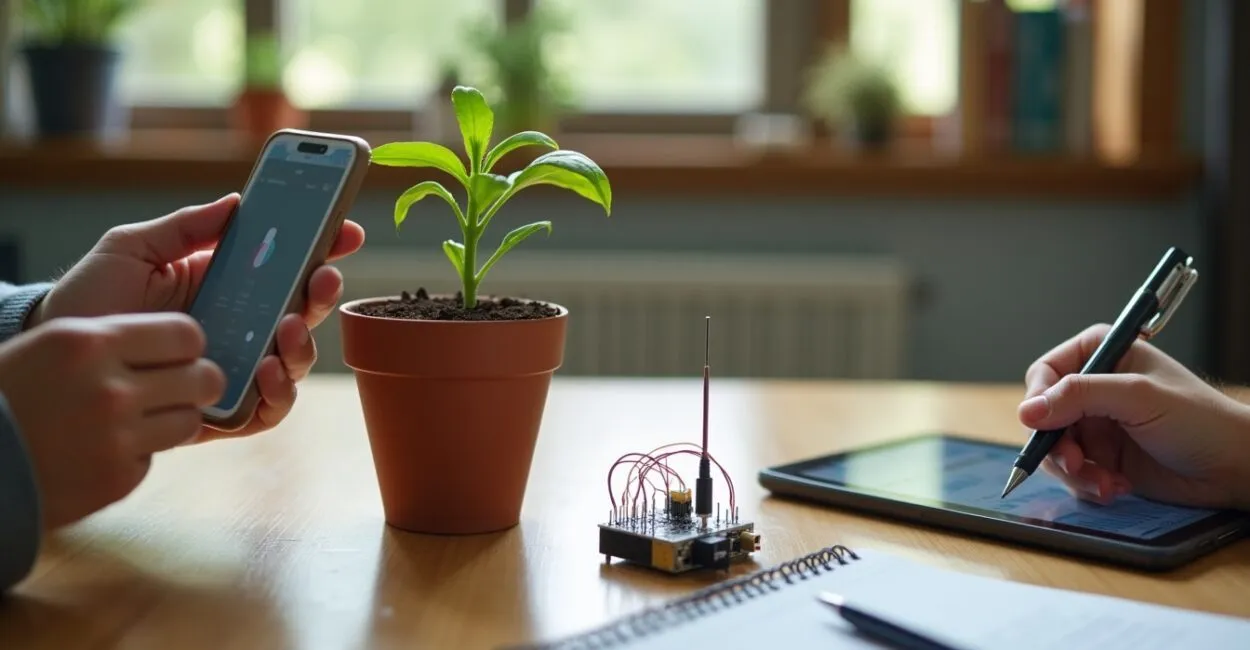
Green technology is transforming how we teach and learn about the environment by bringing together digital tools and hands-on sensors for real-world experiences. It connects curiosity, action, and measurable results in environmental education, making learning more engaging.
Today, the urgency of the climate crisis and the need for ecological literacy make green technology an essential ally. This article explores accessible applications, including plant identification apps, soil sensors, and school projects that inspire change. You’ll discover tools, practical steps, successful examples, and ways to bring green technology into lessons and community projects to create measurable impact and environmental empathy.

Why green technology matters in environmental education
Impact on hands-on learning
Green technology expands hands-on experiences by enabling real measurements and direct observation of natural phenomena. This turns theory into action, boosting retention and motivation. Students develop scientific and digital skills as they use sensors, apps, and collaborative platforms to document change and learn through inquiry.
Connecting with local sustainability
Green technology projects help address community needs, such as monitoring gardens and soil quality, while fostering civic and environmental responsibility. Using local data, students propose real-world solutions, connecting school curricula with public policy and recognized sustainable practices.
Essential tools: identification apps and digital resources
Plant identification apps
Apps such as iNaturalist and PlantNet let users quickly identify plants from photos, linking observations to scientific databases and expert communities. These tools encourage field trips, biodiversity records, and easy contributions to citizen science projects.
Educational platforms and augmented reality
Platforms with augmented reality make abstract concepts visible, enriching lessons about ecosystems, cycles, and interdependence among species. Interactive resources boost engagement, allowing students to simulate human impacts and conduct safe experiments in a virtual environment.
- iNaturalist — a global community for documenting biodiversity.
- PlantNet — collaborative plant identification.
- National Geographic Education — resources and lesson plans.
Affordable equipment: soil and climate sensors and monitoring tools

Moisture and nutrient sensors
Soil sensors measure moisture and pH, helping guide decisions in school gardens and studies on soil health. They’re easy to incorporate into hands-on projects. Regular data collection reveals seasonal variations and enables students to explore connections with land management, irrigation, and planting methods, enriching scientific learning.
Weather stations and microclimate sensors
Low-cost stations record temperature, rainfall, and wind, supporting small-scale climate monitoring projects and contextualized learning. Students interpret time series, identify local climate patterns, and connect them to agricultural practices and conservation.
Hands-on guide: How to build a school project with green technology
Planning and goals
Set clear goals: monitor plant growth, soil quality, or local biodiversity. Goals guide your choice of sensors and methods.
Read also: Assistive technology in education: transforming learning for everyone
Bring together the community and teachers of science, math, and geography to connect curriculum content with practical results.
Getting started, step by step
Use this guide to launch a green technology project at school, with straightforward steps and a focus on measurable results.
- Define the project goal and target audience.
- Choose your tools: an identification app and soil sensors.
- Plan the data collection schedule and assign responsibilities.
- Train students in recordkeeping, ethics, and basic analysis.
- Share results with the community and document what you learned.
Real-world examples and impact studies
Schools transforming urban spaces
Urban schools have created smart gardens using sensors, reducing water waste and involving families in community gardening. Reports show increased student engagement, improved nutrition, and greater awareness of responsible consumption.
Citizen science and conservation projects
Initiatives using identification apps have mobilized communities to map species, contributing to research and the protection of green spaces. Researchers have already used data collected by students, strengthening the credibility and educational value of these projects.
| Tool | Educational use | Main benefit |
|---|---|---|
| Identification app | Recording biodiversity in the field | Connection to scientific databases |
| Moisture sensor | Monitoring school gardens | Water savings and better management |
| Weather station | Microclimate studies | Understanding local patterns |
Teaching best practices and data security
Curriculum integration and assessment
Align activities with curriculum competencies: inquiry, data analysis, and communication. Use clear rubrics to assess participation and results. Formative assessment helps refine experiments and support continuous learning, reinforcing scientific and digital skills.
Privacy and responsible data use
Teach digital ethics: collect only the data you need, obtain consent, and anonymize sensitive information about the school community.
Choose trusted platforms and review their privacy policies to protect students and build trust in green technology activities.
- Assign data managers and establish security protocols.
- Use platforms with transparent policies and secure storage.
- Teach students about ethical use and the impact of shared information.
Resources, support, and funding
Funding sources and partnerships
Look for municipal grants, foundations, and university partnerships to secure equipment and training. Local relationships can expand a project’s reach and sustainability. Companies and nonprofits often support educational projects that demonstrate measurable social and environmental impact.
Available materials and training
Workshops, online courses, and teaching guides help teachers use green technology with confidence and care.
Courses in citizen science and educational platforms are recommended for educators’ ongoing professional development.
Conclusion
Green technology is more than a tool: it’s a bridge between emotion and science, empowering students to take local action with real impact. The key takeaway is clear—integrating apps and sensors turns curiosity into change.
Think back to the beginning: the curiosity that brought you here can come to life with an app, a sensor, and a group project that inspires pride and environmental responsibility.
Frequently Asked Questions
How do I start a green technology project at my school?
Start by setting clear, simple goals: monitor a garden, map plants, or measure soil. Choose accessible tools, such as an identification app and a moisture sensor. Involve teachers, students, and families, set a schedule, and collect data regularly so you can analyze and share the results. Look for local support and online resources to guide implementation and help ensure the project is sustainable.
Which plant identification apps are best for education?
Apps such as iNaturalist and PlantNet are excellent for education because they’re intuitive and connect observations to scientific databases. They let students take part in citizen science, record local species, and get identifications confirmed by experts. These tools also teach documentation, ethics, and care in data collection, promoting active learning and environmental responsibility in schools.
Are soil sensors expensive or difficult to use in school projects?
There are now affordable, easy-to-use soil sensors that measure moisture and pH, making them ideal for school gardens. Many come with instructions and simple interfaces; with a little training, students can collect data regularly. More advanced equipment costs more, but local partnerships and funding can lower costs and expand its sustainable educational use.
How can we protect privacy and security when collecting school data?
Protect collected data by anonymizing personal information, obtaining consent from parents or guardians, and limiting public sharing. Use platforms with clear privacy policies and choose secure storage. Teach students about digital ethics and assign people to manage access and remove data when needed.
Where can I find funding and support for green technology projects?
Look for education and environmental grants, local foundations, universities, and companies with corporate social responsibility programs. Partnerships with nonprofits and municipal agencies can also provide resources and training. To improve your chances of securing funding and ongoing support, present clear goals, impact measures, and plans for community involvement.
Artigos Relacionados
 Educational Technology and Its Impact on Higher Education
 Educational Technology and Blended Learning: The New Normal in Education
 Socio-Environmental Change Through Education: Paths to a Sustainable Future
 Green Technology: 5 Apps and Gadgets for Environmental Education
 2025 Environmental Education Workshops: Hands-On Activities
 Environmental Education Trends for 2025: What’s New
