

A fall in the kitchen, a burn from the stove, or someone fainting on the bus may require a decision before help arrives. Basic first aid consists of immediate steps to preserve life and keep an injury from getting worse. First, make sure the scene is safe; then check the person’s responsiveness and call for help when needed.
This guide explains how to respond to common emergencies without trying to diagnose a condition or replace professional care. If you’re unsure what to do, call emergency services and follow the dispatcher’s instructions.

Before you help
- Look for hazards at the scene, such as traffic, fire, power lines, or chemicals.
- If urgent care is needed, ask someone to call SAMU (Brazil’s Mobile Emergency Medical Service) at 192.
- Wear disposable gloves if blood or other bodily fluids are present and gloves are available.
- Don’t move someone who may have a spinal injury unless the scene poses an immediate danger.
What is basic first aid?
Basic first aid is the knowledge and initial care given to someone who is sick or injured until specialized help arrives or they can be taken to a health care facility. In practice, this means recognizing hazards, calling for help, and doing only what you can without making the situation worse.
These actions don’t include confirming a diagnosis or replacing treatment. For example, someone without training can apply pressure to a bleeding cut, but shouldn’t try to close a deep wound or remove an embedded object.
Guidance varies depending on the cause, the person’s age, and their condition. A young child, a trauma victim, and someone with a known medical condition may need different care. If you’re unsure, follow the emergency dispatcher’s instructions.
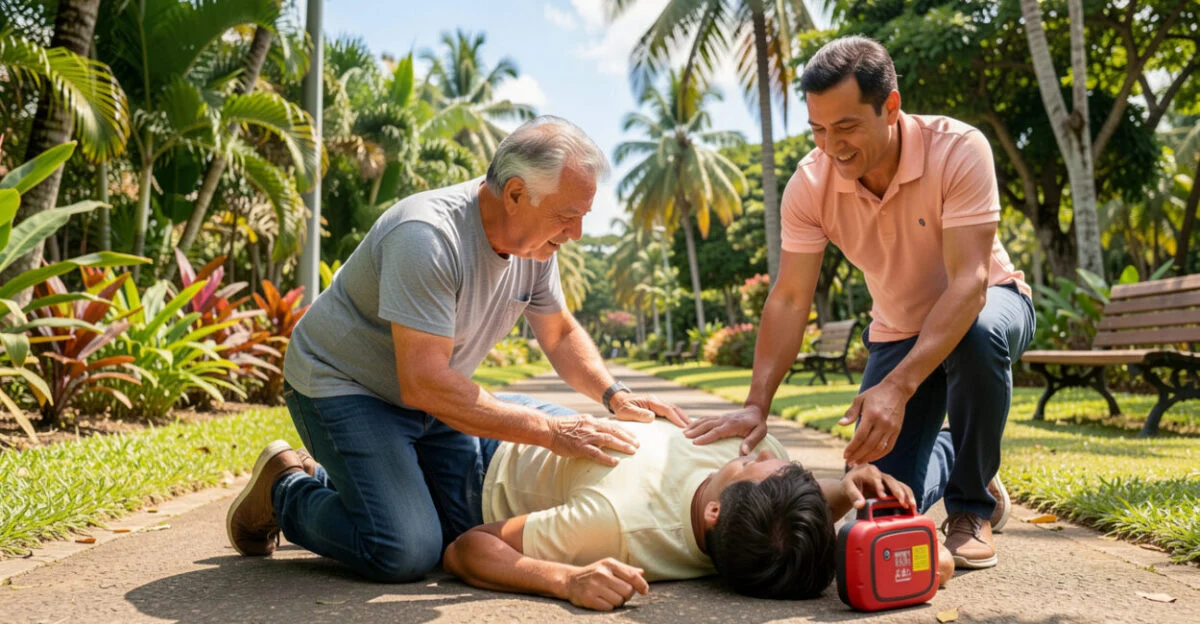
What should you prioritize in an emergency?
The priorities are to protect yourself and others, check whether the person responds and is breathing normally, and call emergency services if there are signs of a serious problem. Following this sequence helps prevent the person trying to help from becoming a victim, too.
Call out to the person and gently tap their shoulder. If they don’t respond, ask someone to call SAMU (192) and get an automated external defibrillator (AED), if one is available. Check their breathing: occasional, irregular, or gasping breaths shouldn’t be treated as normal breathing.
If the person doesn’t respond and isn’t breathing normally, follow the dispatcher’s instructions. Cardiopulmonary resuscitation (CPR) and AED use are skills taught through training; in an emergency, the dispatcher can guide you based on the situation. The American Heart Association’s Basic Life Support guidelines are a reference for professionals and training programs.
In an emergency, effective help starts with keeping the rescuer safe and contacting the right emergency service.
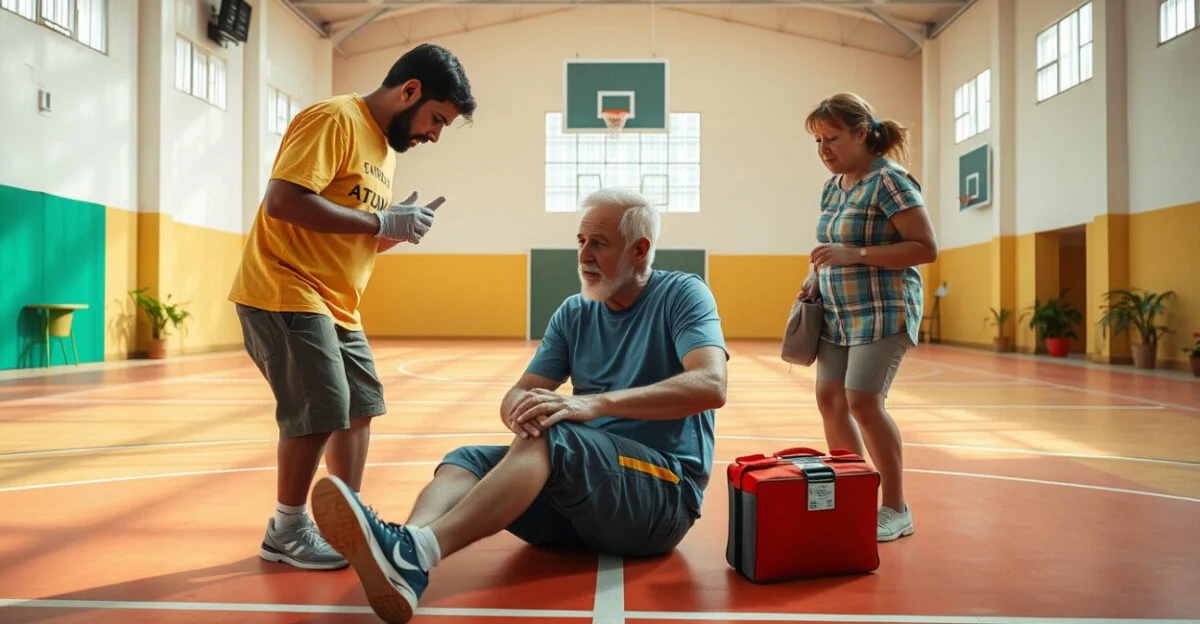
What are the 10 golden rules of first aid?

The 10 essential rules are safety measures and common-sense practices that protect the injured person, the person helping, and the responders who arrive later. Use them as a guide, not as a substitute for hands-on training.
- Check that the scene is safe. Don’t enter areas with fire, smoke, electricity, traffic, or hazardous substances.
- Call for help early. In a serious situation, call 192 instead of waiting to see if the person gets better.
- Identify yourself and ask for consent if the person is conscious and able to respond.
- Use a barrier against blood and bodily fluids. Disposable gloves reduce direct contact; wash your hands afterward.
- Avoid unnecessary movement. Suspected head, neck, or back injuries call for extra caution.
- Don’t give food, drinks, or medication to someone who is unconscious, confused, or having trouble swallowing.
- Don’t induce vomiting after someone swallows a product or substance; seek emergency guidance.
- Don’t use home remedies on burns or wounds, such as toothpaste, butter, or powder.
- Watch for changes in breathing and level of consciousness until help arrives.
- Tell responders what happened and what steps you took, including anything you’re unsure about.
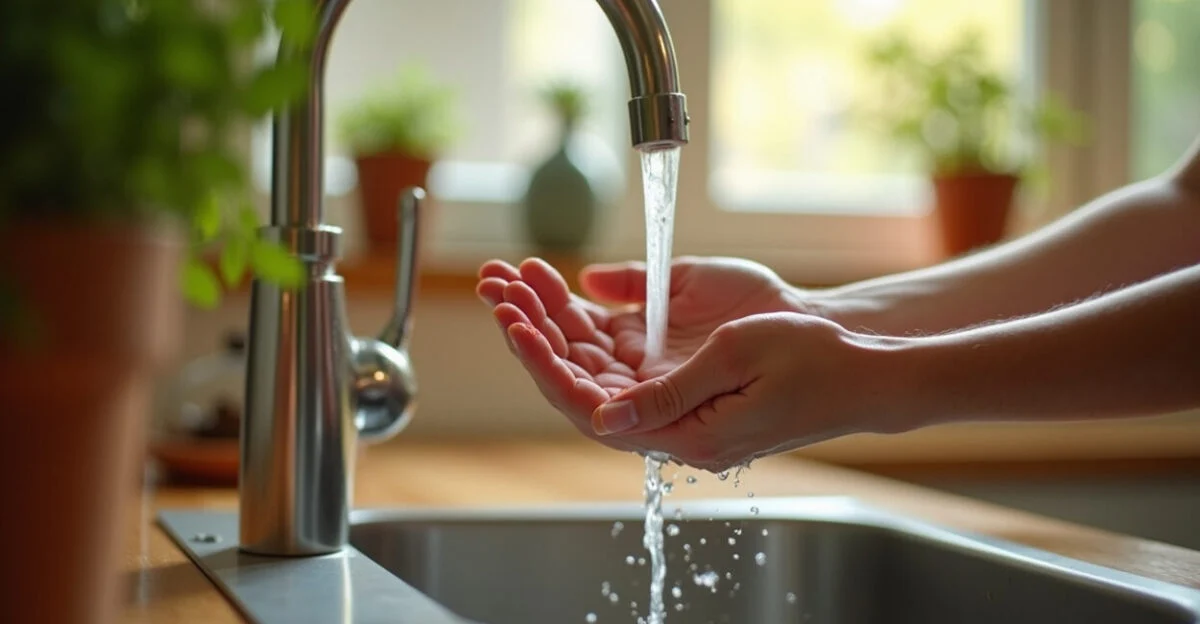
What should you do for cuts, burns, choking, fainting, or fractures?
The first step depends on the problem: controlling bleeding, cooling a burn, or keeping the person still may help, but each approach has limits. If the person has trouble breathing, severe bleeding, loss of consciousness, or a serious injury, call SAMU.
Cuts and bleeding
Press a clean gauze pad or cloth against the wound and apply steady pressure. If blood soaks through, place another layer on top without removing the first. Severe bleeding, a deep wound, or an embedded object requires urgent care; don’t try to remove the object or probe the wound.
Read also: Travel Insurance for Seniors: How to Choose Coverage
Burns
Move the person away from the heat source without putting yourself at risk, then cool the area under cool running water. Don’t use ice, ointments, or home remedies, and don’t pull clothing stuck to the skin. Extensive, deep, or electrical burns, or burns in sensitive areas, need medical evaluation.
Choking
If the person can cough and speak, encourage them to cough and monitor them. If they can’t breathe, speak, or cough effectively, call 192 and follow the dispatcher’s instructions. Choking-relief techniques should be performed according to the person’s age and the rescuer’s training.
Fainting
Help the person lie down in a safe place and check whether they regain consciousness and are breathing normally. Don’t shake them, put anything in their mouth, or offer liquids while they’re unconscious. If they don’t wake up promptly, are injured, or aren’t breathing normally, call SAMU.
Suspected fracture
Don’t try to straighten the limb or test whether it’s broken. Ask the person to stay still and support the area in the position you found it, without squeezing. A deformity, severe pain, or an injury after a fall or collision should be evaluated by professionals.
Imagine someone cuts their hand while making dinner: if the bleeding is minor, they’re alert, and there’s no embedded object, applying pressure with clean gauze is a reasonable first step. If the bleeding doesn’t stop or the cut is deep, the priority shifts to getting medical help without continuing to handle the wound.

What are the 10 basic items in a first aid kit?
A basic kit contains supplies for protection, cleaning, and covering wounds initially; it doesn’t need to include medication. Keep supplies in a dry place that adults can access but children can’t. Check packaging and replace expired or damaged items.
Item Purpose Disposable gloves Reduce contact with blood and bodily fluids. Sterile gauze Cover wounds and help control bleeding. Bandages Secure dressings without wrapping too tightly. Medical tape Hold gauze and dressings in place. Adhesive bandages Cover small cuts and scrapes. Sterile saline solution Help rinse small wounds, as directed. Blunt-tip scissors Cut tape or clothing without bringing the blades close to injured skin. Tweezers Handle supplies; don’t use them to remove embedded objects. Emergency blanket Help protect someone from the cold while waiting for help. Resuscitation face shield Provide a barrier during rescue breaths, if you’re trained.
What you need may vary depending on whether the kit is for home, school, or work. A kit doesn’t replace training, and adding medication on your own could lead to misuse or adverse reactions.
When should you call SAMU, and what information should you give?
Call SAMU at 192 if there’s a life-threatening situation or urgent need for care, such as unconsciousness, abnormal breathing, chest pain, a seizure, severe bleeding, major trauma, or severe choking. Based on its assessment of the call, the service may guide you while the team is on its way.
Give the address and nearby landmarks, explain what happened, say how many people need help, and describe how the person is responding and breathing. Also mention any hazards at the scene and what steps have already been taken. Answer the dispatcher’s questions, and don’t hang up until they tell you to.
Brazil’s Ministry of Health, which provides information about SAMU 192, describes the service as a mobile prehospital emergency care service. To learn more about careers in health care, also see this article on the evolution of health care professions.
How can you study first aid and find reliable resources?
To learn safely, look for a course with supervised practice and qualified instructors. A PDF can help you review concepts, but pictures and written instructions alone can’t teach you to perform techniques safely.
If you’re looking for a first aid summary, first aid PDF, basic first aid PDF, downloadable first aid PDF for students, illustrated first aid manual PDF, or updated first aid PDF, check the author, the responsible organization, the revision date, and whether the material reflects current recommendations. The Brazilian Red Cross provides information about first aid training on its official website.
For studying and competitive exams, use materials from recognized institutions and check whether an up-to-date first aid manual covers scene safety, calling for emergency help, and the limits of what a bystander should do. First aid material for exam preparation can help you review theory, but it doesn’t replace hands-on training. Those organizing their study routine can also find guidance on physical activity and studying.
The next step is to check whether there’s an accessible first aid kit at home or work and choose an in-person course with hands-on practice. In a real emergency, assess the risk, call for help, and follow the emergency service’s instructions.
Frequently Asked Questions
Can I help even if I haven’t taken a course?
Yes, as long as you don’t put yourself in danger and stick to simple steps, such as calling emergency services and following the dispatcher’s instructions. Hands-on training is needed to learn techniques such as CPR and choking-relief maneuvers.
Should I move the person to a more comfortable place?
Avoid moving them if you suspect an injury, especially to the head, neck, or back. Move the person only if there’s immediate danger, such as fire or traffic, and only if you can do so without increasing the risk.
How often should I check my first aid kit?
Check the kit regularly and after each use. Replace used supplies, opened packages, or damaged items, and keep the kit in a dry place that the adults in your household know about.
Artigos Relacionados
 School Adjustment: Supporting Children in Their First Days
 Entry-Level Labor Law: Where to Find Your First Jobs
 Interpretation Answer Key: Common Errors and How to Fix Them
 Time Blocking: The Method That Cuts Distractions in Your First Month
 Free Online Entrepreneurship Course: 5 Common Mistakes
 Finance for Beginner Entrepreneurs: Manage Resources, Build a Budget, and Avoid Common Financial Mistakes
