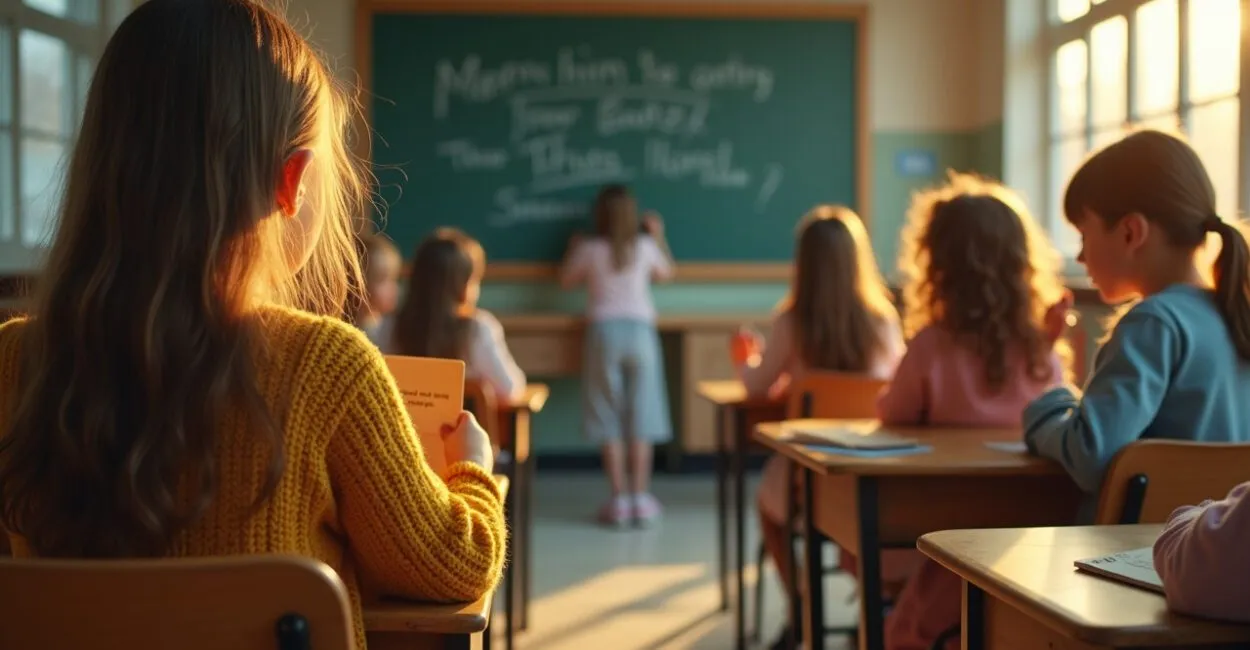
A whole classroom is looking at the note on the board. Students whisper; some smile, while others hold a card that still needs a message. An end-of-year message can be the gesture that turns an ending into a beginning—simple, heartfelt, and ready to share.
Here are 30 messages for elementary school kids: short, moving, and easy to adapt for notes, cards, or presentations. Read through them, choose the one that speaks to you, and personalize it in seconds.

1. Why an End-of-Year Message Can Become a Lifelong Keepsake
A phrase shared at the end of the school year often stays with students. It recognizes achievements, eases worries, and celebrates small steps. When a student saves a card, it’s more than a piece of paper—it’s a reminder that someone noticed. It’s like finding an old photo: you’re transported back in time and feel it all over again.
According to Brazil’s Ministry of Education, school celebrations strengthen relationships. That’s why choosing the right message matters. The words you write today can give someone courage tomorrow.
2. 30 Ready-to-Use Messages for Elementary School Students
This section delivers what I promised: 30 short phrases, grouped by tone and easy to copy or adapt. Use them in a note, card, or quick classroom message.
- 1. You shined so brightly this year—keep believing in yourself.
- 2. Every mistake was a step forward. I’m proud of you.
- 3. Thank you for being curious. It will take you far.
- 4. Come back with new stories and fresh courage.
- 5. Congratulations on your small wins—they add up to a lot.
- 6. You made a difference in our class.
- 7. Take your smile and your love of learning with you.
- 8. Hold your dreams close and take good care of them.
- 9. Learning is an adventure. Keep exploring.
- 10. Thank you for every moment of attention and friendship.
- 11. You’ve grown so much—celebrate every step.
- 12. Your creativity is a gift. Put it to use.
- 13. Hope your break is full of fun and rest.
- 14. Come back full of energy and new ideas.
- 15. Your questions matter—keep asking them.
- 16. Be proud of who you are and the courage you show.
- 17. We’ll miss you at school. See you soon!
- 18. Hold on to our memories—and make plenty of new ones.
- 19. You have what it takes to help make the world a better place. Believe it.
- 20. Let every day be a chance to learn something new.
- 21. Thank you for brightening our classroom with your presence.
- 22. Growing means looking ahead with hope.
- 23. Stay curious—it’s the best way forward.
- 24. Everyone is proud of what you’ve accomplished.
- 25. Never underestimate the power of a good hug.
- 26. Take your classmates’ kindness with you.
- 27. A new year is waiting for your next adventure.
- 28. Remember: asking for help is a sign of strength.
- 29. Keep being kind to others.
- 30. Until the next chapter—and may it be amazing!
3. How to Adapt an End-of-Year Message for Different Age Groups

Not every message works the same way for a 6-year-old and an 11-year-old. The key is to adjust the vocabulary and focus. For younger kids, emphasize warmth and imagery: “You are so important.” For older kids, focus on independence: “Stay curious and responsible.”
- Ages 6–7: short, playful phrases.
- Ages 8–9: praise for effort and friendship.
- Ages 10–11: encouragement to be independent and dream big.
This kind of adaptation helps an end-of-year message reach the heart, not just the head.
4. Common Mistakes to Avoid When Writing an End-of-Year Message
Some well-meaning phrases can come across as empty or confusing. Avoid generic praise and big promises. Saying “You can do anything” without context can sound insincere. Also avoid comparing students—it can leave a lasting negative impression.
- Mistake: using overly abstract language. Keep it simple.
- Mistake: writing messages that are too long. Cut the extra words.
- Mistake: promising something you can’t deliver.
Instead, mention a specific action: “I loved how you helped the class.” That makes your end-of-year message feel genuine and heartfelt.
5. A Comparison That Changes the Way You Write
Expectation: write a beautiful, generic phrase. Reality: write something specific that helps a student relive a moment. That’s the magic. A before-and-after comparison shows that details mean more than broad praise.
Before: “You did great.” After: “I remember when you explained the activity and helped your classmate—that showed maturity.” The second version becomes a keepsake. The first fades with time. Keep this principle in mind when choosing your end-of-year message.
6. A Short Story: How One Message Changed a Student’s Year
At the end of the year, a teacher left a note: “Your drawing brightened the classroom on a hard day.” A student saved it and showed it to their family. The following year, they came back more confident about presenting their work. The end-of-year message was short, but it gave them courage.
These four lines show how a specific phrase can inspire someone. Don’t underestimate the power of a well-chosen sentence.
7. How to Use These Messages in Cards, Notes, and Presentations
The same text can work as a note, a card, or a short speech. Keep notes direct; add a drawing to cards; and turn the message into a public thank-you during a presentation. Try these quick variations:
- Note: one or two lines.
- Card: a phrase plus a drawing or signature.
- Presentation: a phrase plus a specific example in 10 seconds.
If you need ready-to-print templates, look for resources from organizations such as UNICEF Brazil, which offers accessible educational materials.
Choose one of the 30 messages. Personalize it with a detail. Share it with a smile. Students often carry those words with them for a lifetime.
Frequently Asked Questions
How Do I Choose the Best End-of-Year Message for a Mixed-Age Class?
For a mixed-age class, choose messages that recognize both group and individual effort. Pick short, positive phrases that work for different ages, such as: “Congratulations on your hard work—each of you made our class better.” Then, when possible, add a line about a moment from the year. Avoid comparisons and focus on observable actions, like helping classmates or participating attentively. That way, your end-of-year message reaches most students with respect and warmth.
Can I Use These Messages in a Digital Card Sent to Parents?
Yes. Short messages work well in digital cards because they’re quick to read and easy to share. If you send one by email or through the school app, add a class photo (with permission) or a short 10-second video. Use the end-of-year message as the headline and sign it with the class or teacher’s name. That way, it becomes a digital keepsake and helps build a connection between home and school. Be sure to protect students’ privacy when sharing images.
What’s the Ideal Length for an End-of-Year Message at an Elementary School Graduation?
For an elementary school graduation speech, aim for a clear, moving phrase of 8 to 15 words. This keeps the ceremony moving and makes sure everyone understands. Pair the phrase with a specific example in your speech, such as a project or a memorable moment. The end-of-year message should serve as an emotional moment, not drag on. End with an invitation to look ahead: “Keep being curious and confident.”
How Can I Adapt the Message for Students With Special Needs?
Adapt the language to each student’s comprehension and sensory profile. Use short phrases, positive repetition, and visual elements when needed. Include concrete examples of the desired behavior or progress made. When writing the end-of-year message, involve caregivers and other professionals to make sure the tone and content are appropriate. Messages that recognize small achievements tend to be more effective and motivating for students with special needs.
Is It Better to Write Individual Messages or One Message for the Whole Class?
Both have their place. Group messages build a sense of community and celebrate shared accomplishments. Individual messages offer personal recognition and are often treasured more. If time is short, write a message for the whole class and add a personalized line for each student. That way, you balance efficiency and warmth. The right words can turn a gesture into a keepsake, so combine both approaches whenever possible.