
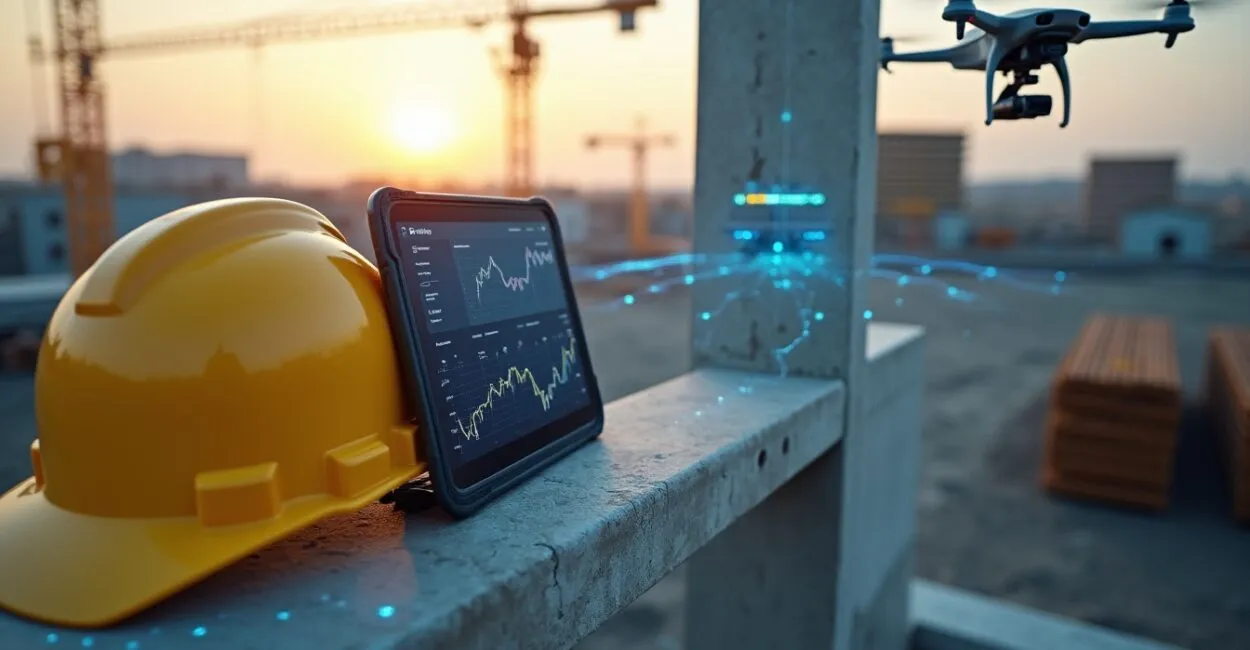
construction automation refers to the integrated use of sensors, the Internet of Things (IoT), management software, and automated controls to monitor, control, and optimize processes at construction sites and in building maintenance.
Today’s environment calls for greater efficiency, safety, and on-time project delivery. Construction automation reduces operational risks, boosts productivity, and provides real-time data for technical and management decisions. With advances in 5G networks, cloud platforms, and predictive analytics, construction automation has become essential to the digital transformation of the construction industry, connecting teams, machinery, and assets in intelligent ecosystems.

Key Takeaways
- Integrate sensors and IoT for continuous monitoring.
- Real-time management improves safety and efficiency.
- Predictive maintenance helps reduce costs.
- Ensure regulatory compliance and project traceability.
Construction Automation: Core Technologies
Sensors and IoT in Construction Automation
Structural, vibration, humidity, and position sensors provide continuous signals that, when integrated via IoT, enable immediate analysis of site conditions. This sensor infrastructure is essential for construction automation at scale.
Connecting these devices via LoRaWAN, NB-IoT, or 5G determines latency and coverage, directly affecting the reliability of automated actions and critical alerts for technical teams.
Platforms and Software
Management platforms bring together sensor, BIM, and ERP data, automating control routines, work orders, and reporting. Interoperability is essential for scaling construction automation across projects.
Open APIs and common data models make it possible to integrate vendors, manage permissions, and apply automated business rules, reducing rework and speeding up strategic decisions.
Construction Automation: Real-Time Monitoring
Data Flows and Dashboards
Dashboards bring together critical KPIs—including progress, energy use, and incidents—to give engineers and managers a unified view. Real-time monitoring turns raw data into concrete action.
Configurable alerts with technical thresholds enable immediate responses, minimizing downtime and keeping operations running while ensuring construction automation is implemented responsibly.
Connectivity and Latency
The choice of communication infrastructure determines latency and reliability. In mobile environments, 5G and advanced LTE networks reduce delays, ensuring commands and measurements arrive in time for construction automation.
Redundant networks and MQTT or OPC-UA protocols improve resilience; hybrid architectures (edge + cloud) balance local processing with cloud-based analysis to meet service-level agreements (SLAs).
- SMS/push alerts integrated with scheduling systems.
- Automated reports for compliance and audits.
- Data exports for BI and predictive models.
These practices strengthen data governance, enabling efficient audits and operational insights that advance construction automation maturity.
Construction Automation: Safety and Compliance

Data Protection and Cybersecurity
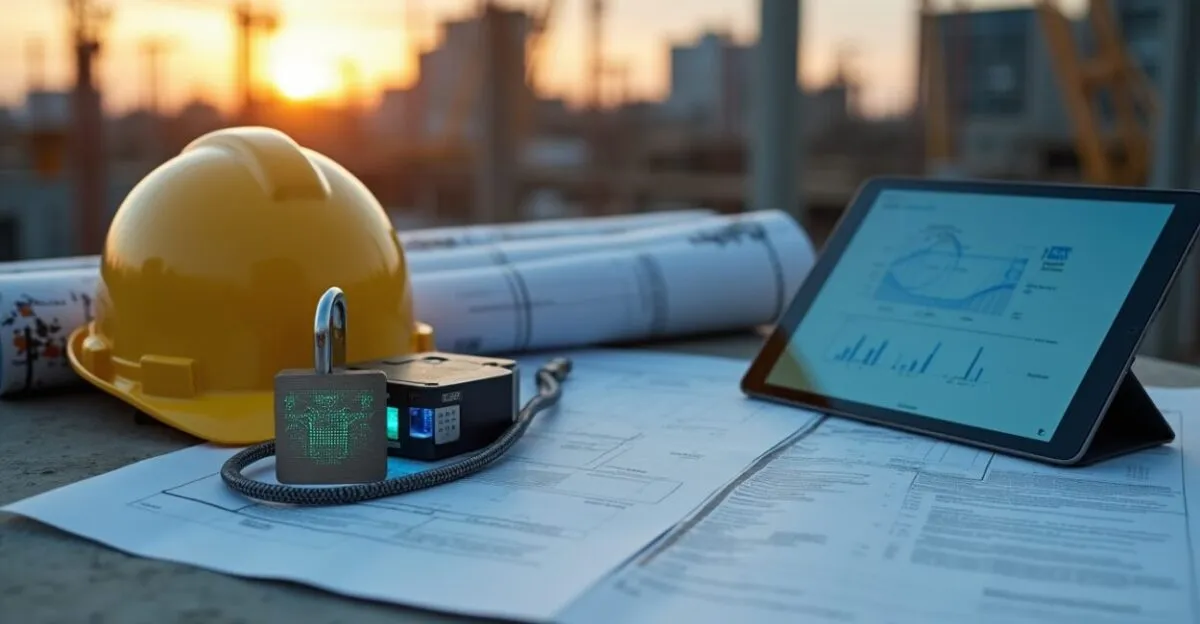
IoT devices expand the attack surface, so encryption, certificate management, and update policies are essential to protecting assets and sensitive information associated with construction automation. Network segmentation, multifactor authentication, and anomaly monitoring reduce risks and ensure interoperability does not compromise the security of critical site systems.
Standards, Certifications, and Compliance
Compliance with safety, environmental, and labor regulations is essential. Automated documentation and action tracking help demonstrate compliance during construction automation audits.
ISO certifications and technical guidelines inform projects that incorporate construction automation, ensuring standardized practices and reducing legal and operational liabilities for adopting companies.
Construction Automation: Resource Management and Productivity
Automated Equipment Allocation
Integrated systems manage fleets, machinery, and consumables, optimizing allocation based on demand and availability. This reduces idle time and boosts operational productivity through construction automation.
GPS or RTLS tracking locates assets in real time and automates maintenance and replenishment orders, helping keep the site’s production flow running smoothly.
Workforce Management and Safety
Biometrics, access permissions, and geofencing help manage teams and prevent entry into hazardous areas. Construction automation provides tools to monitor compliance with PPE requirements and certifications.
Productivity analytics compare schedules with actual performance, allowing automatic adjustments to staffing and task turnaround to meet contractual targets.
- Automated planning based on real-world data.
- Alerts for safety violations.
- Analytics to identify bottlenecks and optimize processes.
Integrating these capabilities supports evidence-based decisions, reduces waste, and makes project timelines more predictable for construction automation projects.
| Element | Benefit | Project Impact |
|---|---|---|
| Structural sensors | Early fault detection | Fewer risks and unplanned shutdowns |
| IoT platform | Unified view | Better real-time decision-making |
| Predictive maintenance | Lower costs | Longer equipment life |
Construction Automation: Implementation Models and ROI
Implementation Phases
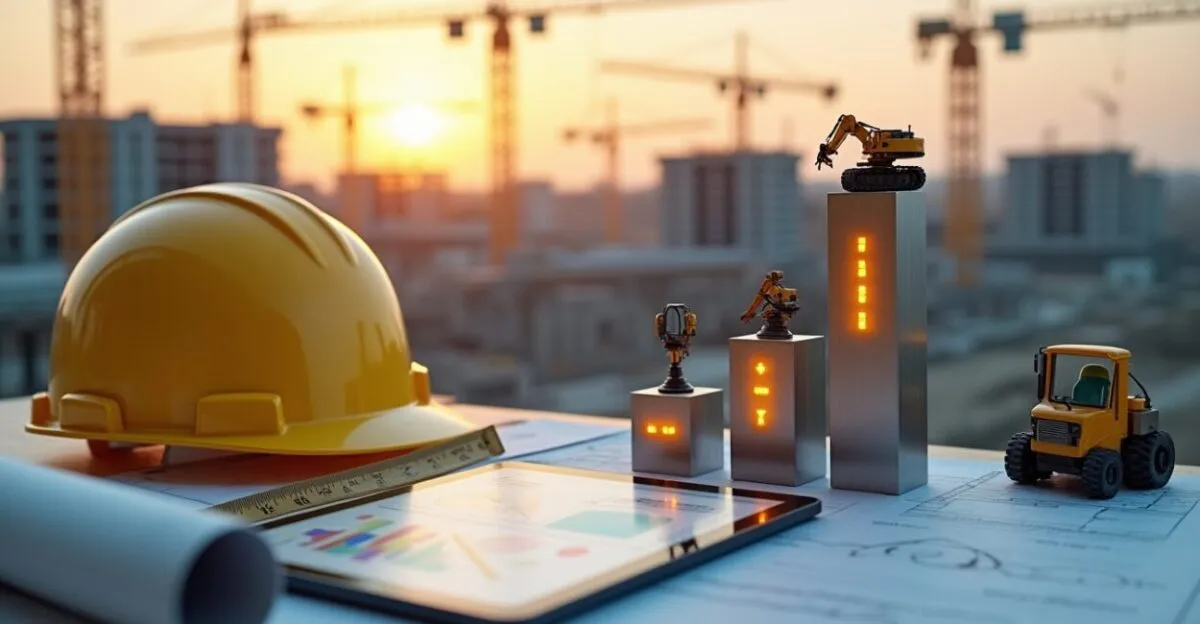
Successful projects follow a phased approach: proof of concept (PoC), pilot, and rollout. Each stage validates the technology, engages stakeholders, and measures critical KPIs to ensure a return on investment (ROI) from construction automation.
Combining agile methods with technical expertise reduces adoption risks and allows teams to adjust the scope based on results, accelerating financial and operational benefits.
Metrics and Return on Investment
KPIs such as reduced downtime, energy savings, and lower material consumption demonstrate ROI. Integrated calculations provide a clear payback timeline for construction automation.
Financial models include CAPEX and OPEX, factoring in savings from reduced rework and accidents, as well as productivity gains, to project sustained economic value.
- Efficiency metrics (TEEP and adapted OEE).
- Measurement of incident and cost reductions.
- Before-and-after comparisons to validate gains.
Using standardized metrics makes it easier to compare projects and support continued investment in construction automation based on measurable results.
Construction Automation: Use Cases and BIM Integration
BIM and Digital Twin Integration
BIM models enriched with real-time data create digital twins that simulate structural and logistical behavior. This integration makes construction automation more predictable from a technical standpoint.
Digital twins make it possible to test scenarios and optimize schedules without affecting the physical site, reducing risks and improving cost and time estimates for strategic decisions.
Practical Use Cases: Energy, Safety, and Logistics
Energy monitoring, access control, and material routing are examples of construction automation in practice. These use cases demonstrate tangible gains in sustainability and operational efficiency.
Large-scale projects show that integrating sensors, BIM, and analytics platforms reduces waste and improves coordination between design and construction disciplines. For technical guidance and applicable standards, consult authoritative public administration and engineering resources, such as Brazil’s Ministry of Infrastructure (the federal agency responsible for infrastructure policy) and academic repositories.
International examples and guides can also inform adoption. See technical documents and white papers from recognized institutions for more details on best practices. Sources and further reading:
- Ministério da Infraestrutura (Brazil’s Ministry of Infrastructure)
- SciELO – Academic research and articles
- IEA – International studies and reports
These resources complement regulatory guidelines and applied research, providing regulatory context and empirical evidence for designing evidence-based construction automation projects.
Construction Automation: The Future and Emerging Trends
AI, Machine Learning, and Predictability
AI applications turn collected data into performance forecasts, anomaly detection, and automated process optimization, enabling construction automation to take a more proactive approach. Models that learn from a project’s historical data can generate operational recommendations and automatic adjustments, reducing manual intervention and accelerating continuous improvements in site performance.
Sustainability and Circular Economy
Construction automation integrates environmental monitoring and waste management, enabling more sustainable practices. Material savings and energy efficiency reduce the environmental footprint of construction projects.
Platforms that track material life cycles and recycling support circular economy practices, aligning sustainability goals with the operational efficiency gains of construction automation.
- AI for predictive maintenance and quality control.
- Platforms that support ESG reporting.
- Automation as a tool for decarbonization.
Aligning technology with environmental policies strengthens its strategic value: construction automation is no longer just a way to improve operational efficiency; it is becoming a competitive and regulatory requirement.
Frequently Asked Questions
What Exactly Is Construction Automation, and What Does It Include?
Construction automation combines sensors, communication networks, IoT platforms, management software, and analytics algorithms to monitor and control construction activities. It includes structural sensors, location systems, BIM integration, real-time dashboards, and predictive maintenance modules. The goal is to reduce risks, optimize resources, accelerate schedules, and ensure technical and regulatory compliance. Solutions should be designed for interoperability, cybersecurity, and scalability across multiple sites and project phases.
What Are the Main Economic Benefits of Construction Automation?
Economic benefits include fewer unplanned shutdowns, less material waste, more efficient use of equipment and labor, shorter project timelines, and less rework. OPEX and CAPEX savings come from predictive maintenance, better logistics planning, and energy management. Construction automation also makes project timelines more predictable, reduces contractual risks, and boosts company competitiveness, delivering measurable payback based on productivity metrics and comparisons of operating costs.
What Technical Risks and Challenges Should Be Considered When Implementing Construction Automation?
Challenges include cybersecurity, interoperability between vendors, connection quality, data management, and resistance to change. Exposed devices can be targets for attacks, making encryption and update policies essential. Integrating legacy systems with new platforms requires well-defined APIs and data governance. Validation phases, including a proof of concept (PoC), should also be planned to reduce implementation failures. Training and process changes are critical to ensuring widespread adoption of construction automation.
How Do You Measure the Success and ROI of Construction Automation Projects?
Success metrics include reduced downtime, material savings, productivity gains, fewer incidents, and improved quality. KPIs such as mean time between failures, schedule adherence, and energy savings are used to calculate ROI. Financial models combine CAPEX and OPEX with projected savings and payback. It is recommended that you establish a baseline before implementation and use dashboards to compare performance before and after, ensuring ongoing evaluation of the impact of construction automation.
Which Standards and References Should I Consult to Ensure Technical Compliance?
Consult relevant national and international technical standards, workplace safety guidelines, and environmental regulations for the construction industry. References include applicable ABNT standards (issued by Brazil’s national standards organization), labor regulations, and public infrastructure guidelines. For technology, follow cybersecurity best practices and interoperability standards such as OPC-UA. Government sources and academic repositories offer technical guidance and scientific evidence to inform projects. Technical compliance is an integral part of any construction automation adoption strategy.
Artigos Relacionados
 Efficient Construction Project Management for Engineering and Construction
 Drones in Construction: Inspection, Mapping, and Safety
 BIM in Construction: Benefits and Practical Implementation
 Fixed Income: Strategies for Safety and Real Returns
 Debt Management Plan for Fast and Sustainable Relief
 Real Estate Agent Fundamentals
