
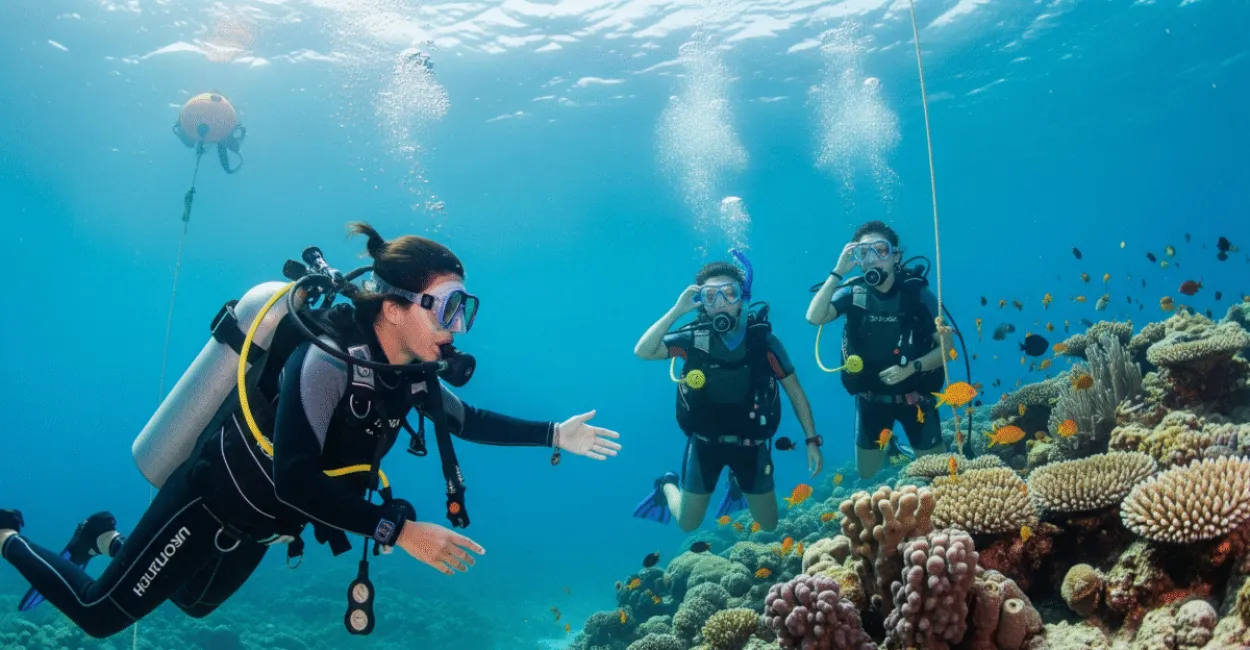
A scuba diving instructor plays a vital role for anyone who wants to explore the underwater world safely and knowledgeably. This profession is essential to ensuring that beginners and experienced divers alike receive proper guidance, from basic techniques to advanced safety procedures. Understanding what a scuba diving instructor does, why the role matters, and how to become one can open the door to an exciting career full of challenges.
Interest in recreational and professional diving continues to grow each year, fueled by a desire for adventure and a closer connection with marine life. But without proper instruction, the risks increase significantly. That’s where scuba diving instructors become indispensable, providing specialized training and internationally recognized certifications. Instructors also support the sustainable growth of underwater tourism by promoting responsible practices.

This article takes an in-depth look at the role of a scuba diving instructor, from qualifications to the skills needed to excel. We’ll also explore the benefits of the profession, the challenges instructors face, and current industry trends, offering a comprehensive overview for aspiring instructors and industry professionals.
What Is a Scuba Diving Instructor, and What Do They Do?
Definition and Responsibilities of a Scuba Diving Instructor
A scuba diving instructor is a trained professional who teaches scuba diving techniques and ensures students learn safely and effectively. Their primary role is to teach both theory and practical skills, preparing divers to face underwater challenges with confidence.
In addition to teaching, instructors are responsible for supervising dives, assessing environmental conditions and equipment, and responding quickly to emergencies. They also promote awareness of marine ecosystem conservation and encourage sustainable practices.
Instructors work in a variety of settings, including pools, open water, caves, and shipwrecks, adapting their training to each student’s skill level and goals. Their work is essential to protecting divers’ physical and mental well-being.
Why Scuba Diving Instructors Are Essential to Safety
Safety is the foundation of scuba diving, and instructors are directly responsible for making sure procedures are followed correctly. They teach breathing and equalization techniques, equipment use, and emergency protocols to minimize risks.
When instructors spot potential problems during training or a dive, they can step in quickly to prevent serious accidents. Their presence significantly reduces the risk of drowning, barotrauma, and improper decompression.
Instructors also prepare students to make better decisions in unexpected situations, helping them become more independent and confident underwater.
The Ideal Scuba Diving Instructor
A scuba diving instructor needs specific qualities to excel in the role. These include patience, clear and effective communication skills, and leadership ability. These traits make it easier to teach and manage diverse groups.
Instructors also need physical and mental stamina to handle the demands of working in the water and responding to emergencies. A passion for diving and a commitment to safety and the environment are essential for motivating students and maintaining high training standards.
Finally, instructors must stay up to date on new techniques, standards, and equipment, pursuing continuing education to strengthen their skills.
How to Become a Scuba Diving Instructor
Basic Requirements for Starting Your Training
To begin training as a scuba diving instructor, you need prior experience as an advanced-level certified diver. Candidates are typically required to hold an advanced diver certification or equivalent, demonstrating practical skills and theoretical knowledge.
You must also be in good physical condition and have a medical certificate confirming that you’re fit for underwater activities. The minimum age for enrolling in a course varies by organization but is generally 18.
A commitment to ongoing learning and safety is also essential for pursuing this career.
Steps to Earn Your Instructor Certification
- Complete a Divemaster Course: Work as an instructor’s assistant while gaining hands-on experience and in-depth knowledge.
- Take an Instructor Course: Complete an internationally recognized training program that teaches instructional and safety techniques.
- Pass Practical and Written Assessments: Demonstrate that you can teach classes and lead dives safely.
- Earn Your Official Certification: Receive the credential that qualifies you to work as a scuba diving instructor.
- Start Working as an Instructor: Begin teaching courses and training beginner and advanced divers.
Internationally Recognized Certifications
The leading scuba diving instructor certifications are issued by internationally recognized organizations, including PADI (Professional Association of Diving Instructors), SSI (Scuba Schools International), and NAUI (National Association of Underwater Instructors). Each has its own training and recertification requirements.
These certifications uphold standards for instruction, safety, and professional ethics, making it easier for instructors to work in different countries and diving environments.
Choosing one of these certifications can expand your job opportunities and strengthen your reputation in the industry.
Essential Technical Skills for Scuba Diving Instructors

Mastery of Diving Techniques
Scuba diving instructors must have a thorough command of diving techniques, including proper equipment use, buoyancy control, underwater navigation, and safety procedures. This knowledge is essential for teaching safely and effectively.
Instructors should also be familiar with different types of diving, such as deep, night, cave, and wreck diving, so they can offer students a broader range of training.
Strong technical skills allow instructors to tailor lessons to each student’s needs and the environment, supporting effective learning.
First Aid and Rescue Skills
First aid and rescue skills are essential for a scuba diving instructor. Instructors must be ready to respond quickly to emergencies, such as diving accidents, breathing problems, or poisoning.
Knowledge of cardiopulmonary resuscitation (CPR) and how to use automated external defibrillators (AEDs) is required to help keep students and dive partners safe during underwater activities.
Instructors should also train regularly to keep their skills current and follow international safety protocols.
Communication and Teaching Skills
A good scuba diving instructor needs to communicate effectively and explain complex ideas in a clear, accessible way. Their teaching approach should account for different learning styles so every student can absorb the material.
Visual aids, hands-on simulations, and ongoing feedback help students understand the material and stay engaged. Patience and empathy are also essential when addressing questions and concerns.
These teaching skills help create a positive, safe learning environment that supports successful training.
Equipment and Tools Used by Scuba Diving Instructors
Personal Safety Equipment
Scuba diving instructors must use personal safety equipment to protect themselves during activities. Essential items include a mask, snorkel, fins, buoyancy compensator, regulator, air cylinder, and wetsuit.
Accessories such as a dive computer, compass, and signal devices are also essential for monitoring depth, time, and location, helping improve safety.
Instructors are responsible for properly maintaining and inspecting their equipment before use to ensure it works correctly and prevent failures during dives.
Teaching and Technology Tools
To make teaching more effective, instructors use a range of educational tools, including manuals, instructional videos, whiteboards, and equipment models. These tools help demonstrate techniques and reinforce course material.
Technology is also an important resource today, with apps for dive simulations, online platforms for classroom instruction, and software for managing students and certifications.
These tools make learning easier and encourage more interaction between instructors and students.
Emergency and Rescue Equipment
Instructors should always have emergency supplies on hand, such as a first aid kit, portable oxygen, a two-way radio, and surface marker buoys. These items are essential for responding immediately to an accident.
Instructors should also know where rescue equipment is located at dive sites and work with rescue teams when needed.
Being prepared for emergencies helps build students’ confidence and makes underwater operations safer.
The Job Market for Scuba Diving Instructors
Industries and Work Settings
Scuba diving instructors can work in a range of settings, including dive schools, tour operators, resorts, cruise lines, and marine research centers. Each offers distinct challenges and opportunities, from recreational instruction to technical diving.
Destinations with abundant marine life and underwater attractions, such as Brazil’s coastline, the Caribbean, and Southeast Asia, are popular with instructors looking to broaden their experience.
Instructors can also work independently, offering customized courses and guide services for certified divers.
Market Overview and Trends
The diving industry is growing worldwide, driven by sustainable tourism, growing appreciation for marine life, and interest in water sports. This creates steady demand for qualified instructors who keep their skills current.
Trends such as technical diving, advanced equipment, and digital training are creating new opportunities for professionals in the field.
Demand for international certifications and specialized training is also a feature of today’s market, making continuous professional development essential.
Career Challenges and Opportunities
Challenges include the need for ongoing training, intense competition in popular tourist destinations, and changing environmental conditions. Working in remote locations and meeting legal requirements can also be difficult.
At the same time, opportunities include working in breathtaking settings, taking part in environmental projects, and building an international career.
Instructors who specialize in areas such as technical or environmental diving can build a loyal client base and diversify their work.
Benefits and Impact of Scuba Diving Instructors
Helping Keep Divers Safe
Scuba diving instructors are primarily responsible for preparing divers to dive safely, reducing risks, and preventing accidents. Their work encourages proper practices and compliance with international safety standards.
Instructors also help divers understand the importance of physical and mental preparation, both of which are essential for preventing incidents.
This contribution is vital to the sustainable growth of the sport and the protection of underwater life.
Environmental Impact and Education
Scuba diving instructors also serve as environmental educators, teaching students why marine ecosystem conservation matters. They encourage practices that minimize the impact of diving on corals and underwater plants and animals.
This awareness helps preserve natural environments so future generations can enjoy diving and marine biodiversity.
Many instructors take part in environmental monitoring and marine cleanup projects, reinforcing their social and environmental role.
Students’ Personal and Professional Development
Beyond technical skills, scuba diving instructors contribute to students’ personal development by fostering self-confidence, discipline, and teamwork. Diving requires concentration, emotional control, and respect for the environment—skills that are valuable in other areas of life, too.
Through their teaching, instructors encourage students to overcome fears and personal limitations, creating transformative experiences.
This positive influence strengthens the instructor-student relationship and leads to meaningful, lasting learning.
Continuing Education and Specializations for Scuba Diving Instructors
Why Ongoing Professional Development Matters
The diving industry is constantly evolving, with new techniques, equipment, and safety standards emerging regularly. That’s why ongoing professional development is essential to maintaining an instructor’s skills and credibility.
Taking courses, attending workshops, and participating in industry events provide access to current information and help instructors improve their technical and teaching skills.
In addition, certifying organizations require periodic recertification to maintain an instructor’s active status.
Specializations Available
Scuba diving instructors can choose from a range of specializations to broaden their knowledge and career options. Popular choices include technical diving, cave diving, underwater photography, commercial diving, and underwater rescue.
These specializations allow instructors to offer more distinctive courses and serve specific audiences, increasing their competitiveness and professional value.
Environmental specializations, such as marine conservation and underwater biology, are also increasingly valued in the industry.
Additional Certifications and Refresher Training
In addition to basic instructor certification, supplementary courses can expand an instructor’s qualifications. These include advanced first aid, teaching techniques for students with special needs, and dive operation management.
Periodic refresher training is recommended to maintain teaching quality and stay current on new protocols and technologies.
Additional certifications can give instructors a competitive edge and help extend their careers.
Legal and Regulatory Requirements for Scuba Diving Instructors
National and International Regulations
Scuba diving instructors must comply with various legal standards governing safety, certification, and civil liability. In Brazil, government agencies such as the Brazilian Navy and the National Health Surveillance Agency (ANVISA) set specific guidelines for the industry.
Internationally, certifying organizations and maritime conventions establish standards that must be followed to ensure consistent, safe diving operations.
Understanding and complying with these rules is essential to avoiding legal problems and protecting students and professionals.
Ethical and Professional Responsibilities
Scuba diving instructors must act ethically, respect students’ rights, promote safety, and protect the environment. They are responsible for informing students about risks, dive conditions, and individual limits.
Transparency, honesty, and a commitment to high-quality instruction are the principles that underpin a professional’s credibility.
Instructors must also follow the codes of conduct established by certifying organizations and industry associations.
Insurance and Civil Liability
To work legally, scuba diving instructors must carry liability insurance that covers potential accidents during activities. This insurance protects both instructors and students in the event of personal injury or property damage.
Before starting operations, it’s important to review the policy terms and coverage to make sure they meet legal and contractual requirements.
Working with a lawyer who specializes in this area can help prevent complications and ensure compliance.
Marketing and Management Tools for Scuba Diving Instructors
Strategies for Promoting Your Services and Finding Students
To stand out in the industry, scuba diving instructors should invest in digital marketing strategies, such as building a website, maintaining a social media presence, and running targeted ads. Creating valuable content, such as videos and blog posts, can attract prospective students and establish an instructor’s expertise.
Attending events and travel shows, as well as partnering with tour operators, are also effective ways to increase visibility.
Networking and word-of-mouth referrals, built on high-quality service, remain powerful ways to attract new clients.
Course Management and Customer Service
Effective course management involves planning lessons, tracking enrollment, organizing equipment, and monitoring students’ progress. Specialized software for dive schools can simplify these tasks and improve the customer experience.
Personalized service, clear communication, and support before, during, and after a course help increase student satisfaction and loyalty.
Investing in a qualified, well-trained team also contributes to a successful operation.
Using Technology to Work More Efficiently
Technology tools, including management apps, online learning platforms, and dive monitoring devices, help instructors provide a more modern and efficient service.
Virtual reality and digital simulations are also becoming more common in training, making learning more immersive and safe.
Using the right technology can reduce costs, streamline processes, and improve communication with students and partners.
How Scuba Diving Instructors Compare to Other Underwater Professions
Scuba Diving Instructor vs. Dive Guide
Although both work underwater, scuba diving instructors focus on teaching and certifying students, while dive guides accompany and guide already-certified divers during dives.
A guide needs to know the dive sites well and keep the group safe but does not teach classes or issue certifications.
This distinction matters to anyone considering a career in the field because it clarifies the responsibilities and requirements of each role.
How Instructors Differ from Technical Divers
Technical divers have advanced skills for deep dives, cave dives, and other complex environments, but they don’t necessarily work as instructors. Instructors, on the other hand, can specialize in technical diving techniques and teach this type of diving.
Technical divers focus on diving itself, while instructors also draw on teaching skills to train new professionals.
As a result, instructor training is broader, covering both teaching and group management.
Similarities to Underwater Rescue Professionals
Scuba diving instructors and underwater rescue professionals share knowledge of first aid, rescue techniques, and safety equipment. However, rescue professionals focus on responding to emergencies, while instructors focus on prevention and training.
In some situations, instructors may also work as rescue professionals, especially in tourist areas, adding to their professional value.
These complementary roles contribute to the overall safety of diving operations.
Specialized Equipment and Advanced Techniques for Scuba Diving Instructors
Equipment for Technical Diving
Instructors specializing in technical diving use advanced equipment, such as multiple cylinders, systems with rebreathers, powerful dive lights, and dive computers with specialized functions. This equipment allows for deeper and longer dives.
A thorough understanding of how to set up, maintain, and use this equipment is essential to ensuring safe and effective training.
Instructors must also teach students how to handle the equipment properly and use techniques specific to technical diving, preparing them for challenging situations.
Diving Techniques for Specialized Environments
In addition to open-water diving, instructors can train students for cave, wreck, cold-water, and night diving. Each environment calls for specific techniques, such as guideline navigation, redundant equipment use, and lighting control.
These advanced techniques broaden divers’ horizons and expand the professional opportunities available to instructors.
Rigorous training and consistent practice are essential for working safely in these environments.
New Technologies and Their Impact on Instruction
New technologies, such as augmented reality, virtual simulators, and smart devices, are transforming scuba diving instruction. Instructors who incorporate these innovations can offer safer, more interactive, and more personalized training.
These tools make it possible to simulate dangerous situations and reinforce theoretical learning in a practical, safe way.
Adopting these technologies helps modernize the profession and improve the student experience.
Specialized Equipment and Advanced Techniques for Scuba Diving Instructors
Equipment for Technical Diving
Instructors specializing in technical diving use advanced equipment, such as multiple cylinders, rebreather systems, powerful dive lights, and dive computers with specialized functions. This equipment allows for deeper and longer dives.
A thorough understanding of how to set up, maintain, and use this equipment is essential to ensuring safe and effective training.
Instructors must also teach students how to handle the equipment properly and use techniques specific to technical diving, preparing them for challenging situations.
Diving Techniques for Specialized Environments
In addition to open-water diving, instructors can train students for cave, wreck, cold-water, and night diving. Each environment calls for specific techniques, such as guideline navigation, redundant equipment use, and lighting control.
These advanced techniques broaden divers’ horizons and expand the professional opportunities available to instructors.
Rigorous training and consistent practice are essential for working safely in these environments.
New Technologies and Their Impact on Instruction
New technologies, such as augmented reality, virtual simulators, and smart devices, are transforming scuba diving instruction. Instructors who incorporate these innovations can offer safer, more interactive, and more personalized training.
These tools make it possible to simulate dangerous situations and reinforce theoretical learning in a practical, safe way.
Adopting these technologies helps modernize the profession and improve the student experience.
Conclusion
Scuba diving instructors are essential to making diving safe, responsible, and enjoyable in all its forms. Their technical training, teaching skills, and commitment to safety help students explore the underwater world with confidence and respect for the environment.
Ongoing training and professional development are essential to staying competitive and meeting the needs of the industry. If you’re looking for a career that combines passion, adventure, and responsibility, becoming a scuba diving instructor could be the ideal path to personal and professional fulfillment.
Frequently Asked Questions About Scuba Diving Instructors
What’s the difference between a scuba diving instructor and a divemaster?
A divemaster assists instructors with training and supervises certified divers but cannot teach scuba diving courses. An instructor is qualified to teach, certify students, and lead full training programs.
How long does it take to become a scuba diving instructor?
The process generally includes earning an advanced diver certification, completing a divemaster course, and taking an instructor course. It can take anywhere from 6 months to 2 years, depending on the candidate’s commitment and availability.
What are the risks of working as a scuba diving instructor?
The main risks include underwater accidents, equipment problems, and adverse environmental conditions. However, proper training, safety protocols, and experience can significantly reduce these risks.
Can you work as a scuba diving instructor abroad?
Yes. International certifications allow instructors to work in many countries. Knowing other languages and understanding local regulations can make it easier to enter the international job market.
How much does it cost to become a scuba diving instructor?
Costs include training courses, personal equipment, certifications, and medical expenses. They vary depending on the location and organization you choose, but it’s important to view the investment as part of your professional development.
Artigos Relacionados
 Telemarketing Operator Roles and Responsibilities
 Key Responsibilities of an E-commerce Manager
 SEO Analyst: Roles and Responsibilities
 Restaurant Manager: Roles and Responsibilities
 Healthcare Professions: Their Evolution and Impact on Modern Society
 Dietitian: What They Do, When to See One, and Their Role in Health
