
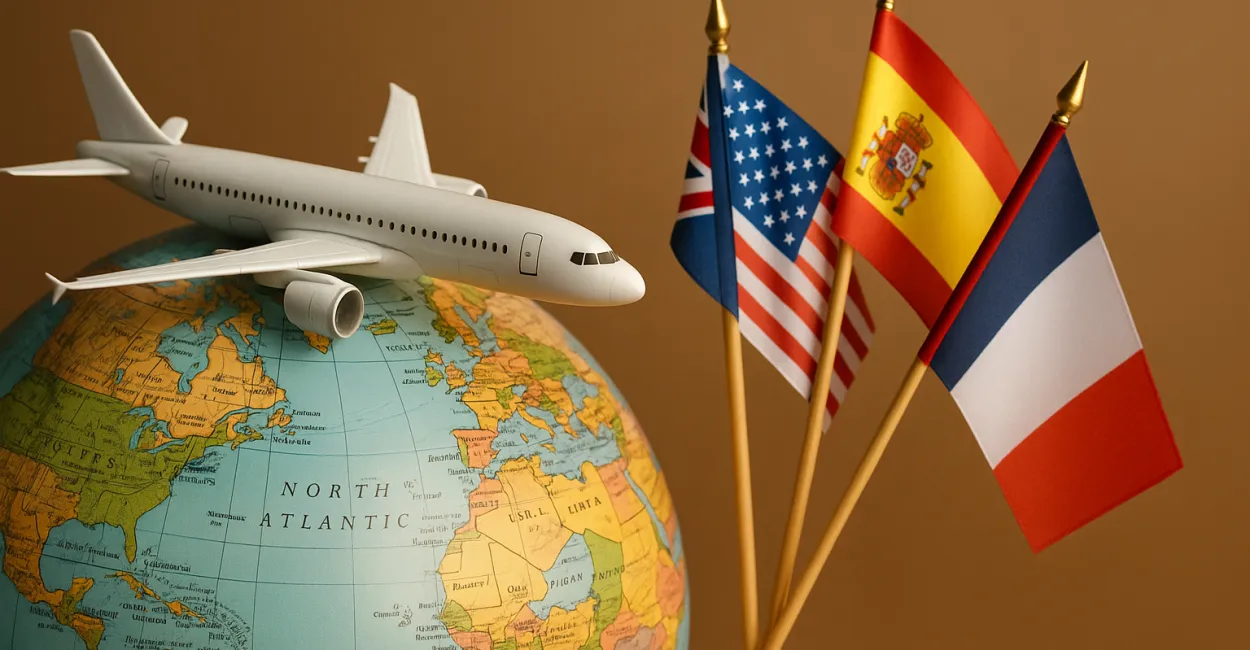
Knowing the languages used in international trade is essential for professionals who want to stand out in the global market. Whether you’re negotiating, signing contracts, or expanding a business, communicating effectively in different languages opens the door to countless opportunities. Do you know which languages are most valued in this field and how to learn them efficiently?
In this comprehensive article, we’ll explore the essential languages for international trade, share effective learning techniques, and show you how to improve your fluency for successful international negotiations. Get ready to transform your career with strategic language skills.

Top Languages for International Trade and Why They Matter
English: The Universal Language of International Trade
English is undoubtedly the most important language for international trade professionals. It is the standard language for negotiations, contracts, and business communication, making fluency essential. Global companies use English to facilitate conversations among partners from different countries, so it plays a key role in day-to-day business.
Beyond communication, English gives you access to a wealth of information, including trade agreements, international laws, and specialized publications. Learning English is therefore an essential strategy for expanding your opportunities and gaining a better understanding of the global market.
Professionals who speak English fluently stand out in the hiring process and can work in more competitive markets, increasing their professional value.
Spanish: The Second Most Valued Language in International Trade
With more than 20 countries in Latin America listing Spanish as an official language, it is essential for international trade focused on the region. Spanish makes it easier to communicate with emerging markets and established economies such as Mexico, Chile, and Argentina.
Spanish is also relatively accessible to Portuguese speakers, making it faster and easier to learn. Knowing Spanish can open doors to bilateral business and strategic partnerships across the Americas.
Spanish is also useful for understanding business documents, regulations, and cultural practices that influence negotiations in Latin America.
Mandarin: The Language of the World’s Largest Market
As China has rapidly grown into an economic powerhouse, Mandarin has become a crucial language for international trade. Knowing Mandarin lets you build direct business relationships with Chinese companies, avoid intermediaries, and build trust during negotiations.
Mandarin also opens the door to exploring the Asian market, which has significant consumer and production potential. Although it can be challenging to learn, companies involved in importing and exporting highly value this language.
Professionals who speak Mandarin have a competitive edge, especially in industries such as technology, manufacturing, and consumer goods.
- English: the global standard
- Spanish: a key to Latin America
- Mandarin: access to the Asian market
- French: important in Africa and Europe
- German: a focus on technology and engineering
Other Languages for International Trade and Where They’re Used
French: Important in African and European Markets
French is an official language in several African countries and is widely used in the European Union. For businesses operating in these regions, knowing French can make all the difference. The language is also valued in industries such as diplomacy, logistics, and energy.
Learning French helps you expand your professional network and understand the cultural nuances that influence business negotiations in these regions.
French-speaking professionals can access opportunities at multinational companies and international organizations.
German: A Focus on Technology and Engineering in International Trade
Germany is one of the world’s largest economies and a leader in technology and engineering. German is therefore a strategic language for international trade in these fields. Neighboring countries also use German as an official language, extending its reach.
Knowing German makes it easier to connect with high-tech suppliers and customers, and gives you access to market research and specialized publications.
German proficiency is an advantage in industrial and scientific fields, and is valued by companies focused on innovation and quality.
Portuguese: Valuable in Portuguese-Speaking Markets
Although Portuguese is the native language of many Brazilian professionals, it’s worth remembering that Portugal, Angola, Mozambique, and other Portuguese-speaking countries are also important trading partners. Understanding regional variations of Portuguese and the cultures of these countries is essential for expanding business.
In addition, knowing local official languages alongside Portuguese strengthens business relationships and expands opportunities in international trade.
Investing in Portuguese for international business can give you a competitive edge in both emerging and established markets.
How to Learn Languages for International Trade Effectively

Cultural and Language Immersion
One of the most effective ways to learn languages for international trade is through cultural immersion. Exchange programs, business trips, and international events let you practice in real-life situations and accelerate your learning.
Immersion also helps you understand idioms, customs, and protocols that influence global negotiations.
Being surrounded by the language also builds confidence and fluency.
Specialized Online and In-Person Courses
Today, there are language courses focused on international trade that cover technical vocabulary, negotiations, and business communication. They’re offered both in person and online, giving students flexibility.
Specialized courses help you learn industry-specific terms and practice situations you’ll encounter in day-to-day international business.
Many courses also offer recognized certifications that strengthen your résumé and demonstrate your proficiency.
Consistent Practice with Digital Tools
Apps, conversation platforms, and podcasts are valuable resources for anyone looking to learn languages for international trade. They let you practice anytime, anywhere, making learning more dynamic and accessible.
Using these tools every day helps reinforce what you learn and exposes you to different accents and communication styles.
Professionals who make these practices part of their routine can improve quickly and keep their language skills sharp.
Strategies for Mastering Technical Vocabulary for International Trade
Study Specialized Glossaries
To work in international trade, you need to know the technical vocabulary related to contracts, logistics, finance, and regulations. Specialized glossaries can help you learn essential terms and avoid mistakes in negotiations.
You can find these resources in books, on official websites, and in specialized courses. They offer reliable, up-to-date information.
Regularly studying glossaries builds confidence when handling documents and technical discussions.
Practice with Negotiation Simulations
Taking part in in-person or virtual international negotiation simulations is an effective way to put technical vocabulary into practice. These exercises let you try out realistic scenarios, develop your arguments, and understand the nuances of the language.
Feedback during simulations also helps you correct mistakes and improve your communication.
This approach prepares you for real-world challenges in the global market.
Read Documents and Contracts in a Foreign Language
Another way to master technical vocabulary is to read contracts, trade agreements, and specialized articles in other languages regularly. This practice expands your terminology and familiarizes you with common formats and structures.
Critical reading also helps you identify key points and avoid misunderstandings.
Over time, this habit helps you communicate more clearly and confidently.
Comparing Languages for International Trade: Benefits and Challenges
| Language | Benefits | Challenges |
|---|---|---|
| English | Universal, provides access to global information, standard in business | Highly competitive, requires advanced fluency |
| Spanish | Accessible to Portuguese speakers, important in Latin America | Regional variations, less widely used outside Latin America |
| Mandarin | Access to the world’s largest market, valued in technology | Complexity, cultural differences, time required to learn |
| French | Useful in Africa and Europe, valued in diplomacy | Fewer speakers worldwide, less common in Asia and the Americas |
| German | Important in technology and engineering, supported by a strong economy | Complex grammar, limited use outside Europe |
Resources and Tools for Learning Languages for International Trade
Specialized Online Learning Platforms
Sites such as Duolingo, Babbel, and Coursera offer courses focused on languages for international trade, including modules on technical vocabulary. These platforms offer flexible learning and progress tracking.
Many courses also include recognized certifications that add value to your résumé.
Using these tools makes learning more accessible and effective.
Communities and Forums for Multilingual Professionals
Joining LinkedIn or Facebook groups, or participating in specialized forums, can help you practice with professionals in the field. These exchanges let you share experiences, get answers to questions, and expand your network.
These communities also share information about free and paid events and learning opportunities.
Participating in groups boosts motivation and gives you the chance to use the language in a professional context.
Language Consulting and Mentoring
Hiring consultants or mentors who specialize in languages for international trade can accelerate your learning. These professionals provide personalized guidance tailored to the specific needs of the market.
Mentoring can also help you overcome challenges and use the language strategically in negotiations.
This approach is recommended for anyone looking for fast, effective results.
Why Cultural Competence Matters When Using Languages for International Trade
Understanding Cultural Protocols and Etiquette
Beyond language skills, understanding cultural protocols is essential for successful international negotiations. Knowing how to greet people, negotiate, and present proposals in ways that reflect local customs prevents misunderstandings and builds trust.
Learning about culture complements language skills and improves interpersonal communication.
Professionals who respect local cultures achieve better results and build lasting partnerships.
Adapting Your Message to the Region
Even within the same language, regional variations can affect how a message is understood. Adapting your message to a specific audience by accounting for local expressions and levels of formality is a valuable skill.
This adaptation shows cultural awareness and professionalism, making business agreements easier to reach.
Learning about regional differences improves communication.
Conflict Management and Nonverbal Communication
Recognizing nonverbal cues and handling conflicts diplomatically are essential skills in international trade. Cultural understanding helps you interpret gestures, expressions, and tone, preventing miscommunication.
Effective communication also helps resolve disputes respectfully and clearly.
This skill strengthens relationships and supports successful negotiations.
Tips for Maintaining Fluency in Languages for International Trade
Practice Regularly and Consistently
Maintaining fluency takes daily effort. Setting aside time to practice reading, writing, speaking, and listening helps prevent you from losing skills and helps you improve.
Using the language in your professional and personal life makes learning continuous and natural.
Disciplined professionals stay current and competitive in the market.
Attend International Events
International events, trade shows, and conferences are excellent opportunities to practice languages and grow your network. Taking part encourages you to use the language in real situations and learn industry-specific terms.
Interacting with professionals from different cultures also enriches your knowledge and experience.
These experiences contribute to your personal and professional growth.
Consume Authentic Content
Watching videos, reading news, and listening to podcasts in the language you’re learning keeps you engaged and builds your vocabulary. Authentic content helps you understand accents, slang, and language trends.
This practice also makes learning more enjoyable and relevant to international trade.
Professionals who engage with the language every day communicate more naturally.
How Language Certifications for International Trade Can Boost Your Career
International Recognition in the Job Market
Official certifications such as TOEFL, DELE, and HSK demonstrate proficiency in languages used for international trade. These certificates are recognized worldwide and valued by employers.
Certification boosts your credibility and demonstrates your commitment to professional development.
It can make all the difference when applying for jobs or promotions.
Higher Pay and Global Opportunities
Certified professionals often earn higher salaries and have access to international job openings. Certification can open doors to roles at multinational companies and on global projects, increasing your career potential.
It also demonstrates that you can work in multilingual, multicultural environments.
Earning certifications is a smart strategy for anyone who wants to advance in international trade.
Exam Preparation and Ongoing Improvement
Earning a certificate requires focused preparation in specific aspects of the language and international trade. Studying for exams helps you improve your technical knowledge and fluency.
The certification process also encourages continuous improvement and a deeper command of the language.
This preparation adds value to your résumé and boosts your professional performance.
Common Mistakes When Learning Languages for International Trade and How to Avoid Them
Focusing Only on Grammar and Neglecting Speaking Practice
Many students focus on grammar and neglect conversation, making it harder to communicate in real situations. Speaking practice is essential for developing fluency and confidence.
Balancing theory with speaking exercises leads to better performance in negotiations.
Making a point of speaking with native speakers and colleagues is a good way to avoid this mistake.
Ignoring Cultural Differences in Communication
Ignoring cultural differences can cause misunderstandings and harm business relationships. Learning the language without learning about the culture limits how effectively you can communicate.
Learning about the culture complements language study and strengthens relationships.
Seeking reliable sources and hands-on experience can help you avoid this problem.
Giving Up When You Encounter Early Challenges
Learning languages for international trade takes time and commitment. Early frustration can lead you to quit too soon and stall your progress.
Staying motivated, setting realistic goals, and celebrating small wins are essential for success.
Support from groups and qualified teachers can make it easier to overcome challenges.
The Future of Languages for International Trade: Trends and Technology
Using Artificial Intelligence to Teach Languages
Artificial intelligence (AI) is transforming language learning with personalized lessons and instant feedback. AI-powered platforms adapt content to each student’s pace and needs.
This technology makes learning more efficient and accessible, especially for technical international trade terms.
Professionals who use AI have an advantage in building language skills and adapting to the market.
Machine Translation and Real-Time Support
Machine translation tools and real-time support apps can help with communication during negotiations and meetings. While they can’t replace language proficiency, they make it easier to understand information quickly.
Advances in these technologies complement language skills and improve professional effectiveness.
Knowing how to use these tools is becoming increasingly important for today’s professionals.
Growth of Hybrid Learning and Gamification
Hybrid learning methods and gamification make studying more interactive and engaging. Combining in-person and online classes with educational games improves retention of complex material.
These approaches are especially useful for learning technical languages and international negotiation skills.
Adopting these trends helps you keep up with market needs and student preferences.
Why Languages for International Trade Matter for Building a Global Career
Expanding Your Global Network
Knowing the languages used in international trade lets you connect with professionals and companies around the world. A strong network is vital for finding opportunities and strategic partners.
Attending international events and using multilingual platforms can help you build that network.
Professionals with global networks have access to exclusive projects and information.
Developing Cross-Cultural Skills
Along with language skills, interacting with different cultures develops interpersonal skills and cultural awareness. These abilities are valued in global workplaces and make it easier to adapt to new challenges.
This versatility is a significant competitive advantage.
Professionals with strong cultural awareness can successfully lead international teams and projects.
Career Opportunities at Multinational Companies
Language skills for international trade are a requirement for strategic roles at multinational companies. These organizations seek professionals who can work across different markets and cultures.
With these skills, you can take on leadership roles, work in more regions, and increase your professional impact.
Investing in languages means investing in a promising global career.
How to Fit Language Learning for International Trade into Your Workday
Set Clear, Realistic Goals
Setting specific goals, such as learning a certain number of technical terms each week or practicing conversation daily, helps you stay focused and measure your progress.
Realistic goals help prevent frustration and keep you motivated.
Making study part of your work routine helps you stay consistent.
Use the Language at Work Every Day
Incorporating the language into daily tasks, such as reading emails, attending meetings, or preparing reports, reinforces practical learning.
Consistent exposure helps you retain what you learn and build fluency.
Taking on language challenges at work accelerates your professional development.
Seek Feedback and Evaluate Yourself
Asking colleagues, teachers, or mentors for feedback helps you identify your strengths and areas for improvement. Regular self-assessments can also help you adjust your study plan.
This proactive approach supports continuous growth and excellence.
Professionals who assess themselves regularly make faster, higher-quality progress.
Conclusion
Knowing the languages used in international trade is essential for anyone looking to thrive in the global market. English, Spanish, Mandarin, French, and German are the most valued languages, each with its own strategic uses and challenges. Learning these languages through immersion, specialized courses, and consistent practice expands career opportunities and makes international negotiations easier.
Beyond language itself, understanding culture and using today’s technology can improve communication and strengthen your global network. To advance your career, make language study part of your work routine, pursue recognized certifications, and avoid common learning mistakes. Start improving your language skills today and shape your future in international trade!
Enjoyed this article? Share your experiences with languages for international trade in the comments below, and pass it along to colleagues looking to grow in the global market!
Frequently Asked Questions (FAQ)
Which languages are most important for people working in international trade?
The most important languages are English, Spanish, Mandarin, French, and German because they are widely used in negotiations and strategic markets.
How can I learn languages for international trade effectively?
Combine cultural immersion, specialized courses, consistent practice, and digital tools to speed up your learning.
Why is it important to understand the culture as well as the language?
Effective communication depends on respecting cultural protocols, which helps prevent misunderstandings and strengthen business relationships.
Can language certifications help with a career in international trade?
Yes. Certifications demonstrate proficiency, increase credibility, and open doors to international opportunities.
What are the biggest challenges of learning Mandarin for international trade?
The main challenges are the complexity of the writing system, tonal pronunciation, and cultural differences, all of which require dedication and consistent practice.
Artigos Relacionados
 Bilingual Education: Is It Worth Investing in International Education?
 Complete Guide to Scholarships for Private Colleges in 2025
 Online Learning Platforms That Can Transform Your Studies
 Distance Learning: 12 Essential Tips to Get the Most Out of Online Education
 Educational Gamification: Innovative Strategies to Boost Student Engagement
 The Colleges of the Future: Preparing Students for Careers in an AI-Driven World
