

A drop in blood pressure noticed during a measurement can change the entire care team’s response. Nursing assistants provide basic care, observe patients, and perform activities within the scope of their training, under the guidance and supervision of a nurse. This guide explains their duties, legal limits, and the steps to enter the profession.
Nursing assistants work in a variety of health care settings, where they must pay close attention both to procedures and to what patients communicate. Before applying for a job, it’s important to understand the difference between an assistant and a nursing technician, verify that a program is properly accredited, and learn the rules for professional registration.

What Does a Nursing Assistant Do Day to Day?
Nursing assistants provide basic care to patients and help carry out routine care tasks within their qualifications and under the guidance and supervision of a nurse. Their day-to-day work may include helping patients with hygiene and comfort, checking vital signs, assisting with meals and mobility, preparing supplies, and reporting observed changes to the care team.
Vital signs they commonly check include temperature, pulse, respiratory rate, and blood pressure. The job involves more than recording a number: assistants must use the proper technique, recognize readings outside the expected range, and report them to the nurse. Clinical interpretation and decisions about care are the responsibility of qualified professionals.
- Assist with hygiene, changing clothes, and making the bed.
- Help with meals and mobility, based on the patient’s condition and the instructions provided.
- Prepare supplies and help keep the unit organized.
- Document care and report relevant observations to the team.
One detail that helps prevent errors: blood pressure should be measured using a cuff that fits the patient’s arm, with the patient positioned according to the facility’s protocol. If the reading doesn’t match the patient’s condition or is accompanied by discomfort, it’s safer to repeat the measurement or report it as directed by local guidelines than to ignore it or act independently.

What Are the Legal Limits and Responsibilities of the Professional?
Nursing assistants must work within the limits of their training, applicable professional laws, facility policies, and the nurse’s supervision. The name of a procedure alone does not mean they can perform it in every situation. Law No. 7,498/1986, Brazil’s law regulating the practice of nursing, sets rules for the profession, and the Federal Nursing Council (Conselho Federal de Enfermagem, or Cofen) publishes guidance and professional standards.
Can a Nursing Assistant Administer Medication?
In certain circumstances, nursing assistants may participate in administering medication, provided the task is within their scope of practice, there is an applicable prescription and guidance, and the procedure takes place under a nurse’s supervision. This authorization is not unlimited: the route of administration, facility protocol, the professional’s training, and current regulations must all be considered. If in doubt, the assistant should stop and consult the person in charge rather than improvise.
Assistants are also responsible for reporting observed changes, following biosafety measures, and protecting patient privacy. If they are unsure whether a specific task is within their scope, they should consult the law, their regional nursing council, and the facility’s policies. The division of duties may vary by setting, but this does not remove the profession’s legal limits.
What’s the Difference Between a Nursing Assistant and a Nursing Technician?

The difference comes down to training and scope of practice: a technical program prepares students for a broader range of mid-level tasks, while nursing assistant training focuses on less complex care, always subject to applicable laws and supervision requirements.
Aspect Nursing Assistant Nursing Technician Training Specific vocational training, subject to current education regulations. Mid-level technical program in nursing. Scope of practice Basic care and tasks within the assistant’s qualifications, under guidance and supervision. Technical-level tasks within the professional’s qualifications, under a nurse’s guidance and supervision. Registration Professional registration is required to practice. Professional registration is required to practice.
The specific limits depend on current regulations, the professional’s registered qualifications, and the conditions at the facility. The table is a general guide, not authorization to perform any particular procedure. Nursing assistants who want to expand their opportunities should check with their regional council to find out which education and registration pathways apply to them.
Where Can Nursing Assistants Work Besides Hospitals?
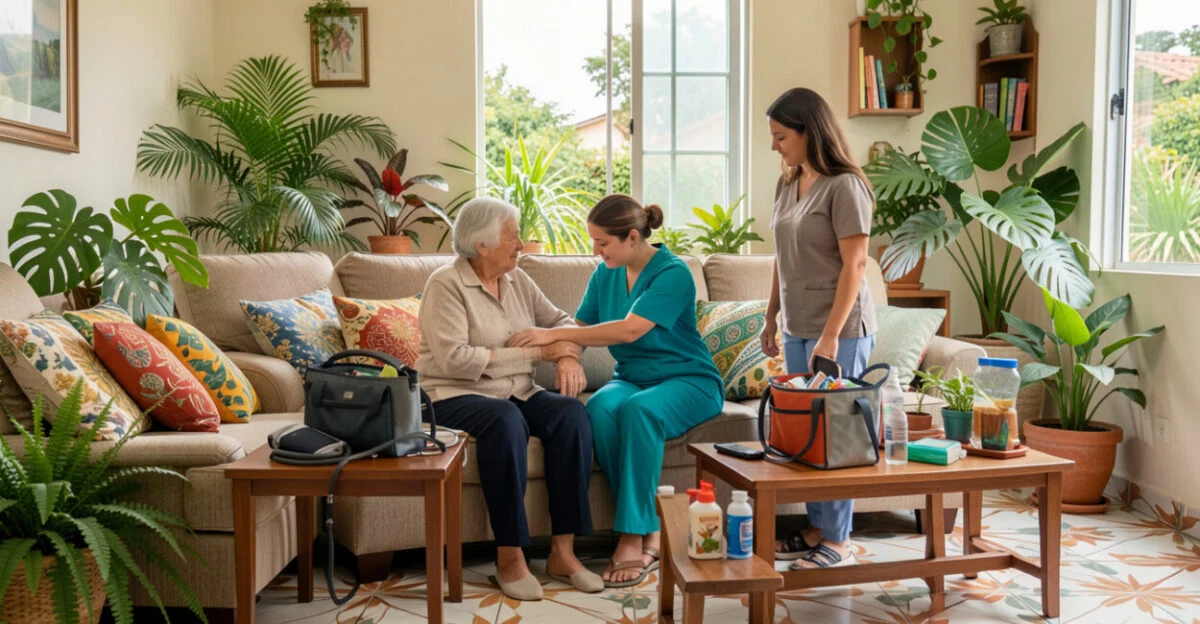
Nursing assistants may work in hospitals, primary care clinics, medical practices, long-term care facilities, and home health services, as long as the position and duties match their qualifications. The day-to-day work varies by setting: at a primary care clinic, assistants may help with procedures and patient flow; at a long-term care facility, daily care and monitoring residents are important parts of the job.
Read also: Nurse: A Complete Guide to Building a Successful Nursing Career
In home health care, the work takes place in the patient’s home but follows a care plan and instructions from the responsible team. Family members may participate in the daily routine, but they do not replace professional supervision. The resources available also vary, so workers should confirm how to document incidents and whom to notify about a change in the patient’s condition.
Hospitals and outpatient services are part of the health care system, but job openings and responsibilities depend on each organization. Seeing the job title in a posting does not mean that every listed task is within a nursing assistant’s scope of practice.
Read also: Why Pastel Colors Are Back in Zen-Inspired Decor

What Skills Help Prevent Care Errors?
Careful observation, clear communication, organization, and respect for biosafety practices all contribute to safer care. When reporting information, say what happened, when you noticed it, and what measurement you recorded. Don’t turn an impression into a diagnosis. Clear communication reduces the chance that important information will get lost between shifts.
Imagine that a patient becomes sleepier than usual during care and reports feeling unwell in a way that is unusual for them. The assistant documents the observation according to protocol and alerts the nurse in charge without waiting for the next shift change. The care team assesses the patient and decides what to do next. The assistant does not try to diagnose the patient or change the care plan independently.
A common mistake is relying on memory to report an incident. This often happens because of time pressure or interruptions; documenting the event right away, in accordance with facility rules, helps prevent omissions. It’s also important to clean your hands at the recommended times, use the appropriate protective equipment, and dispose of supplies according to protocol. For health and safety guidance, visit the Anvisa website (Brazil’s National Health Surveillance Agency).
What Training and Registration Are Required?
To practice, you must complete training that matches your professional qualification and register with the Regional Nursing Council (Conselho Regional de Enfermagem, or Coren) for your jurisdiction. Before paying for a nursing assistant course, check with the relevant education authorities to confirm that the school and program are in good standing and that the training qualifies you to apply for the corresponding registration.
The course’s marketing name is not enough. Ask what certificate you’ll receive, how many hours the program requires, how supervised clinical practice works, and what registration requirements apply. Be wary of programs that promise immediate professional qualifications through fully remote classes without proof that they meet education and professional standards.
Additional courses in biosafety, first aid, and care for specific groups are available, but they do not replace required professional training or automatically expand your legal scope of practice. If you’re looking for free health care courses or options such as a free online nursing course with a certificate, check who offers the course, whether it includes a certificate, and what the certificate actually verifies. Availability, cost, and recognition vary; don’t assume that a nondegree course qualifies you to work as a nursing professional. General public health information is available from Brazil’s Ministry of Health.
How to Search for Jobs and Compare Pay
To find nursing assistant jobs, search job boards, hospital websites, clinic networks, and public-sector hiring announcements by job title and location. If you’re looking for nursing assistant jobs in São Paulo, filter by city or town, type of facility, and shift schedule as well: results for São Paulo may include the city, its metro area, and other parts of the state.
Pay varies by region, employer, hours, experience, collective bargaining agreement, and benefits. To compare nursing assistant pay or nursing technician pay, look at recent postings in the same city for similar hours, and check whether the amount is gross, monthly pay and includes shift differentials or other extra compensation. The IBGE (Brazil’s national statistics agency) provides data on employment and earnings, but it does not replace checking collective bargaining agreements and job announcements specific to the profession.
Before applying, check whether the job requires active registration, experience in a particular department, or availability for specific shifts. Read the duties carefully: if a posting asks for tasks outside your qualifications, clarify the issue with the employer before accepting. If you’re still choosing a program, a good first step is to verify that it’s recognized and check the requirements of your local Coren.
Question Short answer What does a nursing assistant do? Provides basic care and supports the team within their qualifications. Which vital signs do they check? Generally, temperature, pulse, respiratory rate, and blood pressure. Can they administer medication? In specified circumstances, with an appropriate prescription, guidance, and supervision. Is registration required? Yes. Professional practice requires registration with the Coren. Where can they work? In various settings, including hospitals, clinics, primary care facilities, and patients’ homes.
Before enrolling, confirm that the program is recognized by the education authorities and ask your regional Coren which documents you’ll need to register. Then tailor your job search to the city, schedule, and type of facility that match your experience.
Frequently Asked Questions
Can You Work as a Nursing Assistant While in School?
An internship or supervised clinical practice may be part of your training, depending on the program’s rules. This is not the same as practicing the profession before meeting the qualification and registration requirements.
Does a Nondegree Nursing Course Qualify You to Work as an Assistant?
Not on its own. Nondegree courses can supplement your knowledge, but they don’t replace the required professional training or registration with the council.
What Should You Check in a Job Posting Before Sending Your Resume?
Check the registration requirements, location, hours, shift schedule, duties, and benefits. Only compare postings that match your qualifications, and confirm that the advertised pay corresponds to the stated hours.
Can You Continue Your Education After Training as a Nursing Assistant?
Yes. You can pursue additional training or consider a technical program, subject to the school’s admission and transfer-credit requirements. You should also contact the Coren to find out how the new qualification affects your professional registration.
Artigos Relacionados
 Paid Traffic Manager: A Complete Guide to This Essential Digital Marketing Career
 Pulmonologist: A Complete Guide to the Profession and Career
 Systems Analyst: A Complete Guide to the Modern Profession
 Successful YouTuber: A Complete Guide to Building Your Career on the Platform
 Digital Influencer: The Complete Guide to Building a Successful Online Career
 Lawyer: A Complete Guide to Requirements, Practice Areas, and Career Tips
