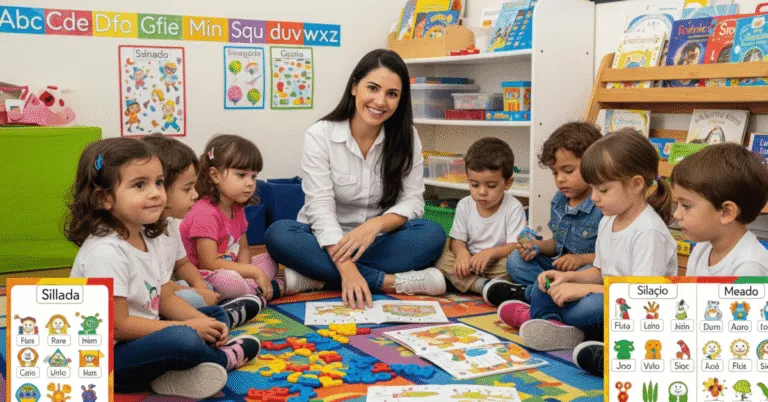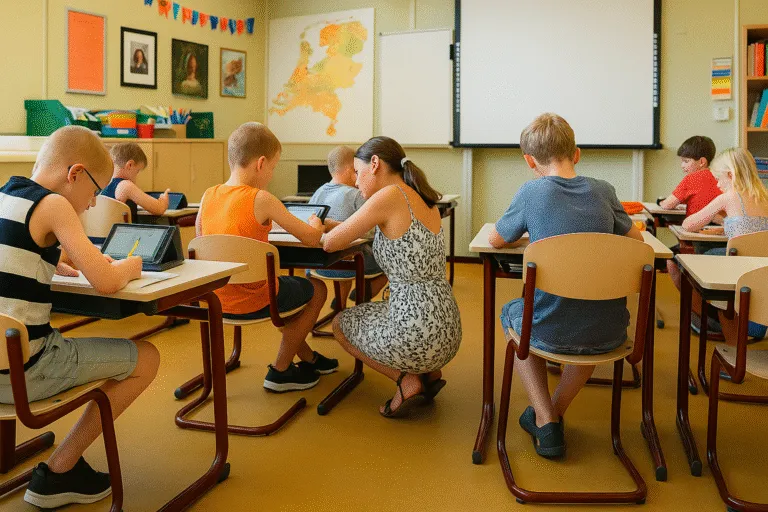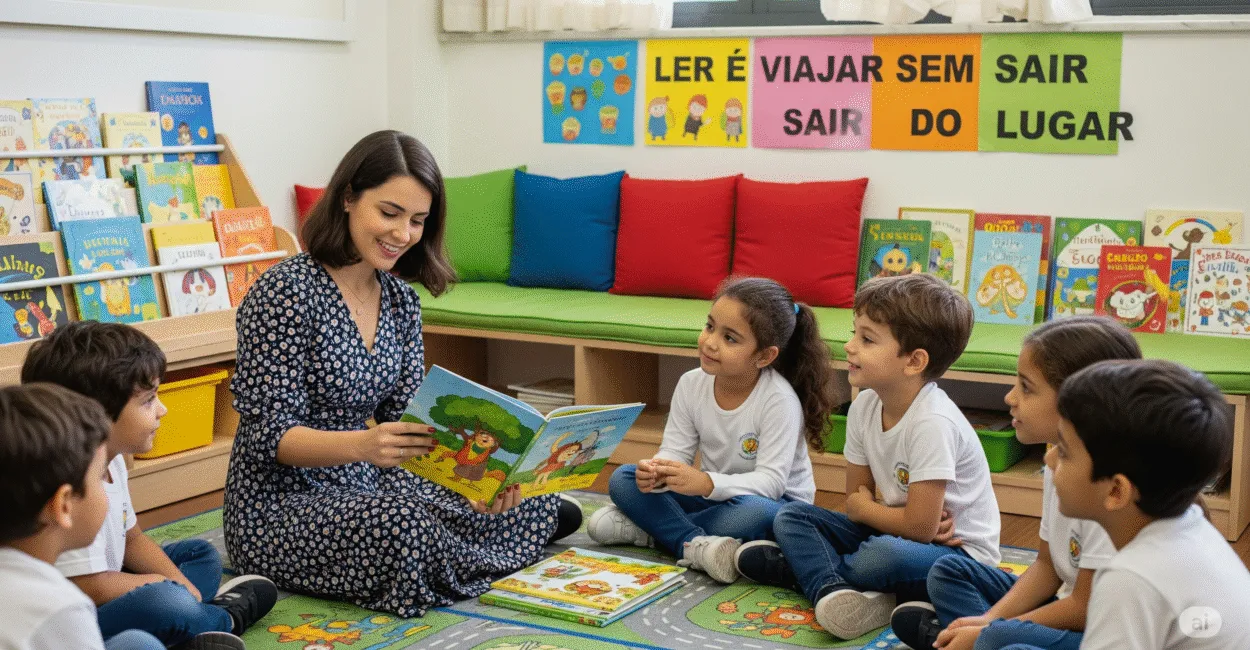
Interest in reading doesn’t happen by chance: it often develops when a child finds books that fit their age, routine, and curiosity. In the early grades, a love of reading depends less on being told to read and more on creating frequent, brief, enjoyable experiences with real texts.
In practice, what works is combining access, guidance, and repetition. When school and family treat reading as something to share—not just an assignment—the chances that a child will move from decoding words to enjoying reading increase considerably.

Here’s what supports this process, which strategies really help, and where the most common mistakes tend to arise.
The Essentials
- A love of reading develops when children associate books, voices, images, and independence with a positive experience.
- In the early grades, shared reading and the freedom to choose books tend to work better than long lists of required reading.
- A school library, a reading nook, and a short daily routine are more effective than occasional one-off activities.
- Texts suited to a child’s fluency level prevent frustration; overly difficult texts can undermine motivation, even in curious readers.
- Families and schools play different roles: one fosters an emotional connection, while the other provides structure, a range of reading materials, and support.
How a Love of Reading Develops in the Early Grades
Technical Definition and Practical Meaning
From an educational perspective, a love of reading is the emotional and cognitive inclination that leads a child to seek out texts out of personal interest, not just because of a school requirement. Put simply, a child reads because they want to continue the experience, not just because they have to complete an assignment.
This process rests on three pillars: familiarity with books, understanding the text, and a sense of competence. When a student understands what they read and realizes they can make progress, they’re more likely to keep reading.
That’s why enjoyable reading often starts with short books, vivid illustrations, predictable stories, and accessible language.
Learning to Read Without Anxiety
In the early grades, children are still learning to read. If adults focus only on reading accuracy, children may start associating books with mistakes, comparisons, and embarrassment.
The result is predictable: they read less, take fewer chances, and disengage from the text.
A love of reading grows when children can understand what they read before being judged on speed or perfection.
This principle is reflected in guidance from organizations such as UNESCO, which recognizes access to reading as part of a broad education, and in materials from Brazil’s Ministry of Education, which emphasize the importance of instructional guidance in the early grades.
What Makes a Child Want to Read More
Curiosity, Relatability, and Choice
Children read more when they find three things at once: a subject that interests them, characters they can relate to, and some freedom to choose. This applies to short stories, nursery rhymes, comics, poems, and nonfiction books. The problem isn’t the genre; it’s insisting that everyone read the same kind of material.
Anyone who works with early readers knows that a class of 20 students rarely responds to the same thing. One group is drawn to animals, another to humor, another to adventure, and another to facts about the human body. A school library needs to reflect that diversity. Otherwise, reading becomes a narrow hallway instead of an open door.
What Gets in the Way of a Connection with Reading
- Using reading only as punishment or an obligation.
- Books that are far beyond a child’s current fluency level.
- Overcorrecting during read-alouds.
- Not allowing free time to explore books independently.
This is where a one-size-fits-all approach falls short: not every child will learn to love reading in the same way. Some are drawn in by pictures, others by oral storytelling, and others by very specific interests. The mistake is trying to make everyone fall in love with reading the same way.
Classroom Strategies That Work

Purposeful Read-Alouds
Reading aloud isn’t just a teaching gimmick. When a teacher reads with rhythm, pauses, and expression, they model fluency, build vocabulary, and show how punctuation contributes to meaning. This is especially important for children who are still struggling to decode words.
After reading, it’s worth talking about a scene, a new word, or a character’s decision. There’s no need to turn the moment into a quiz. Thoughtful guidance is enough to add depth without taking away the pleasure.
Reading Circles, Book Borrowing, and Independence
The three things that tend to help most are simple: a weekly reading circle, a book-lending system, and time set aside for silent or shared reading. Repetition builds a habit. Here, that means a positive, predictable routine.
Strategy
What it does
When it works best
Read-alouds
Models fluency and expression
When the text is short and engaging
Book borrowing
Builds a connection beyond school
When children choose their own books
Discussion circle
Builds comprehension and background knowledge
When the discussion is brief and focused
In the early stages of reading, consistency matters more than intensity: ten minutes a day tends to have more impact than an occasional hour-long marathon.
Data from Cetic.br, a Brazilian research center focused on internet and technology use, helps show how access to and use of technology vary across family settings, affecting the availability of books, screens, and reading routines at home.
The Family’s Role Without Turning Home into an Extension of School
A Reading-Friendly Home Isn’t a Pressured Home
At home, children need to see books as a natural part of everyday life. A book might be on the table, in a backpack, on the couch, or next to the bed. What doesn’t help is treating reading as a daily demand, as if the family were giving an informal test all the time.
Read also: Reading for Children with Dyslexia: Strategies for Home
In practice, a simple routine makes a difference: an adult reading aloud, 15 minutes of reading before bed, visits to the library, and brief conversations about stories. That’s worth much more than buying a stack of books and leaving them forgotten on a shelf.
A Brief Story About a Routine That Changed Things
I saw a second-grade class keep a shared journal of the books they read. Each child wrote down a title, a favorite character, and a new word. At first, only three or four children took part enthusiastically.
After a few weeks, the children started sharing their enthusiasm with one another. One student took home a book about dinosaurs because a classmate mentioned an illustration. Another asked for a poem because they wanted to “read like the teacher.” The progress didn’t come from more pressure; it came from sharing interests.
How to Choose the Right Texts for Each Stage
Short Texts, Repetition, and Progression
For the early grades, it’s worth prioritizing books with predictable structures, short sentences, and visual support. That doesn’t mean underestimating children. It means respecting the stage of reading they’re at.
As their confidence grows, the complexity can increase gradually: fewer pictures and more text; more description and less repetition; stories with more developed characters. Progression is part of the process, not an optional step.
Genres That Tend to Engage Young Readers
- Short stories and brief narratives.
- Comics and comic strips.
- Poems with rhythm and musicality.
- Informational books about animals, the human body, and space.
- Retellings of folk tales and classic children’s literature.
This variety matters because motivation changes over time, too. A student may reject a short story today and devour a book of fun facts tomorrow. Teaching needs to adapt to those shifts without labeling a child as “someone who doesn’t like to read.”
Common Mistakes That Turn Children Away from Books
Too Much Control
If every reading session ends with a worksheet, a summary, or a list of questions, books become a tool for constant assessment. That leaves less room for enjoyment. Children learn to look for the right answer, not to experience the text.
Underestimating the Need for Guidance
Some people believe it’s enough to hand children books. It isn’t. Adult guidance helps bring children and texts together. Without it, many students may pick up a book but struggle to stay focused or figure out where to start.
Ignoring Social Context
Not all families have equal access to books, free time, or experience with literature. Schools need to help bridge that gap with an active library, rotating book collections, and dedicated reading time. This kind of inequality is reflected in reports from IBGE, Brazil’s national statistics agency, which help measure differences in access and daily routines across the country.
There’s a clear limitation here: no strategy works the same way in every classroom. Classes with high energy, significant gaps in reading skills, or limited access to print materials require adjustments. The underlying principle stays the same, but the way it’s applied can vary considerably.
How to Tell Whether a Strategy Is Working
Signs of Meaningful Progress
The most reliable indicator isn’t complete silence or a polished performance in front of the class. What matters are other signs: children choose books on their own, return to a text they’ve already read, talk about characters, and ask for new books more often.
It’s also worth noticing whether children can read for longer without losing focus, build their vocabulary, and begin to make simple inferences. These are signs that reading has become more than a mechanical exercise.
What to Look for in the Daily Routine
- How long a child chooses to spend with a book.
- How often they choose a book on their own.
- How much they participate in reading circles and text discussions.
- Whether they’re less reluctant when an activity involves reading.
If none of these signs appear after a reasonable amount of time, the issue may be the book collection, the guidance, or the level of difficulty. It doesn’t mean the child has failed. It means the process needs fine-tuning.
What to Do Now to Build a Reading Habit
The surest approach is to make reading a short, manageable daily experience. Choose a few books, set aside regular time, and watch how the child responds before increasing the difficulty. Those who try to move too fast often lose exactly what they wanted to build: a connection.
To make concrete progress, set up a simple routine for 30 days: read aloud three times a week, let the child choose books once a week, and have a brief conversation after reading. If the school or family can maintain this rhythm, a love of reading stops being an abstract goal and becomes an observable behavior.
Frequently Asked Questions
What’s the Best Age to Foster a Love of Reading?
The earlier children are introduced to books, the better. Even before they learn to read, they can listen to stories, handle books, and watch adults read. In the early grades, this effort gains momentum as reading becomes a more regular part of the school day.
Do Books with Lots of Pictures Help or Hurt?
They help, as long as they’re right for the child’s reading stage. Pictures support comprehension, help children anticipate what happens next, and build vocabulary. The problem isn’t illustration; it’s using only materials that don’t gradually challenge the reader.
Should I Correct My Child Every Time They Make a Reading Mistake?
No. Overcorrecting disrupts fluency and increases insecurity. It’s best to choose when to step in: errors that interfere with meaning deserve attention, but small stumbles can be addressed later, with less pressure.
Do Comics Count as Reading?
Absolutely. Comics develop inferencing, narrative sequencing, visual literacy, and meaningful engagement with written text. For many children, they’re the most natural gateway to a reading habit.
How Can I Tell Whether My Child Really Enjoys Reading?
They may ask for new books, talk about characters, return to favorite stories, and choose to read for longer. These signs matter more than simply finishing a school assignment. Enjoyment shows up in spontaneous behavior.
What Should I Do When My Child Says They Hate Reading?
First, ease up on the pressure. Then look for subjects, formats, and times when reading feels less like an obligation and more like a discovery. Often, children don’t dislike books themselves; they dislike the way reading has been presented to them.