
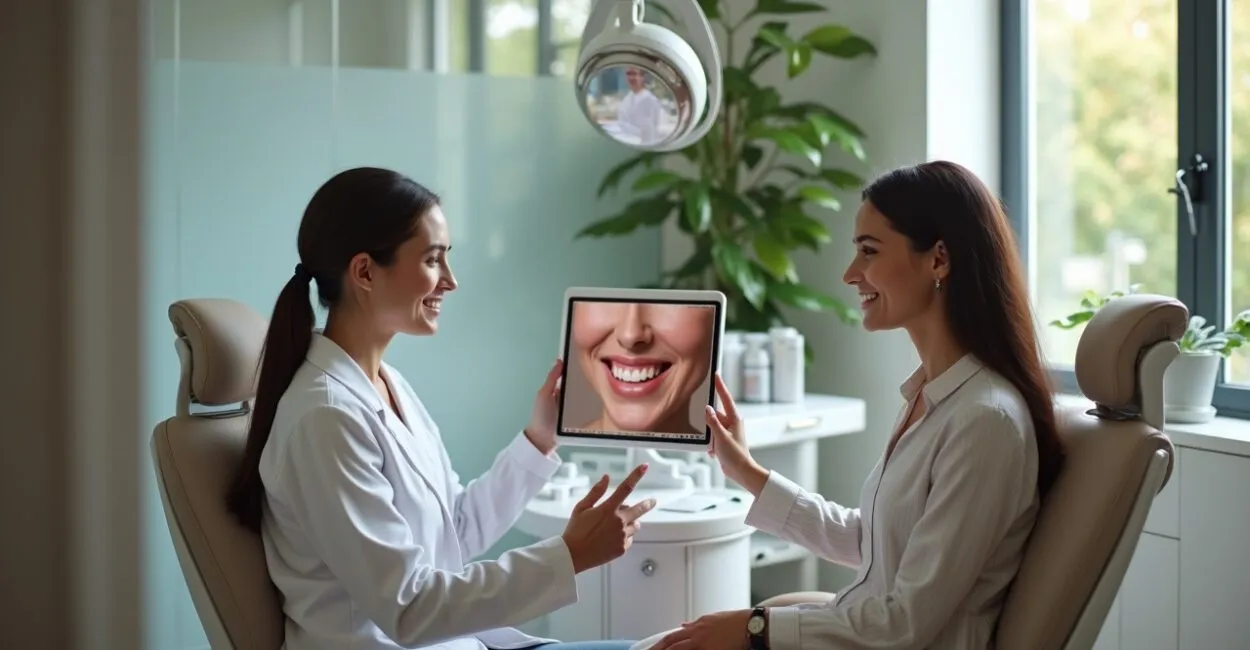
The difference between a “pretty” smile and a truly successful result comes down to diagnosis. In practice, how to work in dentistry cosmetics requires combining clinical assessment, esthetic and functional planning, and clear communication to recommend the right procedure for each case—without promising miracles or treating every patient as if they need veneers. Anyone entering this field needs to understand that cosmetic dentistry is not separate from the rest of dentistry: it relies on periodontics, occlusion, restorative dentistry, prosthodontics, and even clinical photography. In this guide, you’ll learn what these professionals do, which training can help, which procedures are part of cosmetic dentistry, and how to build a safe, thoughtful practice in the field.

The Essentials
- Cosmetic dentistry aims to improve the shape, color, proportions, and harmony of a smile without compromising function, periodontal health, or occlusion.
- To practice well, dentists need to master diagnosis, photography, digital planning, appropriate case selection, and predictable execution; marketing alone won’t sustain a career.
- The most popular procedures include teeth whitening, porcelain veneers, dental contact lenses, cosmetic contouring, and direct composite resin restorations.
- The market values professionals who explain limitations, document cases, and deliver results that suit the patient’s face, profile, and overall features.
- In 2025, cosmetic dentistry remains a promising field, but higher earnings go to professionals who combine technical skill, positioning, and clinical ethics.
How to Work in Cosmetic Dentistry and Practice Professionally
Working in cosmetic dentistry means applying the principles of dental esthetics to improve smiles predictably, safely, and without compromising function. This means assessing the teeth, gums, smile line, facial symmetry, tooth proportions, and the patient’s habits before choosing between teeth whitening, porcelain veneers, dental contact lenses, or restorations.
Professionals in this field don’t sell “perfect teeth”; they provide a viable treatment plan. They need to know when a concern is esthetic, when it’s functional, and when the two overlap.
That’s what separates a clinical approach from a sales-driven one.
What cosmetic dentistry involves in practice
Cosmetic dentistry includes procedures designed to enhance the smile, focusing on color, shape, visual alignment, and harmony with the face. Put simply, it’s the area of dentistry that improves the appearance of teeth without overlooking tissue health or the long-term success of treatment.
What a professional in this field does
Cosmetic dentists assess each case, determine the appropriate treatment, explain risks and limitations, perform or coordinate care, and oversee maintenance. In practice, this includes taking photographs, recording the midline, assessing prosthetic space, planning tooth reduction when needed, and preserving tooth structure whenever possible.
What separates an esthetically pleasing case from a truly successful one isn’t technique alone—it’s planning that respects function, biology, and the patient’s expectations.
The key point is this: esthetics without diagnosis is a gamble. And a bad bet in dentistry can be costly, because mistakes in treatment selection often become apparent later, when the patient is already unhappy and reversing the treatment is more difficult.
What You Need to Work in Cosmetic Dentistry
To practice cosmetic dentistry consistently, you first need a strong clinical foundation. Without a solid grasp of restorative dentistry, dental anatomy, occlusion, and periodontics, the risk of recommending overly aggressive treatments rises significantly.
Training that makes a difference
- A dental degree with solid clinical experience and exposure to digital dentistry.
- Cosmetic dentistry courses focused on planning, materials, and execution—not just “a beautiful finish.”
- Postgraduate training or a specialty program to deepen your skills in diagnosis, case selection, and more complex protocols.
- Ongoing education in photography, intraoral scanning, mock-ups, diagnostic wax-ups, and digital mock-ups.
Do you need postgraduate training to work in cosmetic dentistry? There’s no single rule for every procedure, but in practice, additional training carries significant weight when treating more complex cases safely. Patients can tell when a professional understands materials, biological limitations, and the planning process.
Skills the market actually demands
The most valued skills aren’t just manual. Communication, facial analysis, treatment presentation, predictability, and expectation management directly affect patient acceptance. A good case doesn’t start with a drill; it starts with a conversation.
Sources to consult
To follow best practices and maintain ethical standards, consider consulting guidance from organizations such as the Conselho Federal de Odontologia, Brazil’s Federal Council of Dentistry, technical resources from the American Dental Association, and educational materials from the National Institutes of Health. These organizations can help support clinically sound decisions rather than choices based solely on social media trends.
The most common mistake beginners make is thinking cosmetic dentistry is all about the “finishing touches.” In practice, it requires clinical decision-making before manual skill.
Popular Cosmetic Dentistry Procedures and When to Recommend Them

Cosmetic dentistry procedures vary according to the patient’s concerns, dental health, and desired degree of change. Choosing the right treatment helps avoid unnecessary tooth reduction, repeat work, and patient frustration.
Teeth whitening
Teeth whitening is often the first option when color is the main concern and there are no significant issues with shape or alignment. It works well on vital teeth and, in many cases, addresses esthetic concerns with minimal intervention. Not all discoloration responds the same way, and stains caused by fluorosis, tetracycline, or trauma may require different approaches.
Porcelain veneers and dental contact lenses
Porcelain veneers and dental contact lenses are options when the goal goes beyond color and includes changing tooth shape or proportions, closing gaps, or improving smile harmony. They generally differ in thickness, the amount of tooth reduction required, and their restorative approach, but the right choice depends on the case—not on which term is “trendy.”
Esthetic composite resin restorations
Composite resin is a useful option for minor corrections, chips, closing diastemas, and reshaping teeth. It offers the advantage of being repairable and generally costs less, but it still requires careful control of shape, texture, and polishing to avoid an artificial-looking result.
Cosmetic contouring, gingivoplasty, and smile enhancement
Cosmetic contouring corrects minor irregularities in the enamel. Gingivoplasty may help when excess gum tissue affects tooth proportions. The term “smile enhancement” refers to planning that integrates the teeth, gums, and lip line, but this approach only makes sense when there’s a clear diagnosis.
| Procedure | Best suited for | What to consider |
|---|---|---|
| Teeth whitening | Discoloration without significant structural changes | Not all stains respond well to treatment |
| Dental contact lenses | Subtle corrections to shape and proportions | Require precise case selection and minimal tooth reduction |
| Porcelain veneers | Cases requiring more significant esthetic changes | Planning and maintenance are essential |
| Composite resin | Minor adjustments and reshaping | The finish affects esthetic longevity |
Not every case needs ceramic restorations. Sometimes the best approach is to whiten the teeth, stabilize gum health, and then reassess whether veneers are still indicated. This kind of decision prevents unnecessary tooth reduction and helps treatment last longer.
How to Build a Predictable, Safe Esthetic Treatment Plan
Dental esthetic planning is at the heart of this specialty. It begins with a patient history, clinical exam, photographs, facial analysis, and, when appropriate, intraoral scanning and a diagnostic wax-up. Without all these elements, the risk of promising a result that doesn’t match reality increases significantly.
Read also: Dentist Salaries: The Highest-Paying Specialties
A practical planning workflow
- Understand the patient’s main concern and expectations.
- Check periodontal health, cavities, tooth wear, and occlusal function.
- Take photographs and videos using a standardized protocol.
- Preview the result with a physical or digital mock-up.
- Adjust the plan before touching the tooth.
This workflow may seem lengthy, but it saves time later. I’ve seen cases where a simple mock-up prevented a set of veneers that would have looked too wide for the patient’s face. The opposite can happen, too: when the preview is skipped, the “before and after” may look impressive in the office but fail to work with the patient’s overall appearance.
Where planning often goes wrong
Planning fails when a professional tries to correct color, alignment, and volume at the same time without assessing the biological width. It also fails when the patient wants a look that’s far removed from their natural anatomy. Specialists may disagree about how much intervention is acceptable in a given case, but that debate only makes sense after the diagnosis—not before it.
Read also: Which Short Courses Can Help You Work From Home in 2026?
Predictable planning isn’t about promising the most dramatic transformation; it’s about reducing surprises, repeat work, and regret after cementation.
If a case requires tooth reduction, explain why. If it doesn’t, explain that, too. Clinical transparency protects both the patient and the professional’s reputation.
How to Build Your Reputation and Attract Patients in Cosmetic Dentistry
When it comes to attracting cosmetic dentistry patients, the mistake is thinking that great photos and generic ads are enough. Patients are looking for trust, clarity, and consistency. Professionals who communicate the process well often attract more patients than those who only show extreme results.
Effective positioning
- Show your clinical reasoning, not just “before and after” photos.
- Explain who is and isn’t a good candidate for treatment.
- Use accessible language without sacrificing technical accuracy.
- Explain predictability, treatment steps, and maintenance.
In practice, trust is what attracts patients most. They can tell when a professional asks good questions, requests tests when needed, and doesn’t sell the same cookie-cutter smile to everyone. That matters more than promises of instant results.
Content and online reputation
Authoritative cosmetic dentistry content tends to work best when it answers real questions: the differences between porcelain veneers and dental contact lenses, when teeth whitening is enough, how long each technique lasts, and what maintenance involves. This kind of content educates patients and helps attract people looking for an appropriate solution.
It also helps to document cases with consent, standardize photos, and maintain a consistent clinical narrative. For a dental practice, that’s more valuable than posting only eye-catching images. If your messaging is sophisticated, your patient experience needs to match.
Common Mistakes to Avoid in Cosmetic Dentistry
The costliest mistakes in this field usually have the same cause: skipping diagnosis to get to the visual result faster. Anyone who works in cosmetic dentistry knows the problem rarely lies in the ceramic or resin; it’s usually the wrong treatment recommendation, poor communication, or misaligned expectations.
The most common missteps
- Recommending veneers without assessing function, bruxism, and tooth wear.
- Promising the same smile for every face.
- Ignoring gum health before starting esthetic treatment.
- Using photography and marketing without thorough clinical documentation.
- Underestimating maintenance, cementation, and follow-up visits.
Another common mistake is treating a procedure like a fixed product. Cosmetic dentistry isn’t a catalog. The same treatment can be excellent for one patient and inappropriate for another because facial features, habits, expectations, and tooth structure all make a difference.
A realistic example of clinical decision-making
A patient comes in asking for “veneers to close the gaps.” During the exam, her gums are inflamed, her home care is inconsistent, and she’s never had her teeth whitened. If the professional ignores these issues and goes straight to ceramic restorations, the risk of dissatisfaction increases. If the dentist first stabilizes gum health, reviews home care, and reassesses the tooth color, the result is more likely to look natural and last longer.
Is Cosmetic Dentistry Worth Pursuing in 2025?
Yes, cosmetic dentistry is worth pursuing in 2025 if you want to build a career with higher average case values, a variety of cases, and strong demand. But it’s not equally worthwhile for everyone: the field rewards professionals who study planning, materials, and the patient experience far more than those simply looking for a “marketable” procedure.
Where the opportunities are
There are opportunities in private clinics, independent practices, premium care, and services integrated with oral rehabilitation. Demand for cosmetic dentistry remains high because of personal image, video, social media, and the aging smile, all of which have brought more attention to the topic. Still, the market has become more demanding: professionals who can’t deliver predictable results lose ground.
Returns depend on three things
- Technical ability to recommend and perform treatment safely.
- Positioning that communicates value without empty sales pitches.
- Clinical processes that reduce repeat work and generate more referrals.
Can you make money in cosmetic dentistry in 2025? Yes, but the honest answer is that revenue follows clinical reputation. Professionals who make sound recommendations, document cases well, and provide maintenance tend to build a steadier schedule than those who rely on fads.
Profit in cosmetic dentistry doesn’t come from the most expensive procedure; it comes from the combination of appropriate treatment recommendations, skilled execution, and patient trust.
Frequently Asked Questions About Working in Cosmetic Dentistry
What does a cosmetic dentist do?
A cosmetic dentist diagnoses changes in the color, shape, proportions, and harmony of a smile, recommends the best approach, and performs treatments such as teeth whitening, resin restorations, porcelain veneers, and dental contact lenses. The work also includes planning, documentation, and follow-up care.
Do you need postgraduate training to work in cosmetic dentistry?
For straightforward cases, a dental degree and solid continuing education may be enough. For safely treating more complex cases, postgraduate training, specialty education, and training in dental esthetic planning can make a real difference.
What are the most popular cosmetic dentistry procedures?
The most popular options are teeth whitening, dental contact lenses, porcelain veneers, composite resin restorations, and cosmetic contouring. The right treatment depends on the patient’s concerns and clinical condition.
How do you get started in cosmetic dentistry?
Start by strengthening your skills in diagnosis, clinical photography, planning, and communication. Then take cosmetic dentistry courses focused on treatment selection and execution, and gradually take on more complex cases.
Can you make money in cosmetic dentistry in 2025?
Yes, provided you combine technical skill, a positive patient experience, and consistent positioning. Revenue improves when treatment is predictable, patients receive clear aftercare guidance, and your clinical reputation grows.
What’s the biggest mistake people make when entering cosmetic dentistry?
The biggest mistake is focusing on visual appeal and putting diagnosis second. That leads to more repeat work, unrealistic expectations, and inappropriate treatment recommendations.
%%AGPTRH11%%
What to Do Next
If you’re serious about entering this field, the best approach is to build a strong clinical foundation before making any promises about esthetic results. Assess each case carefully, study dental esthetic planning, practice clinical photography, and choose a cosmetic dentistry course that teaches proper case selection—not just finishing techniques.
The next step is to test your workflow with real patients: start with predictable cases, document everything, and refine how you communicate with patients. Professionals who build this process early can grow with less repeat work, greater trust, and a much stronger patient base.
Artigos Relacionados
 Remote Jobs in 2024: A Complete List of the Best Opportunities for Working Remotely and Achieving Work-Life Balance
 High-Paying Freelance Work Without a Degree: In-Demand Niches
 Remote Tech Jobs: Roles, Salaries, and Routines in 2025
 Purchasing Manager: Duties, Daily Work, Salary, and Job Openings
 Excellence at Work: 7 Habits for Success
 Circular Economy vs. Recycling: Which Creates More Value?
