
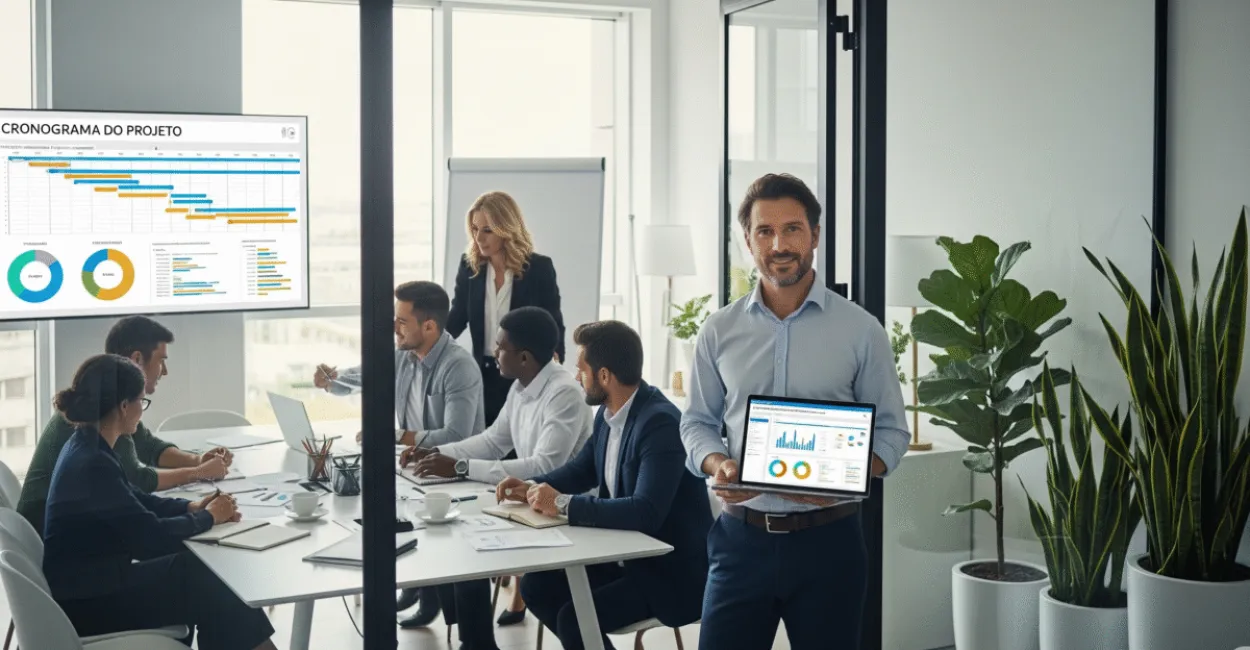
A project can fail even with a great team, an available budget, and cutting-edge technology. What often separates a successful delivery from costly rework is how decisions, risks, and priorities are managed along the way—and that’s where the project manager comes in. In practice, this professional turns broad objectives into an actionable plan, aligning scope, timelines, costs, quality, and communication. The job isn’t to “ask for status updates” all day; it’s to reduce uncertainty, clear dependencies, and keep the team focused on what actually drives results. Below, you’ll learn about the role, the skills it takes, the methods involved, and the mistakes that most often derail projects.

The Essentials
- Project managers bring people, processes, and priorities together to deliver value predictably.
- Mastering scope, schedules, risks, and communication matters more than memorizing a methodology.
- Agile, waterfall, and hybrid approaches work in different contexts; choosing the wrong one can be costly.
- Well-managed projects depend on executive sponsorship, clear criteria, and change management.
- A strong project closeout turns lessons from mistakes into a foundation for future deliveries.
Project Managers and Their Strategic Role in Delivering Results
Technical definition: A project manager is responsible for planning, organizing, coordinating, and controlling a project’s execution to meet specific objectives within defined constraints. In plain English, they make sure the work moves forward without losing focus, needlessly exceeding the budget, or leaving stakeholders in the dark.
The most common mistake is thinking this role exists just to “track tasks.” In reality, it exists to protect delivery from predictable sources of disruption: uncontrolled scope growth, timelines that ignore dependencies, risks addressed too late, and poor communication between teams.
Look at the field’s leading references, and you’ll see that the Project Management Institute (PMI) treats project management as a discipline centered on leadership and integration, not just scheduling. Meanwhile, the Scrum Guide shows how iterative delivery changes the approach to control in highly uncertain environments.
What separates a well-controlled project from a chaotic one isn’t the number of meetings—it’s the quality of decisions made before problems turn into crises.
What This Professional Does Day to Day
- Clearly defines objectives, scope, and success criteria.
- Organizes schedules, owners, and critical dependencies.
- Tracks risks, changes, and approvals while maintaining a clear record.
- Facilitates communication among technical teams, leadership, and clients.
Skills That Set a Strong Project Leader Apart
Anyone who works in this field knows that technical knowledge helps, but it can’t carry the role on its own. An effective project manager combines a big-picture perspective, clear communication, and the confidence to negotiate priorities when everyone wants “just one more small change.”
Technical and Interpersonal Skills
- Planning: Break deliverables into realistic stages with milestones and dependencies.
- Risk management: Spot early warning signs before they lead to delays or financial losses.
- Communication: Tailor the message for executives, the team, and clients without distorting the facts.
- Negotiation: Protect scope without stalling product development.
- Leadership without formal authority: Influence people who don’t report directly to you.
I’ve seen projects with impeccable plans fall short because the leader couldn’t align expectations with senior leadership. The result was predictable: each department had a different understanding of the same commitment. Technical skill without organizational savvy makes for a polished document and fragile execution.
Poor communication doesn’t just delay a meeting; it erodes the entire schedule by turning questions into rework.
The Soft Skills That Matter Most in Practice
Three stand out: active listening, staying clear under pressure, and prioritizing without contradicting yourself. These skills reduce confusion, prevent impulsive decisions, and help build trust across the team.
Methodologies That Change How You Run a Project

There’s no one-size-fits-all methodology. Waterfall works well when requirements are stable; agile makes more sense when learning and adaptation are frequent; and a hybrid approach often works best at companies with stricter governance and changing needs.
| Approach | Best fit | Common risk |
|---|---|---|
| Waterfall | Defined scope and few changes | Limited flexibility |
| Agile | Digital products and continuous learning | Becoming undisciplined improvisation |
| Hybrid | Corporate environments with governance and adaptability | Coordination complexity |
When to Use Each Approach
If a project involves engineering, physical implementation, or regulatory compliance, the predictability of waterfall may be the best choice. If the product depends on frequent user validation, Scrum, Kanban, and other agile practices tend to work better. For corporate transformations, a hybrid approach often delivers better results because it combines executive oversight with short delivery cycles.
Not every situation works the same way—it depends on the level of uncertainty, how much things are likely to change, and the organization’s maturity. Experts disagree about which model is “best,” but almost all agree on one thing: a methodology that doesn’t fit the context creates friction, rework, and a constant sense of urgency.
Tools, Metrics, and Management Routines
A good process needs visibility. Tools like Jira, Trello, Microsoft Project, Notion, and Smartsheet can help, but they don’t replace sound judgment. Their real value lies in how they organize priorities, highlight bottlenecks, and document decisions.
Metrics Worth Tracking
- Schedule: Planned delivery versus actual delivery.
- Scope: What was agreed on versus what was added later.
- Cost: Planned budget versus cumulative spend.
- Quality: Number of defects, rework items, or nonconformities.
- Project health: A combination of risk, engagement, and predictability.
A mature routine usually includes brief check-ins, risk reviews, milestone reviews, and status report updates. The problem isn’t holding regular meetings; it’s treating them as empty rituals. A good meeting produces a decision, an owner, and a clear deadline.
A useful status report doesn’t describe everything; it makes clear what’s blocking delivery and who needs to act now.
According to market data and analysis published by organizations such as McKinsey & Company, organizations with strong execution discipline tend to reduce coordination waste and respond better to change. These gains are especially noticeable when projects are interdependent.
How to Manage Scope, Risks, and Changes Without Losing Control
Scope is where many projects start to bleed. Small requests with “no impact” can have a domino effect, push back timelines, and throw the team off track. The leader’s job is to set boundaries without stifling progress.
A Realistic Project Scenario
During a system rollout for a sales department, the team received three extra requests in the second week, all considered simple. None seemed serious on its own. When the schedule was revised, the three requests together used up nearly 20% of the capacity planned for the next sprint. The difference between finishing strong and going off the rails was stopping, reassessing, and documenting the impact before moving ahead.
This kind of decision requires a change control process, impact analysis, and a record of what’s changing. A project manager doesn’t have to say “no” to everything; they need to say “yes” with a clear understanding of the consequences.
Practices That Keep Things Under Control
- Define scope with objective acceptance criteria.
- Record changes through a single approval workflow.
- Map risks by probability and impact.
- Keep the sponsor and stakeholders informed about trade-offs.
Here’s the straightforward truth: this approach works very well in organizations that accept governance; it fails when leadership wants total flexibility without giving up a fixed deadline. There’s no way to bend the laws of project physics.
Career, Job Market, and Where Professionals Add the Most Value
The market increasingly values people who can connect business goals with execution. In technology, construction, healthcare, manufacturing, marketing, and digital transformation, project managers have become the link between strategy and delivery. The role becomes more valuable as the environment grows more complex and cross-functional.
Data from IBGE, Brazil’s national statistics agency, helps explain the broader Brazilian labor market, especially when it comes to productivity, employment, and shifts across industries. Meanwhile, information from Brazil’s Ministry of Labor and Employment shows how formal employment trends reflect changes in qualifications and specialization.
Where This Career Can Pay Off Most
- Companies with many simultaneous projects and cross-functional dependencies.
- Regulated environments where traceability and documentation matter.
- Digital product teams with continuous delivery and frequent prioritization.
- Organizational transformation programs with multiple workstreams.
Career growth usually comes when someone moves beyond simply organizing tasks and becomes a go-to person for decisions, predictability, and integration. That’s when the role gains executive weight.
Mistakes That Undermine a Project Leader’s Credibility
Some mistakes happen so often they almost seem like part of the job—but they aren’t. The first is promising a deadline without validating actual capacity. The second is confusing activity with progress. The third is hiding a problem until a meeting turns into a fire drill.
The Costliest Missteps
- Failing to align expectations at the outset.
- Ignoring dependencies between teams.
- Treating risks as remote possibilities.
- Sharing status updates without tying them to decisions.
- Letting scope grow without reviewing it.
A project manager’s credibility is built through small details: consistent communication, reliable dates, and the courage to flag a deviation early. When that trust breaks down, leadership turns into policing, and the team starts hiding problems instead of solving them.
Next Steps
If your goal is to get better at this role, the most useful path isn’t collecting certificates without putting them into practice. Start by mastering a real workflow: scope, schedule, risk, communication, and closeout. Then compare how those steps change in an agile, waterfall, or hybrid context. That comparison teaches you more than any generic list of skills.
The next practical step is to review a current or recent project and look at three things: where a delay occurred, which decision came too late, and which dependency was overlooked. This exercise honestly shows whether the process is under control or merely looks that way.
Do You Need a Certification to Get Started as a Project Manager?
Not necessarily. Certifications such as PMP, CAPM, PMI-ACP, or PRINCE2 can build credibility and provide a shared professional vocabulary, but practical experience remains essential. In many cases, the skills that open doors are organizing deliverables and reducing friction between teams.
What’s the Difference Between a Project Manager and a Product Owner?
The project manager coordinates delivery, bringing together timelines, costs, scope, and risks. The product owner prioritizes product value and the backlog, especially in agile environments. At some companies, the roles overlap; at others, they’re clearly distinct.
Does a Project Manager Need to Know Everything About the Technical Side?
They don’t need to know everything, but they do need to understand enough to ask the right questions and spot hidden technical risks. Without that background, it’s harder to negotiate timelines and scope. The ideal balance is knowing enough to have informed conversations with specialists without trying to replace them.
Which Tools Are Most Commonly Used Day to Day?
The most common are Jira, Trello, Microsoft Project, Excel, Notion, and business intelligence tools for executive reporting. The best choice depends on the project’s complexity and the company’s level of governance. A good tool organizes the work; a good process keeps the tool from becoming decoration.
When Does a Hybrid Methodology Make Sense?
It makes sense when a company wants predictable governance but needs flexibility in execution. This is common in large corporate environments with multiple departments and frequent changes. A hybrid approach works well when there’s enough discipline to decide what’s fixed and what can be adjusted.
{
“@context”: “https://schema.org”,
“@type”: “FAQPage”,
“mainEntity”: [
{
“@type”: “Question”,
“name”: “Do You Need a Certification to Get Started as a Project Manager?”,
“acceptedAnswer”: {
“@type”: “Answer”,
“text”: “Not necessarily. Certifications such as PMP, CAPM, PMI-ACP, or PRINCE2 can build credibility and provide a shared professional vocabulary, but practical experience remains essential. In many cases, the skills that open doors are organizing deliverables and reducing friction between teams.”
}
},
{
“@type”: “Question”,
“name”: “What’s the Difference Between a Project Manager and a Product Owner?”,
“acceptedAnswer”: {
“@type”: “Answer”,
“text”: “The project manager coordinates delivery, bringing together timelines, costs, scope, and risks. The product owner prioritizes product value and the backlog, especially in agile environments. At some companies, the roles overlap; at others, they’re clearly distinct.”
}
},
{
“@type”: “Question”,
“name”: “Does a Project Manager Need to Know Everything About the Technical Side?”,
“acceptedAnswer”: {
“@type”: “Answer”,
“text”: “They don’t need to know everything, but they do need to understand enough to ask the right questions and spot hidden technical risks. Without that background, it’s harder to negotiate timelines and scope. The ideal balance is knowing enough to have informed conversations with specialists without trying to replace them.”
}
},
{
“@type”: “Question”,
“name”: “Which Tools Are Most Commonly Used Day to Day?”,
“acceptedAnswer”: {
“@type”: “Answer”,
“text”: “The most common are Jira, Trello, Microsoft Project, Excel, Notion, and business intelligence tools for executive reporting. The best choice depends on the project’s complexity and the company’s level of governance. A good tool organizes the work; a good process keeps the tool from becoming decoration.”
}
},
{
“@type”: “Question”,
“name”: “When Does a Hybrid Methodology Make Sense?”,
“acceptedAnswer”: {
“@type”: “Answer”,
“text”: “It makes sense when a company wants predictable governance but needs flexibility in execution. This is common in large corporate environments with multiple departments and frequent changes. A hybrid approach works well when there’s enough discipline to decide what’s fixed and what can be adjusted.”
}
}
]
}
Artigos Relacionados
 Store Manager: The Complete Guide to Excelling in Retail Leadership
 Digital Marketing Manager: The Complete Guide to Mastering the Role
 Paid Traffic Manager: A Complete Guide to This Essential Digital Marketing Career
 Boost Your Online Side Income: A Complete Guide to Digital Success
 Gastroenterologist: A Complete Guide to the Specialty and Why It Matters
 Chemical Engineer: A Complete Guide to the Career and Job Market
